
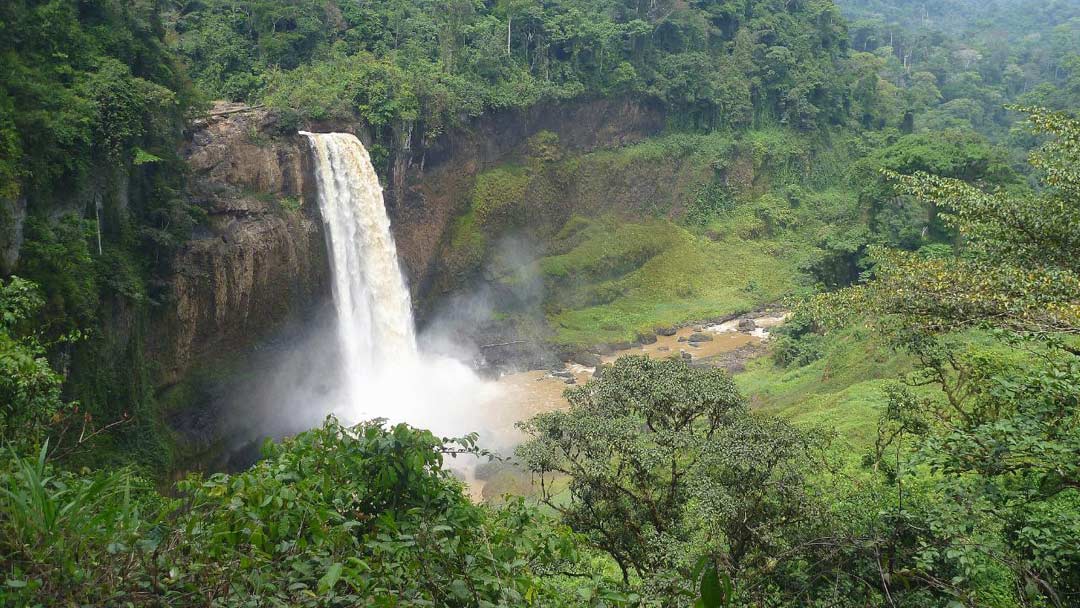
Cameroon is one of Africa's most distinctive hunting destinations, yet it remains unfamiliar to many international hunters. What makes the country particularly unusual is that a hunting safari can take place in two completely different worlds. In the south and east, dense equatorial rainforest provides habitat for sought-after species such as bongo and sitatunga. Travel north, and the forest gives way to vast savannah country associated with Lord Derby eland, roan and other species of northern Cameroon.
For hunters researching Hunting in Cameroon, understanding this geographical divide is one of the most important parts of planning a safari. A rainforest hunt built around tracking bongo through thick vegetation bears little resemblance to pursuing Lord Derby eland across more open savannah. The terrain changes, the species change, and so does the way the hunt unfolds.
That contrast is what sets Cameroon apart. Choosing where to hunt is not simply a matter of selecting an area on a map. It begins with deciding which side of Cameroon you want to experience, and the species that will take you there.
One Country, Two Completely Different Hunts
Cameroon sits at the meeting point of West and Central Africa, bordered by Nigeria, Chad, the Central African Republic, Equatorial Guinea, Gabon and the Republic of the Congo. Covering more than 183,000 square miles, the country stretches from the Atlantic coast and equatorial forests of the south to increasingly open savannah country in the north.
That geography is particularly important when planning a hunting safari. Southern and eastern Cameroon are dominated by dense tropical forest, where species such as bongo and sitatunga are pursued in conditions that can make simply seeing an animal difficult. Farther north, the landscape opens into savannah and woodland associated with Lord Derby eland, roan and other species characteristic of this part of Africa.
French and English are Cameroon's official languages, although French is more widely spoken across much of the country. International hunters generally arrive through Douala or Yaoundé before continuing to their hunting area, and reaching the more remote concessions can involve substantial additional travel.
The distance between these hunting regions means Cameroon should not be viewed as one uniform safari destination. A hunt in the rainforest and a hunt in the northern savannah can differ considerably in terrain, climate, visibility, species and hunting methods. Understanding that difference is the starting point when deciding where, and what to hunt in Cameroon.
How Cameroon's Climate Changes the Hunt
Cameroon's changing landscape brings equally different hunting conditions. In the forest regions, high humidity, rainfall and dense vegetation can make conditions physically demanding. Visibility may be measured in yards rather than hundreds of yards, while wet ground and thick cover place far greater emphasis on tracking and the ability to move quietly through the forest.
Conditions change considerably in the northern savannah. Temperatures can be high, but the more open terrain provides greater visibility and allows hunters and trackers to cover country differently. Rather than working through dense forest where an animal may be close without ever being seen, a hunt may involve following tracks across much greater distances and using openings in the terrain to locate game.
Season and rainfall also influence access and hunting conditions across both environments. Forest roads and trails can become difficult during wetter periods, while vegetation and water availability can affect how game moves through the savannah. This makes the timing of a Cameroon safari particularly important and something that should be planned around the target species and hunting region rather than the country as a whole.
Hunting Cameroon's Rainforest
Hunting in Cameroon's rainforest is a world away from the open-country safaris more commonly associated with Africa. Dense vegetation can reduce visibility to a few yards, while heat and humidity add to the physical demands of moving through the forest. Species associated with these wet, heavily vegetated environments include bongo and sitatunga, with Sitatunga Hunts presenting their own challenge in the swampy and waterlogged habitats these secretive antelope favor. There may be little opportunity to sit behind binoculars and glass distant hillsides. Instead, success often depends on tracks, fresh sign and the knowledge of local trackers who understand how animals move through the forest.
The bongo is one of the species most closely associated with this style of hunting. Bongo Hunts can involve days spent searching roads, trails and forest openings for fresh tracks before following a promising animal into thick cover. Once a track is taken, progress can be slow and deliberate, with the hunter relying heavily on the tracking team to interpret sign that would be easy for an unfamiliar eye to miss.
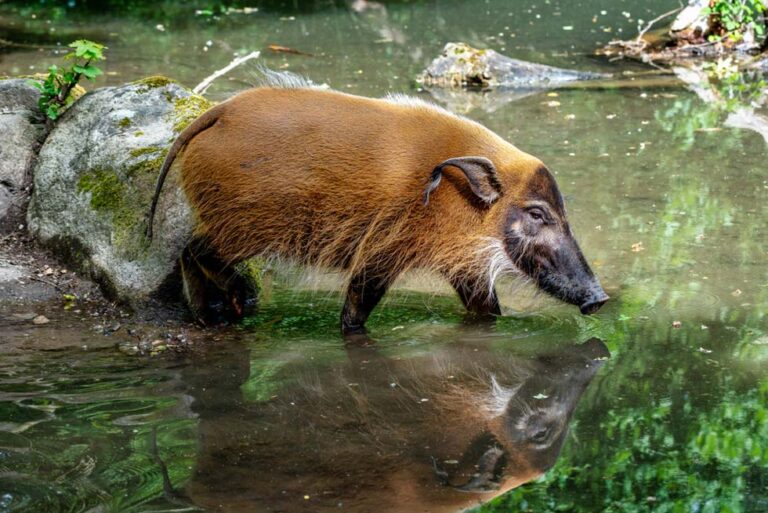
Bongo may be the headline species, but they are far from the only reason to hunt Cameroon's forests. Red River Hog Hunting in Cameroon is another major attraction, particularly for hunters drawn to Africa's more unusual forest game. Their striking coloration and preference for dense cover make red river hog a distinctive trophy, and they fit naturally into a safari built around the specialist species found in this part of Central Africa.
The forest also changes the way a hunter uses his senses. An animal can be remarkably close and remain completely hidden, while a broken branch, movement in the vegetation or a sound ahead may provide the first indication that the tracking team is closing the distance. Shot opportunities can develop quickly and at considerably shorter ranges than hunters accustomed to open African country might expect.
Understanding these conditions before arriving is important. Our guide to The Unwritten Rules of Hunting Africa's Rainforests looks more closely at the fieldcraft, patience and preparation required when hunting in these environments. In Cameroon, the rainforest does not simply provide the backdrop to the hunt. It dictates how the hunt is conducted from the moment a track is found.
When to Hunt Cameroon and Getting to Camp
The best time to hunt in Cameroon depends largely on the species being pursued and whether the safari takes place in the rainforest or the northern savannah. The country's two hunting environments experience different conditions, making it important to plan the timing of a safari around the specific hunting area rather than treating Cameroon as having one uniform season.
In the rainforest, rainfall and humidity influence everything from road access to tracking conditions. Bongo and other forest hunts require careful consideration of local conditions, as fresh tracks can be easier to follow when the ground holds sign, while heavy rain can make remote roads and forest trails considerably more difficult to navigate. The timing of a forest safari should therefore be discussed with the outfitter operating the specific concession.
Northern Cameroon presents a different set of considerations. Hunts for species such as Lord Derby eland and roan take place in more open savannah and woodland, where the progression of the dry season affects vegetation, water availability and animal movement. Conditions can also become increasingly hot as the season progresses, making the timing of the hunt an important part of planning the safari.
International hunters enter Cameroon through Douala or Yaoundé before continuing to camp. From there, the journey depends entirely on where the hunt will take place. Reaching a remote rainforest concession can involve substantial onward travel, while hunting areas in northern Cameroon require a different route and logistical plan. These transfers are normally coordinated by the outfitter and should be considered part of the overall safari itinerary when allowing sufficient travel time before and after the hunt.
Hunting the Northern Savannah
Leaving the dense forests of southern and eastern Cameroon for the hunting country of the north brings a dramatic change in terrain. Thick rainforest gives way to open savannah, woodland and rolling country where visibility increases and hunters can cover considerably greater distances while searching for fresh tracks and game.
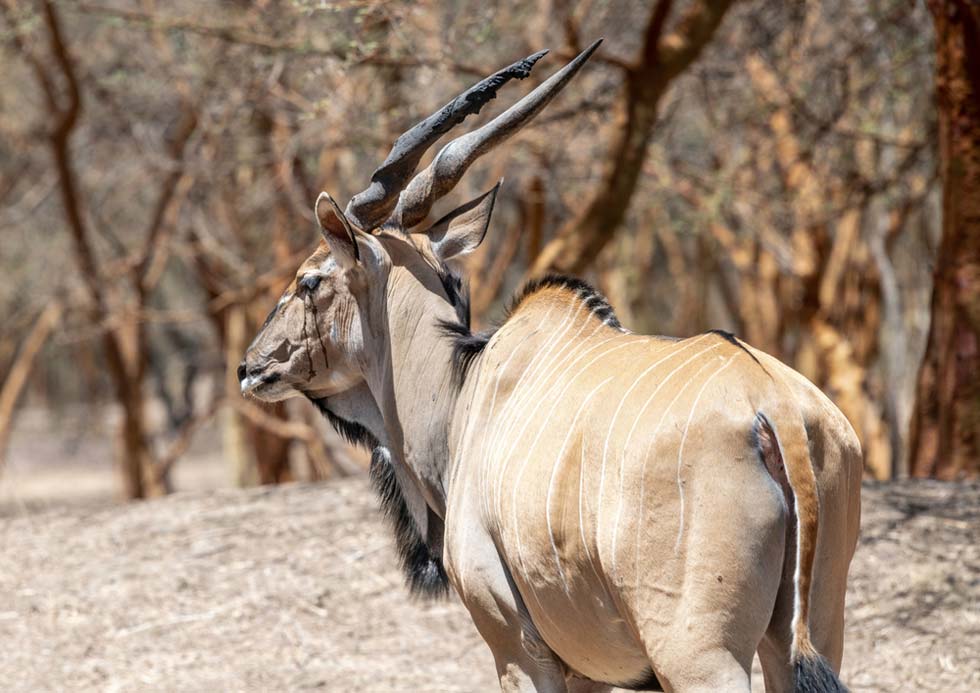
The Lord Derby eland is usually the main attraction. The largest of the African antelope and one of the continent's most impressive spiral-horned species, it has become closely associated with the classic hunting country of this region. Among the different Eland Hunts available across Africa, pursuing Lord Derby eland in Cameroon is a very different proposition from hunting the more familiar common or Livingstone's eland farther south.
A Lord Derby eland hunt is often built around tracking. Once the spoor of a suitable bull is found, the tracking team may follow it for hours as the animal moves through the savannah and woodland. These enormous antelope can cover considerable ground, turning the pursuit into a test of endurance where staying with the tracks is only the beginning. Eventually, the challenge is getting close enough and finding a clear opportunity before the bull moves on again.
This open country can occasionally provide opportunities to see animals at greater distances than in the rainforest, but that does not necessarily make the hunting easier. Roan and other species add variety to a northern Cameroon safari, yet the Lord Derby eland remains one of the defining reasons to travel here.
Few animals illustrate the two sides of Cameroon better. In the forest, a safari may revolve around following bongo tracks beneath a closed canopy. In the north, the same country offers the chance to follow one of Africa's largest antelope across vast stretches of savannah. The species changes, the landscape changes, and the hunt changes with it.
Which side of Cameroon Would You Hunt?
Choosing where to hunt in Cameroon usually begins with the species at the top of the list. This is particularly true for serious collectors, as some of the country's most sought-after game is closely tied to a specific habitat and region.
A hunter pursuing bongo and other specialist forest species will spend his safari in a world of dense vegetation, humidity and close-range encounters, where experienced trackers and fresh sign often provide the only connection to an animal hidden somewhere ahead. The rainforest itself becomes an important part of why these species are so highly regarded by hunters who have already hunted extensively elsewhere in Africa.
Lord Derby eland points the compass in the opposite direction. Pursuing one of these great spiral-horned antelope takes the hunter north into Cameroon's savannah country, where the distances become greater and long hours following tracks can define the hunt. Roan and other northern species can add depth to the safari, but a mature Lord Derby eland is often the animal around which the entire trip is planned.
For the serious African game collector, that distinction is part of Cameroon's appeal. The decision is not simply which concession to hunt, but which Cameroon to pursue first. One safari can take a hunter deep into the rainforest in search of species rarely encountered elsewhere, while another can be built around tracking one of Africa's most iconic antelope across the northern savannah. Some hunters may eventually find good reason to return and experience both
What Does a Hunting Safari in Cameroon Cost?
Cameroon is generally one of Africa's more expensive hunting destinations, particularly when a safari is built around specialist species such as bongo or Lord Derby eland. The cost is not determined by the trophy fee alone. The length of the safari, hunting area, target species and logistics required to reach a remote concession can all have a substantial effect on the final price.
Pricing can also be more complicated than hunters expect. In addition to daily rates and trophy fees, a quotation may include or exclude government charges, hunting licences, firearm permits, conservation or anti-poaching levies and other area-specific fees. Remote camps may require charter flights or lengthy ground transfers, while trophy handling and transportation from isolated hunting areas can add further costs after the safari.
The two sides of Cameroon can also involve very different logistics. A rainforest safari built around bongo may have a different cost structure from a Lord Derby eland hunt in the northern savannah, even before additional species are considered. This is why comparing two Cameroon safari quotations purely by the advertised daily rate or trophy fee can be misleading.
Our guide to African Hunting Safari Prices explains the broader costs involved in planning a hunt in Africa. When considering Cameroon specifically, hunters should request a detailed quotation showing exactly what is included and excluded, particularly transfers, charter flights where required, government fees and levies. Understanding the complete cost before booking is far better than discovering additional charges once the safari is underway.
Planning a Hunting Safari in Cameroon
A hunting safari in Cameroon requires more advance planning than a hunt in some of Africa's more frequently visited destinations. Hunting areas can be remote, logistics vary considerably between the rainforest and northern savannah, and the species being pursued will influence everything from the length of the safari to the equipment and physical preparation required.
International hunters should book through a licensed outfitter operating in the relevant hunting area and hunt with a licensed Professional Hunter. Permits, firearm import arrangements and any species-specific requirements should be confirmed well before departure, particularly when a safari is being built around specialist game such as bongo or Lord Derby eland.
Preparation should also reflect the environment. Lightweight clothing, reliable footwear and protection from rain, humidity and insects become particularly important in the rainforest, while a northern savannah hunt may involve considerable time on foot in hot, more exposed conditions. Arriving physically prepared can make a significant difference when a fresh track leads to several hours of walking.
When comparing Hunting Trips in Cameroon, the starting point should therefore be the target species and the hunting area rather than simply choosing a safari package. The right outfitter should have established access to suitable hunting country, experienced local trackers and a clear understanding of the logistics required to get the hunter from international arrival all the way to a remote camp, and ultimately onto the tracks of the animal he came to Cameroon to hunt.
Two Very Different Reasons to Hunt in Cameroon
Cameroon occupies an unusual place on Africa's hunting map. Few destinations offer such a dramatic contrast between the species and conditions found within the same country. In the rainforest, the hunt can be measured in fresh tracks, sounds in the vegetation and brief opportunities beneath a closed canopy. In the north, the country opens up, and following the tracks of a Lord Derby eland can lead across miles of savannah and woodland.
That diversity is what makes Cameroon particularly interesting to hunters who have already travelled extensively in Africa and are looking for something different. Bongo, red river hog, Lord Derby eland and the country's other specialist species are not simply names to add to a collection. Pursuing them means entering the environments that shaped them and adapting to a very different style of hunting.
Whether the first journey leads into the rainforest or north toward the savannah will depend on the species at the top of the list. Either way, Cameroon remains one of those African hunting destinations where the country itself becomes as much a part of the safari as the animal being pursued.
Frequently Asked Questions
What animals can you hunt in Cameroon?
Cameroon offers an unusual combination of forest and savannah species. Bongo, red river hog and sitatunga are among the game associated with the forest regions, while Lord Derby eland and roan are major attractions in the north. The species available will depend on the hunting area, current quota and applicable regulations.
What is Cameroon best known for among hunters?
Cameroon is particularly well known for bongo hunting in its dense rainforest and Lord Derby eland hunting in the northern savannah. These two species represent very different hunting environments and are among the main reasons serious African game collectors travel to the country.
Can you hunt bongo in Cameroon?
Yes. Cameroon is one of Africa's established destinations for hunting bongo. Hunts take place in dense forest habitat and typically rely heavily on experienced trackers to locate fresh spoor before following a suitable animal through thick cover.
What can you hunt in the savannah of northern Cameroon?
Northern Cameroon is particularly associated with Lord Derby eland and roan, along with other species found in the region's savannah and woodland habitats. Hunters interested in combining specialist northern species with broader Plains Game Hunts should discuss current species availability and quota with the outfitter when planning the safari.
When is the best time to hunt in Cameroon?
The best time depends on the target species and hunting region. Conditions in Cameroon's rainforest differ considerably from those in the northern savannah, with rainfall, road access, vegetation and temperature all influencing the hunt. The ideal dates should therefore be selected according to the species and specific concession rather than relying on one general season for the entire country.
How difficult is hunting in Cameroon's rainforest?
Rainforest hunting can be physically and mentally demanding. High humidity, dense vegetation and extremely limited visibility place considerable emphasis on tracking and patience. Animals may be close without being visible, and shot opportunities can develop quickly when they do appear. Good physical preparation and confidence shooting at shorter ranges can be valuable when preparing for a forest safari.
About the Author
Pierre van Wyk is the Co-Founder of Game Hunting Safaris and has extensive experience in the African hunting industry. He works with international hunters planning safaris across Africa, with a particular focus on matching hunters with suitable destinations, species and experienced hunting outfitters.