
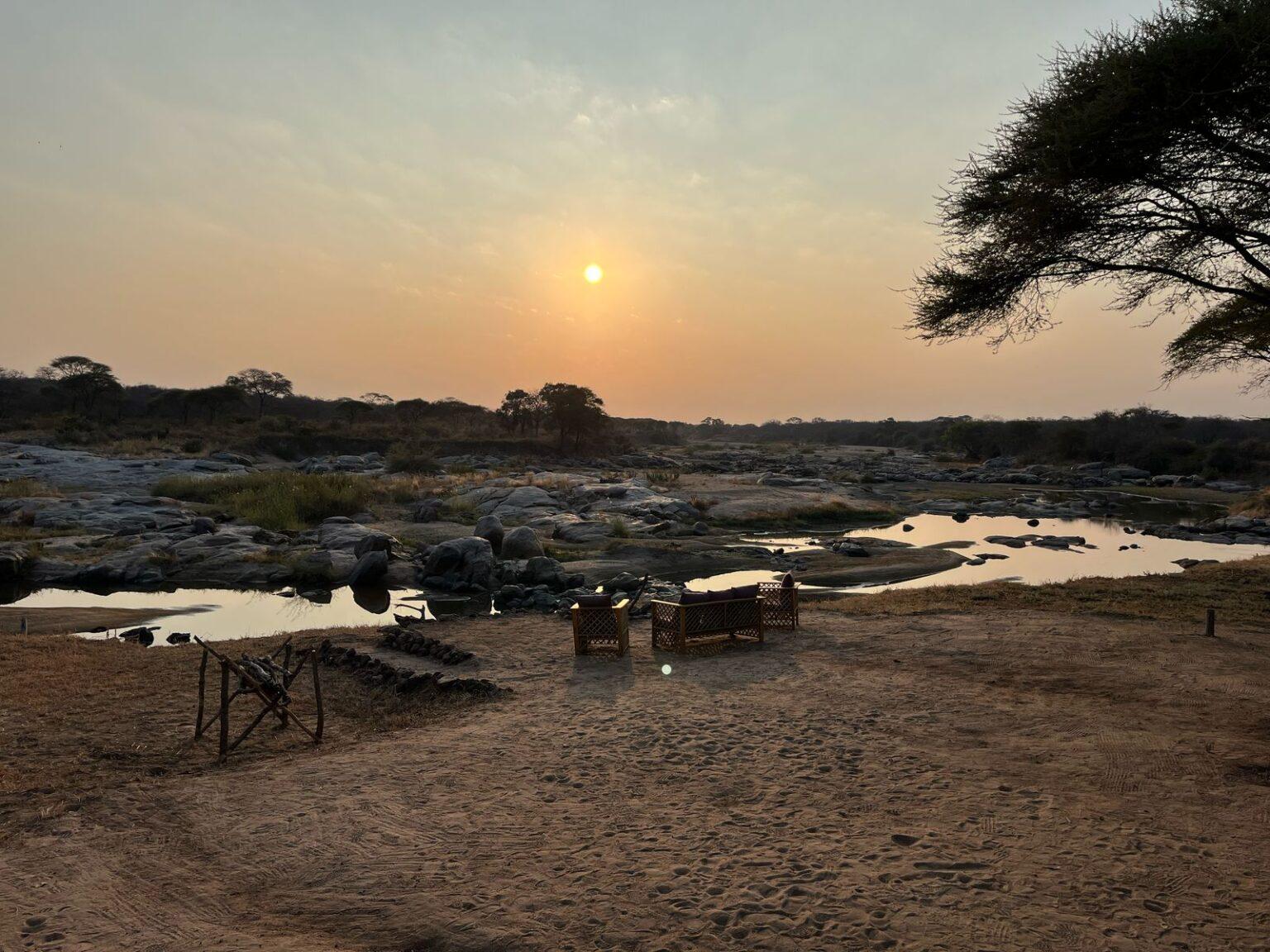
Tanzania, previously known as Tanganyika, is well known for providing traditional East African safaris, with high levels of service and exceptional quality trophies, including Elephant, Lion, Leopard and, of course, Cape Buffalo. For American hunters seeking authentic free-range dangerous game hunting, the country remains one of Africa’s premier destinations, offering vast wilderness areas, exceptional trophy quality and truly wild safari experiences. Few destinations compare to safari hunting in Tanzania for hunters wanting an authentic East African adventure.
This firsthand review focuses specifically on Lunda Nkwambi GCA, its accessibility, accommodation, wildlife and hunting conditions. Hunters comparing the country’s broader species, hunting areas and safari structures can explore our complete guide to Big Game Hunting in Tanzania.
[DYNAMIC-BLOGTABLEOFCONTENT]
Why We Visited Lunda Nkwambi GCA
Tanzania big game safaris have for more than a century been a favorite among famous hunters such as Theodore “Teddy” Roosevelt, Antonio “Tony” Sánchez-Ariño, Frederick Selous and Jim Corbett, many of whom combined sport hunting with scientific research and African exploration.
Today, Tanzania is a sought-after destination for American hunters wanting to follow in the footsteps of these legendary adventurers while experiencing authentic free-range hunting in vast wilderness areas untouched by modern development.
Tanzania, previously known as Tanganyika, is well known for providing traditional East African safaris, with high levels of service and exceptional quality trophies, including Elephant, Lion, Leopard and, of course, Cape Buffalo. For hunters seeking authentic free-range dangerous game hunting, the country remains one of Africa’s premier safari destinations. Few destinations compare to Tanzania for hunters wanting a true East African hunting adventure.
Tanzania, in fact, has the highest population of Cape Buffalo, with latest estimates standing at more than 400,000 animals. Hunters pursuing Cape Buffalo hunts in Africa will find their dream “Dugga Boy” in Tanzania, whether it be a large bull with broomstick horns, a hard-bossed trophy bull or a battle-scarred “scrum cap” buffalo. For many international hunters, buffalo hunting in Tanzania represents the ultimate dangerous game challenge.
Beyond Cape Buffalo, Tanzania remains one of the few destinations in Africa where hunters can still pursue free-range Elephant hunts, Lion hunts and Leopard hunts in vast unfenced wilderness areas.
First Impressions of Lunda Nkwambi GCA
Safari hunting in Tanzania provides international hunters with a variety of safari hunting locations, from the famous Selous Reserve (now known as Nyerere National Park, honouring the country’s first president), Maasailand, Rungwa and Kigosi, to name but a few. These vast wilderness concessions are well known for offering authentic free-range dangerous game safaris in some of Africa’s most remote and untouched hunting areas.
In addition to dangerous game safaris, Tanzania also offers exceptional plains game hunts for species such as Greater Kudu, Impala, Sable and Warthog in expansive unfenced wilderness concessions. Tanzania is also one of the few destinations in Africa where hunters can pursue the elusive Lesser Kudu, a spiral-horned antelope highly sought after among serious plains game collectors wanting a rare and uniquely East African trophy. For hunters wanting a traditional East African safari experience combining dangerous game and antelope species, Tanzania remains one of Africa’s most diverse safari hunting destinations.
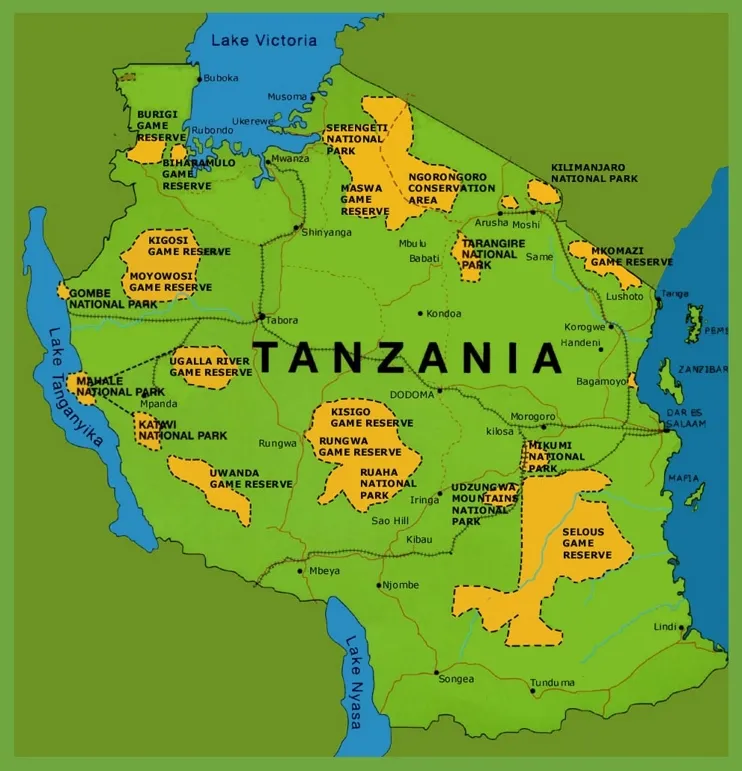
On this occasion, the team at Game Hunting Safaris decided to visit Lunda Nkwambi GCA, a hunting block of more than 400 square miles situated in the western area of Tanzania. Lunda Nkwambi GCA, being a buffer zone to famous national parks such as Kisigo and Rungwa, would naturally be expected to produce exceptional trophy quality and abundant wildlife.
Based on a little internet research, Lunda Nkwambi GCA was shown as a Game Controlled Area boasting abundant wildlife, pristine wilderness and excellent safari hunting opportunities. The team at Game Hunting Safaris therefore had no choice but to accept the generous invitation from the outfitter and investigate the concession for ourselves.
What is a GCA in Tanzania?
In Tanzania, a GCA is a Game Controlled Area, where protection of wildlife, wilderness and conservation is the primary initiative. But, unlike a proclaimed Game Reserve, land and resource uses are not restricted.
GCA’s form “corridors” or “buffer zones” to larger reserves and are managed by the Tanzanian Wildlife Authority, known as the “TAWA”. Residents are allowed to live and cultivate land. At Lunda Nkwambi GCA, the nearest small village is hours away from the main hunting lodge and the block is untouched by human encroachment. The small presence of Tsetse flies in the GCA, while not directly benefitting big game animals, can transmit Nagana disease to livestock, which deters local habitants from ranching in the GCA, thus protecting the wildlife and habitat and making these insects “natural game wardens.”
GCA’s in Tanzania are crucial for supporting communities on the perimeters of the hunting block and maintaining biodiversity. These protected wilderness corridors play an important role in supporting sustainable safari hunting in Tanzania while preserving vital wildlife migration routes and natural habitat.
Traveling to Lunda Nkwambi
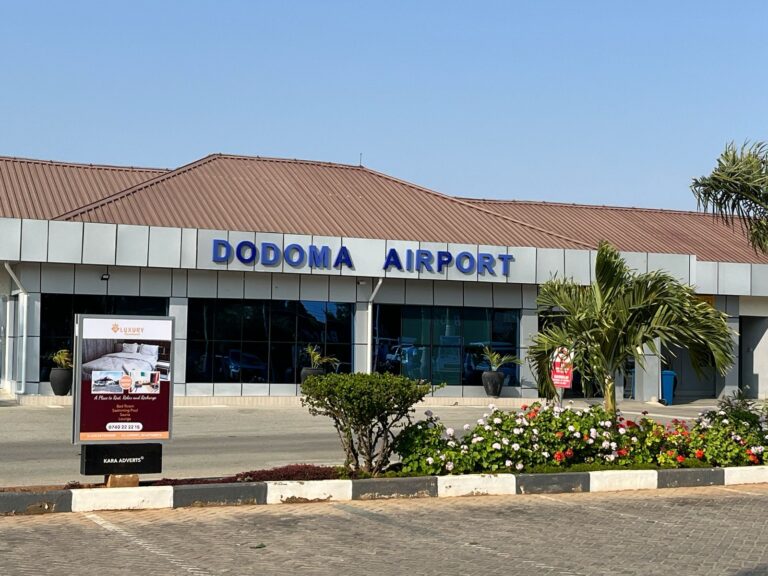
American hunters can enter Tanzania via Kilimanjaro International or Julius Nyerere (Dar Es Salaam) and thereafter take a domestic flight to the administrative capital of Tanzania, the city of Dodoma. Air Tanzania is recommended for the domestic flight. For international hunters who must take multiple flights to go game hunting in Tanzania, it is recommended to overnight in Dodoma. We at Game Hunting Safaris stayed at the Best Western, which on average costs US$ 90 per night and is situated only a few minutes away from the airport with transfers to and from the hotel available. Rooms were clean, comfortable and well maintained. The hotel also has a good quality roof top bar and restaurant, with a gym for hunters wanting to get in the last “miles” before commencing the hunting safari.
Traveling from Dodoma to Lunda Nkwambi is via road transfer and while only approximately 120 miles away, takes on average four and half hours.
Shortly after leaving Dodoma, the road trip becomes scenic as hunters and observers will travel through the local villages, with breathtaking views of the famous African Baobab trees. The road transfer is safe and comfortable, while the final two hours into the GCA showcase true African wilderness, with stunning river crossings, dense vegetation and classic East African safari terrain ideally suited to big game hunting.
Tanzania Hunting Prices at Lunda Nkwambi
One of the largest cost contributions of any big game hunting safari in remote areas, such as Niassa in Mozambique, the Bangweulu Swamps in Zambia, the Selous and Maasailand in Tanzania, is the need for private air charters to reach hunting camps.
When hunting in Tanzania and choosing Lunda Nkwambi GCA, due to the concession being accessible by road transfer, there is no need for private air charter. Safari hunting costs are thus “trimmed” by approximately US$ 4,000 to US$ 6,000. Hunters comparing the complete cost of a Tanzania safari should also consider licence fees, trophy fees, transfers and trophy handling. Our guide to African Hunting Safari Prices explains how these expenses contribute to the final safari budget.
Not only is this a material saving, but for American hunters who are budget conscious, this cost reduction can make the dream of an authentic East African Safari a reality for many sport hunters.
Tanzania Hunting Packages at Lunda Nkwambi
What is impressive at Lunda Kwambi, is the way that the outfitter has tailormade certain safari hunting packages. Traditionally, game hunting in Tanzania has been promoted by marketing only the cost of the Tanzania hunting license, i.e. 10-, 16- or 21-day license and then separating trophy fees from day fees.
This outfitter has customized hunting safaris and provides a combination of hunts i.e. Hippo and Croc, Plains Game, or a dedicated Cape Buffalo hunt, which also includes the trophy fee. This can be classified as “user friendly,” in that costs which are usually quoted as “additional costs,” such as CITES permits, hunting licenses, road transfer costs, government levies etc. have all been included, thereby making it easy to budget and plan.
7-day hunting packages, while paying the 10-day license, are also available which saves the hunter additional day fees, especially when targeting only a single species, such as the Cape Buffalo. The original concept of “day fees” when safari hunting was developed to include, but not limited to the full hunting experience, including standard costs such as on territory transport, accommodations, meals, guide and professional hunting fees.
The standard hunting licenses, i.e. 10,16 and 21 are also available allowing hunters to hunt all species and quantities under the specific licenses.
The hunting packages at Lunda Nkwambi all include the associated costs of Government game scouts whose function it is to ensure that no hunting laws are infringed and to validate the hunting license. Once the hunting safari is completed, hunters are required to sign the license. The trophy is removed from the area and allows for a trophy export certificate, ensuring that all trophy fees and trophy handling has been paid.
These packages ensure that when safari hunting in Tanzania at Lunda, hunters do not have to be qualified accountants or mathematicians to calculate price estimates.
Hunting Lodges in Tanzania
Most hunting lodges in Tanzania comprise traditional safari tented accommodation, and Lunda Nkwambi is no exception, offering hunters an authentic East African wilderness experience.
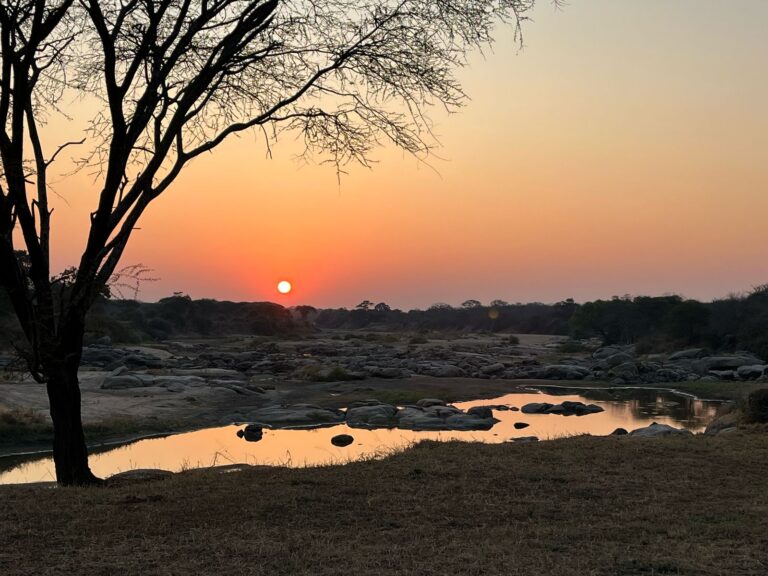
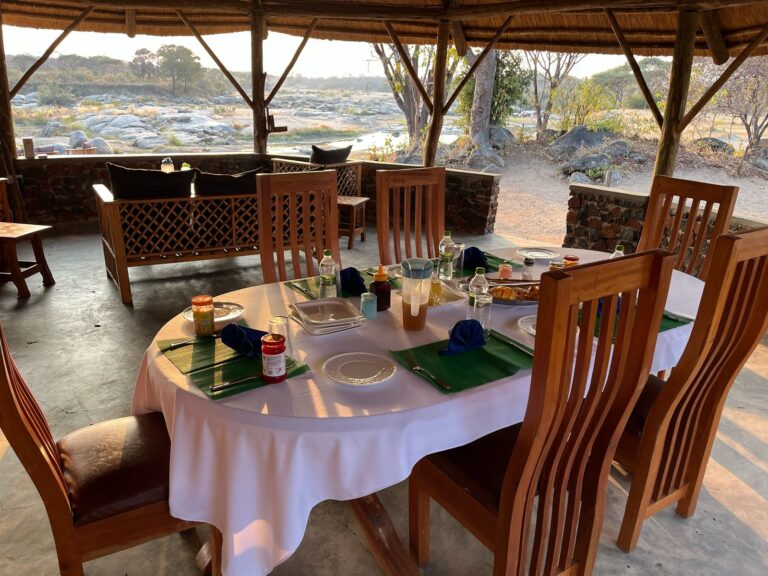
Lunda Nkwambi offers a standard safari tent, with comfortable beds, showers, solar electricity, running water and flushing toilets. Wifi is available in camp, and the tents as well as the central dining and entertainment area offer breathtaking views across the surrounding wilderness below. The main lodge features a bar area, with a fire pit overlooking the waterways below.
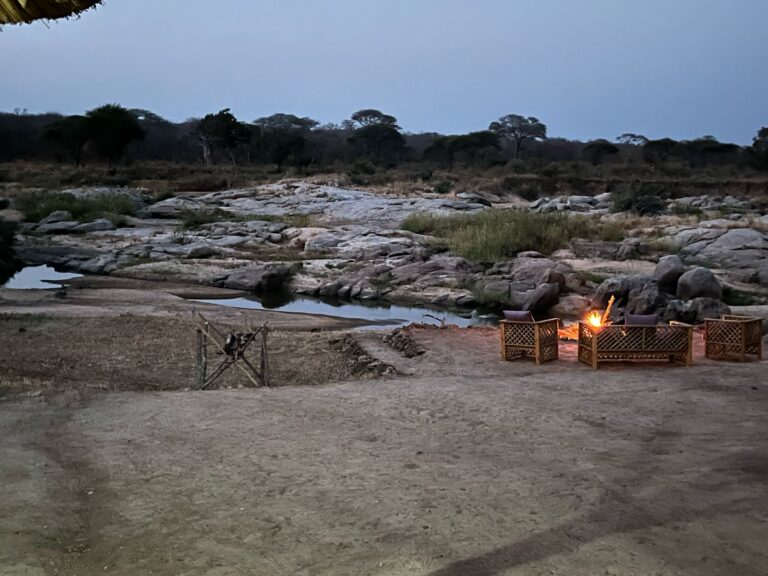
Enjoying a few cold adult beverages at the boma, it really was a privilege to witness Kudu, East African Impala, Dik-Dik, Giraffe, Warthog and Elephant crossing the riverbed below. Troops of Olive baboons, also known as Anubis baboon, were plentiful around the lodge, with mongooses busy in the sand banks in the late afternoons.
Bird life surrounding the lodge is plentiful, with Pied Kingfishers being abundant, along with healthy numbers Fish Eagles and Hamerkops. On the second morning, we were fortunate enough to witness a herd of more than 200 Cape Buffalo crossing downstream in the early morning.
At night, in the comfort of our tent, two Lions kept us awake every night. At one stage we were certain one of the males was no less than a few yards away. When hunting in Lundwa Nkwambi, keep your rifle alongside your bedside, this concession is truly wild Africa! While listening to the groans, snarls, grunts and moans of the two Lions, we wished every night that we were fortunate enough to have a hunting license for Lion. These free-range adult males found in Tanzania are huge and make exceptional trophies.
The food was great, healthy, filling and well prepared. On any hunt in Tanzania, always ensure you advise the outfitter of any special dietary or drinks requirements well in advance. Concessions can be miles away from retail outlets.
Challenges when operating Hunting Concessions in Tanzania
We at Game Hunting Safaris often hear hunters say that big game hunting in Tanzania is expensive, and truthfully, they are not wrong. Professionally managing and operating remote free-range hunting concessions in Tanzania costs significant time, money and resources, with hunters ultimately paying a premium for access to some of Africa’s last truly wild hunting areas.
The reality is that even basic supplies such as food, drinks, fuel and maintenance items often need to be transported over vast distances, with operators regularly dealing with shortages of critical equipment and supplies that can impact day-to-day operations in camp.
These operational costs go far beyond daily safari logistics and include maintaining roads, solar systems, generators, vehicles, communications equipment and the transport of trophies for dip and pack services.
Equipment such as properly equipped four-by-four vehicles, radio communication systems, medical kits and back-up trucks are expensive to purchase, maintain and operate in these harsh wilderness environments, where rough terrain and remote conditions quickly reduce the lifespan of essential equipment.
In addition, monitoring wildlife movement and animal health, implementing anti-poaching initiatives, training camp staff and maintaining healthy trophy quality across large wilderness concessions all require considerable experience, manpower and financial investment.
Feedback for International Hunters
Unfortunately, we at Game Hunting Safaris had limited time during this trip to Tanzania. We would have liked to spend far more time exploring the concession, but with Lunda Nkwambi exceeding 405 square miles in size, it is a vast wilderness area to properly cover, even when not actively on a hunting safari.
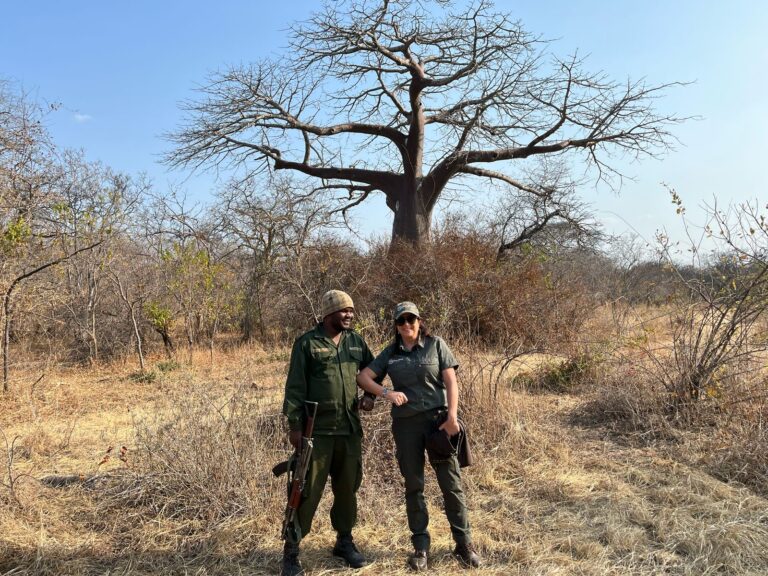
The concession is packed with spectacular Baobab trees, dense woodland areas and scattered open clearings attracting a wide variety of African plains game species. Hunters pursuing Sable hunts and Roan hunts will appreciate the quality habitat found throughout the concession, while species such as Greater Kudu, Impala, Dik-Dik and both Grants and Thomson’s Gazelle are plentiful across the area.Giraffes are plentiful throughout the concession, but as Tanzania’s national animal, they are not legally permitted to be hunted.
Game trails are plentiful, with constant signs of animal movement making walking through the scrub a little easier. During our stay, we encountered a herd of more than 150 Cape Buffalo, including several heavy bossed bulls and exceptional shootable trophies. Lunda Nkwambi is perfectly suited to hunters wanting to experience Cape Buffalo hunts “in the thick,” often at extremely close range of 20 yards or less. In this type of terrain, an open-sighted double rifle such as a 470 or 500 Nitro Express would be perfectly suited, especially when loaded with quality expanding bullets for the initial shot and solids for follow-up situations.
The concession is also packed with dangerous game species such as Lions, Leopards and large free-range Elephants. This is not the type of wilderness area where one casually walks around camp unarmed or without the company of a professional hunter. Lunda Nkwambi is truly wild Africa at its best.
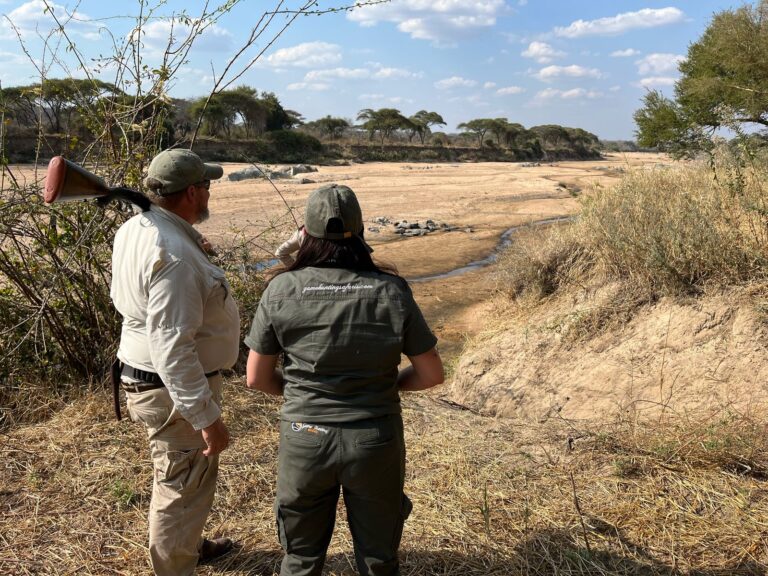
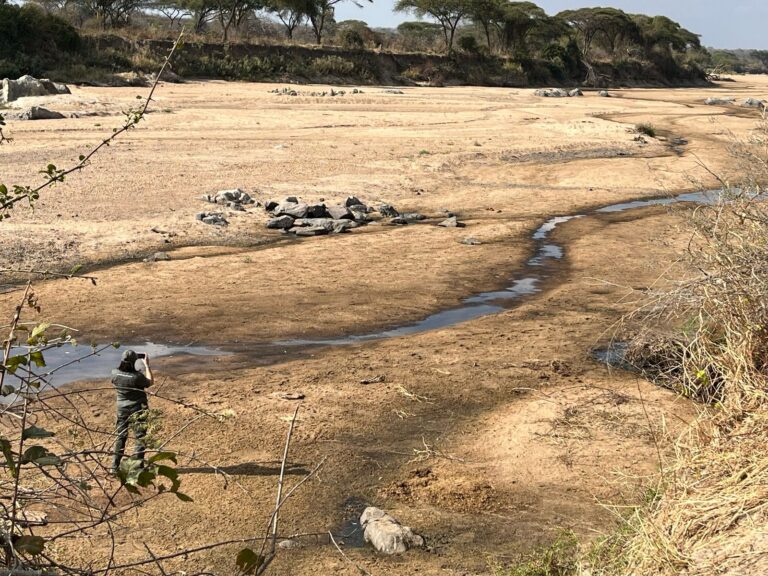
The river systems flowing through the concession provide excellent habitat for Hippo hunts and Crocodile hunts, with healthy populations found throughout the waterways and surrounding riverbanks. During a short walk through the dry sections of the riverbed, the sand was covered in dangerous game spoor, while signs of specialty species such as Spotted Hyena and Honey Badger were plentiful throughout the area.
As night hunting in Tanzania is illegal, pursuing large black-maned Lions, mature tom Leopards and Hyena becomes even more challenging. Tanzania is also one of the few African destinations where hunting Striped Hyena remains legal, making these elusive predators highly sought after among dangerous game and specialty animal collectors.
Tips for Hunting Lunda Nkwambi GCA
- Terrain varies through Africa. Pack long pants and sleeved shirts as additional protection against the sun and the thick brush. Pack a wide brimmed hat covering your ears.
- While the outfitter has a general medical emergency kit available, with the concession being so remote, pack a few basic medical supplies such as headache tablets, rehydrate, general antibiotics, antihistamine cream and personal hygiene products.
- Pack good quality walking shoes and extra boot laces.
- Do not overpack, daily laundry services are available.
- Know the Tanzanian hunting laws, licensing requirements and firearm/ammunition restrictions.
- Plan the hunting safari in advance so that the “best times” can be secured.
- Study shot placement for the target species in advance, especially when hunting dangerous game at close range. Proper shot placement is critical when pursuing thick-skinned African game in heavy cover.
- If you are pursuing a trophy Cape buffalo, bring a suitable rifle, listen to your Professional Hunter and do not rush the first opportunity.
Frequently Asked Questions
Do I require a permit to hunt in Tanzania?
Yes, hunting permits are required. These permits are issued by the Tanzania Wildlife Management Authority (TAWA) and are divided into three different categories, namely regular 10, 16, and 21-day hunting permits.
Does Tanzania allow night hunting?
No night hunting is undertaken, it is illegal. All hunting in Tanzania needs to occur during daylight hours. This includes 30 minutes before sunrise and 30 minutes after sunset.
What is the most dangerous member of the Big 5 to hunt?
While many hunters consider the leopard to be the most dangerous, it is largely agreed that the Cape buffalo ticks the boxes as the most dangerous Big 5 species to hunt. Known for its largely unpredictable nature, aggressive and grumpy attitude, this 2,000-pound wall of muscle is not to be messed with. In fact, its nicknames of “Africa’s Black Death” and “The Widow Maker” reference its killing ability.
What rifle is required to hunt dangerous game in Tanzania?
When hunting the Big 5 or other dangerous game, a minimum of a .375 is required.
Can I hunt dangerous game on Lunda Nkambi?
Yes, members of Africa’s Big 5 can be hunted on the GCA, including the Lion, Leopard, Elephant, and Cape Buffalo.
Is hunting in Tanzania suited to both Novice and Seasoned Hunters?
Tanzania offers a wide variety of hunting packages suited to both novice and experienced international hunters. For hunters beginning their African hunting journey, shorter safari packages targeting plains game species such as antelope, Zebra, Warthog and smaller predators provide an excellent introduction to safari hunting in East Africa.
For more experienced hunters wanting the ultimate free-range African hunting adventure, Tanzania is world-renowned for dangerous game hunting opportunities, including Cape Buffalo hunts, Lion hunts, Leopard hunts and Elephant hunts in vast unfenced wilderness concessions. The country remains one of Africa’s premier destinations for hunters pursuing authentic big game safaris and exceptional trophy quality.
Conclusion
If safari hunting in Tanzania is on your bucket list, Lunda Nkwambi GCA offers hunters an authentic East African safari experience in one of Africa’s last truly wild hunting areas. From dangerous game and exceptional plains game species to breathtaking wilderness scenery and true free-range hunting, this Tanzanian concession delivers the type of safari adventure many hunters spend a lifetime dreaming about.
Author: PC van Wyk
PC van Wyk is an African hunting writer, safari consultant and experienced outdoorsman with a passion for free-range hunting, dangerous game safaris and African conservation. Through Game Hunting Safaris, he shares firsthand experiences, destination insights and practical hunting knowledge from some of Africa’s leading safari destinations.