
So, are you ready for your African Hunting Safari? After all the planning, training, paying, packing and travelling, the success of the safari often comes down to a single split second. It is the moment every hunter prepares for, yet no amount of planning can completely remove the pressure that arrives when the crosshairs finally settle on the animal.
Knowing where to place the bullet is only part of the equation. Our Shot Placement Guide explains the correct aiming points for many of Africa's most popular game species, helping hunters understand the anatomy behind an ethical shot before they ever step into the field.
What the guide cannot teach is what happens in the seconds before the trigger is squeezed. Whether pursuing Big Game Hunting or classic Plains Game Hunts, excitement, fatigue, expectation and pressure all come together at exactly the same moment. This article is about that moment, and the lessons learned from real hunting safaris across Africa.
[DYNAMIC-BLOGTABLEOFCONTENT]
When Everything Comes Down to One Shot
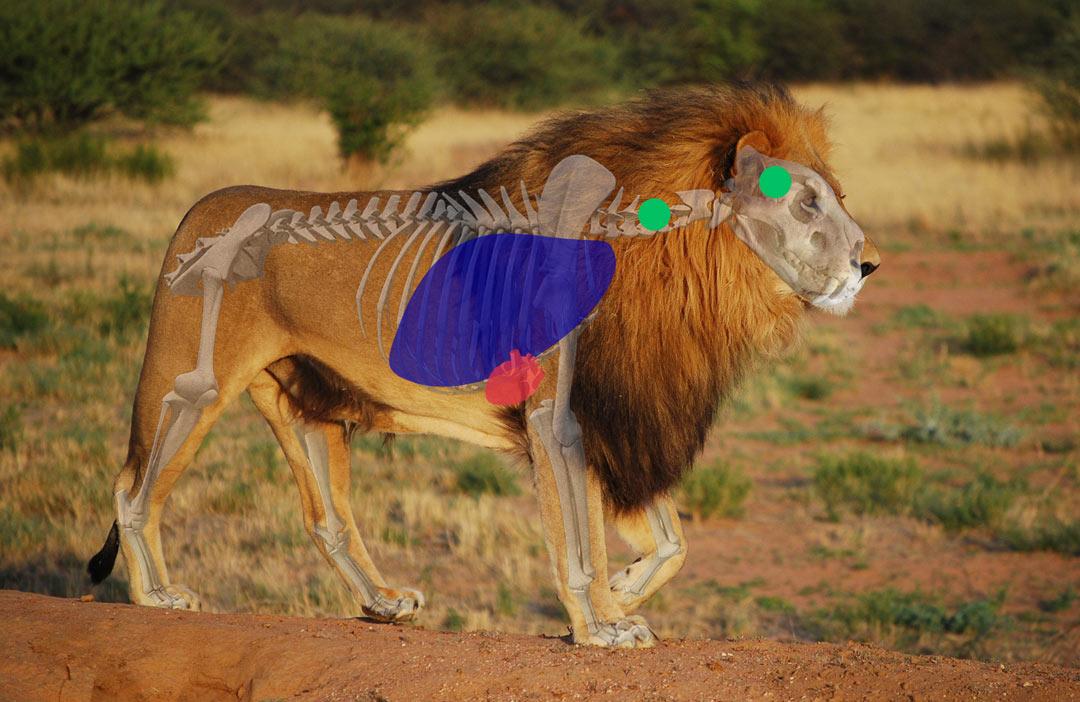
We hunted the lion below a few years ago in the Kalahari, South Africa. If you have not yet experienced one of Africa's classic Lion Hunts, whether in a large free-range area or an extensive hunting property, it remains one of the continent's most unforgettable dangerous game safaris.
We stalked the lion on foot for almost two hours before finally finding him lying beneath an acacia tree in the long grass. When he eventually stood, he presented a frontal heart shot from roughly twenty yards away. There was very little time to think.
The bullet entered the chest, the lion spun in a series of mid-air circles before running about fifty yards, and then quickly expired. Standing beside me was an exceptionally experienced Professional Hunter who had completed well over 1,500 lion hunts. Having that level of experience at your side brings a confidence that is difficult to appreciate until you find yourself in that moment. It also became my first recorded dangerous game cat.
Looking back, I remember very little about pulling the trigger. What I remember is the pressure leading up to it. After months of preparation, travel and anticipation, everything came down to a decision measured in seconds. That is one of the realities of dangerous game hunting. The shot itself is often over almost immediately, but the responsibility of making it count begins long before the animal ever comes into view.

Knowing When Not to Shoot
One of the most valuable lessons an African safari teaches is that pulling the trigger is not always the right decision. Animals move unexpectedly, branches appear where there were none a moment before, the wind changes or a trophy turns just enough to hide the vital area. Experienced hunters understand that an opportunity is only worthwhile if it can be taken ethically.
The pressure to shoot can be surprisingly intense. After months of planning, long international flights and days of tracking an animal, it is easy to convince yourself that this may be the only chance you will get. That is often when mistakes happen. Rushing a shot because the opportunity might disappear rarely ends well for either the hunter or the animal.
Some of the most successful hunters are also the most patient. They are willing to lower the rifle, wait another few seconds or even walk away completely if the shot does not feel right. Confidence is not measured by how quickly the trigger is squeezed, but by knowing when to wait for a better opportunity.
Several of the stories in this article reflect exactly that lesson. Success is not simply about placing a bullet in the right position. It is about judgement, preparation and having the discipline to make the right decision when the pressure is at its highest. In the end, good hunters are remembered not for the shots they rushed, but for the ones they chose not to take.
Preparation Before the Safari
- Ethical hunting is built around making every reasonable effort to achieve a quick and humane harvest. Every hunter has a responsibility to minimise suffering by understanding the anatomy of the species being hunted and waiting for an ethical shot opportunity.
- The vast majority of shots that should be considered by the hunter would be a heart shot as the animal is presenting the hunter with a larger target.
- Heart shots, like when crocodile hunting, or hippo hunting, while the crocodile or hippo remains in the water, cannot always be considered as a first option.
- In other instances, head and brain shots should only be considered when the animal, such as an African elephant, Cape buffalo, or hippo is charging the hunter and there literally is no other choice to consider.
- When taking the heart shot, the best choice, if presented, would be when the animal is standing broadside (excluding when crocodile hunting), and the bullet is placed one-third of the way up.
- Not all animals’ hearts sit in this position, so it is worth the time and effort to investigate the exact heart placement on specialty animals such as giraffes, etc.
- Shot placement can substantially vary for some species of African game animals, so be sure to do the research.
When the Plan Changes in the Field
In 2022, we travelled to Mozambique on one of our Crocodile Hunts. Like any responsible hunter, I had done my homework before arriving in camp. I had studied the anatomy, practised the side brain shot and loaded my .300 Win Mag with 220-grain monolithic bullets. In my mind, I knew exactly how the hunt would unfold.
From the side, the brain of a crocodile sits "above the smile" and "behind the eye." That was the shot I had prepared for weeks.
On arriving in Mozambique, however, I quickly realised that local conditions sometimes require a different approach. In that particular hunting area, the Professional Hunter preferred a three-shot sequence:
- First shot through the neck to anchor the crocodile.
- Second shot into the brain.
- Third shot into the heart and lungs.
The reason was simple. If a crocodile reaches deep water and rolls after the first shot, there is always the possibility of losing the trophy altogether.
Shooting from approximately one hundred yards across an estuary on Lake Cahora Bassa using steady shooting sticks, I had plenty of time to think. The challenge was not the distance. It was abandoning the plan I had rehearsed over and over in my mind and trusting the experience of the Professional Hunter standing beside me.
The first shot struck the neck perfectly. The second entered the heart, and the third removed a sizeable portion of the crocodile's head. Fortunately, it was an enormous crocodile with plenty of room for my taxidermist to work his magic.
Looking back, the biggest lesson had nothing to do with crocodile anatomy. It was learning that preparation is essential, but flexibility is just as important. Every hunting area has its own methods, and experienced Professional Hunters adapt those methods to local conditions. Success often comes from trusting that experience rather than trying to force the hunt to follow the plan you made at home.
That remains one of the reasons crocodile hunting stands out as one of Africa's most rewarding safaris. The pressure is different, the margin for error is small, and every decision matters.

Every Species Demands Something Different
Many international hunters have a dream, an African hunting trip for lions and leopards in Africa. The same also applies to cheetah hunting in Namibia. Smaller cats such as genet, serval, caracal, and African wild cats are also becoming sought-after game hunting safaris.
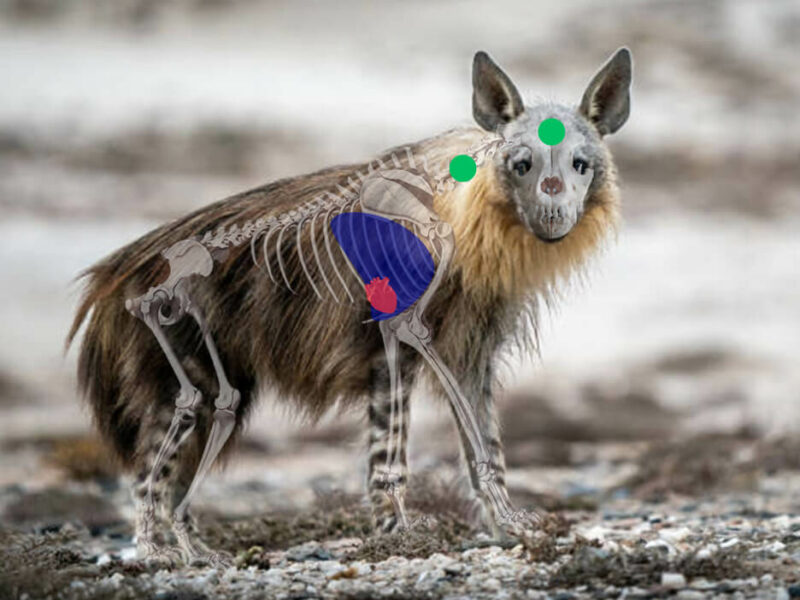
As these cats are nocturnal, they are often hunted in conjunction with other night critters such as honey badgers and porcupines. Hyena hunting is also becoming a sought-after African hunting safari.
When hunting African cats, the hunter needs to remember that these cats have vitals that sit just a little further back and lower than when hunting African plains game.
The hunter will need to visualize the exact location of the heart and lungs and target the bullet correctly, no matter the circumstance. Cats also have a habit of stretching or either reaching up for bait or lying down. The hunter must know the exact position of the heart within the chest cavity under any circumstance or position.
Managing Pressure When the Crosshairs Settle
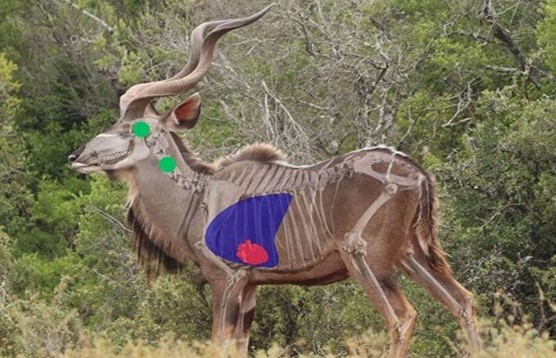
Game hunting for African plains game antelope needs a little more work if the hunter is used to hunting outside of Africa.
While the anatomy of African antelope is similar to species within the USA or those found in Europe, there are exceptions, and the hunter would be wise to investigate and have a few lengthy discussions with a professional hunter.
The entire hunting safari revolves around the moment that the hunter squeezes the trigger. Besides waiting for the desired game hunting trophy to possibly turn into the correct position, the hunter still needs to personally be able to contend with:
- Excitement
- Fatigue
- Ensuring that breathing is regulated
- Panic that the animal may turn out of position or bolt
Under such pressure, hunters when hunting humped shoulder antelope such as Wildebeest or Gemsbuck (Oryx) often forget to factor in the height of the shoulder, resulting in shot placement that is too high.
An African hunting safari is not easy and comes with many challenges. When hunting from a position of a blind, or a similar structure, the hunter can relax and will wait for the animal to enter the shooting area. This method of game hunting is vastly different from walking and stalking an animal that may be on high alert, creating even more pressure for the hunter.
On a recent hyena hunting safari in Limpopo, South Africa we spent seven days and nights travelling hundreds of miles. It is stressful realizing that all the effort by outfitters and professional hunters, can only be converted into a success based on the perfect shot placement, which has to be taken “in the heat of the moment.”
On a recent safari while hippo hunting in Namibia's Caprivi Strip (Zambezi Region), I was dead adamant about shooting a bull hippo out of the water at roughly 30 yards. That was the plan, and that is what we had mentally prepared and practiced for.
A week before the hippo hunt, the outfitter called and asked if did not want to cancel and arrange another date as the entire area was still under water after the heavy summer rainfall.
Changing the dates of the safari was not an option. I was dead set on executing the plan of action. Anyway, for days we scouted the area looking for a suitable hippo. We just could not find any on land. We even considered going to a local chief and considered the possibility of hunting a hippo at night using a few various techniques. We chose not to.
The reality began to dawn on me that this hippo hunt was going to take place in the water. My first concern was that I would make use of the outfitter’s .375 rifle which was not my own. In the water, the only shot we would have would be a frontal brain shot or a side brain shot. The target, which sits either between the eyes or from the side between the ear and eye, is tiny. I had recently recovered from a shoulder surgery so had not practiced as much as I should have, especially for a brain shot. Additionally, the target moves and bobs around in the water, adding to the pressure.
In the back of your mind, the hunter still considers how much hard-earned has been spent on the hunting safari, but what can you do? Nothing, you are committed, and I was certainly not planning to go home without my trophy hippo!
After lining up on one or two hippos in the water, I was not feeling great about the shot (must have been a mental block) and on both occasions decided not to squeeze the trigger.
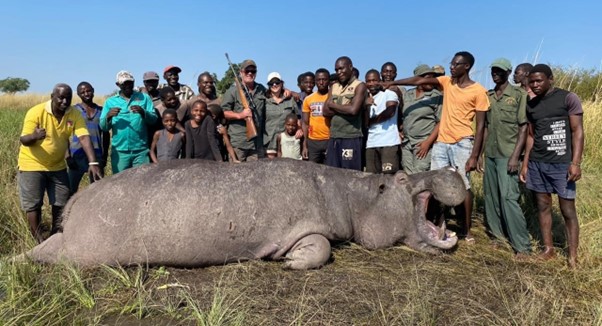
A couple of days before the end of the safari, at about 350 yards out we came across a hippo partially out of the water. Pulling our mokoro to the embankment, I raced up the embankment, lay on what felt like a ninety-degree angle, and focused on shot placement.
I was shaking so much, that wisely I decided to place that first shot on hold. The hippo moved into position, and I squeezed off the shot. The hippo sank into the water, out of sight. I cannot explain the amount of stress I felt waiting for the hippo’s stomach contents to create the gasses needed to make it float.
Eventually, the hippo appeared from the depths, and we recovered the carcass. My bullet was nowhere near the brain, and I had severed the spinal cord, about a foot away from the target area (Such things one should not confirm in writing!😊). While I was delighted to have the hippo, poor shot placement got me worked up.
An inch either way, and my hippo, along with my safari expenses, would have disappeared into the Chobe River, running parallel to my levels of failure. It worried me to such an extent, that we have in fact booked another hippo hunting safari. This time it is during the dry season. I think as I get older, my shot placement is getting worse, so I need to have larger animals out of the water and opt only for the preferred heart shot!
Night Hunting Requires Different Preparation
Hunting nocturnal critters is quite different from hunting African big game during daylight hours. We recently went on a hyena hunting safari, searching for a spotted hyena.
Again, my bad, I was not 100 percent prepared for the hyena hunt. Having been working day and night, the hyena hunting trip was supposed to be more of a holiday, but that is a story for another day
I was under the impression we would be baiting hyenas and shooting under artificial light. Yes, I should have checked way before. Regardless, it turned out that we were going to be using night vision, a first for me. I really battled with the optics and later found out that because of being far-sighted, the images appeared better when using my glasses. Bottom line, if planning a hunting safari for night critters, get some practice in before the hunt.
Shot placement is a little trickier when using this kind of equipment and practice is needed. I have subsequently purchased my own night vision scope to ensure that this type of error does not reoccur in the future.
The Moment Every Hunter Remembers
Every African safari eventually comes down to a decision measured in seconds. Good shot placement remains one of the foundations of ethical hunting, but confidence, preparation and the ability to stay calm under pressure are what allow hunters to apply that knowledge when the moment finally arrives.
The stories shared throughout this article all point to the same conclusion. No two hunts unfold in exactly the same way. Conditions change, opportunities appear unexpectedly and even the best-laid plans sometimes need to adapt. The hunters who consistently succeed are usually those who prepare thoroughly, trust their Professional Hunter and remain patient enough to wait for the right shot.
If you are planning one of our African Hunting Trips, take the time to prepare before leaving home. Learn the anatomy of the species you intend to hunt, spend time behind your rifle and arrive ready for the moment that every hunter remembers long after the safari has ended. When that opportunity finally presents itself, preparation often becomes the difference between simply taking a shot and making one count.
Frequently Asked Questions
Should I practise from shooting sticks before my African safari?
Absolutely. Most African hunting shots are taken from shooting sticks rather than from a bench or prone position. Becoming comfortable shooting from sticks before arriving in camp helps build confidence and allows you to focus on the shot rather than the equipment.
Is shot placement different for every African game species?
Yes. Although many species share similar heart and lung positions, there are important differences depending on the animal being hunted. Hunters should always study the anatomy of the specific species before travelling and discuss shot placement with their Professional Hunter before the hunt begins.
What if the animal does not present the perfect shot?
One of the most important hunting skills is knowing when to wait. Animals move constantly, branches appear where there were none a moment before and the perfect opportunity can disappear just as quickly as it arrives. Rushing a marginal shot increases the risk of wounding the animal and can jeopardise the entire safari. Patience is often one of the hunter's greatest strengths.
Why do Professional Hunters sometimes recommend a different shot than I expected?
Every hunting area, species and situation is different. Terrain, vegetation, water, animal behaviour and safety considerations may require a different approach from the one originally planned. Experienced Professional Hunters adapt to local conditions and will recommend the safest and most effective shot available at that moment.
Does the pressure ever become easier?
Even experienced hunters feel pressure when the moment finally arrives. The difference is that experience, preparation and confidence help manage those emotions. Spending time practising, understanding the species and trusting your Professional Hunter all contribute to making better decisions in the field.
What is the biggest mistake hunters make before an African safari?
Many hunters focus entirely on rifles and equipment while overlooking preparation. Understanding shot placement, practising from shooting sticks, becoming familiar with your rifle and discussing different hunting scenarios with your Professional Hunter before the safari all help reduce stress when the opportunity finally presents itself.
Should I always take the first opportunity at a trophy animal?
Not necessarily. Ethical hunting is about taking the right shot rather than the first shot. If the angle is poor, the animal is moving or visibility is compromised, waiting for a better opportunity is often the correct decision. Good judgement is one of the most valuable skills a hunter can develop.
How can I prepare for the mental pressure of an African safari?
Preparation begins long before you arrive in Africa. Practice under realistic conditions, know the anatomy of the species you intend to hunt, listen carefully to your Professional Hunter and accept that every hunt unfolds differently. Confidence comes from preparation rather than hoping everything goes perfectly.
Is an African hunting safari physically demanding?
The physical demands depend on the species, terrain and hunting destination. Some hunts involve long days of walking and stalking through rugged country, while others may require less strenuous approaches. Discussing the expected terrain, daily distances and hunting style with your outfitter before travelling allows you to prepare properly and enjoy the safari with confidence.
What Is the Best Shot Placement for African Game?
Although shot placement varies between species, the heart and lungs are generally the preferred target for most African plains game. Dangerous game and specialised species may require different aiming points depending on the animal, the angle presented and the hunting conditions. Before travelling to Africa, hunters should study the anatomy of each species they intend to pursue and discuss shot placement with their Professional Hunter before the hunt begins.
Author
Pierre van Wyk is the co-founder of Game Hunting Safaris and has hunted extensively across Southern and East Africa. Having pursued both dangerous game and plains game in numerous African countries, he shares practical insights drawn from first-hand experience to help hunters better prepare for their own African safaris.