
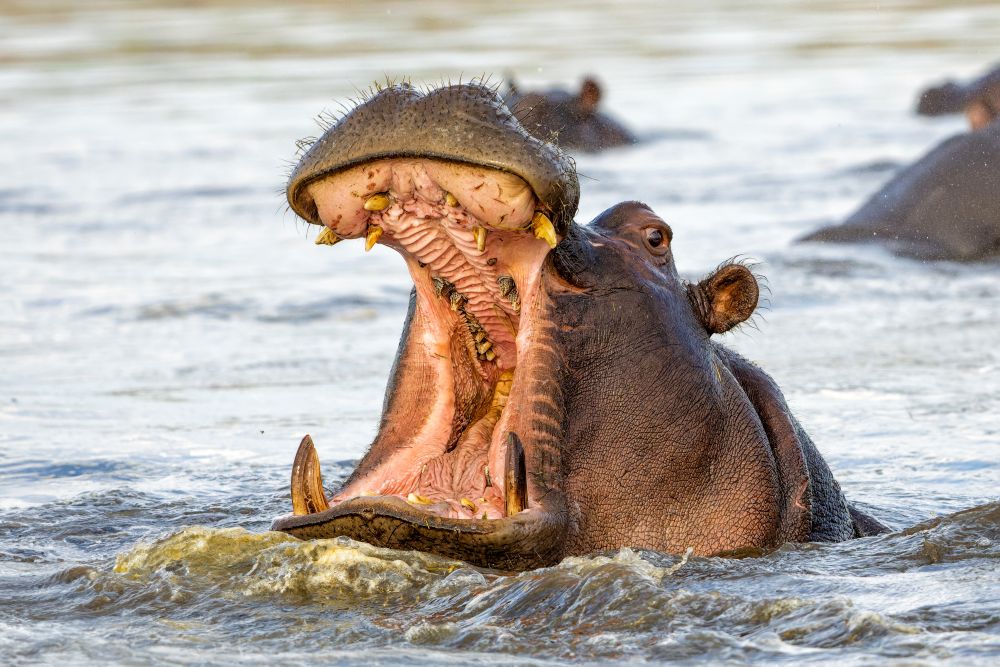
A pod of hippos is lying in the water fifty yards away. Several heads are visible, and one bull immediately looks bigger than the others. The Professional Hunter watches him through binoculars, waiting for another look.
Then the bull disappears.
A minute later, three hippos surface almost together. One opens his mouth. Another moves farther out into the water. The big bull appears again near the edge of the pod. Or at least you think it is the same bull.
This is one of the challenges that makes Hippo Hunts more interesting than they may first appear. Finding hippos can be relatively easy in the right area. Identifying a mature bull, keeping track of him among several other animals and waiting until there is no doubt about which hippo you are looking at can take considerably longer.
Most of the animal is hidden below the surface. Hippos regularly submerge, and in deeper water they can move considerable distances while walking along the bottom before surfacing again. Other animals in the pod are doing the same thing, and it is not always easy to know exactly how many hippos are in the water. A pod that looked simple to understand through binoculars can become confusing surprisingly quickly.
Patience and Professional Hunter judgement matter here. There may be plenty of hippos in front of you, but only one animal has been selected.
The first job is not getting the rifle ready. It is making certain you know which hippo you are hunting.
[DYNAMIC-BLOGTABLEOFCONTENT]
Why It Is So Easy to Lose the Right Bull
Once a mature bull has been identified, keeping track of him can be very difficult. A hippo disappears below the surface, moves underwater and may come up some distance from where you last saw him.
In deeper water, several animals can be doing this at the same time. One disappears, two surface farther along the pool, another comes up behind them and suddenly the pod looks completely different. It may not even be clear exactly how many hippos are in the water.
The bull that surfaces closest to where the selected animal disappeared is not necessarily the same hippo. Assuming it is can quickly lead to the wrong animal being followed.
This is where the binoculars stay up. The PH watches where the bull goes down, where he surfaces and which animals are around him. The size and shape of the head can help, while an open mouth may provide another look at the tusks. Sometimes enough of the body becomes visible to add another piece to the picture.
The more identifying features the PH can establish, the easier it becomes to pick the same bull out again when several hippos are moving around the pod.
Other hippos make the job more difficult. Animals can bunch together, move across one another or disappear beneath the surface at almost the same time. A bull that was easy to identify a few minutes earlier can become just another head among several others.
Sometimes the PH picks him up again immediately. Sometimes everyone waits until there is another clear look.
If there is any doubt about which hippo has surfaced, there is no reason to rush. The bull has not gone anywhere simply because the rifle is ready.
A Big Head Does Not Always Tell the Whole Story
From a distance, the biggest-looking head in the pod can attract attention. But judging a hippo from what appears above the water is not always straightforward.
Most of the animal remains hidden, and the amount of head showing can change depending on how the hippo is lying in the water. Distance and angle can also make one animal look considerably larger than another, particularly when the hippos are not sitting side by side.
The PH will look for more than head size alone. An open mouth can provide a better look at the tusks, while brief views of the neck, shoulders and body can help build a clearer picture of the animal. Scars, damaged ears and other marks from fighting may also help confirm that the bull being watched is still the same one selected earlier.
This takes time. A bull that looks impressive on his first appearance may look quite different after another ten or fifteen minutes of observation. Another animal that initially attracted little attention may provide a better look when he changes position.
The objective is not to decide from one good view. It is to keep watching until the PH has enough information to be comfortable with the bull.
Once that decision has been made, another problem remains: knowing which hippo to hunt does not mean there is a shot.

Knowing the Bull Does Not Mean You Have a Shot
Identifying the right bull is only part of the job. He still needs to give the hunter a clear and suitable opportunity.
That can take time in a pod. Another hippo may be directly behind the bull, a cow may move across him or several animals may bunch together with little more than their heads showing above the water. Even when the selected bull surfaces in the right place, he may disappear again before the hunter is ready.
The angle matters too. A hippo facing the bank presents a different shot from one turned sideways or moving through the water. The PH needs to know exactly which animal he is looking at and be satisfied with the presentation before giving the hunter the go-ahead.
Shooting a hippo in water can be particularly challenging. The aiming point can feel small on an animal that is constantly rising, sinking and moving with the water. Through the scope, it can feel a little like trying to hold on a golf-ball-sized target sitting on something that never quite stops moving.
This is where patience becomes important. The rifle may already be on the sticks and the bull may be clearly identified, but there is nothing wrong with waiting for a better presentation. A poor shot on a hippo can turn a straightforward hunt into a difficult recovery, especially if the animal reaches deep water or crosses into an area where following it becomes complicated.
When the opportunity appears, there may not be much time. The hunter needs to be ready, understand the correct Hippo Shot Placement and listen carefully to the PH. Hours of watching can come down to a few seconds when the right bull surfaces in the right position.
This is also one reason some hunters prefer an opportunity when a hippo is out of the water. More of the animal is visible, the aiming point can be easier to judge and the constant movement of a head rising and falling in the water is removed from the equation. A hippo lying in a pool can look like an easy target from the bank, but shooting one cleanly in the water is anything but simple.
Knowing which hippo you want is one decision. Knowing when you have the right shot is another.
Sometimes You Just Have to Wait
You can spend hours watching the right bull and still never get the opportunity you need. He may stay buried in the middle of the pod, surface with another hippo behind him or keep showing himself at an angle the PH does not like.
There is a temptation at this point to make something happen. You have found the bull, the rifle is ready and everyone has been watching the same stretch of water for what feels like forever.
But the hippos do not care how long you have been sitting there.

Sometimes the best decision is to put the rifle down and keep watching. The bull may eventually move away from the other animals, change position or surface where there is no doubt about the shot. If he does not, there may be another opportunity later in the day or the following morning.
Hippo hunting can be strange in that way. Very little appears to be happening, yet everyone is watching for one small change in the pod.
Then suddenly the opportunity is there.
Once the bull has been positively identified and the hunter knows exactly which animal he is following, there may be little time for another discussion when he surfaces correctly. As one PH repeatedly put it to me while hunting hippo: if you're comfortable, take the shot.
The problem is that when hunting hippo, you are rarely completely comfortable. The head is moving, the angle changes and the bull may only give you a few seconds before disappearing again. If the animal has already been wounded, the pressure increases further. Every opportunity to reach deep water, thick cover or move into an area where recovery becomes difficult matters.
You can wait a long time for a hippo to give you the right opportunity. When it finally comes, you need to recognize it.
The Hippo in Your Scope Must Still Be the Same Bull
By the time the rifle comes up, the hunter may have been watching the same bull for hours. He has seen the tusks, noticed the shape of the head and perhaps picked out a scar, damaged ear or another mark that helps identify the animal.
But hippos keep moving.
There is a reason mature bulls are often heavily scarred. Dominant bulls are continually being challenged by other males, and fighting and chasing within a pod can change the position of several animals quickly. While two bulls are fighting, there is certainly no sensible opportunity for a shot.
The bull disappears below the surface. Another hippo crosses behind him. Two animals surface close together and several members of the pod change position. What was obvious five minutes earlier can quickly become uncertain again.
This is where assumptions have no place. The hippo that surfaces where you expect the bull to appear is not automatically the same animal. If the PH loses track of him, the hunter may be told to come off the rifle while everyone finds the bull again.
Sometimes that takes thirty seconds. Sometimes it takes longer.
Once the bull has been positively identified again, the hunter can get back onto the rifle and wait for the next suitable opportunity. If there is still doubt, the hunt simply goes back to watching.
The fact that you were certain which bull you were watching five minutes ago does not mean you are certain which bull is in the scope now.
That, more than anything, explains why finding a pod of hippos and hunting the right hippo are two very different things.
Hippo is one of Africa's classic Big Game Hunting species, but the hunting area, water conditions and experience of the Professional Hunter can make a considerable difference to the hunt. For anyone considering hippo as part of a wider African safari, current African Hunting Trips can be compared around the species available, destination and type of safari you want to hunt.
Frequently Asked Questions About Hippo Hunting
How do you tell a bull hippo from a cow?
It is not always easy, especially when only the head is visible. Mature bulls generally have broader, heavier heads and larger tusks, while old males may carry scars from fighting with other bulls. A Professional Hunter will normally watch several animals and compare them before deciding which bull to pursue.
Why is it so difficult to keep track of one hippo in a pod?
Hippos spend much of their time below the surface and can move underwater before appearing again. In deeper water, several animals may disappear and surface in different positions at the same time. Once a pod starts moving around, the bull you were watching can quickly become difficult to identify.
How long does it take to select the right hippo bull?
Sometimes a mature bull can be identified quickly. On another hunt, the PH may watch a pod for hours before being satisfied. The amount of the animal visible, the number of hippos in the pod, water depth and how frequently the bull provides a good look can all affect the decision.
Is it better to hunt a hippo in or out of the water?
Both opportunities occur, but some hunters prefer taking a hippo on land because more of the animal is visible and the aiming point can be easier to judge. A hippo in water may look like an easy target, but the head is continually rising, sinking and moving, which can make accurate Hippo shot placement more difficult.
Why can shooting a hippo in water be difficult?
The animal is large, but the precise aiming point is much smaller than its overall size suggests. Only part of the head may be exposed, and it rarely remains completely still. The hunter also needs to be certain that the hippo in the scope is still the bull that was selected.
What happens if a hippo is wounded in the water?
A wounded hippo can make recovery considerably more difficult, particularly if it reaches deep water, thick vegetation or moves away from the original position. The situation can also become dangerous. This is one reason waiting for a clear shot and following the PH's instructions are so important when Hunting Hippo.
What should a first-time hippo hunter expect?
Expect to spend more time watching than you may imagine. Finding hippos does not mean finding the right bull, and finding the right bull does not necessarily mean getting a shot. Good binoculars, patience and being ready when the opportunity appears are all important.
About the Authors
Pierre and Tamlyn van Wyk are the founders of Game Hunting Safaris and have firsthand experience hunting hippo in Africa. Their time in the field has given them practical insight into judging mature bulls, shot opportunities and the challenges of hunting hippo around water.