
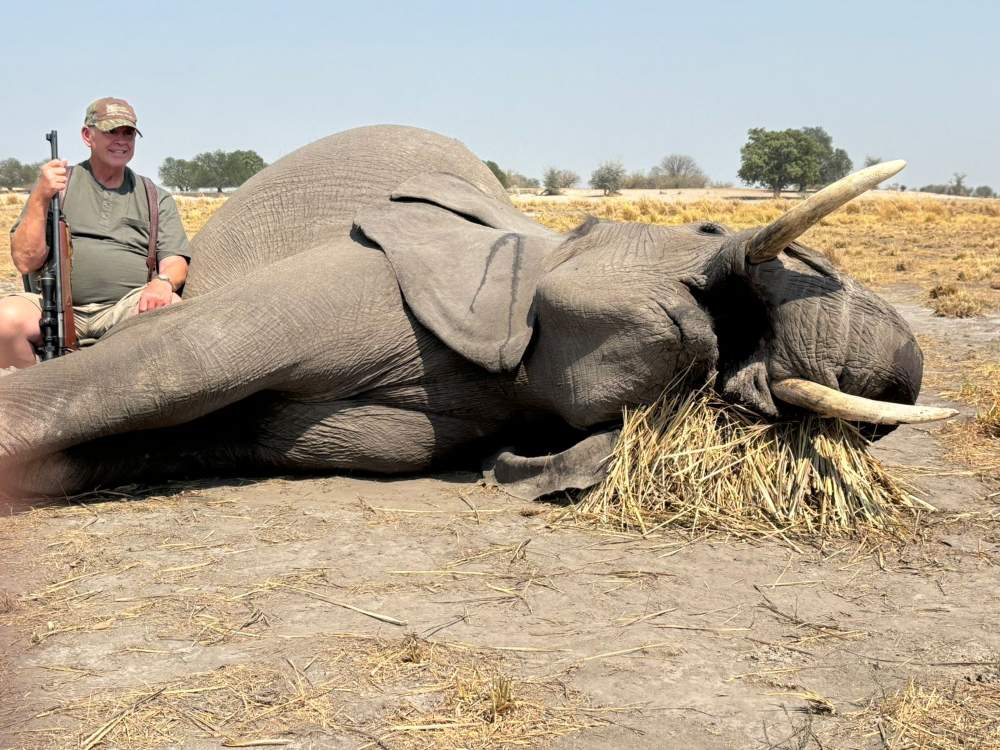
This hunt in Namibia’s Zambezi Region was one that will stay with us forever. While spending time in the area, we had the privilege of meeting Paul and his wife Barbara from the United States, who had travelled to Africa to fulfill a lifelong dream of experiencing an elephant hunt in Namibia. What followed became far more than simply another safari — it was a powerful reminder of why these hunts mean so much to hunters from around the world.
The Zambezi Region, formerly known as the Caprivi Strip, remains one of southern Africa’s last truly wild areas for Zambezi elephant hunting safaris. Vast floodplains, winding river systems, thick vegetation, and free-ranging elephant herds create an unforgettable setting for hunters pursuing one of Africa’s most respected dangerous game animals. For those fortunate enough to experience it, elephant hunting in the Zambezi becomes far more than the pursuit of a trophy — it becomes part of the story of Africa itself.
[DYNAMIC-BLOGTABLEOFCONTENT]
Key Takeaways
Namibia’s Zambezi Region remains one of southern Africa’s most immersive elephant hunting destinations, with vast floodplains, winding river systems, thick vegetation, and free-ranging elephant herds creating a unique safari environment. Elephant hunting in the Caprivi offers a very different experience from Namibia’s drier hunting regions, with water-based ecosystems, dense bushveld, and exceptionally high dangerous game densities shaping the hunt.
Seasonal elephant movement between Botswana and Namibia contributes to outstanding free-range elephant hunting opportunities throughout the Zambezi corridor, while traditional walk-and-stalk hunting methods continue to challenge even experienced hunters. During our time in the region, we witnessed first-hand how conservation hunting, local communities, and dangerous game safari traditions remain deeply connected throughout these remote wilderness areas.
During the wet season, parts of the Caprivi can transform completely as floodwaters spread across the floodplains and low-lying areas. In some concessions, roads become inaccessible and mokoros and boats are occasionally used instead of vehicles to move through sections of the hunting area. The landscape changes dramatically between seasons, giving hunters two very different safari experiences depending on the time of year.
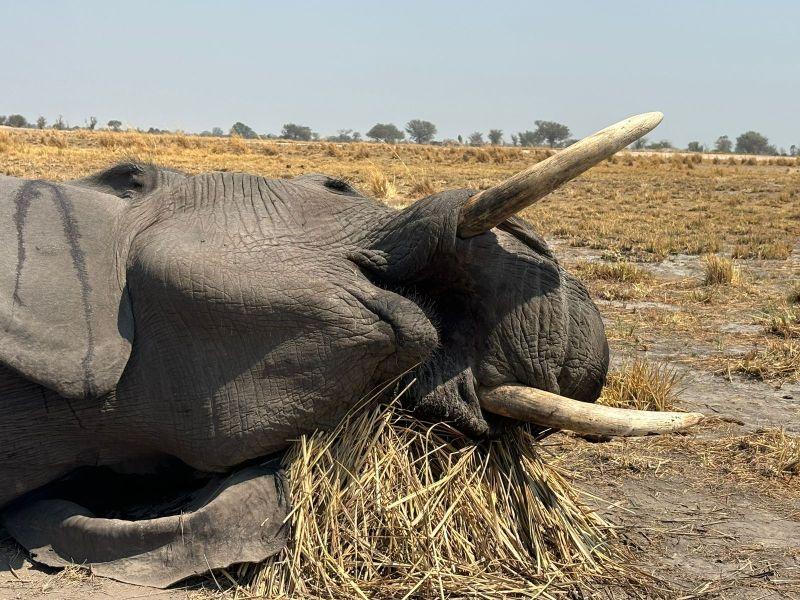
Hunting Elephants in the Zambezi Floodplains
The Zambezi Region offers a completely different elephant hunting environment compared to many of Namibia’s drier hunting areas. Dense vegetation along the river banks, winding channels, seasonal floodplains create challenging conditions for both hunters and trackers pursuing elephant bulls through the area.
During the wet season, parts of the Caprivi can transform almost completely as floodwaters spread across the floodplains and low-lying areas. In some concessions, mokoros and boats may even be used instead of vehicles to move through sections of the hunting area, creating a safari atmosphere unlike anywhere else in Namibia.
The region’s permanent water systems support exceptionally high dangerous game densities, with elephant, buffalo, hippo, and crocodile all thriving throughout the river corridors. Buffalo bulls regularly move across from Botswana through the Chobe systems, while elephant herds constantly travel between international boundaries, creating outstanding free-range hunting opportunities throughout the Zambezi corridor.
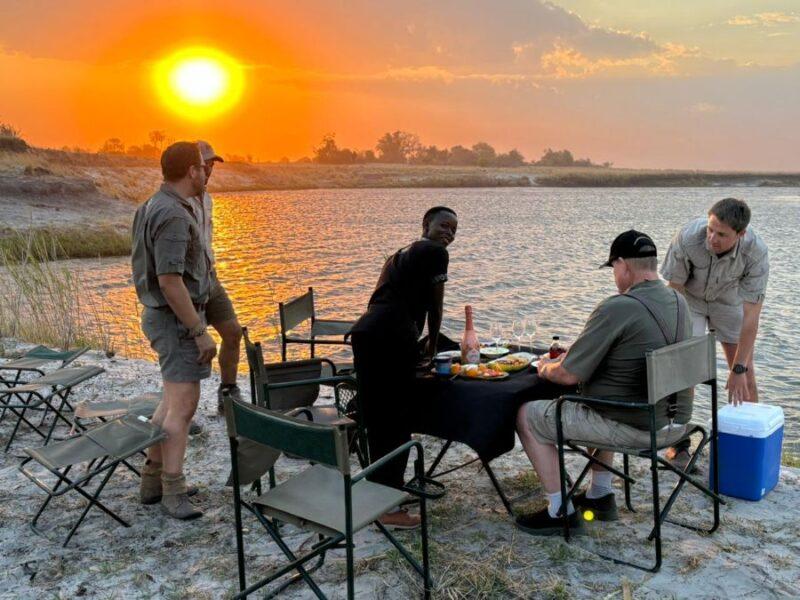
Beyond the Hunt
One of the unique aspects of spending time in Namibia’s Zambezi Region is the atmosphere surrounding the safari itself. Between hunts, visitors can experience boat cruises along the river systems, exceptional birdlife, nearby national parks, and even day trips toward Victoria Falls and Chobe. Unlike many of Namibia’s drier hunting regions, the Caprivi combines dangerous game hunting with lush scenery, permanent water, and a very different safari atmosphere from what many hunters expect when visiting Namibia for the first time.
Early mornings in the Zambezi carried a very different atmosphere from many other hunting areas in Namibia. Hippos could often be heard grunting through the river systems before sunrise, while fresh elephant tracks cut through the damp floodplain sands surrounding camp. As the mist slowly lifted off the water, the bush would come alive with bird calls, distant buffalo movement, and the sounds of camp beginning to stir for another day in the African wilderness.
Evenings in the Caprivi brought a completely different kind of beauty. The sunsets over the river systems were nothing short of spectacular, with deep orange and crimson skies reflecting across the floodplains while elephants moved silently through the reeds in the fading light. Combined with the permanent water, thick vegetation, and constant wildlife movement, the Zambezi created a safari environment that felt truly wild, immersive, and unpredictable.
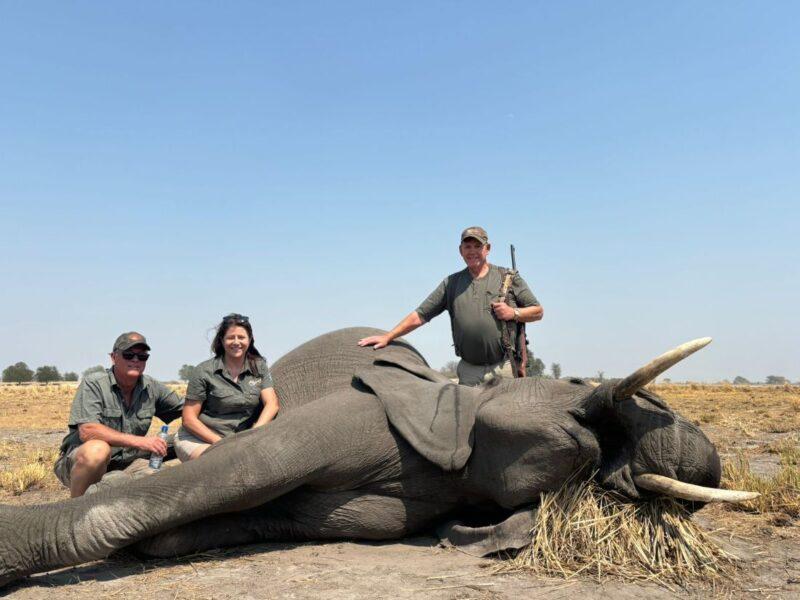
An Elephant Hunt in the Zambezi
After completing our buffalo and hippo safari in Namibia, we were invited to accompany Paul as observers on his elephant hunt in the Zambezi Region. Watching the hunt unfold across the open floodplains of the Zambezi was a completely different experience from many traditional elephant safaris elsewhere in southern Africa. With very little cover available in parts of the concession, closing the distance on elephant bulls without being detected became one of the greatest challenges of the hunt.
One of the most fascinating aspects of the hunt was witnessing the unusual “tortoise formation” method used by the hunting party while approaching the elephant bulls across the open floodplains. Arms linked together and moving slowly as a single shape across the landscape, the group would periodically crouch and freeze whenever the elephants became alert. Despite the openness of the terrain, the technique allowed the hunters to close the distance remarkably effectively without alarming the herd.
During our time together in the Zambezi, Paul shared that this safari had long been a personal dream of his. Facing serious illness at the time, the opportunity to experience an African elephant hunt alongside his wife Barbara carried a meaning far beyond the trophy itself. One of the professional hunters, Philip, remarked during the safari that their role extended beyond simply guiding dangerous game hunts — they were “dream makers,” helping hunters fulfill experiences they had often waited a lifetime to achieve.
In many parts of the Zambezi Region, Botswana lies only a short distance away across the Chobe River systems, and an elephant crossing the boundary can mean the loss of the trophy entirely. It added another layer of intensity to an already unforgettable safari experience.
Pressure to Process: Giving Back to the Local Communities
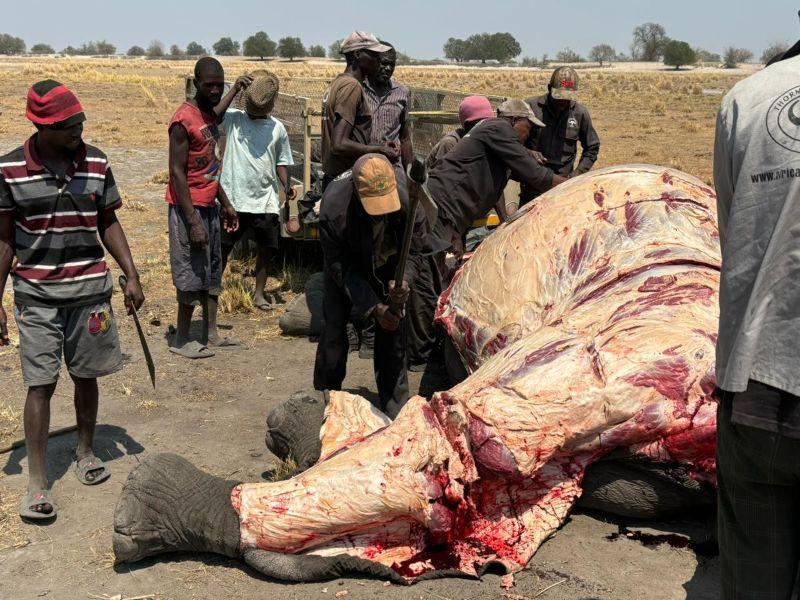
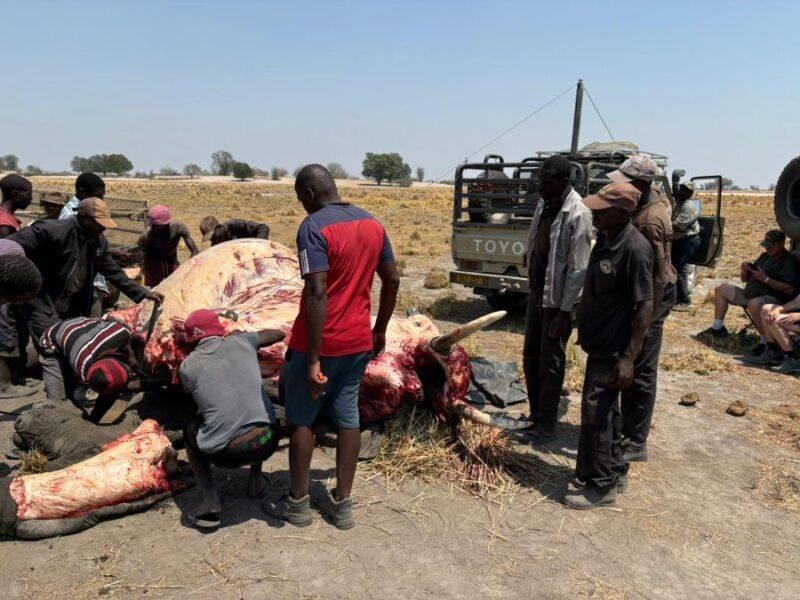
In the intense Zambezi heat, the pressure on skinners and camp staff becomes enormous. Knives, machetes, and vehicles move constantly as teams work against time to process and distribute the meat before spoilage becomes a risk. In these remote areas, where temperatures can climb rapidly during the day, efficient teamwork and organization become absolutely critical once an elephant is down.
In terms of keeping with this obligation, the government will allocate a quota to each conservancy, based on the size thereof. The animals are harvested by clients of the African outfitters. Communities benefit by not only having a portion of the trophy paid by the international hunters but also with meat proceeds.
If you have ever been hunting in Africa, you will know that many, many local communities depend on this meat to provide fresh protein for their people.
Conclusion
As a hunting destination, Namibia offers international hunters the best of both worlds — modern accessibility combined with truly wild and untamed safari experiences. Few places in Africa still provide the sense of wilderness found in the Zambezi Region, where vast floodplains, roaming elephant herds, river systems, and remote conservancies combine to create an unforgettable dangerous game hunting safari.
For Paul, this elephant hunt in the Zambezi became far more than simply pursuing one of Africa’s Big 5. It was the fulfillment of a lifelong dream shared alongside his wife Barbara in one of Africa’s last truly wild hunting areas. As Philip remarked during the safari, professional hunters often become “dream makers,” helping hunters experience moments they may have waited a lifetime to achieve.
Hunters interested in comparing Namibia’s major elephant hunting regions can also explore our guide to Caprivi elephant hunting safaris and Bushmanland hunting areas. For those wanting to learn more about combining hunting with travel opportunities in the region, read our article on Namibia elephant safari experiences and visitor activities.

Frequently Asked Questions
What makes elephant hunting in Namibia’s Zambezi Region unique?
Unlike many of Namibia’s drier hunting areas, the Zambezi Region offers floodplains, permanent river systems, thick vegetation, and exceptionally high dangerous game densities. The area’s free-ranging elephant populations, combined with the constant movement of wildlife across international boundaries, create one of Africa’s most immersive wilderness hunting experiences.
When is the best time for elephant hunting in the Caprivi Strip?
Elephant hunting in the Zambezi Region can differ greatly depending on seasonal conditions and rainfall patterns. During the dry months, elephants concentrate more heavily around permanent water sources and river systems, while wetter periods can see herds spreading across the floodplains and surrounding conservancies. Cross-border elephant movement between Botswana and Namibia also plays an important role in hunting conditions throughout the year.
Why is stalking elephants in the Zambezi so challenging?
Large sections of the Zambezi floodplains are surprisingly open, often offering very little natural cover for hunters trying to approach elephant bulls undetected. Combined with shifting winds, wet terrain, and highly alert elephants, closing the distance can become extremely difficult, which is why experienced professional hunters sometimes rely on unusual techniques such as the “tortoise formation” method described during our safari.
Can elephant hunts in the Zambezi Region be combined with other dangerous game safaris?
Yes. The Zambezi Region is one of southern Africa’s richest dangerous game areas, allowing hunters to combine elephant hunting safaris with buffalo hunts, hippo hunts, and crocodile safaris within the same wilderness ecosystem. The abundance of wildlife, permanent water systems, and remote conservancies make the area one of Namibia’s most diverse hunting destinations.
Author Note
Written by Pierre and Tamlyn, founders of Game Hunting Safaris, who have spent time hunting dangerous game throughout Namibia’s Zambezi Region, including buffalo and hippo safaris within the Caprivi floodplains. Their first-hand experience in the area, together with time spent alongside professional hunters, trackers, and local communities, continues to shape their passion for African hunting safaris and wildlife conservation.