
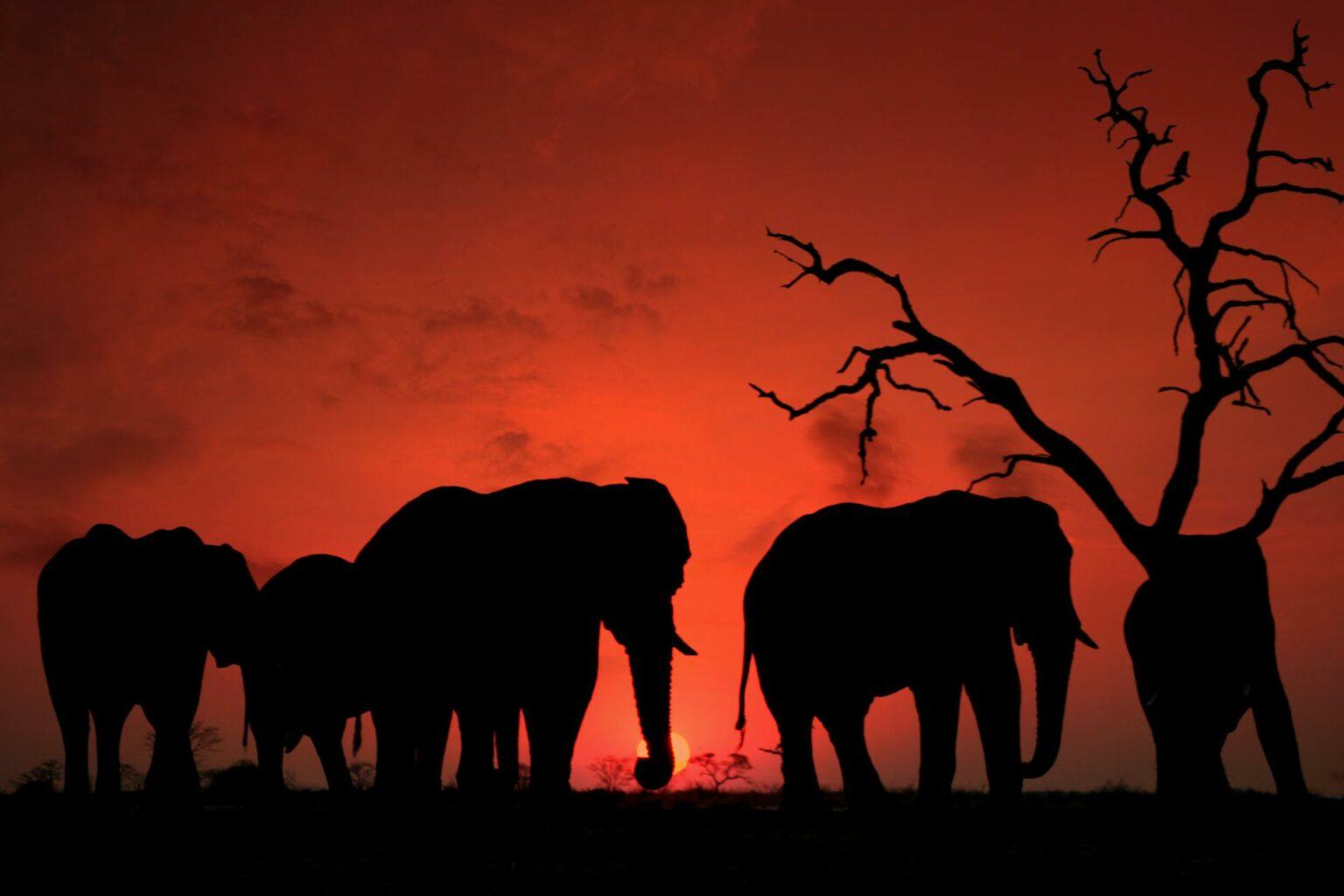
Namibia’s elephant hunting regions differ dramatically from one another, with the Caprivi Strip and Bushmanland offering two completely different safari environments. While both regions produce free-range elephant hunts in remote wilderness concessions, the terrain, vegetation, hunting style, and even average ivory size can vary significantly between the two areas.
Caprivi elephant hunting safaris, now more commonly associated with the Zambezi Region, are shaped by permanent river systems, seasonal floodplains, reed-lined channels, and thick riverine vegetation. Bushmanland elephant hunting, by contrast, takes place across dry Kalahari sands, scattered woodland areas, ancient camel thorn trees, and vast remote concessions bordering Botswana.
For hunters considering hunting elephants in Namibia, understanding the differences between these elephant hunting regions in Namibia can help determine which safari best matches their expectations and hunting style. Some hunters are drawn to the wetter floodplain conditions and the concentration of dangerous game found throughout the Caprivi, while others prefer the remoteness, drier terrain, and larger ivory potential often associated with Bushmanland elephant hunting safaris.
[DYNAMIC-BLOGTABLEOFCONTENT]
Following Elephants Across Two Different Landscapes
Many elephant hunting areas in both the Caprivi Strip and Bushmanland operate within communal conservancy systems, which involves working with local communities and concession agreements with hunting outfitters. These conservancies play an important role in maintaining large free-range wilderness areas across Namibia’s hunting regions.
Bushmanland remains one of Namibia’s more remote elephant hunting regions, with relatively little plains game compared to many other hunting areas in southern Africa. Outside of elephant hunting, the area is also well known for free-range leopard hunting, while species such as kudu, gemsbok, and other traditional plains game are encountered far less frequently across the dry Kalahari sands and scattered woodland concessions.
The Caprivi Strip, now more commonly referred to as the Zambezi Region, offers a very different safari atmosphere altogether. Permanent river systems and seasonal floodplains support a far wider variety of dangerous game and plains game species, with many hunters combining elephant hunting safaris with buffalo hunts, hippo hunts, crocodile hunts, or selected plains game opportunities. Species such as red lechwe, impala, warthog, and Burchell’s zebra are regularly encountered in parts of the region, particularly around the river systems and floodplain areas.
Elephant Hunting in the Caprivi Floodplains
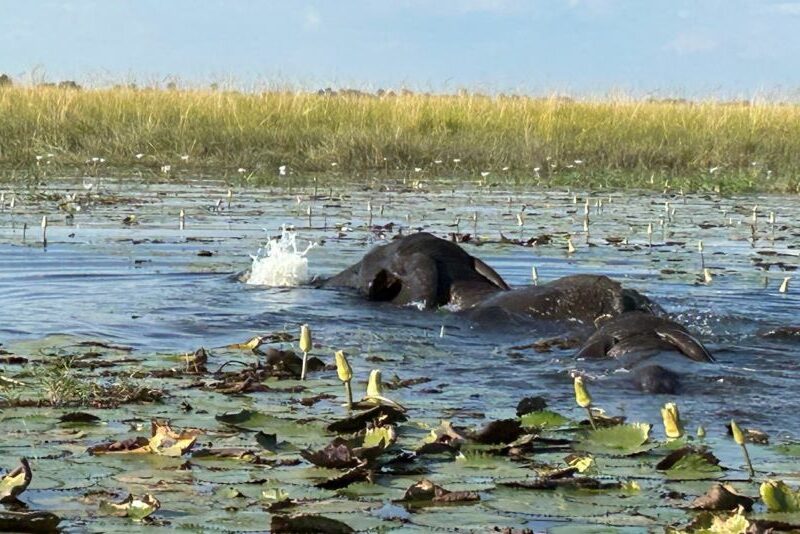
The Caprivi Strip, now more commonly referred to as the Zambezi Region, is Namibia’s wettest elephant hunting area. Seasonal floodwaters transform large sections of the region into floodplains, reed beds, shallow channels, and river systems that attract significant elephant movement throughout the year.
Bordering Botswana, Angola, and Zambia, the region forms part of one of Africa’s largest free-range elephant corridors, with elephant bulls regularly moving across international boundaries through the river systems and surrounding woodlands. Tracking elephants in the Caprivi often differs significantly from drier Namibian hunting regions. River channels, soft ground, thick riverine vegetation, and seasonal flooding can all influence the pace and style of the hunt. In some concessions, mokoros are still occasionally used to navigate flooded channels and estuary systems during parts of the season.
The Caprivi is also one of Namibia’s best-known dangerous game hunting regions, with buffalo, hippo, crocodile, and elephant often sharing the same floodplain systems throughout the safari area.
Elephant Hunting in Bushmanland
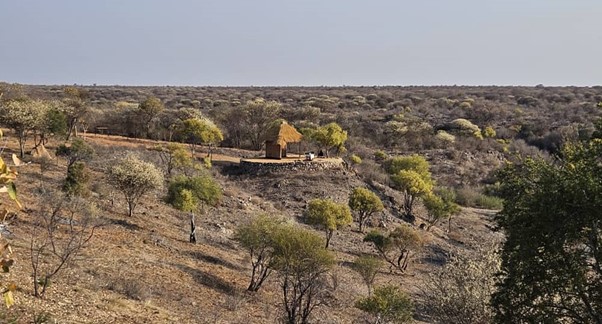
Bushmanland remains one of Namibia’s most remote elephant hunting regions, bordering Botswana across vast areas of dry Kalahari sandveld and scattered woodland terrain. Ancient camel thorn trees, deep sandy tracks, and long distances between water sources create a very different hunting environment compared to the wetter floodplain systems of the Caprivi Strip.
Elephant hunting in Bushmanland is entirely free-range, with many hunts focused on older bulls moving through communal conservancy areas and remote wilderness concessions. The region has also become increasingly well known for non-exportable and own-use elephant hunts, which are often more affordable than fully exportable trophy safaris.
Compared to the Caprivi floodplains, Bushmanland generally carries lower concentrations of plains game species, although free-range leopard hunting remains highly regarded throughout the region. For many hunters, the appeal of Bushmanland lies in its remoteness, larger ivory potential, and the physical challenge of tracking elephants across dry sandy terrain far removed from roads, rivers, and permanent settlements.
Comparing Namibia's Two Main Elephant Hunting Regions
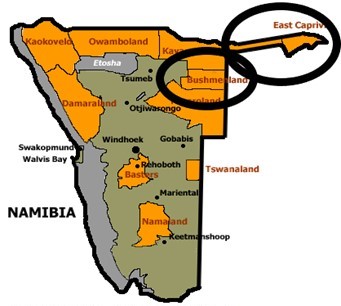
The map below highlights the geographical separation between Namibia’s Caprivi Strip, and the far drier Bushmanland concessions situated further west along the Botswana border. The sheer distances between these regions help explain why elephant hunting conditions, terrain, vegetation, and even trophy expectations can differ so significantly between the two areas.
While the Caprivi floodplains are shaped by permanent river systems and seasonal water movement, Bushmanland remains dominated by Kalahari sands, scattered woodland, and much drier tracking conditions across remote wilderness concessions.
Caprivi Strip vs. Bushmanland: Which Region Suits You Best?
Although both regions offer free-range elephant hunting in remote wilderness concessions, the overall safari experience differs considerably between the Caprivi Strip and Bushmanland.
Hunters who prefer greener environments, more varied terrain, and higher concentrations of game species often gravitate toward the Caprivi Strip. Visibility can vary dramatically depending on seasonal flooding and vegetation density, with hunting conditions frequently shaped by river systems, reeds, and changing water levels throughout the season.
Bushmanland offers a noticeably drier and more isolated hunting environment. Long tracking days through deep Kalahari sand, lower overall game densities, and larger expanses of remote concession land create a very different pace to the safari. The region has also developed a strong reputation for producing older bulls carrying heavier ivory, with elephant bulls exceeding 70 pounds still occasionally encountered under the right conditions.
For many American and international hunters, the decision ultimately comes down to personal preference. Some are drawn to the atmosphere and variety of the Caprivi floodplains, while others prefer the remoteness and harsher tracking conditions associated with Bushmanland elephant hunts,
Safari Camps in Caprivi and Bushmanland
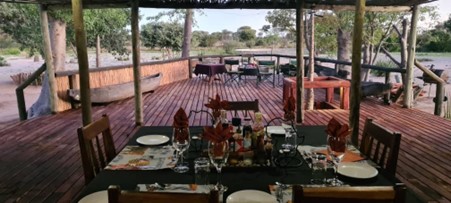
Elephant hunting safaris in both the Caprivi Strip and Bushmanland are conducted from relatively small remote camps positioned close to active hunting concessions. Most camps consist of permanent safari tents or simple bush lodges designed for hunters spending extended periods tracking elephant on foot through remote wilderness areas.
While these camps are often located far from towns and major infrastructure, most provide comfortable beds, hot water, daily laundry, and generator or solar-powered electricity. The atmosphere is practical rather than luxurious, with camps built around early starts, long tracking days, and evenings spent around the fire discussing the day’s hunting.
Camp environments between the two regions can feel very different. Caprivi camps are often situated near river systems and thicker vegetation, while Bushmanland camps tend to feel drier, quieter, and more isolated within the Kalahari sandveld.
Bushmanland feels far more isolated and removed from outside activity, with some concessions located vast distances from towns, major roads, or permanent settlements. In parts of the Caprivi Strip, particularly near the larger river systems, hunters may encounter fishing boats, houseboats, or tourist activity moving along sections of the Chobe River during the safari. Away from the main river systems, however, the hunting concessions themselves remain remote.
Why Are Bushmanland Elephant Tusks Often Larger?
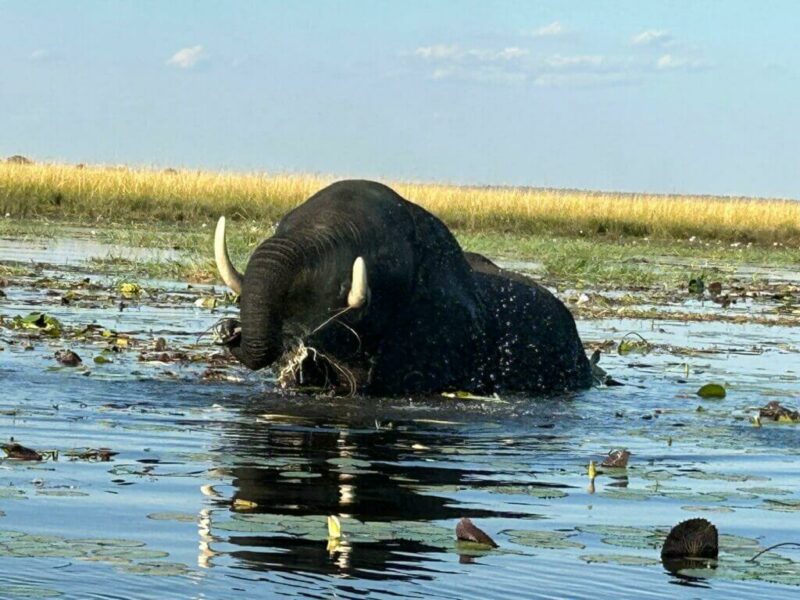
One of the more noticeable differences between hunting elephant in the Caprivi Strip and Bushmanland is the average ivory size encountered between the two regions. Elephant bulls moving through the Chobe and Caprivi floodplain systems often carry noticeably smaller tusks than some of the older bulls found in Bushmanland concessions further west.
Many hunters and PHs attribute part of this difference to regional soil composition and feeding conditions. Areas surrounding the Chobe River systems are believed to contain lower calcium and mineral concentrations than some drier inland regions, which may influence tusk development and density over time. As a result, tusks from elephants in the Caprivi and Chobe systems are often lighter and occasionally more brittle than the heavier ivory sometimes encountered in Bushmanland.
There are also noticeable physical differences in the elephants themselves. Bulls encountered around the Chobe floodplains often appear larger-bodied due to the abundance of water and nutrient-rich grazing available throughout the river systems, while some of the older Bushmanland bulls can appear leaner, heavier-headed, and more heavily tusked after years of surviving in far drier conditions.
For hunters focused primarily on heavier ivory potential, Bushmanland generally remains the preferred elephant hunting region in Namibia. While truly large tuskers have become increasingly uncommon across Africa, elephant bulls carrying ivory exceeding 60 pounds — and occasionally over 70 pounds — can still be encountered in parts of Bushmanland under the right conditions.
Do Elephants Behave Differently in Caprivi and Bushmanland?
Although difficult to scientifically measure, many professional hunters and trackers believe elephants in Bushmanland often behave differently to elephants encountered in the Caprivi floodplains and surrounding Chobe river systems.
Bushmanland elephants frequently spend years moving through isolated Kalahari concessions with very little regular human activity beyond occasional hunters, local communities, or anti-poaching patrols. Many hunters describe these older bulls as more cautious, unpredictable, and noticeably more aware of danger when tracked on foot through dry woodland terrain.
In contrast, elephants living closer to the Chobe River systems and Caprivi floodplains are often exposed to far higher levels of human activity. Fishing boats, houseboats, river traffic, safari lodges, and tourism activity are common along sections of the Chobe River, and many elephants in these areas appear far more accustomed to seeing people and boats moving along the waterways.
Some professional hunters also believe this isolation may partially contribute to why Bushmanland continues producing older age-class bulls carrying heavier ivory. Bulls surviving for decades in remote concessions with limited disturbance may simply live long enough to develop larger tusks than elephants living in busier river systems with greater human activity.
Why Bushmanland Hunts Usually Cost More
Bushmanland elephant hunts are more expensive than hunts conducted in the Caprivi Strip. Longer safari durations, lower elephant densities, larger concession areas, and the possibility of encountering heavier ivory bulls all contribute to the higher overall cost of hunting in the region.
A typical Bushmanland elephant hunt may run for up to 21 days, with safari prices often ranging between US$ 50,000 and US$ 75,000 depending on the area, quota availability, and trophy expectations. In contrast, many Caprivi elephant hunting safaris are conducted over shorter periods of approximately 14 days, with average costs often ranging between US$28,000 and US$36,000.
Bushmanland’s remoteness also plays a major role in safari pricing. Camps are often positioned vast distances from major towns and supply centers, requiring longer road transfers, additional fuel logistics, remote camp support, and larger operational costs to maintain hunting camps in isolated wilderness concessions.
Non-Exportable Elephant Hunts in Namibia
Non-exportable elephant hunts have also become increasingly popular in both Bushmanland and the Caprivi Strip, particularly among hunters more focused on the experience of hunting elephants in Namibia than shipping ivory trophies internationally.
These safaris are often significantly less expensive than fully exportable trophy hunts, because costs associated with export permits, shipping, taxidermy, and international trophy handling are removed from the overall safari package. Depending on quota availability and hunt duration, non-exportable elephant hunts in Namibia can sometimes be conducted from approximately US$20,000, with certain management elephant hunts occasionally priced lower.
Non-exportable elephant hunts conducted in Bushmanland cost more than comparable hunts in the Caprivi Strip due to the region’s remoteness, longer safari durations, additional fuel requirements, and the operational costs involved with maintaining remote hunting camps far from major supply centers.
Short-notice hunts also occasionally become available when outfitters need to fill remaining quota allocations before the close of the season, although these opportunities usually require hunters to travel at relatively short notice.
Why are Some Elephants Tuskless?
Tuskless elephants are most commonly female elephants and are generally believed to be linked to inherited genetic traits. Research suggests the gene responsible for tusklessness is associated with the X chromosome and can be lethal to male calves early in development, which is one of the reasons tuskless adult bulls are exceptionally uncommon.
In Namibia, certain elephant management hunts may specifically target older tuskless cows or non-exportable elephants as part of broader wildlife management programs within communal conservancy areas.
Tuskless elephants are also widely regarded by many professional hunters as being particularly unpredictable and aggressive when compared to older elephant bulls. Without ivory to command herd dominance or defend themselves naturally, tuskless cows are often described as more confrontational at close range, especially in thick vegetation or when encountered in breeding herds.
Caprivi Strip or Bushmanland - Which Elephant Hunt is Right for You?
Elephant hunting in Namibia offers two very different safari experiences, with both the Caprivi Strip and Bushmanland holding their own appeal depending on the type of hunt a hunter is looking for.
For some hunters, the floodplains, river systems, and concentration of dangerous game found throughout the Caprivi create the perfect African elephant hunting safari atmosphere. Others are drawn toward the remoteness, dry Kalahari terrain, and larger ivory potential often associated with Bushmanland elephant hunting concessions.
Neither region is necessarily “better” than the other. Much of the decision comes down to personal preference, physical expectations, trophy goals, safari duration, and budget. Some hunters may prefer shorter elephant hunting safaris in the greener Caprivi floodplains, while others are willing to spend additional time and money tracking older bulls through the isolated sandveld concessions of Bushmanland.
Regardless of which region is selected, both areas continue to produce some of the most respected free-range African elephant hunts available anywhere in southern Africa.
Hunters wanting to learn more about Namibia’s floodplain elephant hunting areas can also read our article on Unforgettable Elephant Hunting In Namibia’s Zambezi Region. For a broader overview of why Namibia remains one of Africa’s leading elephant hunting destinations, visit The Appeal Of Elephant Hunting In Namibia Explained.
First-Hand Experience Hunting Namibia’s Elephant Regions
Pierre and Tamlyn van Wyk, founders of Game Hunting Safaris, have personally hunted elephant in Bushmanland and dangerous game species including buffalo and hippo throughout Namibia’s Caprivi Strip. Their firsthand experience tracking dangerous game across both regions has helped shape the comparisons and observations discussed throughout this article.
Frequently Asked Questions About Elephant Hunting in Caprivi and Bushmanland
Is Bushmanland or the Caprivi Strip better for larger elephant tusks?
Bushmanland is regarded as Namibia’s stronger elephant hunting region for heavier ivory bulls. While truly large tuskers have become increasingly uncommon across Africa, older bulls carrying ivory exceeding 60 pounds — and occasionally over 70 pounds — are still encountered in parts of Bushmanland under the right conditions. Elephant bulls moving through the Caprivi and Chobe floodplain systems typically carry smaller average tusk weights.
Are elephant hunts in Bushmanland more physically demanding?
In most cases, yes. Bushmanland elephant hunting often involves long tracking days across deep Kalahari sand, dry woodland terrain, and remote concessions with fewer roads and lower elephant densities. Caprivi elephant hunting can also be physically demanding, particularly in flooded areas and thick riverine vegetation, although tracking conditions are often very different due to the wetter terrain and higher concentration of wildlife.
Can elephant hunts in the Caprivi Strip be combined with other dangerous game hunts?
Yes. The Caprivi Strip, now more commonly referred to as the Zambezi Region, is one of Namibia’s best-known dangerous game hunting areas. Many hunters combine elephant hunting safaris with Cape buffalo, hippo, crocodile, or selected plains game species depending on the concession, quota availability, and time of year.
Why are Bushmanland elephant hunts usually more expensive than Caprivi hunts?
Bushmanland elephant hunting safaris are typically longer and conducted across extremely remote concessions requiring extensive fuel logistics, remote camp support, and long road transfers. Lower elephant densities and the possibility of encountering older heavier ivory bulls also contribute to the higher overall safari cost compared to many Caprivi elephant hunting safaris.