
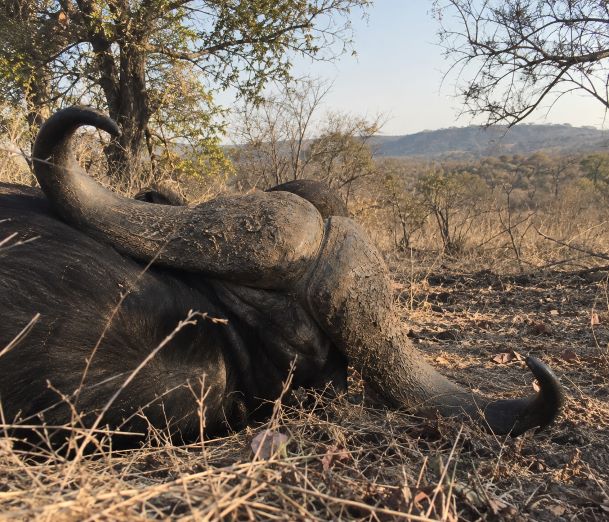
One Buffalo, Two, Three or Four, What Changes in Tanzania?
A hunter looking at Tanzania for the first time can be forgiven for finding the buffalo side of the safari slightly confusing. One hunt may be built around two bulls, another three, while a longer safari can sometimes include four. For hunters accustomed to thinking in terms of a single buffalo permit, the obvious question is: how can one hunter legally pursue several Cape buffalo on the same safari?
The answer lies partly in the way Tanzania structures its hunting safaris. Rather than every hunter simply buying the same buffalo permit, different safari packages allow different combinations of hunting days and species. That makes buffalo hunting in Tanzania rather different from many buffalo hunts elsewhere in Africa. A larger safari package can do more than simply change the length of the hunt; it can also change how many buffalo may form part of the safari.
But that is only the paperwork side of it.
Seeing two, three or four buffalo available on a safari does not mean the hunter should think of them as four identical opportunities waiting to be collected. The exact hunting area, buffalo numbers, quota available, the way the bulls are being found and, perhaps most importantly, what sort of buffalo the hunter is prepared to take all change the equation.
A hunter looking for several mature, solid bulls in productive buffalo country is setting a different objective from one who wants every bull to be an old dagga boy. Add requirements for exceptional horn, age or a particular type of bull, and the safari becomes more selective again.
The more useful question is not simply “How many buffalo does my Tanzania safari allow?”
It is: “How many of the buffalo I want to hunt is this area realistically capable of producing?”
Tanzania’s Safari Package System in Plain English
Tanzania’s hunting system is easier to understand once the safari package is separated from the individual trophy.
Hunters will see safaris structured around 10-day Regular, 14-day Major and 21-day Premium packages. Those categories are not simply different lengths of time in camp. They also affect which species may be hunted and, in the case of buffalo, how many bulls can be legally hunted as part of the safari under the relevant licence.
Buffalo are one of the clearest examples. Under one current operator structure, a Regular safari can allow up to two buffalo, a Major safari up to three, and a Premium safari up to four, always subject to quota and actual availability in the hunting area.
Some hunters unfamiliar with hunting in Tanzania may get confused, as it can seem as though a buffalo hunt is simply being multiplied by two, three or four. It is better to think of the buffalo allocation as part of the wider safari structure rather than as a single permit with extra animals added to it.
The package may determine how many buffalo can legally form part of the safari, but it does not tell the hunter how difficult those buffalo will be to find, what sort of bulls the area is currently producing, or whether several bulls meeting the hunter’s standards are realistically available.
That distinction becomes important as the number of buffalo rises. Two mature bulls in strong buffalo country may be a realistic objective, while three or four old dagga boys can become a completely different proposition, even when the paperwork allows it.
So the safari package establishes what may be possible on paper. The hunting area, quota, buffalo numbers and the hunter’s own standards determine what is realistically possible in the field.
More Buffalo on the Licence Does Not Mean Easier Buffalo
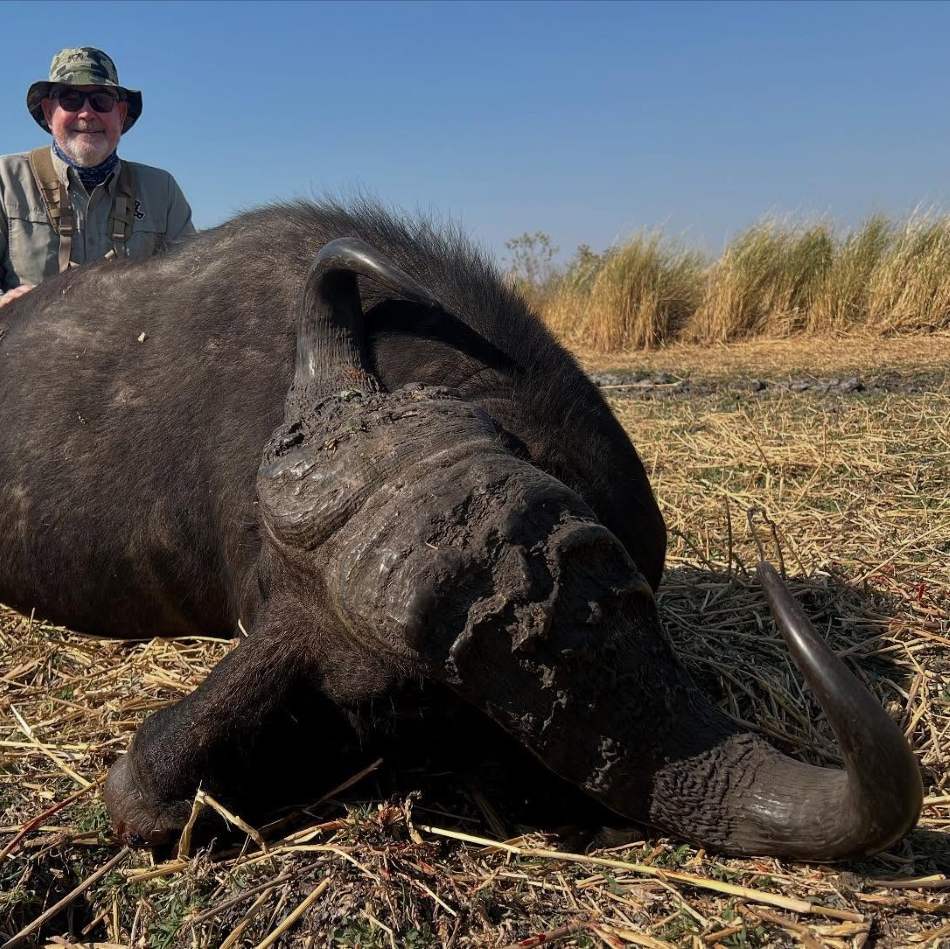
For a North American hunter looking at Tanzania from the outside, seeing two, three or even four buffalo attached to one safari can make the hunt look unusually generous. On paper, it may seem that once the first bull is taken, the second and third simply become more of the same.
There is also a financial distinction worth understanding. Unless additional buffalo are included in the package price, trophy fees are normally charged separately, and the cost of the second, third or fourth buffalo can vary according to the outfitter and the safari structure.
Buffalo hunting rarely works that neatly.
The number written into the safari structure says how many buffalo may potentially be hunted. It says nothing about how many suitable bulls will be found, how widely they are spread through the concession, or how much time the hunting team may spend separating a mature bull from a herd or following the tracks of an old dagga boy.
In strong buffalo country, there may be days when several groups are found and the hunter sees more buffalo than expected. On another day, the same team can spend hours following spoor before getting even a brief look at a bull worth considering. The licence has not changed. The hunting has.
A multi-buffalo safari should not be approached as though the hunter has simply booked the same hunt several times over. Each additional buffalo can become a fresh problem: a new set of tracks, a different herd, another long walk, another judgement call and, sometimes, another bull that looks good enough until the PH gets a proper look at him.
The more selective the hunter becomes, the more important that distinction is.
A hunter prepared to take several mature, representative bulls in productive country may have a different safari from one who wants every buffalo to be an old, hard-bossed dagga boy with the kind of age and character he has spent years picturing before the trip.
Four Mature Bulls and Four Old Dagga Boys Are Not the Same Hunt
The number of buffalo a safari allows becomes less important once the hunter starts defining what sort of bulls he wants.
There is a difference between setting out to hunt several mature, representative buffalo and deciding that every bull must be an old dagga boy carrying the scars, worn horn and heavy boss that come with age. Both objectives may fit within the same safari package, but they create very different hunts.
In productive buffalo country, a hunter prepared to consider mature herd bulls may have the advantage of working through larger numbers of animals. A herd can hold several bulls and, with time, patience and a good look through the binoculars, the PH may be able to identify a suitable animal without starting an entirely new hunt from scratch.
Old dagga boys are another matter. Some travel alone, while others move in small bachelor groups well away from the larger herds. Finding one good old bull does not necessarily tell the hunting team where the next one will be. Once the first buffalo is taken, the process may begin again with fresh spoor, another part of the concession and another long walk.
Some hunters are simply addicted to Cape buffalo hunting. They are not chasing a particular horn shape or record-book number every time; they want the tracking, the tension and the rush of getting close to another good bull.
Others become increasingly particular. A bull may be old enough but lack the horn shape the hunter prefers. Another may carry impressive width but still be younger than the PH wants to take. A third may have exactly the worn, battered character the hunter hoped for, even though he would never win a tape-measure contest.
Saying “I want to hunt four buffalo” does not tell the outfitter that much. The useful conversation is about which four buffalo the hunter hopes to find.
Why the Hunting Concession Changes the Arithmetic
Once those expectations are understood, the quality and character of the hunting concession become increasingly important.
A concession holding strong buffalo numbers gives the hunting team more opportunities to find spoor, locate herds and work through different groups of animals. That does not make the hunt easy, but it improves the chances of finding several suitable bulls over the course of the safari.
In lower-density country, the same objective can become much harder. Buffalo may be spread across a large area, old bulls may be travelling in small groups or alone, and each new opportunity can require the team to begin again in another part of the concession.
An area may hold plenty of buffalo and still struggle to produce three or four bulls matching a very specific standard. The more the hunter insists on age, horn shape, boss development or true dagga-boy character, the more important the hunting area becomes. That is why two Tanzania safaris carrying the same number of buffalo on paper can produce very different hunting experiences. The licence may allow the same number of bulls, but buffalo density, terrain, hunting pressure and the type of animals available can change what is realistically achievable.
For hunters wanting a deeper look at those regional differences, How Cape Buffalo Hunting Changes Across Tanzania explains how the hunt varies from one part of the country to another.
The First Buffalo Can Change What You Want From the Second
There is another part of a multi-buffalo safari that is difficult to predict before the hunt begins: the hunter himself may change his mind.
A hunter who takes a solid mature bull early in the safari may become more selective with the second. Perhaps the next bull needs more age, a heavier boss, a different horn shape or simply more character. If a third buffalo is available, the standard may tighten again.
The first bull has already delivered the buffalo hunt the hunter came for. That can remove some of the pressure and make it easier to pass a good bull later because he is no longer simply looking to take a buffalo.
He is looking for something different. A multi-buffalo safari can become harder rather than easier. Success with the first bull does not necessarily shorten the search for the next one. It raises the bar. By the time the hunter reaches the second or third buffalo, he may no longer be looking for another good bull.
He may be looking for a specific one.
A Bigger Package Still Depends on Quota and Opportunity
A larger safari package may allow more buffalo, but it does not create quota where none exists and it does not guarantee that every allocated bull will still be available when the hunter arrives.
That distinction matters as package entitlement, concession quota and actual hunting opportunity are three different things.
A Premium safari may allow the hunter to take more buffalo than a shorter package, but the outfitter must still have sufficient quota in that specific concession. Some buffalo may already have been hunted earlier in the season, others may be committed to another safari, and the remaining allocation may not match the number the hunter originally hoped to pursue.
The same applies in the field. Quota can be available and the hunting can still become difficult. Buffalo move, herds shift, old bulls disappear into country where finding them takes time, and a hunter may pass several animals before seeing one that fits the agreed standard.
Hunters booking a multi-buffalo safari should ask not only how many buffalo the package allows, but also how many are genuinely available on quota in that concession for those dates.
The two numbers are not always the same. And even when the quota is there, opportunity still must be earned in the bush.
What Should You Ask Before Booking a Multi-Buffalo Tanzania Safari?
A multi-buffalo safari is one of those hunts where the right questions before booking can make a big difference once the hunter is in camp.
The first question is obvious: how many buffalo does the safari package allow under the licence? That should be followed by something more useful: how many buffalo are genuinely available on quota in the exact concession for those dates?
From there, the conversation should move into the kind of buffalo the area is producing. Are most opportunities coming from larger herds, small bachelor groups or solitary old bulls? If the hunter wants several buffalo, what standard does the PH think is realistic? A concession that can regularly produce mature herd bulls may be well suited to one kind of multi-buffalo safari, while a hunter insisting on three or four old dagga boys is asking a different question.
It is also worth asking how recent hunters have done. How many buffalo were taken? How many mature bulls were passed? Were later buffalo harder to find than the first? Those answers often tell a hunter more than the package brochure.
For hunters planning broader African hunting trips, the buffalo objective should also be considered alongside everything else they hope to do. A safari built around several buffalo can consume a surprising amount of time if tracks are followed for hours, bulls are passed or the hunting team must start again in another part of the concession.
The same applies to hunters looking at a wider Big Game Hunting in Tanzania safari. Buffalo may be the main priority, but the time and quota committed to the second, third or fourth bull can affect how the rest of the safari is structured.
Before anything is booked, the hunter must be clear about what is included financially. Are all buffalo included in the package price, or are additional trophy fees charged separately? What happens if fewer buffalo are taken than the package allows? Those details are easier to understand before the safari than after it.
A good outfitter should be able to answer all of this plainly. The goal is not to find the safari offering the biggest number of buffalo on paper.
It is to find the safari most capable of producing the kind of buffalo hunt the hunter wants.
Frequently Asked Questions About Multi-Buffalo Hunting in Tanzania
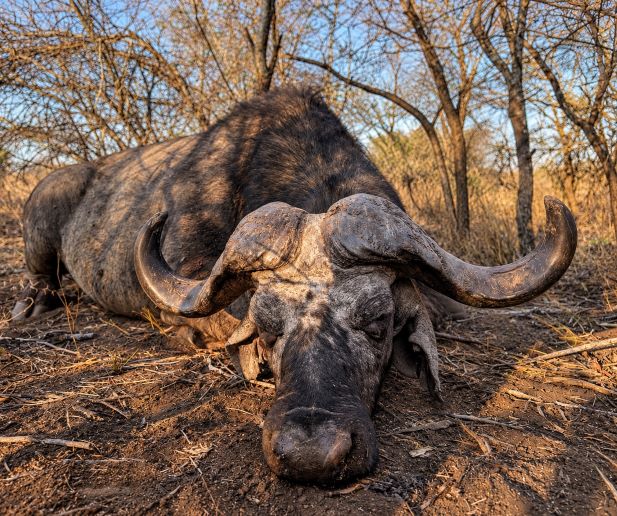
How Many Buffalo Can You Hunt on One Tanzania Safari?
Depending on the safari structure, quota and hunting concession, a Tanzania safari can allow more than one Cape buffalo. Current operator structures may provide for two buffalo on a shorter safari, three on a larger package and as many as four on a longer Premium safari.
The important point is that the maximum allowed under the safari package is not the same as a guarantee that every buffalo will be taken. Quota, buffalo availability, hunting conditions and the hunter’s trophy standards still determine what is realistic.
Does a Bigger Tanzania Safari Package Mean a Better Buffalo Hunt?
Not necessarily. A larger package can provide more hunting days and may allow additional buffalo, but it cannot compensate for weak buffalo numbers, limited quota or an unsuitable hunting area.
A hunter wanting several mature bulls may benefit enormously from the extra time. A hunter looking specifically for three or four very old dagga boys, however, still needs a concession capable of producing that kind of opportunity.
Are Trophy Fees Included for Every Buffalo on a Tanzania Safari?
Not always. Some safari packages include buffalo, while others charge additional trophy fees for the second, third or fourth bull. The structure varies between outfitters and hunts, so the hunter should establish exactly what is included before booking.
Hunters comparing packages, daily rates and trophy-fee structures can find a broader explanation in African Hunting Safari Prices.
Is It Realistic to Hunt Four Old Dagga Boys on One Tanzania Safari?
It can be possible in exceptional buffalo country, but it is a different objective from hunting four mature representative bulls.
Old dagga boys may travel alone or in small groups, and locating one does not necessarily lead to the next. The more particular the hunter becomes about age, boss development, horn shape and character, the narrower the field becomes. Four buffalo may be legally available while four buffalo meeting that exact standard are not.
Can You Hunt Buffalo and Other Big Game on the Same Tanzania Safari?
Yes. Tanzania safaris are often built around several hunting objectives, depending on the package, area and available quota.
The practical consideration is time. A hunter concentrating heavily on a second, third or fourth buffalo may spend several days following spoor, checking different parts of the concession or passing bulls. That can affect how much time remains for other species on a broader Tanzania safari.
Should I Book the Maximum Number of Buffalo My Tanzania Safari Allows?
Only if that matches what you want from the hunt.
Some hunters simply love hunting buffalo and would happily pursue several good bulls. Others would rather devote most of the safari to finding one exceptional old bull and use the remaining time for other species. The better question is not how many buffalo the package will allow you to hunt, but how many buffalo of the type you want the concession can realistically produce during your safari.
About the Author
Pierre van Wyk is the founder of Game Hunting Safaris and has spent years working with hunters, professional hunters and outfitters across Africa. His writing focuses on practical safari planning, honest hunting advice and what hunters can expect in the field.