
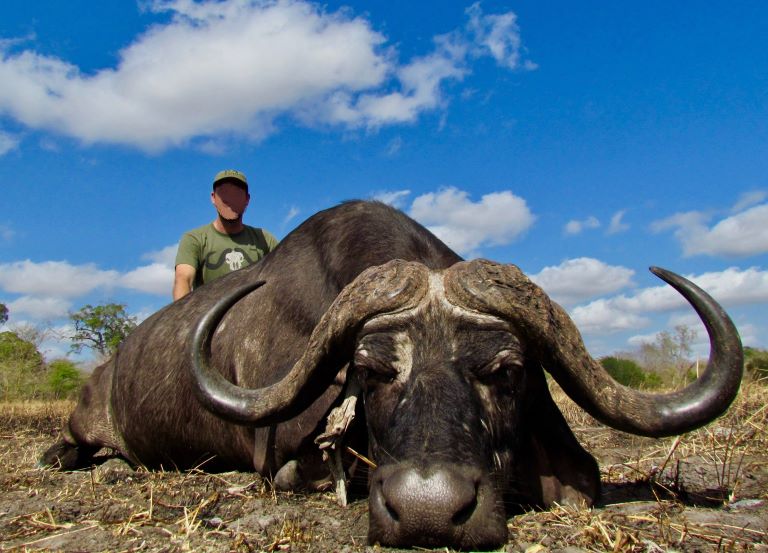
Tanzania has a way of occupying a hunter's imagination long before he ever gets there. Perhaps the idea began with stories told by a grandfather who hunted East Africa decades ago, or with old safari books read until their covers began to wear. For others, it simply grew from a lifelong fascination with Cape buffalo and the desire to one day hunt an old bull in the kind of country where buffalo hunting traditions were built.
That is still the attraction of Cape Buffalo Hunting in Tanzania. The objective is not to find the largest herd or see how many buffalo can be taken during a safari. The hunt many serious buffalo hunters come looking for is far simpler: find the tracks of an old dagga bull, shoulder a heavy rifle and follow him.
Sometimes those tracks belong to a solitary bull. Sometimes two or three old dagga boys have left the breeding herds behind and are travelling together. Either way, once the trackers decide the spoor is worth following, the vehicle becomes considerably less important. From there, the hunt happens on foot, one track at a time, until you catch the buffalo, lose him to the wind or follow him into the thick country where he intends to spend the day.
Among American hunters, there are those who have pictured this safari for most of their lives. They may already have hunted Africa several times. They may own a .470 or .500 Nitro Express that has spent far too many years in the gun safe. And they may have little interest in filling every day with plains game. They have travelled to Tanzania for one reason.
They came to hunt an old buffalo.
Tanzania does not need to recreate the great East African safaris of another era to retain that connection with them. When the sun is barely above the horizon, fresh tracks disappear ahead into the bush and the tracker points in the direction an old bull has gone, the fundamentals remain remarkably familiar.
The truck stays behind. From here, you walk.
Fresh Tracks and the Smell of Buffalo
The first sign of an old bull may be nothing more than a set of tracks crossing a dusty road. The trackers climb down, study the spoor and begin piecing together what happened during the night. How many bulls passed through? Which direction were they travelling? How old are the tracks? And, most importantly, is there enough here to justify leaving the vehicle and following them?
Sometimes the ground tells only part of the story. Fresh dung, disturbed vegetation and the places where buffalo have stopped to feed can all help establish how far ahead the bulls might be. Under the right conditions, there may even be that distinctive bovine smell hanging in the air. You cannot see the buffalo, but you know they have been there, and perhaps only a few hours earlier.
Once the trackers take the spoor, the rhythm of the hunt changes. The vehicle stays behind and progress is measured one track at a time. The bulls may have walked steadily through the night and already be miles ahead, or they may have fed slowly before turning toward thicker country as the morning begins to warm.
There is also no telling where those tracks will eventually lead. Old dagga bulls have a habit of going where they want, when they want, and a set of tracks heading in one direction at first light may take the hunting party somewhere entirely different several hours later. During the dry season, the need for regular access to water can provide one of the few constants, but even then, predicting exactly where an old bull will spend his day is another matter entirely.
Following them can take an hour. It can take most of the day. Tracks disappear on hard ground, cross those of other animals and sometimes force the trackers to circle until the spoor is found again. The wind can undo hours of careful work, while a sudden change in direction may reveal that the buffalo have already sensed something behind them.
Then, occasionally, the signs begin to change. The tracks look fresher. The dung is more recent. Perhaps the smell of buffalo becomes noticeable again. Conversations become quieter and movement more deliberate because somewhere ahead, the distance between hunter and buffalo is beginning to close.
You still have not seen him, but now you know you are getting close.
Where the Old Bulls Leave the Herd Behind
There comes a stage in a buffalo bull's life when the breeding herd may no longer define his movements in the way it once did. Old bulls are often encountered alone or in small bachelor groups, and it is these mature dagga boys that hold a particular fascination for serious buffalo hunters.
Finding them can require a different mindset from simply locating buffalo. A large herd is difficult to miss once you are in the right country. An old bull tucked away with one or two companions can be another matter entirely. His tracks may be the only indication that he is there, and once you decide to follow them, there is no guarantee that another buffalo will appear alongside him to make the search any easier.
Among committed buffalo hunters, inches are not always the measure of the trophy. Many would rather follow the tracks of a genuinely old dagga bull, with worn horns, solid bosses and the unmistakable character that comes with age, than take a younger bull simply because he carries a wider spread. They are hunting the buffalo as much as the horns, and the story written across an old bull can matter far more than what eventually appears on the tape measure.
That philosophy suits Tanzania. The hunter who has travelled there specifically for buffalo may be perfectly content to spend day after day looking for the right old bull. Seeing buffalo is one thing. Finding the buffalo you want to hunt is something else entirely.
Old dagga boys also have a presence that is difficult to explain until you finally catch up with one. Perhaps he is standing quietly in the shade after spending the morning feeding. Perhaps there are two bulls together, caked in dried mud and seemingly unconcerned with anything around them. From a distance, the moment can appear almost peaceful, but getting close enough to judge them is another matter.
The trackers have brought you this far, but now every step counts. The wind matters. The cover matters. The bull's position matters. After hours on the tracks, you may finally be within sight of the buffalo you came to Tanzania to find.
And you still may not squeeze the trigger.
Tanzania Gives Old Bulls Room to Grow Old
A great buffalo safari depends on more than simply having buffalo in the hunting area. What matters to the serious hunter is whether there are genuinely mature bulls to hunt, and whether the way the area is managed gives those animals the opportunity to reach old age.
This is where sensible buffalo management and the ambitions of the dedicated dagga-boy hunter meet. The objective is not to remove prime breeding bulls simply because they carry impressive horns. Carefully managed hunting places the emphasis on mature animals, with quotas and the judgement of experienced Professional Hunters playing a significant role in deciding which bulls should be taken.
That matters when hunting in Tanzania, particularly across wilderness areas where buffalo remain part of a much broader natural system. An old bull may have spent years contributing to the population before eventually leaving the breeding herds behind and entering the later stages of his life.
To the hunter following his tracks, that age is something to respect rather than overlook.
It also changes how success is measured. A productive morning is not necessarily one that ends with a buffalo on the ground. You may find bulls, approach them and spend considerable time judging what is standing in front of you, only for the Professional Hunter to quietly decide that none is the animal you came to hunt.
So you back away. Tomorrow morning, you start looking again.
For the committed buffalo hunter, there is nothing disappointing about that. The opportunity to hunt old bulls only continues if hunters, outfitters and Professional Hunters are prepared to let the younger ones walk.
And when the right old dagga bull is found, there is a certain satisfaction in knowing that he was not taken simply because he was the first buffalo available.
He was the buffalo you came to Tanzania to find.
Where the Big Rifles Still Belong
There are rifles bought because they are practical, and then there are rifles bought because a hunter has spent half his life imagining where he will one day carry them. A .470 Nitro Express or .500 Nitro Express may spend years making occasional trips to the range before the day finally comes when it is taken out of its case in Tanzania with fresh buffalo tracks disappearing into the bush ahead.
Now the rifle has a job to do.
The heavy doubles and big-bore bolt actions traditionally associated with Cape buffalo hunting make sense here. Buffalo are often approached at relatively close range, particularly when an old bull has moved into thicker cover. The hunter may have spent hours walking behind the trackers before finally getting close enough for the Professional Hunter to judge the bull and decide whether the stalk should continue.
This is not about getting dangerously close simply to make the story better. The objective is always a clear, responsible shot at a properly identified old bull. But buffalo hunting has always been an intimate form of dangerous game hunting, and there is something particularly satisfying about carrying a rifle built for close work while following the tracks of an animal that may eventually be encountered at exactly that distance.
American hunters understand the appeal immediately. A heavy double rifle is not necessarily the easiest rifle to carry all day, nor is a .500 Nitro Express required to kill a Cape buffalo. That is almost beside the point. The hunter who brings one to Tanzania may have practised with it for years, learned how it handles and imagined the moment when it would finally stop being a rifle taken to the range and become the working tool it was designed to be.
There is a connection with the old East African safaris here that is difficult to ignore. The camps are different. The vehicles are better. Modern optics and communication have changed considerably. Yet when a hunter closes a double rifle, slips two spare cartridges between his fingers and falls in behind a tracker following an old dagga bull, the fundamentals have not changed nearly as much.
The buffalo is somewhere ahead. The rifle is loaded.
And after all those years of waiting, there is nowhere else that hunter would rather be.
Finding Him Where He Sleeps
As the morning wears on, an old bull that has spent the night feeding may begin looking for somewhere to spend the hotter hours of the day. The tracks that started in relatively open country can lead toward thicker bush, a shaded drainage line or another piece of cover where the buffalo feels comfortable lying up.
This is where the hunt becomes more serious.
The spoor is fresh now. Perhaps the trackers have found where the bull stopped only a short while earlier. The smell of buffalo may be stronger, and everyone knows that the animal they have followed for hours could be somewhere just ahead.
A tracker who has walked confidently all morning begins placing each foot more carefully. The Professional Hunter checks the wind again. The hunter carries his rifle differently now, because there is little point having a heavy double or big-bore bolt action in your hands if you are not ready when the moment finally arrives.
Visibility may be measured in yards rather than hundreds of yards, and somewhere inside that cover is an old buffalo that has no intention of presenting himself simply because you have spent half the day following him.
You may hear movement before you see anything, sometimes there is only silence. Then a dark shape appears between the trees, or the curve of a horn becomes visible through the brush.
After miles of tracking, the temptation is to believe that this must be the moment.
But the buffalo still must be identified. The Professional Hunter needs to see enough of the bull to judge him properly. The hunter needs a clear opportunity, confidence in buffalo shot placement and a responsible angle before squeezing the trigger. If any of those pieces are missing, all those hours of tracking do not change the decision.
You wait.
That may be what separates the buffalo hunt imagined from home from the one that unfolds in Tanzania. The hunter has finally found the animal he has been following, the heavy rifle is ready in his hands, and the distance between them may be remarkably short.
Yet the old bull still gets the final say in how the hunt will unfold.
Some Hunters Come to Tanzania for One Reason
Tanzania can offer an extraordinary variety of hunting, and there are hunters who arrive with carefully prepared lists that include everything from buffalo to specialised Gazelle Hunts and other distinctive East African game.
Then there are the buffalo hunters. Their trophy list may contain one animal.
They are not worried about how many species they can fit into the safari or how many trophies will eventually arrive home. If another opportunity presents itself, they may take it, but it was never the reason they booked the hunt.
They came to Tanzania because somewhere in that vast country is an old dagga bull.
They are prepared to spend their days looking for his tracks, following them for miles and walking away from bulls that are not yet what they came to find. A morning without a shot is not a wasted morning, and a day spent following spoor that eventually disappears into impossible country is still part of the safari.
These are often hunters who have already spent years hunting Africa. They understand that an old buffalo cannot be ordered from a menu and delivered on schedule. The uncertainty is part of what brought them back.
Tomorrow they will climb into the truck before daylight, rifles beside them, and start looking for tracks again, because they did not come to Tanzania simply to shoot a buffalo.
They came to hunt one.
Why Tanzania Still Produces the Classic Buffalo Safari
There are many ways to hunt Cape buffalo in Africa, but Tanzania continues to hold a particular place in the imagination of hunters who believe the journey to an old bull should matter as much as the moment the hunt finally comes together.
Perhaps that is why Tanzania remains such an important destination when planning serious African Hunting Trips. The country still offers the space, wilderness and hunting tradition for a buffalo safari to unfold at its own pace. There are tracks to find, miles to walk and younger bulls to leave behind while the search for the right old dagga boy continues.
For the committed buffalo hunter, that is not time wasted. It is exactly what he travelled to Africa for.
He wanted to follow trackers who could read a patch of hard ground that appeared empty to everyone else. He wanted to feel the wind change and know that hours of work might have just disappeared with it. He wanted to carry the heavy rifle he had practised with for years and, somewhere along the way, catch that unmistakable smell that tells you buffalo have passed through before you ever see one.
Most of all, he wanted to earn the opportunity.
Tanzania does not need to recreate the great buffalo safaris of the past. The old bulls are still out there, following their own paths through wild country, completely unaware of the hunter who may have spent half a lifetime dreaming about finding their tracks.
And perhaps, tomorrow morning, he finally will.
Frequently Asked Questions
Is Tanzania a good destination for Cape buffalo hunting?
Yes. Tanzania is particularly well suited to hunters looking for a traditional, free-range buffalo safari conducted across large wilderness areas. Hunting often involves locating fresh tracks and following buffalo on foot, with mature dagga bulls being the preferred objective for serious buffalo hunters.
How are old dagga bulls hunted in Tanzania?
Old dagga bulls may be encountered alone or in small bachelor groups away from the larger breeding herds. Hunters typically search for fresh tracks before following the spoor on foot with their Professional Hunter and trackers. The process can take several hours or even most of the day, depending on how far the bulls have travelled and the country they move through.
What rifle should I use for buffalo hunting in Tanzania?
Hunters should discuss rifle and calibre requirements with their outfitter before travelling, as Tanzanian regulations must be followed. Heavy bolt-action rifles and traditional double rifles are popular choices for Cape buffalo, with experienced hunters often favouring calibres they can shoot confidently and accurately under pressure.
Do I need to hunt the widest Cape buffalo I can find?
No. Many dedicated buffalo hunters place greater importance on age and maturity than horn spread alone. An old dagga bull with hard bosses, worn horns and plenty of character may be far more desirable to a committed buffalo hunter than a younger animal carrying a wider spread.
Can I hunt other species during a Tanzania buffalo safari?
Yes. Depending on the hunting area, licence and available quota, a Tanzania safari can offer opportunities for a variety of East African antelope and other game. Species may include greater kudu, eland, sable, waterbuck, impala and several regionally specialised antelope. Hunters interested in combining buffalo with Plains Game Hunts should discuss their complete trophy list with the outfitter before selecting a hunting area.
About the Author
Written by Pierre van Wyk, co-founder of Game Hunting Safaris