
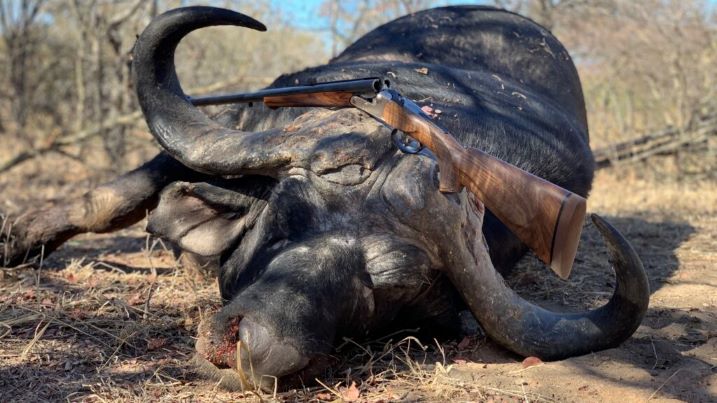
There are easier places in Africa to hunt Cape buffalo, but that is not why sportsmen choose Zambia. The attraction lies in hunting mature bulls across vast, wild country where buffalo are only one part of the landscape. Lion tracks may cross the same road where fresh buffalo spoor was found at first light, while elephant move through the surrounding bush and remind everyone that this remains a functioning African wilderness.
This is what gives Cape Buffalo Hunts in Zambia their distinctive character. Much of the hunt is conducted the traditional way: finding fresh tracks, deciding whether they are worth following and setting off on foot with a Professional Hunter and tracking team. Sometimes the spoor leads to a herd, sometimes it belongs to old bachelor bulls. And sometimes hours of walking end with nothing more than the knowledge that the buffalo are still somewhere ahead.
Areas such as Rufunsa represent much of what continues to make buffalo hunting in Zambia so special. These are places where the wilderness surrounding the hunt matters almost as much as the buffalo itself. Following tracks through country shared with lion and elephant adds a dimension that cannot be measured by the width of a bull's horns. The hunters drawn to these wild areas are not always simply chasing inches; they are looking for an old, mature bull and a hunt that must be earned.
Zambia can produce magnificent buffalo, but the real appeal runs deeper. An old bull with a hard boss and worn tips, tracked and hunted on foot through genuinely wild country, carries a story of his own. The trophy may ultimately be the buffalo, but much of the reward lies in everything it took to find him.
Why Zambia Still Matters to Serious Buffalo Hunters
Zambia has held a place in Africa's dangerous game hunting tradition for generations, and much of its appeal has survived precisely because large parts of the country remain wild. Zambia is not a destination built around making buffalo hunting predictable. In the great hunting areas, success still depends on finding the animals, reading the country correctly and putting in the miles when necessary.
That uncertainty is part of the attraction. Buffalo move according to water, grazing, hunting pressure and the changing conditions around them. A herd seen in one area today may be several miles away tomorrow, while old bachelor bulls can separate from larger groups and disappear into country where locating them becomes a completely different challenge. The hunt follows the buffalo rather than expecting the buffalo to fit the hunter's schedule.
It is also why local trackers remain such an important part of Hunting in Zambia. A fresh track in the early morning dust may look like little more than a hoofprint to the visiting hunter, but an experienced tracker begins asking different questions. How old is it? How many buffalo passed? Which direction were they travelling? Were they feeding slowly or moving with purpose? Is there evidence of a bull worth following? Those decisions made at first light can determine how the rest of the day is spent.
And then there is the country itself. In genuinely wild areas, following buffalo is never an isolated activity. Fresh lion spoor may cross the tracks ahead. Elephant sign can appear along the same path. What began as a straightforward morning following buffalo can change quickly because something else has moved through the area or because the wind suddenly makes the original approach impossible.
This is why Zambia continues to appeal to hunters who want their buffalo hunt to remain unpredictable. You may find the herd, catch up after hours of tracking and finally get close enough for the PH to study the bulls, only to discover there is nothing worth taking. The rifles go back onto the shoulders, the herd moves away, and tomorrow morning you start again.
Hunting Buffalo in Country Shared with Lions and Elephants
In genuinely wild Zambian hunting concessions, buffalo do not exist in isolation. Areas such as Rufunsa support lion, leopard and elephant alongside large populations of plains game, creating the type of complete African ecosystem that has disappeared from many parts of the continent. Depending on the hunting area, Zambia also offers distinctive species such as Cookson's wildebeest, Kafue lechwe and southern sitatunga, adding another dimension to safaris that may have begun with buffalo as the primary objective. The country's great wetlands and river systems also provide opportunities for Sitatunga Hunts, a completely different pursuit from tracking buffalo through the bush.
The coexistence of Africa's great game animals is part of what gives Big Five Hunting in these wilderness areas such a distinctive character.
Following buffalo spoor through this country means remaining aware of far more than the tracks directly ahead. Fresh lion prints may cross the same road travelled by the herd during the night. Leopard spoor can appear along a dry riverbed, while elephant may have moved through the area only hours earlier. Occasionally, the animals themselves are encountered, forcing the hunting team to change direction or simply wait until it is safe to continue.
None of this guarantees a more successful buffalo hunt, but it changes the atmosphere completely. You are pursuing one of Africa's most formidable game animals in country where other dangerous game is moving freely around you.
That is difficult to reproduce on a smaller or more intensively managed hunting property. In Zambia's wild areas, the buffalo hunt is part of something much bigger, and you are reminded of it almost every day you spend on the tracks.
The Buffalo Aren't Waiting for You
One of the first lessons of buffalo hunting is that the buffalo has no idea how many hunting days you have left, what calibre rifle you brought to Africa or how badly you want to find him. He moves when he wants to move, feeds where the conditions suit him and can disappear into thick country without the slightest concern for the plans made around the campfire the night before.
Fresh spoor at first light may suggest the buffalo are close. The tracks show that a herd has been feeding slowly, and for an hour everything appears to be going according to plan. Then the ground hardens, the spoor becomes difficult to follow and valuable time slips away. When the trackers finally pick up the trail again, the wind has changed and the entire approach has to be reconsidered.
Even catching the herd solves only part of the problem. There may be buffalo everywhere but no suitable old bull among them. A promising bull may never give the PH a clear enough look, or the herd may move off before his age and boss can be properly judged.
So, the rifles go back onto the shoulders and the walking begins again.
Finding buffalo does not necessarily mean you have found your buffalo. And the buffalo certainly doesn't care how many days are left on your safari.
Not Every Buffalo Hunter Is Chasing Inches
Zambia can produce magnificent Cape buffalo, and nobody is going to complain when an old, wide bull steps into view. But not every hunter who travels here is chasing inches. There comes a point, particularly for sportsmen who have hunted buffalo before, when the age and character of the bull and the way he was hunted begin to matter more than another inch on the tape.
An old bull tells his own story. Worn horn tips, a hard boss and the scars accumulated over years in wild country can make him every bit as impressive as a younger bull carrying greater width. Perhaps he has left the breeding herds and now travels with one or two other old dagga boys. Finding him may take days and following him may take hours.
When that bull is finally in the salt, taken after a long day on the tracks, nobody around the buffalo is thinking about whether another bull somewhere else might have measured an inch wider.
That does not mean trophy quality is unimportant. It means the definition of a great trophy changes when the hunt itself matters just as much as the measurement.
A tape measure can tell you how wide a buffalo is. It cannot tell you what it took to hunt him.
Why Zambia Remains Special
A great buffalo hunt is rarely remembered only for the moment the trigger was pulled. It is remembered for the tracks found at first light, the miles walked behind good trackers, the approaches that failed and the mornings when the buffalo simply disappeared into country too thick to follow.
Zambia still offers that kind of hunt. In its wild hunting areas, buffalo share the landscape with lion, leopard and elephant, and there is never any guarantee that the bull you are looking for will cooperate with the plans made back at camp. Some days you catch up. Some days the wind beats you. And sometimes you finally find the buffalo only to decide that the old bull you came looking for is not among them.
When everything eventually comes together and a mature bull is taken, the measurement of his horns becomes only one part of the story. The tracks, the walking, the trackers and the wild country in which he lived all come home with you.
Perhaps that is why Zambia continues to hold such a special place among buffalo hunters.
You arrive looking for an old bull. You leave remembering everything it took to find him.
Frequently Asked Questions About Buffalo Hunting in Zambia
Is Zambia a good destination for Cape buffalo hunting?
Yes. Zambia offers traditional Cape buffalo hunting across large, wild hunting areas where mature bulls are typically pursued by tracking on foot. The country is particularly appealing to hunters who value wilderness, experienced local trackers and the opportunity to hunt buffalo in areas also inhabited by lion, leopard and elephant. Zambia can produce excellent trophy bulls, but much of its reputation comes from the quality and character of the hunt itself.
How are Cape buffalo hunted in Zambia?
Most buffalo hunts begin by searching for fresh spoor early in the morning. Once suitable tracks are found, the Professional Hunter and trackers may follow them on foot until the buffalo are located. Catching up is only part of the challenge, as the wind, vegetation and movement of the herd can all affect the final approach. Even after locating buffalo, considerable patience may be required before a mature bull can be properly judged and a safe, clear shot presents itself.
What makes buffalo hunting in Zambia different from other African destinations?
Zambia combines traditional tracking-based buffalo hunting with genuinely wild country and relatively low hunting pressure in many of its established hunting areas. The presence of lion, leopard, elephant and abundant plains game adds to the character of the safari. Hunters comparing Hunting Trips across Africa should consider not only trophy expectations, but also the type of country they want to hunt and how they want their days in the field to unfold.
Do I need to hunt the widest buffalo available in Zambia?
No. Trophy expectations are personal, and Zambia certainly has the potential to produce impressive bulls. However, plenty of experienced buffalo hunters place greater importance on finding a genuinely old bull with a hard boss, worn tips and plenty of character. This is particularly true when Big Game Hunting is about the challenge of the pursuit as much as the final measurement. Nobody objects to a wide old bull, but a tape measure is only one way of judging a memorable trophy.
How many days should I allow for a buffalo hunt in Zambia?
The appropriate safari length depends on the hunting area, season and whether buffalo is the only primary objective or part of a broader safari. Hunters should allow enough time for the realities of tracking wild buffalo: spoor can be lost; the wind can ruin an approach and the first herd located may not contain a suitable bull. Your Professional Hunter can make the most of every available day, but as every buffalo hunter eventually discovers, the buffalo has absolutely no idea when your flight home is booked.