
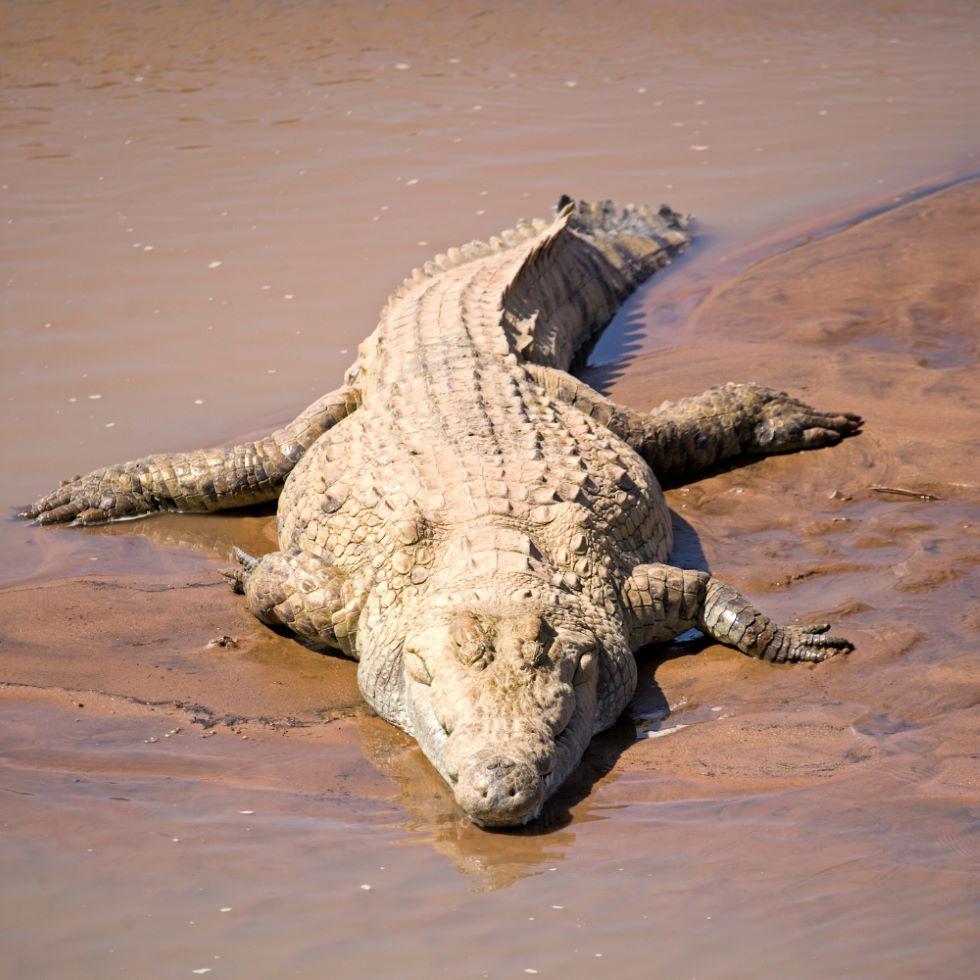
Zimbabwe has earned a well-deserved reputation as one of Africa's leading destinations for Crocodile Hunting. From the waters of Lake Kariba to the river systems of the Zambezi Valley and the Lowveld, the country consistently produces outstanding Nile crocodile trophies while offering hunters an authentic dangerous game safari in some of Africa's last truly wild hunting concessions.
Zimbabwe: A Sought-After Dangerous Game Hunting Destination
Unlike hunting Cape buffalo or plains game, a crocodile hunt is rarely about covering long distances. Instead, success depends on patience, careful observation, experienced professional hunters, and making one perfectly placed shot when the opportunity finally presents itself. Mature crocodiles are cautious, spend much of their time partially submerged, and can disappear beneath the surface in an instant if they detect the slightest movement.
Crocodile Hunting in Zimbabwe is widely regarded as one of Africa's finest Dangerous Game Hunts, combining healthy crocodile populations with extensive river systems, large reservoirs, and professionally managed hunting concessions. Many outfitters also offer combination safaris, allowing hunters to pursue species such as hippo, Cape buffalo, or a selection of plains game during the same trip.
Whether you're planning your first dangerous game safari or looking to add one of Africa's oldest predators to your trophy room, Hunting in Zimbabwe offers an outstanding combination of trophy quality, fair-chase hunting, experienced professional hunters, and excellent value.
Where to Hunt Crocodiles in Zimbabwe
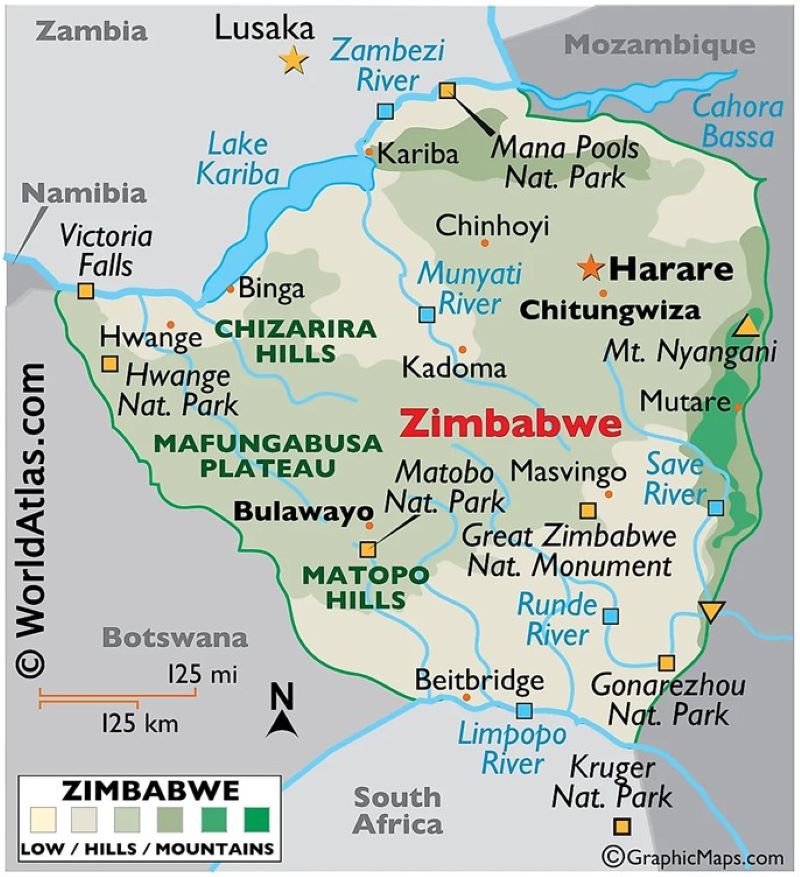
From the shores of Lake Kariba to the rivers of the Lowveld, Hunting Crocodiles in Zimbabwe offers several outstanding destinations, each producing quality Nile crocodile trophies and its own unique style of dangerous game safari.. Whether you prefer the vast waters of Lake Kariba, the wilderness of Gonarezhou, or the river systems of the Lowveld, choosing the right hunting area depends as much on the overall safari experience as it does on trophy potential.
Most crocodile hunts take place along major rivers, lakes, and reservoirs where mature crocodiles spend their days basking on sandbanks or lying almost completely submerged along the shoreline. These environments also support other dangerous game species, making combination safaris both practical and highly rewarding.
Lake Kariba
Few places are more closely associated with Crocodile Hunting than Lake Kariba. Stretching for more than 220 kilometres along the border between Zimbabwe and Zambia, it is one of Africa's best-known crocodile hunting destinations and has consistently produced exceptional Nile crocodile trophies for decades.
The lake's vast shoreline, numerous bays, and countless islands create ideal crocodile habitat, while the surrounding safari areas also support healthy populations of hippo, elephant, buffalo, lion, leopard, and a wide variety of plains game. For hunters looking to combine several dangerous game species during one safari, Lake Kariba remains one of Zimbabwe's premier hunting destinations.
The size of the concession also means hunters are rarely limited to a single stretch of shoreline. Professional hunters can relocate throughout the area, improving the chances of finding a mature crocodile under favourable hunting conditions.
Savé Valley Conservancy
The Savé Valley Conservancy offers a completely different hunting experience.
As one of Africa's largest privately managed wildlife conservancies, the area is renowned for its conservation success and outstanding dangerous game populations. While crocodiles inhabit the Save River and surrounding waterways, many hunters choose this destination because it provides excellent opportunities to combine crocodile hunting with Cape buffalo, leopard, plains game, and other dangerous game species within the same concession.
The varied landscape of river systems, woodland, and open bushveld creates a traditional Zimbabwe hunting experience where every day in the field can produce something unexpected.
Gonarezhou National Park
Bordering Mozambique in southeastern Zimbabwe, Gonarezhou is one of the country's last truly wild landscapes.
Its remote location, rugged terrain, and extensive river systems provide outstanding habitat for Nile crocodiles while offering hunters an authentic wilderness safari far removed from busy tourist areas. Crocodile hunting here often takes place along the Runde and Save Rivers, where mature bulls patrol the deeper pools and exposed sandbanks.
For hunters who value solitude and untouched wilderness, few areas in southern Africa can match the atmosphere of Gonarezhou.
Limpopo River
Flowing along Zimbabwe's southern border, the Limpopo River supports healthy crocodile populations and provides another excellent destination for hunters seeking a genuine river hunt.
The river's mix of sandbanks, reed beds, and slow-moving pools creates ideal crocodile habitat while also supporting hippo and a variety of plains game species. Although the Limpopo may not enjoy the same international recognition as Lake Kariba, it consistently produces quality trophies and offers a rewarding safari in a quieter hunting environment.
Which Area is Best?
There is no single "best" place for crocodile hunting in Zimbabwe. Each destination offers its own advantages.
Hunters whose primary objective is a trophy Nile crocodile, combined with the opportunity to pursue several dangerous game species, often gravitate towards Lake Kariba because of its long-established reputation and diverse hunting opportunities.
Those seeking a classic wilderness safari may prefer Gonarezhou or the Savé Valley Conservancy, where remote concessions, experienced professional hunters, and abundant wildlife create an authentic African hunting experience. The Limpopo River, meanwhile, remains an excellent choice for hunters who enjoy traditional river hunting away from the more widely known destinations.
Ultimately, the best hunting area depends on the type of safari you want to experience, the additional species you hope to pursue, and the style of hunting that appeals to you most.
How a Crocodile Hunt Works
At first glance, crocodile hunting appears straightforward. Find a crocodile lying on a sandbank, make a careful stalk, and place an accurate shot.
Few dangerous game animals demand more patience.
A typical hunting day begins early, when crocodiles emerge from the water to warm themselves in the morning sun. Because crocodiles are cold-blooded reptiles, they rely on external heat to raise their body temperature, making the first few hours after sunrise one of the best times to find mature bulls basking along the shoreline.
Professional hunters spend much of this time glassing riverbanks, islands, and exposed sandbars from elevated viewpoints or by slowly travelling the shoreline. Once a suitable crocodile has been located, the real hunt begins.
Unlike many dangerous game animals, a crocodile often presents only a small target. Much of its body may still be submerged, while the surrounding terrain offers very little cover for a stalk. Every movement must be deliberate, with the wind, sun, and available cover all working in the hunter's favour.
Even after closing the distance, patience remains critical. Hunters frequently wait for several minutes—or even much longer—for the crocodile to settle into the correct position before taking the shot. Rushing the opportunity almost always ends with the crocodile slipping silently back into the water.
Successful hunts are the result of several unsuccessful stalks before the right opportunity finally presents itself.
Why Hunting a Crocodile is So Challenging
Hunters who have never pursued a Nile crocodile are often surprised by how alert these ancient reptiles can be.
A mature crocodile has survived for decades by recognising danger long before it arrives. While its eyesight is excellent, particularly when watching movement along the shoreline, it also detects vibrations through both the ground and the water. A careless footstep, an unexpected silhouette against the skyline, or even the flash of sunlight reflecting from a rifle barrel can send a trophy crocodile disappearing beneath the surface without warning.
Unlike buffalo or plains game, a crocodile rarely gives a hunter a second opportunity. Once disturbed, it may remain underwater for an extended period or emerge in a completely different location hours later.
Professional hunters understand these behaviours and adapt every stalk accordingly. They use natural features such as riverbanks, termite mounds, reeds, and vegetation to stay concealed while constantly watching the crocodile's body language. An experienced PH can often tell whether a crocodile is relaxed, becoming suspicious, or moments away from sliding back into the water.
This is one of the reasons crocodile hunting rewards patience more than speed. The hunters who consistently succeed are usually those willing to wait for the perfect opportunity rather than forcing an imperfect shot.
A Crocodile Hunt Can Change the Way You Look at Big Game Hunting
Crocodile hunting is unusual because it turns many of the expectations associated with African big game hunting on their head. There may be no miles of tracking behind a team of trackers, no long approach through thick bush and none of the physical intensity associated with following buffalo or elephant on foot.
Instead, much of the hunt is spent watching.
A large crocodile may be located early in the day, yet hours can pass before conditions allow a stalk to begin. The animal may be in the wrong position, too close to deep water or lying where an approach is impossible without being detected. Sometimes the only sensible decision is to leave and return later.
That change of pace is part of what makes crocodile hunting so interesting. The challenge is not necessarily finding an animal and closing the distance as quickly as possible. It is understanding when an opportunity is worth pursuing and having the discipline to wait when it is not.
Hunters accustomed to other forms of Big Game Hunting may find that a crocodile safari demands a very different kind of patience. One precise shot can determine the outcome of days spent glassing and stalking, and there is often little room to correct a mistake once the trigger is pulled.
The result is a hunt where restraint matters just as much as marksmanship.
The Crocodile You Hunt May Have Been There for Decades
There is something worth considering when a Professional Hunter finally points out a truly old Nile crocodile lying along a Zimbabwe riverbank.
A mature crocodile may have occupied the same river system for decades. During that time, water levels have risen and fallen, droughts have come and gone, and countless animals have crossed the banks around him. He has survived territorial fights with other crocodiles, periods of scarce food and years of avoiding threats in an environment where mistakes are rarely forgiven.
Older males often carry that history on their bodies. Scarred hides, damaged scutes, worn teeth and injuries from encounters with other crocodiles can all hint at the life an animal has lived.
That perspective can change the way a hunter looks at the trophy.
Length will always be important when judging a Nile crocodile, but an exceptional trophy is not simply a measurement from nose to tail. A heavy-bodied old male that has dominated a stretch of river for years represents something altogether different from a younger animal that happens to measure well.
It is another reason the judgment of an experienced Professional Hunter matters. The objective is not simply to find the first large crocodile visible through the binoculars, but to identify the kind of mature animal that makes the patience invested in the hunt worthwhile.
And when an old crocodile is finally recovered and examined at close range, the scars and wear accumulated over decades often tell a story that could never have been seen from the opposite riverbank.
Judging a Trophy Crocodile
One of the most common questions professional hunters hear is, "How big is he?"
Unlike most African game animals, accurately judging the length of a crocodile in the field is surprisingly difficult. A crocodile lying on a sandbank may appear enormous because of its broad body, while a genuinely exceptional trophy can easily be underestimated if much of its tail remains hidden in the water.
Experienced professional hunters rely on years of observation rather than guesswork. Head size, skull proportions, body depth, neck thickness, and overall balance often provide better clues than simply trying to estimate length from a distance.
Older bulls also tend to show signs of a lifetime spent defending territory. Broken or worn teeth, scarred jaws, damaged scutes, and healed bite marks from territorial fights all indicate a mature crocodile that has survived for decades in the wild.
Ultimately, hunters should trust the judgement of their professional hunter. Estimating crocodile length accurately takes years of experience, and an experienced PH will usually recognise a mature trophy long before exact measurements can be confirmed.
Equipment
Crocodile hunting does not require heavy stopping rifles or dangerous game calibres. Instead, success depends on accuracy. The vital area of a Nile crocodile is surprisingly small, making precise shot placement far more important than raw bullet energy.
Most professional hunters recommend a flat-shooting rifle chambered in a medium calibre such as the .270 Winchester, .308 Winchester, .30-06 Springfield, .300 Winchester Magnum, or similar cartridges capable of delivering accurate shots at moderate distances. Premium expanding bullets are generally preferred, providing reliable penetration while minimising unnecessary meat and hide damage.
Because many opportunities arise across open water or wide sandbanks, a quality riflescope with good light transmission can make a significant difference, particularly during the first and last hours of daylight when crocodiles are most active.
Perhaps the most important piece of equipment, however, is a stable shooting rest. Whether using shooting sticks, a backpack, or a natural support, hunters should expect to wait for the perfect shot rather than attempting an unsupported off-hand shot.
Shot Placement is Everything
Unlike buffalo or antelope, a crocodile's vital organs are positioned much further forward in the body than many hunters expect. Understanding the correct Crocodile Shot Placement is particularly important, as a shot placed behind the shoulder, as one might use on plains game, is unlikely to produce a clean kill.
The preferred shot depends on the position of the animal.
When the crocodile is broadside on land, the ideal aiming point is the brain or the upper spinal column immediately behind the skull. These shots require absolute precision but anchor the animal instantly when correctly placed.
If a brain shot is not available, some situations allow for carefully placed heart and lung shots. Because crocodiles can reach deep water in only a few seconds, professional hunters will wait until the animal presents the exact angle needed for a central nervous system shot rather than risk losing it beneath the surface.
Discipline is often what separates a successful crocodile hunt from a frustrating one. Passing up marginal opportunities is part of the process, and experienced professional hunters would rather wait another hour, or another day, than rush a shot that may result in a lost trophy.
Recovering a Crocodile
Even after a perfectly placed shot, the hunt is not necessarily over.
A crocodile may remain motionless for several minutes, making it difficult to determine whether it has expired. Professional hunters approach every downed crocodile with extreme caution, treating it as though it is still alive until proven otherwise.
If the animal reaches the water before expiring, recovery becomes considerably more challenging. Depending on the location, the hunting team may use boats to search the shoreline or carefully watch likely areas where the crocodile may surface.
This is another reason experienced professional hunters are so patient before taking the shot. Waiting for the right opportunity greatly increases the chances of anchoring the crocodile on the bank instead of watching it disappear into deep water.
Preparing for Your Crocodile Hunt
Crocodile hunting isn't physically demanding in the same way as tracking buffalo or climbing for mountain game, but it will test your patience. Long periods of glassing, slow stalks through soft sand, high temperatures, and hours spent waiting for the right opportunity all require patience and concentration. Lightweight clothing in neutral colours, a wide-brimmed hat, quality binoculars, and comfortable boots are generally more valuable than carrying excessive gear.
Before travelling, hunters should also spend time practising from shooting sticks at distances between 50 and 150 metres. More importantly, they should practise holding steady for extended periods, as the perfect shot often comes after several minutes of waiting rather than immediately after the rifle is shouldered.
A crocodile hunt can also form part of a much broader African safari, particularly when combined with buffalo, hippo or plains game. Hunters comparing destinations, species and combination safaris can explore our Hunting Trips to see the different opportunities available across Africa.
A little preparation before arriving in camp can make a significant difference when that one brief opportunity finally presents itself.
Frequently Asked Questions About Crocodile Hunting in Zimbabwe
Is crocodile hunting legal in Zimbabwe?
Yes. Crocodile hunting is legal in Zimbabwe when conducted through a licensed hunting outfitter operating under government-issued quotas. These quotas are carefully managed to ensure that hunting remains sustainable while supporting long-term conservation and wildlife management.
What species of crocodile can you hunt in Zimbabwe?
Zimbabwe is home to the Nile crocodile (Crocodylus niloticus), Africa's largest crocodile species. Mature males regularly exceed 14 feet in length, with exceptional trophies occasionally growing considerably larger.
When is the best time for crocodile hunting in Zimbabwe?
The dry season, generally from May to October, offers the best hunting conditions. As water levels fall and vegetation becomes less dense, crocodiles spend more time basking along exposed banks, making them easier to locate and stalk.
How difficult is a crocodile hunt?
Although crocodile hunting is not physically demanding, it is mentally challenging. Success depends on patience, careful observation, and precise shooting. Many stalks end with the crocodile slipping quietly back into the water before a shot can be taken.
What calibre is best for hunting crocodiles?
Accuracy is far more important than calibre. Cartridges such as the .270 Winchester, .308 Winchester, .30-06 Springfield, and .300 Winchester Magnum are all popular choices when paired with quality ammunition and precise shot placement.
Where should you aim when hunting a crocodile?
The ideal aiming point depends on the angle of the animal, but brain and upper spinal shots are generally preferred because they anchor the crocodile immediately. Because crocodile anatomy differs significantly from mammals, hunters should familiarise themselves with the correct aiming points before the hunt.
Can you combine a crocodile hunt with other species?
Yes. Many hunters combine crocodile hunting with Cape buffalo, hippo, leopard, and a variety of plains game species. Zimbabwe's large hunting concessions make combination safaris one of the country's biggest attractions.
How long does a crocodile hunting safari last?
Most crocodile hunts last between 7 and 10 hunting days, although combination safaris that include dangerous game or plains game often extend to 10–14 days.
How are crocodile trophies measured?
Crocodiles are measured in a straight line from the tip of the nose to the end of the tail. Professional hunters typically estimate trophy size before the stalk, although judging length accurately in the field is far more difficult than many hunters expect.
Are crocodile hunts dangerous?
Yes. Although the hunt itself is usually conducted from the shoreline, you're often hunting around deep water inhabited by crocodiles, hippos and other dangerous game. Professional hunters understand these risks and plan every stalk accordingly.
Do crocodiles sink after being shot?
Yes. If a crocodile reaches deep water after the shot, it will usually sink to the bottom, making recovery extremely difficult. In some cases, the trophy may be lost altogether. This is why experienced professional hunters are so patient when setting up a shot. They would much rather wait for a brain or upper spinal shot that anchors the crocodile on the bank than risk it reaching the water. On a crocodile hunt, patience before the shot often determines whether the trophy ends up in camp or on the bottom of the river.
Why choose Zimbabwe for crocodile hunting?
Zimbabwe combines excellent crocodile habitat, experienced professional hunters, well-managed concessions, healthy crocodile populations, and outstanding opportunities to combine a crocodile hunt with other iconic African game species. It has earned its reputation as one of the continent's premier destinations for hunting Nile crocodiles.
About the Author
Tamlyn van Wyk is the co-founder of Game Hunting Safaris and has firsthand experience hunting dangerous game in Africa. Among her hunting experiences is a 15.1-foot Nile crocodile taken in Mozambique, giving her personal insight into the patience, precision and careful shot placement required when hunting these remarkable animals.