
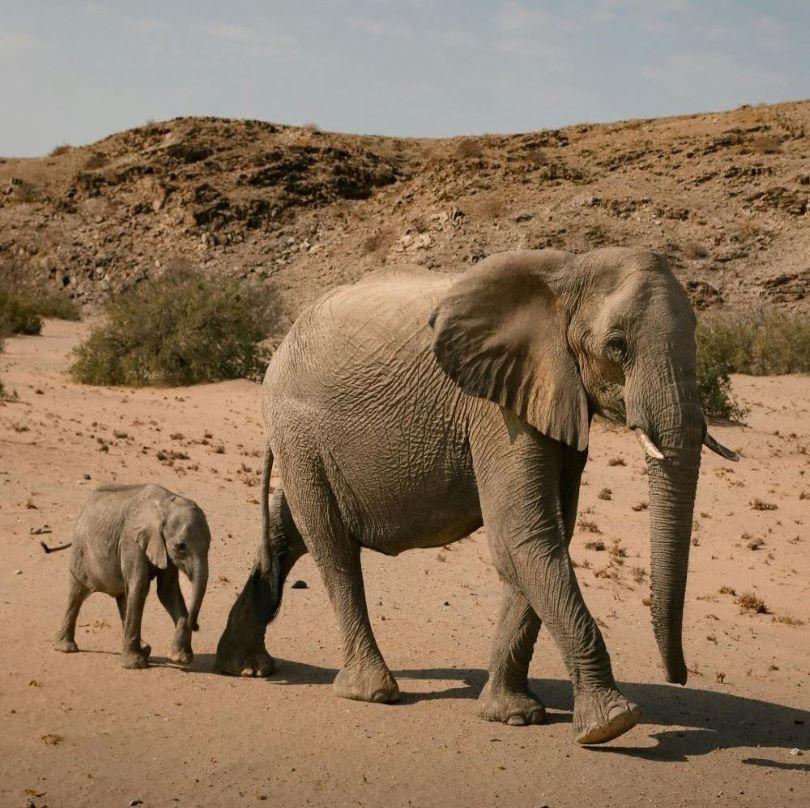
Namibia is home to one of Africa’s most unusual elephant populations — the desert-adapted elephants of the country’s arid northwestern regions. Living in harsh desert and semi-desert environments where temperatures soar and water sources may remain dry for months, these elephants have adapted their behavior and movement patterns to survive in conditions few large mammals could tolerate.
Unlike elephants living in wetter regions of Africa, Namibia’s desert-adapted elephants travel vast distances across dry river systems, gravel plains, and mountainous terrain in search of food and water. Their ability to survive in some of the harshest environments in southern Africa has made them one of the country’s most fascinating wildlife populations and a unique part of African elephant hunts conducted in extremely unforgiving terrain.
While these elephants are not classified as a separate subspecies, years of adapting to arid terrain have resulted in distinct survival behaviors that differ considerably from many other African elephant populations. For hunters and trackers alike, understanding desert elephant behavior becomes an important part of navigating Namibia’s dry wilderness areas.
Namibia's Desert-Adapted Elephants
Namibia’s desert-adapted elephants were once believed to be a separate subspecies of African elephant due to their appearance and their ability to survive in some of the harshest environments in southern Africa. Today, they are recognized as African bush elephants that have gradually adapted their behavior and movement patterns to survive in some of the driest regions of southern Africa.
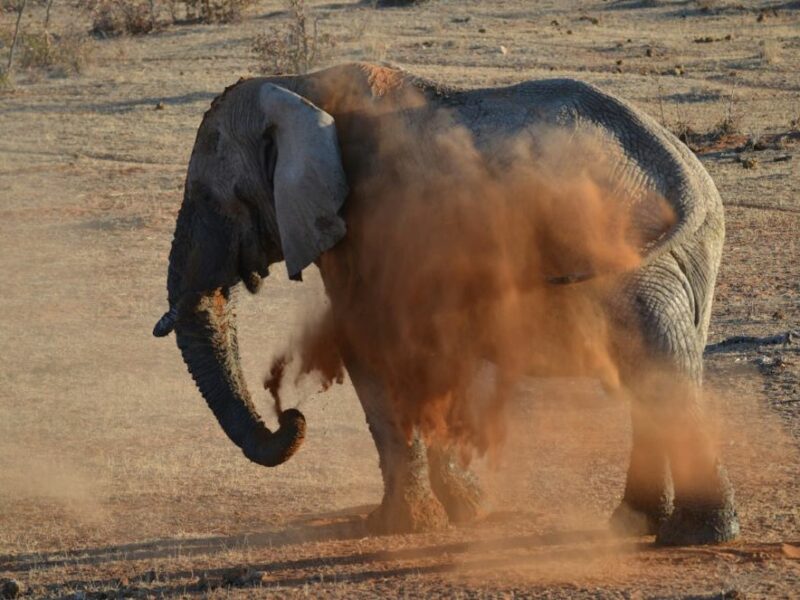
Unlike elephants living in wetter environments with permanent rivers and dense vegetation, Namibia’s desert-adapted elephants often move across enormous areas searching for food and water. In some regions, herds may travel long distances along dry river systems where underground moisture still supports scattered vegetation and trees.
The harsh terrain has also influenced how these elephants behave. They are known for moving carefully through rocky valleys, gravel plains, and dry riverbeds while conserving energy and avoiding unnecessary movement during the hottest parts of the day. Much of their feeding and traveling activity may take place during cooler evening and nighttime hours when temperatures become more manageable.
Although these elephants are not necessarily larger than other African elephants, their appearance is often different due to their living conditions. Long distances, limited food resources, and difficult terrain contribute to leaner body condition and a more rugged appearance compared to elephants living in greener regions of Africa.
The extreme conditions surrounding desert elephant hunting in Namibia also create a very different experience from many traditional elephant hunting safaris conducted in wetter African environments. Dry terrain, sparse vegetation, shifting winds, and enormous tracking distances all become part of navigating Namibia’s desert elephant country.
Are Desert Elephants A Separate Subspecies?
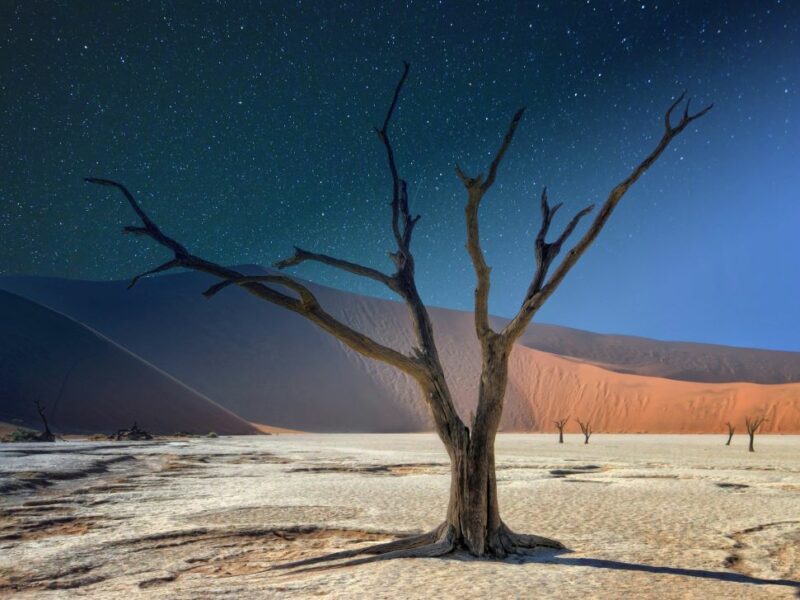
Although Namibia’s desert-adapted elephants were once believed to be a separate subspecies of African elephant, they are today recognized as African bush elephants that have adapted to survive in arid and semi-arid environments. Unlike African forest elephants found in the tropical forests of Central and West Africa, Namibia’s desert elephants belong to the larger African bush elephant species but display unique behavioral adaptations shaped by harsh desert conditions.
Life in Namibia's Dry River Systems
Namibia’s desert-adapted elephants survive in regions where rain may not fall for months at a time and permanent water sources are often scarce. Much of their movement revolves around dry river systems that cut through the desert and semi-desert terrain of northwestern Namibia.
Although these rivers may appear lifeless for much of the year, underground moisture often supports scattered vegetation, trees, and small pockets of water beneath the sand. Desert elephants are known to dig into sandy riverbeds using their trunks and feet to reach water hidden below the surface.
These elephants may cover vast areas while moving between feeding zones and water sources through rocky valleys, gravel plains, and dry washes where vegetation remains sparse and widely scattered. Unlike elephants living in greener environments with more reliable food supplies, desert-adapted elephants must constantly conserve energy while adapting to changing conditions.
Temperatures in these regions can become extreme during the daytime, particularly during the hotter months of the year. As a result, desert elephants often become more active during cooler evening and nighttime hours when traveling conditions are less demanding.
The dry terrain and sparse vegetation also create a very different environment for trackers following elephant spoor through these regions. Wind, hard ground, and difficult terrain can make tracking challenging, particularly once elephants leave the softer sand found in the river systems.
Despite the harsh conditions, these dry river systems still support a surprising variety of wildlife. Species such as gemsbok, kudu, Hartmann’s zebra, lion, and leopard may all move through these areas while following the same limited food and water sources that sustain the elephants.
Are Desert-Adapted Elephants Hunted in Namibia?
Yes, desert-adapted elephant hunts do take place in Namibia, although they remain highly limited and tightly controlled. These elephants are not classified as a separate subspecies of African elephant, but they are regarded as one of the country’s most unique elephant populations due to the harsh environments in which they survive.
Because elephant numbers in these arid regions are relatively low compared to other African elephant populations, hunting opportunities remain limited and subject to strict government regulation and permit controls. Desert-adapted elephant hunts are therefore uncommon and generally associated with specialized free-range elephant hunting safaris conducted in remote areas of northwestern Namibia.
The combination of dry terrain, vast distances, sparse cover, and constantly changing conditions contributes to the demanding nature of these hunts and the reputation surrounding Namibia’s desert elephant country.
Tracking Desert Elephants in Namibia
Tracking desert-adapted elephants in Namibia differs considerably from following elephants in greener African environments with heavier vegetation and more reliable water sources. When hunting in Namibia, trackers often work through riverbeds, gravel plains, rocky valleys, and open desert terrain where spoor can change quickly depending on terrain and wind.
Fresh tracks may remain visible in soft sand along dry river systems, but once elephants move into rocky terrain or hard ground, tracking becomes significantly more difficult. Strong winds common to these arid regions may also partially cover spoor within a short period, particularly in exposed sandy areas.
Because food and water sources remain limited, desert elephants are constantly moving between feeding areas and river systems. Trackers may therefore spend long hours following sign across open country while attempting to determine the direction and pace of the herd.
Unlike heavily wooded elephant country where visibility may be limited to only a few yards, Namibia’s desert terrain often allows trackers to glass large sections of country from elevated ground while searching for movement, dust, or feeding activity. At the same time, the lack of dense cover means elephants may detect movement or scent at considerable distances if the wind shifts unexpectedly.
When a hunting opportunity finally develops, understanding proper Elephant Shot Placement becomes critical, as shot angles, distance, and visibility can vary considerably depending on the terrain and conditions.
The combination of heat, distance, dry terrain, and constantly changing tracking conditions is part of what makes desert-adapted elephant hunts so physically demanding for both hunters and trackers alike.
Desert Elephant Benavior and Survival
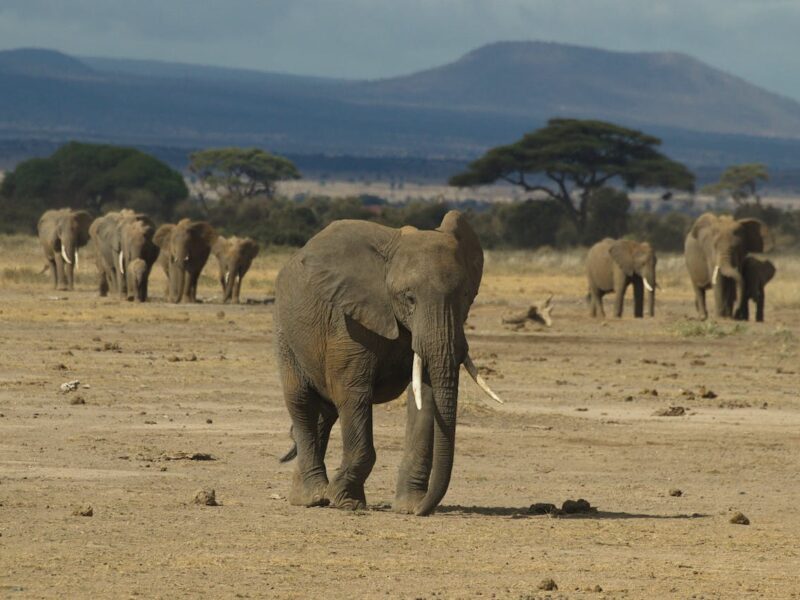
Desert-adapted elephants survive in conditions where food and water availability may change dramatically throughout the year. As a result, their movement patterns and feeding behavior are closely tied to seasonal conditions and the availability of vegetation along dry river systems.
These elephants are capable of surviving several days without direct access to water, particularly when feeding on moisture-rich vegetation found in riverbeds and shaded valleys. During hotter periods, much of their movement may shift toward cooler evening and nighttime hours when temperatures become less extreme and long-distance travel requires less energy.
Compared to elephants living in greener environments with more consistent food sources, desert-adapted elephants often appear leaner and more lightly built. Their feet may also appear wider, assisting movement across sandy riverbeds and soft desert terrain.
Because food resources remain scattered and unpredictable, desert elephants may travel continuously between feeding areas while adjusting their routes according to seasonal conditions. This constant movement forms part of the reason why locating and following these elephants across Namibia’s dry wilderness areas can become both physically demanding and highly unpredictable.
Why Desert Elephants Fascinate Hunters and Trackers
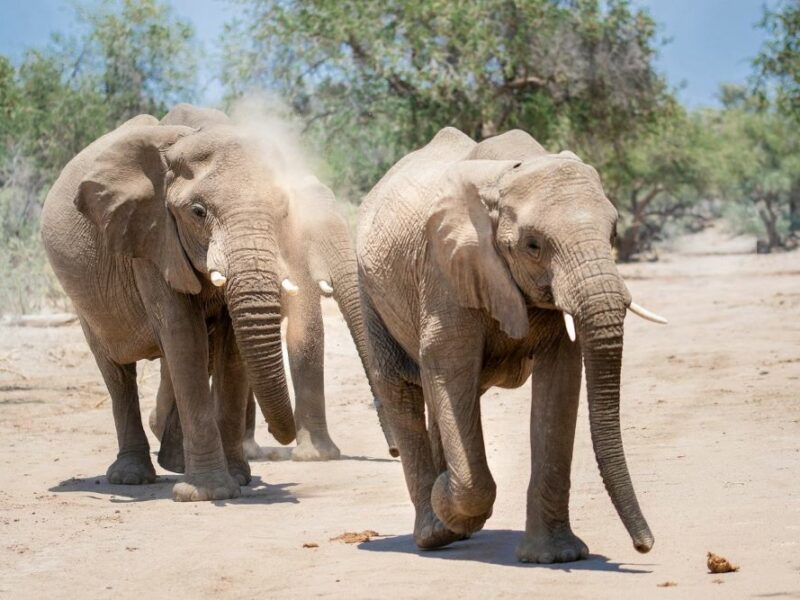
Part of what makes Namibia’s desert-adapted elephants so fascinating is the simple fact that these animals survive in landscapes that appear far too harsh to support creatures of their size. Dry river systems, rocky valleys, gravel plains, and vast stretches of desert form part of an environment where food and water may remain scarce for extended periods.
Unlike elephants living in greener regions with permanent rivers and dense vegetation, desert-adapted elephants are constantly shaped by the demands of the environment around them. Seasonal movement, careful energy conservation, and the ability to survive in extreme heat all form part of their daily existence in Namibia’s arid northwestern regions.
For hunters and trackers alike, much of the respect surrounding these elephants comes from the terrain itself. The openness of the country, the dry conditions, and the unpredictable nature of following elephants across desert landscapes create an experience very different from traditional elephant hunting in thicker African bushveld.
Part of what continues drawing attention to these elephants is not only the hunt itself, but also the remarkable conditions under which these animals continue to survive.
Conclusion
Namibia’s desert-adapted elephants remain one of the country’s most remarkable wildlife populations, surviving in environments where heat, dry conditions, and limited water sources constantly shape their behavior and movement patterns. Their ability to adapt to harsh desert and semi-desert terrain has made them a unique part of both Namibia’s wildlife heritage and specialized elephant hunting safaris conducted in remote free-range areas.
For hunters and trackers alike, much of the respect surrounding these elephants comes from the conditions in which they live. From dry river systems and gravel plains to rocky valleys and open desert country, desert elephant hunting in Namibia presents a very different experience from many traditional elephant hunts in Africa.
Although opportunities for desert-adapted elephant hunts remain limited and tightly controlled, these elephants continue attracting worldwide interest due to the extreme environments they inhabit and the unique challenges associated with tracking them across Namibia’s arid wilderness regions. For many, Namibia desert elephant safaris represent far more than simply pursuing dangerous game elephant hunting opportunities — they offer insight into one of Africa’s most unusual and resilient elephant populations.
Continue Reading About Elephant Hunting In Namibia
Learn more about Namibia’s unique elephant hunting environments, management hunts, and the history surrounding African elephant hunting safaris:
Elephant Hunting In Namibia, The “Tuskless Giant”
The Fascinating History Of Elephant Hunting In Namibia
About The Author
Pierre van Wyk is the co-founder of Game Hunting Safaris and has hunted extensively throughout Namibia and southern Africa. His experience includes buffalo, elephant, hippo, and other dangerous game hunts across a wide range of African terrain and hunting environments.
Frequently Asked Questions About Desert Elephant Hunting In Namibia
Are Namibia’s desert-adapted elephants a separate species of elephant?
No. Namibia’s desert-adapted elephants are African bush elephants that have gradually adapted their behavior and movement patterns to survive in arid and semi-arid environments. They are not classified as a separate subspecies.
Where are desert-adapted elephants found in Namibia?
Desert-adapted elephants are primarily found in the arid northwestern regions of Namibia, particularly around dry river systems flowing through parts of Kunene and northern Erongo. These elephants often move through riverbeds, gravel plains, rocky valleys, and desert terrain while searching for food and water.
Why is tracking desert elephants in Namibia considered difficult?
Tracking desert elephants in Namibia can be challenging due to shifting winds, hard ground, rocky terrain, and the vast areas covered by the elephants themselves. Tracks visible in soft river sand may disappear once elephants move onto gravel plains or rocky ground, forcing trackers to constantly adapt to changing conditions.
What makes desert-adapted elephant hunts different from other elephant hunts in Africa?
Desert-adapted elephant hunts take place in extremely dry and open terrain where food, water, and cover remain limited. Unlike elephant hunting in thicker bushveld or wetter river systems, Namibia’s desert elephant country often involves long tracking distances, sparse vegetation, and constantly changing environmental conditions.