
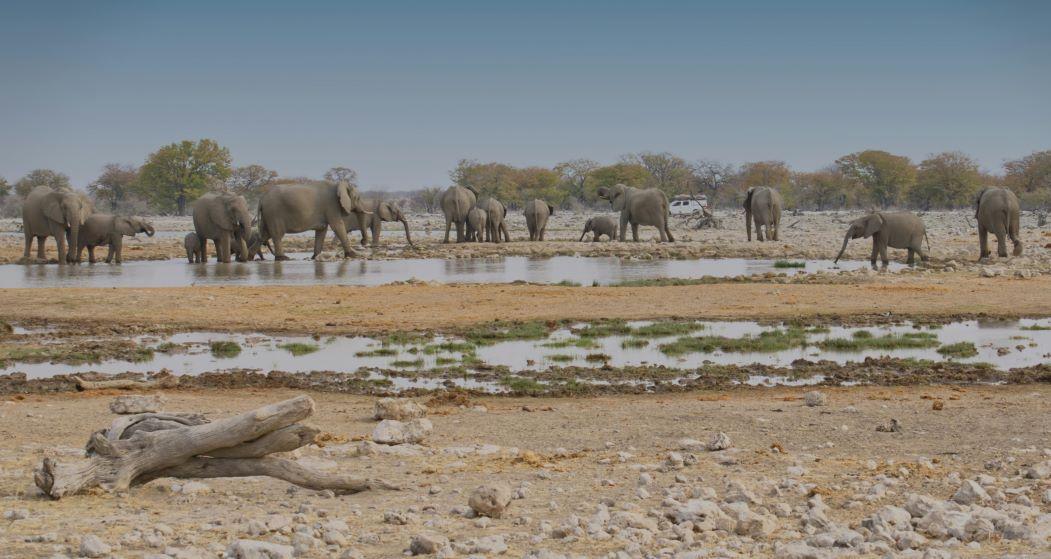
Tuskless elephant hunting in Namibia remains one of the least understood parts of modern African elephant hunting. While most hunters naturally associate elephant safaris with giant ivory and heavy tuskers, not every elephant hunt revolves around trophy bulls alone. In some areas of Africa, elephant management hunts involving older cows, problem animals, or tuskless elephants have gradually become part of broader wildlife management strategies.
Modern Namibia management elephant hunts also appeal to a growing number of American and international hunters for practical reasons. Rising trophy costs, strict export regulations, limited availability of large ivory bulls, and the increasing complexity surrounding international trophy movement have all contributed to greater interest in non trophy elephant hunts. At the same time, older tuskless cows can be every bit as intense, and sometimes even more unpredictable, than hunting mature bull elephants.
Part of what makes tuskless elephant hunting in Namibia so unique is that it occupies a very different space from traditional trophy hunting. For some hunters, the experience becomes less about ivory and more about tracking elephants on foot through remote country while participating in a tightly regulated management system that has become increasingly important across parts of southern Africa.
[DYNAMIC-BLOGTABLEOFCONTENT]
Why Some Elephants are Tuskless
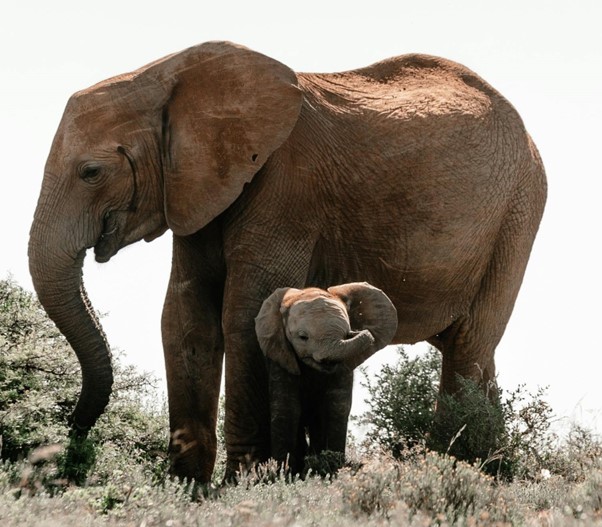
Tuskless elephants are not unique to Namibia and have been documented in elephant populations across several parts of Africa for generations. In most cases, tusklessness is believed to be linked to inherited genetic traits passed through certain elephant bloodlines, particularly among cows. While some elephants are born completely without tusks, others may carry only very small ivory that never develops fully.
Among African elephants, tusklessness appears far more commonly in females than in mature bulls. Wildlife researchers have long believed that the condition is connected to sex-linked genetic traits, although elephant genetics remains a highly complex subject that is still being studied today. In some elephant populations, the trait can become more noticeable over time, particularly where specific family lines continue reproducing within isolated regions.
Not all tuskless elephants are genetically identical. Some elephants may lose ivory through injury, damage, or age, while others are born carrying almost no visible tusk development at all. Experienced professional hunters and wildlife managers are often able to distinguish between naturally tuskless elephants and older animals that have simply broken or worn down their ivory over time.
In Namibia, tuskless elephants are most often discussed within the context of management elephant hunting rather than traditional trophy ivory hunting. Although these elephants may not carry the massive ivory that shaped much of old Africa’s hunting mythology, they remain every bit as large, intelligent, and potentially dangerous when encountered on foot in thick country.
The Role of Management Elephant Hunting in Namibia
Modern elephant hunting in Namibia operates very differently from the old ivory hunting era. Today, elephant populations are managed through tightly controlled hunting systems that attempt to balance wildlife numbers with available habitat, farming pressure, water resources, and the realities of people living alongside large free-ranging elephant populations.
Not every elephant hunted in Namibia is selected because of trophy ivory alone. In some situations, older non-breeding cows, problem elephants, or naturally tuskless animals may form part of broader management elephant hunting programs designed to reduce pressure on specific areas.
These hunts often take place under strict quota systems and involve close cooperation between wildlife authorities, communal conservancies, and professional hunters.
Part of the misunderstanding surrounding non trophy elephant hunts comes from the assumption that elephant hunting revolves entirely around ivory size. In reality, modern elephant conservation hunting in Namibia is often tied as much to wildlife management objectives as it is to traditional trophy hunting. In some rural areas, elephant populations can place enormous pressure on water points, crops, fencing, and local communities living close to elephant movement corridors.
Despite carrying little or no ivory, tuskless elephants remain fully capable of the same aggression, intelligence, and unpredictability associated with all African elephant hunts. Professional hunters frequently regard older cows involved in management hunts as especially alert and defensive, particularly when other elephants are nearby. In thick cover, these hunts still demand careful tracking, close-range shooting, and complete trust between hunters, trackers, and the professional hunting team.
Part of what makes management elephant hunts so unique is that they are shaped less by trophy ivory and more by the realities surrounding elephant populations in Africa today. While old safari stories often focused on massive tuskers, elephant hunting today increasingly involves balancing elephant populations with the realities of habitat pressure and life alongside free-range wildlife.
Why Tuskless Elephant Hunts have a Dangerous Reputation
Tuskless elephant hunts have earned a reputation for being surprisingly intense dangerous game hunts. While the absence of heavy ivory may cause some people to underestimate these animals, elephant hunters often describe older cows as more alert, defensive, and unpredictable than mature bull elephants.
Part of that reputation comes from the social nature of elephant herds. Unlike older bulls that may spend long periods moving alone or in small bachelor groups, tuskless cows are often encountered within family groups containing younger animals. In thick cover, this can create extremely tense situations where several elephants are moving together at close range while hunters and trackers attempt to identify the correct animal under strict management conditions.
Older cows seem particularly sensitive to movement, scent, and pressure while being tracked on foot. In some situations, hunters may follow elephant spoor for hours through mopane, riverine bush, or dry grass before suddenly finding themselves within only a few yards of multiple elephants standing silently in cover.
These hunts remain physically and mentally demanding forms of dangerous game hunting. Tracking still happens on foot, shooting distances are often extremely close, and the pressure surrounding wounded elephants remains exactly the same as in traditional African elephant hunts.
Part of what continues attracting experienced hunters to tuskless elephant hunting in Namibia is the realism of the experience itself. The hunt becomes less about trophy measurements and more about tracking skill, composure under pressure, and participating in a modern form of elephant management hunting that still retains much of the intensity associated with old Africa’s dangerous game traditions.
Although tuskless elephant hunts differ from traditional ivory hunts in many ways, the realities of close-range dangerous game hunting remain largely unchanged. Elephant shot placement, follow-up procedures, and the pressure surrounding wounded elephants still demand the same level of discipline and accuracy expected during all professional elephant hunts.
Why Tuskless Elephant Hunts are so Challenging
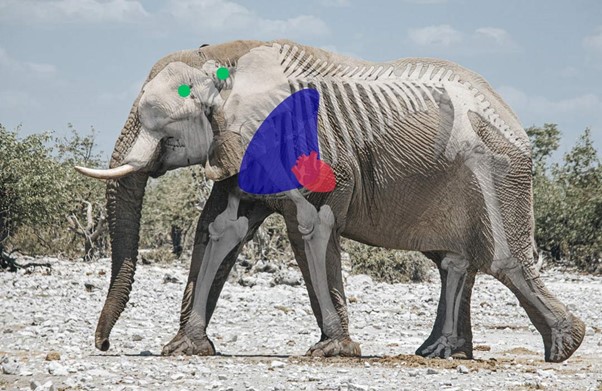
Tuskless cows are often regarded as far more difficult animals to hunt than many people expect. Older cows involved in management hunts are widely known for being alert, defensive, and extremely sensitive to movement, scent, and pressure when tracked on foot through thick cover.
Part of the difficulty comes from the social structure of elephant herds themselves. Unlike mature bulls that may travel alone or in small bachelor groups, tuskless cows are often surrounded by multiple elephants moving together through dense bush. This creates a very different tracking environment where fresh spoor quickly overlaps, visibility changes constantly, and identifying the correct management animal may only happen once the hunting team is already within extremely close range.
In dry riverbeds, mopane country, or thick riverine bush, trackers and professional hunters may spend hours following a herd before ever catching sight of the elephants themselves. Until there is visual confirmation, distinguishing between younger cows, mature herd animals, or even nearby young bulls moving with the group can become slow and difficult work. In some situations, tracks may spread across hard ground or dense cover so quickly that even trackers need time to separate the movement of the herd correctly.
The pressure surrounding these hunts often increases once the elephants become aware of human presence. Older cows protecting younger animals may react aggressively when pressured in thick cover, particularly when visibility is limited and several elephants begin moving at once. Unlike traditional trophy elephant hunts focused on a single mature bull, management elephant hunting sometimes involves multiple elephants standing only a few yards from the hunting team.
Despite carrying little or no ivory, tuskless elephant hunts still demand the same level of composure, shot discipline, and trust between hunter, tracker, and professional hunter expected during all serious African elephant hunts. Shot placement remains critical regardless of ivory size, particularly during close-range encounters involving moving herds and limited visibility.
In Namibia, tuskless elephant herds often move through the same thick riverine country occupied by Cape buffalo, hippo, and other dangerous game animals. While tracking elephants on foot, hunting teams still need to remain constantly aware of their surroundings, particularly in limited visibility where fresh buffalo spoor or unexpected movement in thick cover can quickly change the situation.

The Changing Face of Elephant Hunting in Namibia
Elephant hunting in Namibia looks very different today than it did during the old ivory hunting era. Across much of Africa, the days of unlimited ivory hunting and giant tusker expeditions have largely disappeared, replaced by tightly regulated hunting systems built around wildlife management, conservation planning, and sustainable use.
As elephant populations, land pressure, and international hunting regulations have evolved, management elephant hunting has gradually become a more visible part of modern African elephant hunts. In Namibia, this has included greater focus on problem animals, older non-breeding elephants, and tuskless cows hunted under controlled quota systems rather than traditional trophy ivory hunting alone.
At the same time, hunter expectations have also changed. While large ivory bulls still hold enormous fascination within dangerous game hunting circles, many hunters today are equally drawn to the challenge of tracking elephants on foot through wild country, regardless of tusk size. Management elephant hunts also create opportunities to experience elephant hunting in Africa at a lower overall cost than traditional trophy elephant hunt. In some cases, hunters may combine a tuskless elephant hunt with plains game hunts for species such as kudu, gemsbok, or Hartmann’s zebra while spending extended time in remote parts of Namibia.
Part of what continues giving Namibia a strong reputation among dangerous game hunters is that much of the country still feels connected to an older style of African hunting. Large unfenced areas, free-range wildlife movements, and remote elephant country continue to shape hunts that rely more on tracking skill and fieldcraft than comfort or technology. Although elephant hunting continues to evolve, tuskless elephant hunts remain closely tied to the same realities that have always defined dangerous game hunting in Africa — pressure, uncertainty, close-range encounters, and deep respect for the animals being hunted.
Conclusion: Hunting Elephant Beyond Ivory
Tuskless elephant hunting in Namibia represents a side of African elephant hunting that many people rarely see discussed. Without giant ivory or massive tuskers dominating the conversation, the focus shifts back toward the hunt itself — tracking skill, close-range encounters, difficult decision making, and the realities of managing large free-range elephant populations.
The pressure involved in following elephants on foot through thick bush remains exactly the same. Wind direction, spoor, visibility, and the unpredictable behavior of a nervous herd still place enormous responsibility on the hunter, trackers, and professional hunting team working together in close quarters.
Part of what continues making tuskless elephant hunting in Namibia so respected among dangerous game hunters is that the experience remains authentic. These hunts still take place in remote elephant country where long tracking days, difficult terrain, and genuine uncertainty remain part of daily life in the field.
Although elephant hunting has changed considerably from the old ivory era, many of the same traditions still survive in Namibia today. Large unfenced wilderness areas, experienced trackers, and free-range elephant movements continue to preserve a style of dangerous game hunting that feels closely connected to Africa’s older safari heritage.
Although giant tuskers still dominate much of the public image surrounding African elephant hunts, tuskless elephant hunting in Namibia has gradually developed a reputation of its own. For many hunters, the challenge of tracking elephants on foot through remote country remains the real attraction, regardless of ivory size. Some hunting concessions in Namibia also overlap with country associated with the desert-adapted elephant, where harsh terrain, dry river systems, and difficult tracking conditions continue shaping a very different style of elephant hunting safari.
Even without heavy ivory, these hunts still retain much of the pressure and uncertainty that continue defining dangerous game hunts across southern Africa today.
About The Authors
Pierre and Tamlyn van Wyk are the founders of Game Hunting Safaris and have spent years hunting dangerous game throughout southern Africa. Their experience includes elephant hunting in Bushmanland, as well as numerous buffalo and hippo hunts in Namibia’s Caprivi region. Their writing focuses on firsthand field experience, traditional safari culture, and the realities of modern African hunting.
Frequently Asked Questions About Tuskless Elephant Hunting In Namibia
Why are some elephants in Africa born without tusks?
Tusklessness in African elephants is generally believed to be linked to inherited genetic traits passed through certain elephant bloodlines. The condition appears more commonly among female elephants, although not all tuskless elephants are genetically identical. Some older elephants may also carry damaged or broken ivory rather than being naturally tuskless.
Are tuskless elephant hunts considered dangerous?
Yes. Many hunters regard tuskless elephant hunting in Namibia as one of the more demanding forms of dangerous game hunting. These hunts often involve tracking entire elephant herds on foot through thick cover where visibility is limited and several animals may be moving together at close range.
What is a management elephant hunt?
Management elephant hunts are typically conducted under regulated quota systems designed to assist with population control, problem animal management, or reducing pressure on habitat and farming areas. In Namibia, these hunts may involve older cows, non-breeding elephants, or tuskless animals rather than traditional trophy ivory bulls.
Do tuskless elephant hunts still involve the same hunting experience?
Although tuskless elephants may carry little or no ivory, the hunt itself remains largely unchanged. Hunters still track elephants on foot, work closely with trackers and professional hunters, and face the same close-range pressure associated with African elephant hunts in thick bush country.