
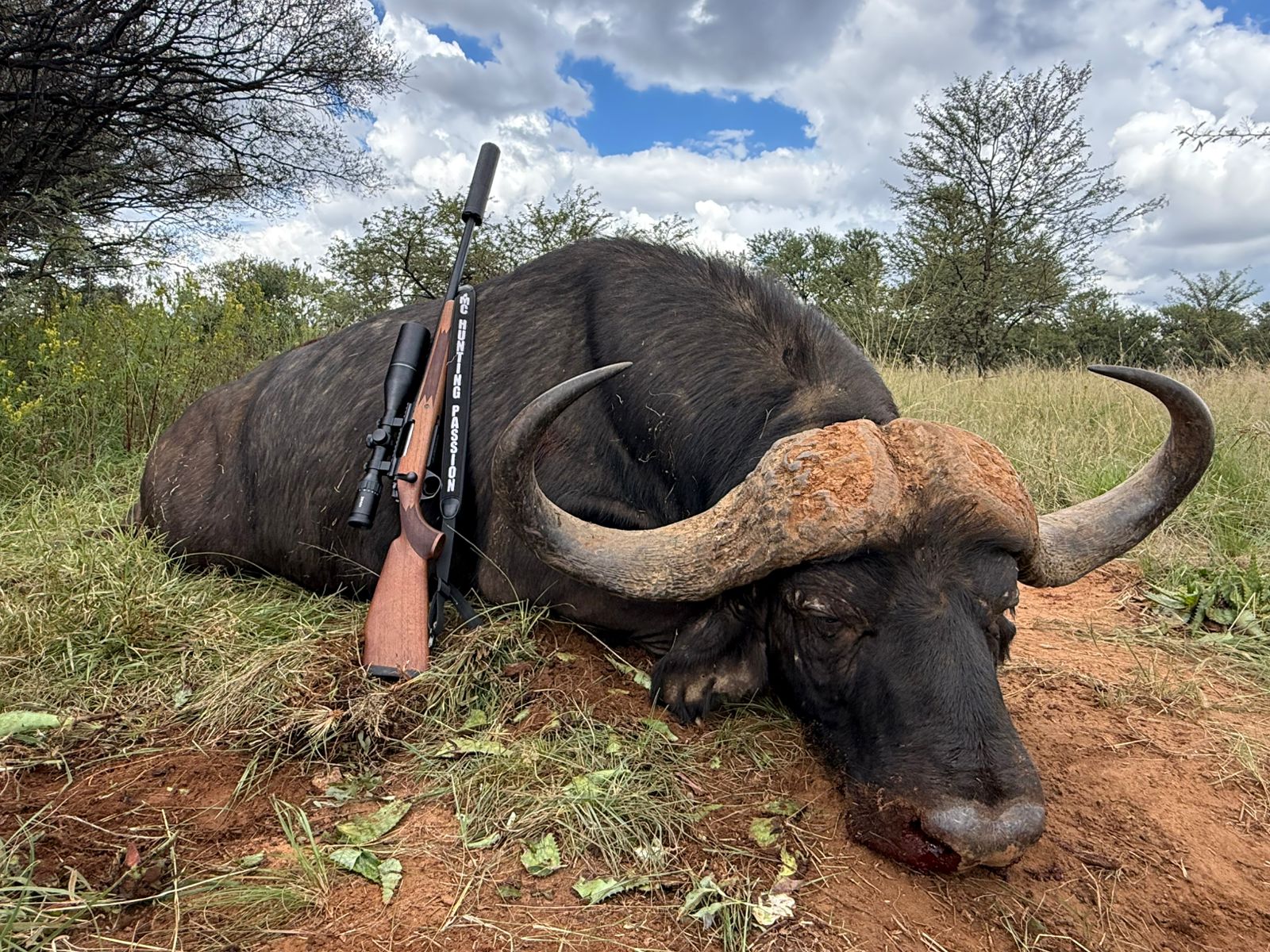
Zimbabwe has earned a reputation as one of Africa's classic buffalo hunting destinations, but that reputation was never built on buffalo alone. It was built on vast unfenced hunting areas, experienced Professional Hunters, skilled trackers and generations of outstanding Cape Buffalo Hunts.
Buffalo Hunting in Zimbabwe has always been about more than pursuing an old bull. Choosing the right hunting area, allowing enough time for the safari and understanding how buffalo use that landscape will have a far greater influence on the hunt than the destination itself.
Some hunting areas consistently hold resident buffalo populations, while others rely more heavily on seasonal movement or buffalo crossing between neighbouring properties. Community land, private conservancies and large safari areas can all produce exceptional buffalo hunting when they are well managed, but they do not all hunt in the same way. Understanding those differences before booking is one of the best decisions you can make.
Zimbabwe still delivers the classic buffalo safari because it rewards traditional hunting. Long days on fresh spoor, close encounters in thick mopane, careful decisions made by experienced Professional Hunters and opportunities earned through patience remain the foundation of the hunt. It is also one of the few places where carrying a classic dangerous-game rifle, whether a .375 H&H, .416 Rigby or a traditional .470 or .500 Nitro Express, feels perfectly suited to the country and the style of hunting it has become famous for.
[DYNAMIC-BLOGTABLEOFCONTENT]
Zimbabwe Earned Its Reputation
Zimbabwe's reputation as one of Africa's premier buffalo hunting destinations was not built overnight. It developed over decades of consistently producing challenging free-range buffalo hunts across remote wilderness areas where tracking on foot has always been the traditional way to hunt.
Zimbabwe's buffalo hunting is measured in footprints rather than kilometres. Fresh spoor found at first light may be followed for hours through mopane woodland, along dry riverbeds and across open vleis before a herd or an old dagga bull is finally located.
That uncertainty is part of what makes buffalo hunting so addictive. When the trackers step off the road onto fresh spoor, nobody knows exactly what lies ahead. The buffalo may already be several kilometres away, the wind may change, the tracks may disappear across hard ground, or the herd may suddenly appear only metres away in thick mopane. Long before a hunter sees a buffalo, the hunt has already begun.
Over time, the inches start to matter a little less. The real reward becomes finding a mature old bull that has survived for more than a decade in wild country, following him on foot and finally earning an opportunity after hours of careful tracking. That is the challenge that keeps hunters returning to Zimbabwe.
The result is a buffalo safari that still feels remarkably traditional. Every hunt is different, but the emphasis has always remained the same: finding buffalo on foot, getting close in thick cover and earning the opportunity through patience rather than speed.

Not Every Buffalo Area Hunts the Same
One of the biggest mistakes visitors may make is assuming that every buffalo hunt in Zimbabwe offers the same experience. It doesn't.
Zimbabwe is home to a wide variety of hunting areas, from remote safari areas and community land to private conservancies, government lands and mixed wildlife properties. All can produce excellent Cape buffalo hunting under the right conditions. They differ in habitat, buffalo movement, management, hunting pressure and the way a safari unfolds.
Some areas hold resident buffalo populations that spend most of the year within the same general range. Others rely more heavily on seasonal movement, with buffalo regularly crossing between neighbouring properties in search of water, grazing or security. A concession may have a healthy quota on paper, yet hunt very differently from another area only a few hours away.
The quality of a buffalo hunt is often determined long before the first track is found. The size of the hunting area, whether buffalo are largely resident, how the concession is managed and how frequently buffalo are encountered during a typical safari usually reveal far more about the hunt than trophy measurements alone.
Choosing the right hunting area is not about finding the biggest buffalo in Zimbabwe. It is about finding the hunting style that matches your expectations. Some hunters enjoy covering long distances in remote country where every buffalo must be earned. Others prefer areas with more consistent buffalo numbers, accepting that the experience may be different. Neither approach is right or wrong, but understanding those differences before booking helps avoid disappointment later.
Zimbabwe's Buffalo Country Is Remarkably Diverse
One of Zimbabwe's greatest strengths is the variety of buffalo hunting available across the country. Although Cape buffalo are found in several renowned hunting regions, the terrain, habitat and hunting style can vary considerably from one area to the next. Understanding those differences helps set realistic expectations long before the safari begins.
The Zambezi Valley remains one of Zimbabwe's best-known buffalo hunting regions. Characterised by rugged escarpments, thick riverine vegetation, extensive mopane woodland and the mighty Zambezi River itself, it offers the kind of traditional tracking safari that has defined Zimbabwe for generations. Buffalo may cover considerable distances between feeding and watering areas, making patient tracking an essential part of the hunt.
Farther south, areas such as the Save Valley have developed their own reputation for producing outstanding buffalo hunting under different conditions. Habitat, concession size, neighbouring land use and the way buffalo utilise the landscape all influence how a hunt unfolds. Success depends not only on the quality of the buffalo, but also on understanding how those animals use the area throughout the season.
Community-managed hunting areas also play an important role in Zimbabwe's conservation model. Some have produced exceptional buffalo hunting for decades while simultaneously creating tangible benefits for local communities. As with any hunting destination, however, the quality of management, anti-poaching efforts and habitat conservation often have a greater influence on the hunting experience than the ownership model itself.
No single hunting area can be described as "the best" for every hunter. Some safaris involve covering long distances on fresh spoor through remote country where opportunities must be earned. Others may offer more consistent buffalo encounters under different conditions. Neither approach is inherently better. The right choice depends on the style of buffalo hunt you are looking for and selecting an area that matches those expectations.
Why Ten Days Usually Beats Seven
A seven-day buffalo hunt can certainly be successful, and Professional Hunters regularly take excellent bulls within that timeframe. However, Zimbabwe is one of those destinations where allowing a little more time often changes the entire character of the safari.
Buffalo hunting here is rarely rushed. Mopane woodland can slow progress to a crawl, fresh spoor may lead the tracking team for hours before buffalo are even sighted, and changing winds or difficult terrain can force everyone to back away and begin again the following morning. Those are not setbacks. They are simply part of hunting truly free-range buffalo.
Additional hunting days create breathing room. They allow a Professional Hunter to pass a younger bull, recover after a blown stalk or adjust to changing conditions without feeling pressured to force an opportunity. A hunter who has travelled halfway around the world should never feel compelled to take the first legal buffalo simply because time is running out.
That becomes even more important when pursuing an old dagga bull. Mature buffalo often spend long periods away from the main herd, moving through thick cover where visibility is limited and every stalk demands patience. Several days may be spent following different bulls before the right animal is found.
A ten-day safari does not guarantee success, and no honest outfitter should suggest otherwise. What it does provide is time. Time to let the hunt develop naturally, time to make better decisions and time to recover if circumstances do not go your way during the first few days.
Zimbabwe has built its reputation on traditional buffalo hunting rather than quick opportunities. Giving yourself enough time to enjoy that process is often one of the best decisions you can make before the safari even begins.
A longer safari also creates opportunities beyond buffalo. Once the primary objective has been achieved, many hunters choose to dedicate additional time to Hyena Hunts, for which Zimbabwe has earned an outstanding reputation, or add a selection of Plains Game Hunts while continuing to enjoy the country and its hunting areas. Those extra days often turn a buffalo safari into a far more complete African hunting adventure.

What Does a Zimbabwe Buffalo Hunt Cost?
A Zimbabwe buffalo safari is rarely defined by trophy fees alone. The hunting area, safari length, logistics, accommodation and the way a concession is managed all contribute to the overall investment.
Some of Zimbabwe's most remote buffalo areas require charter flights or long road transfers, dedicated anti-poaching programmes and year-round wildlife management. Those additional operating costs are naturally reflected in daily rates and, in some cases, trophy fees. While these safaris may cost more, they often provide access to extensive free-range hunting areas where buffalo are managed under traditional safari conditions.
Other hunting areas may offer more accessible logistics or different styles of buffalo hunting, resulting in lower overall safari costs. Lower prices do not automatically indicate an inferior hunt, just as higher prices do not guarantee success. The quality of the hunting area, resident buffalo populations, concession management and the experience of the Professional Hunter usually have a far greater influence on the safari than price alone.
Comparing Zimbabwe buffalo hunts on cost alone can therefore be misleading. Understanding exactly what is included, how the hunting area operates and what style of safari is being offered provides a far clearer basis for comparison than looking only at the final price.
Our African Hunting Safari Prices guide explains how daily rates, trophy fees and additional safari costs are typically structured, helping hunters compare destinations and understand what represents genuine value before making a booking.
Zimbabwe Doesn't Rush the Hunt
Zimbabwe never earned its reputation by producing quick buffalo hunts. It became famous because it still offers the kind of safari where each day unfolds naturally. Fresh spoor may disappear across hard ground, the wind may force the tracking team to back away, or a mature bull may simply refuse to leave thick cover until the following day. None of those moments mean the hunt has gone wrong. They are simply part of hunting truly wild Cape buffalo.
It also explains why so many hunters return. The memories are rarely defined by a single shot. They are built around long hours following fresh tracks through mopane woodland, working alongside experienced trackers, quietly discussing the next move with a Professional Hunter and finally seeing an old bull emerge after a day that seemed to offer nothing at all.
Zimbabwe doesn't promise certainty, and it doesn't rush the hunt. What it offers is one of Africa's last truly traditional buffalo safaris, where success is measured not only by the trophy taken home, but by the journey that led to it.
The First Buffalo Is Rarely the Last
A Zimbabwe buffalo safari rarely marks the end of someone's African hunting journey. More often, it becomes the hunt that changes the way sportsmen think about Africa. Long days following fresh spoor, working alongside experienced Professional Hunters and trackers, and making decisions in truly wild country create memories that continue long after the trophy has been shipped home.
That first buffalo often leads to a broader interest in Big Game Hunting across Africa. Lion, leopard, elephant and other dangerous game each present their own challenges, but the lessons learned while following buffalo through Zimbabwe's mopane woodland provide an ideal foundation for future safaris.
Zimbabwe also reminds hunters that every African destination offers something different. Some return to pursue another old dagga bull in a different hunting area, while others begin planning Hunting Trips to countries such as Tanzania, Mozambique, Namibia or Zambia, each with its own landscapes, traditions and style of safari.
The destination may change, but the attraction often remains the same. Wild places, honest hunting and the satisfaction that comes from earning every opportunity. That is why so many hunters who start with buffalo eventually find themselves planning the next safari before the first one has truly ended.

Frequently Asked Questions
Why is Zimbabwe considered one of the best countries for buffalo hunting?
Zimbabwe has earned its reputation through generations of traditional free-range buffalo hunting. Large unfenced hunting areas, experienced Professional Hunters, skilled trackers and a strong tracking tradition continue to make the country one of Africa's leading Cape buffalo destinations.
How many days should I allow for a buffalo hunt in Zimbabwe?
Although seven-day hunts can be successful, ten days generally provide greater flexibility. Extra hunting days allow time to recover from changing winds, difficult stalks or buffalo moving out of an area, while also creating opportunities to pursue additional species if the buffalo is taken early.
Which parts of Zimbabwe offer the best buffalo hunting?
Several regions produce excellent buffalo hunting, including the Zambezi Valley, Dande, Chewore, Sebungwe, Save Valley and other well-managed safari areas. Rather than focusing on one specific destination, hunters should consider concession quality, resident buffalo populations, habitat and management when choosing where to hunt.
How much does a buffalo hunt in Zimbabwe cost?
The overall cost depends on the hunting area, safari length, daily rates, trophy fees and travel logistics. More remote safari areas may involve higher operating costs and longer transfers, while different concessions offer different hunting styles. Comparing hunts on value rather than price alone usually leads to better decisions.
How much tracking should I expect on a Zimbabwe buffalo hunt?
A traditional Zimbabwe buffalo safari is built around tracking on foot. Following fresh spoor through mopane woodland, dry riverbeds and thick bush may take several hours before buffalo are located, making a reasonable level of fitness beneficial throughout the hunt.
Can I combine a buffalo hunt with other species?
Yes. Buffalo hunting is often combined with plains game, while hunters allowing additional safari days may also pursue species such as hyena where opportunities and permits allow. Zimbabwe is well suited to building a varied dangerous game and plains game safari.
What calibre is recommended for buffalo hunting in Zimbabwe?
Professional Hunters recommend a minimum legal calibre appropriate for Cape buffalo, with cartridges such as the .375 H&H remaining one of the most popular choices. Larger calibres, including the .416 Rigby, .458 Lott and traditional Nitro Express rifles, are also widely used depending on the hunter's preference and experience.
About the Author
Pierre van Wyk is Co-Founder of Game Hunting Safaris and has spent many years working with hunters planning safaris across Southern and East Africa. Drawing on practical experience with African hunting destinations, professional hunters and safari operators, he writes to help sportsmen make informed decisions before booking their hunts. His articles focus on ethical hunting, safari planning, conservation and the practical realities of hunting Africa's diverse game species.