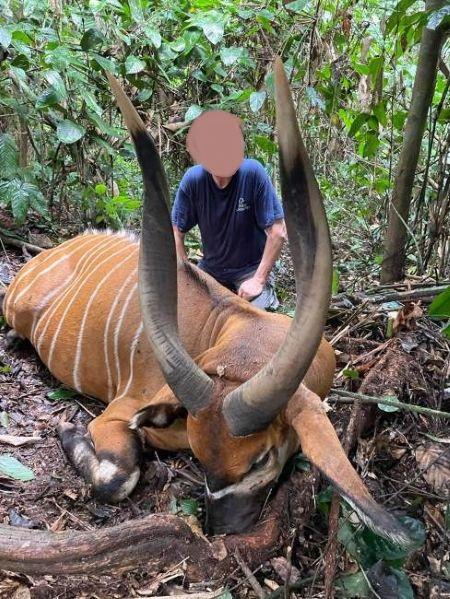
13 Days Bongo hunting in Tala Tala, Republic of Congo
Booking Season: 2026
Hunt Difficulty: Difficult

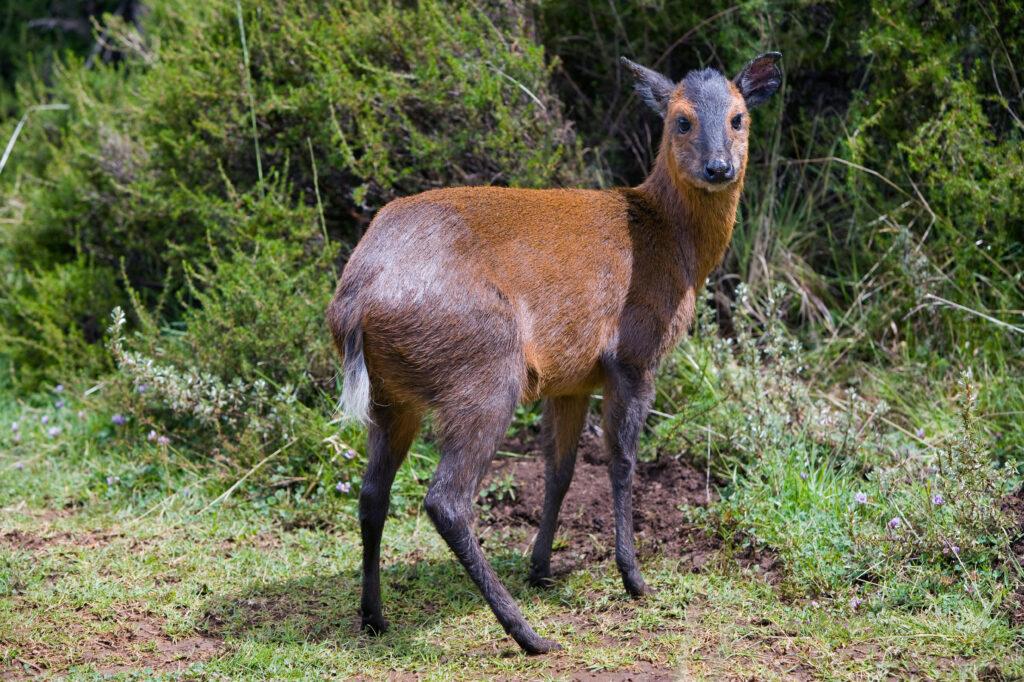
The Republic of Congo is home to some of the largest remaining rainforest ecosystems in Africa. While many hunters travel to the country in pursuit of species such as bongo, the forests also support an extraordinary variety of smaller antelope that are rarely encountered elsewhere. Among them is the black-fronted duiker, a secretive forest species that forms part of the rich wildlife diversity of the Congo Basin.
Unlike antelope found in open country, black-fronted duiker spend their lives within dense rainforest habitat where visibility is limited and encounters are often brief. For hunters exploring the forests of the Republic of Congo, the species represents one of many lesser-known animals that contribute to the unique character of a Central African safari. Hunters interested in available hunting areas, species, and safari planning can learn more in our complete guide to hunting in Congo.
Available Black-fronted Duiker Hunts
13 Days Bongo hunting in Tala Tala, Republic of Congo
Booking Season: 2026
Hunt Difficulty: Difficult

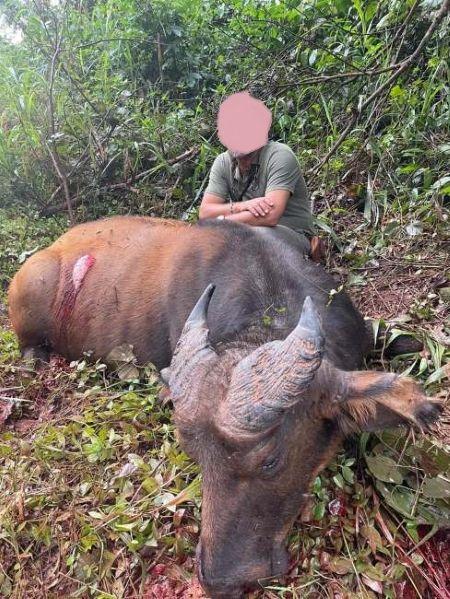
Dwarf Buffalo Hunting Congo (Brazzaville) Tala Tala
Booking Season: 2026
Hunt Difficulty: Difficult
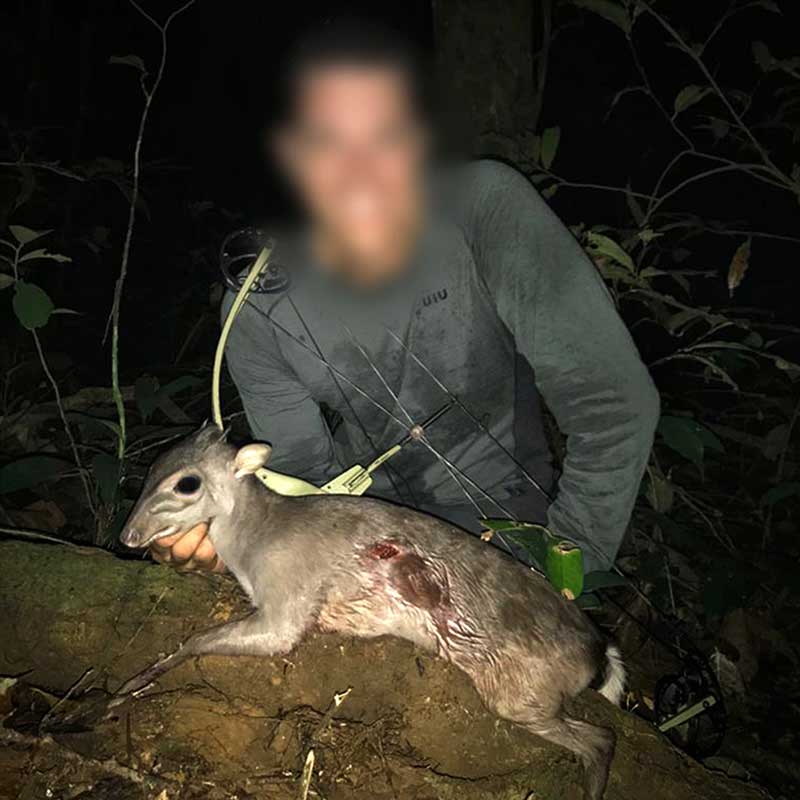
Hunting Adventure in Brazzaville Exotic Duikers & Hogs
Booking Season: 2025
Hunt Difficulty: Difficult
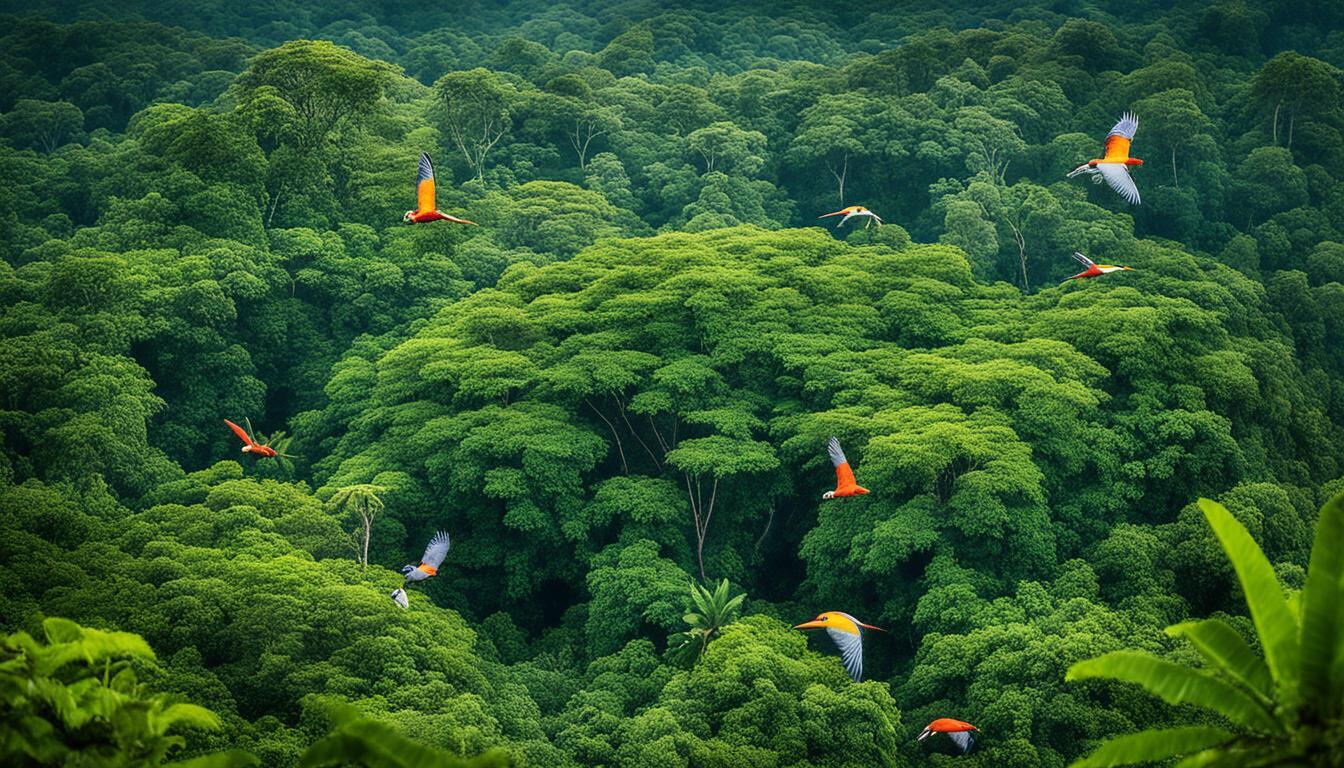
The Republic of Congo forms part of the vast Congo Basin, one of the largest remaining rainforest ecosystems on Earth. These forests provide year-round habitat for an extraordinary range of wildlife, including numerous species of duiker that thrive in dense vegetation and low-light conditions.
Unlike many traditional plains game hunts, where animals can often be spotted at considerable distance across open country, the Congo Basin is defined by thick forest cover, limited visibility, and a complex network of game trails that support animal movement. These conditions allow smaller antelope species to flourish, often remaining unseen despite living in areas that are actively hunted.
The same forests that support exceptional bongo hunts also provide habitat for black-fronted duiker and many other lesser-known rainforest species. For hunters spending extended periods in these remote concessions, encounters with smaller antelope are part of what makes the Congo hunting experience so unique.
More than almost anywhere else in Africa, the Republic of Congo offers hunters the opportunity to experience a complete rainforest ecosystem, where every day in the forest can reveal species that many hunters may never encounter elsewhere.
The black-fronted duiker can be encountered during rainforest safaris in the Republic of Congo, although it is rarely the primary reason hunters travel to the region. Most safaris are planned around larger forest species, with smaller antelope becoming part of the experience as hunters spend time moving through productive rainforest habitat.
The same forests that support black-fronted duiker also provide habitat for several other specialized rainforest species. Hunters spending extended periods in these concessions may also encounter wildlife associated with the wetland and forest systems that support some of Africa's most sought-after sitatunga hunts.
For American and international hunters unfamiliar with Central African safaris, this distinction is important. Black-fronted duiker are not typically hunted as standalone trophies. Instead, opportunities arise naturally during longer hunts where trackers and professional hunters spend days working through dense forest in search of other game.
Because encounters are often brief and unpredictable, hunters who take a black-fronted duiker usually do so as a result of time spent in the field rather than a targeted pursuit of the species itself.
Black-fronted duiker are among the most elusive antelope found in Central African rainforests. Their small size, cautious behavior, and ability to move unnoticed through dense vegetation make them difficult to spot even in areas where they are known to occur.
Unlike many antelope species that rely on open ground and early detection of danger, black-fronted duiker use the forest itself as protection. They move quietly through thick cover, often following narrow game trails and feeding areas hidden beneath the canopy. In many cases, hunters become aware of the animal only after it has already appeared within range.
Encounters are typically brief. A black-fronted duiker may cross a trail, pause momentarily in a small opening, and then disappear back into cover within seconds. Because visibility is limited throughout much of the rainforest, opportunities rarely develop into long observations or carefully planned stalks.
This combination of dense habitat, secretive behavior, and unpredictable encounters is what makes the species so unusual. For serious collectors of African game, black-fronted duiker represent more than another animal on a species list. They are part of a group of rainforest antelope that can only be encountered by spending meaningful time in some of Africa's most remote hunting environments.
Black-fronted duiker are not the species that draw most hunters to the Republic of Congo. They are rarely the focus of safari planning discussions, and few hunters travel to Central Africa with the sole intention of pursuing one.
Their significance comes from the environment in which they are encountered.
Animals such as the black-fronted duiker are part of what makes rainforest hunting fundamentally different from hunting in more familiar safari destinations. They exist within an ecosystem where success is measured not only by trophies taken, but by time spent exploring remote forests, following experienced trackers, and experiencing wildlife that remains largely hidden from view.
For serious collectors of African game, species like the black-fronted duiker often become meaningful additions to a safari. Not because of their size or trophy value, but because they reflect participation in a style of hunting that few hunters ever experience. Opportunities are earned through time in the field rather than planned around a specific species.
In many ways, the black-fronted duiker represents the broader appeal of a Congo safari itself. It is elusive, closely tied to its environment, and encountered only by hunters willing to immerse themselves in one of Africa's last great rainforest wildernesses.
Black-fronted duiker should be viewed as a rewarding addition to a broader rainforest safari rather than a primary hunting objective. Hunters who visit the Republic of Congo typically do so for the opportunity to experience one of Africa's last great rainforest wildernesses, where encounters with lesser-known species form part of the appeal.
Success on these hunts often depends on patience, awareness, and the ability to react quickly when opportunities present themselves. Because encounters with smaller forest antelope are frequently brief, hunters are encouraged to familiarize themselves with proper shot placement for hunting game in Africa before undertaking a Central African safari.
For more information on available hunting areas, species, and safari planning, see our complete guide to hunting in Congo.
Search from our range of Hunts across various popular destinations in Africa.

Book Your Hunt