
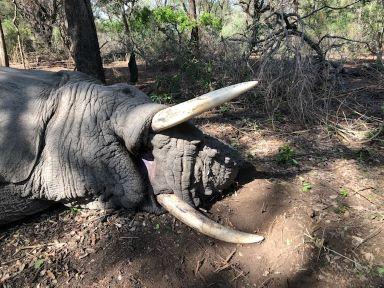
Elephant Hunting in Zimbabwe 10 Days Action in Save Valley
Booking Season: 2026
Hunt Difficulty: Difficult

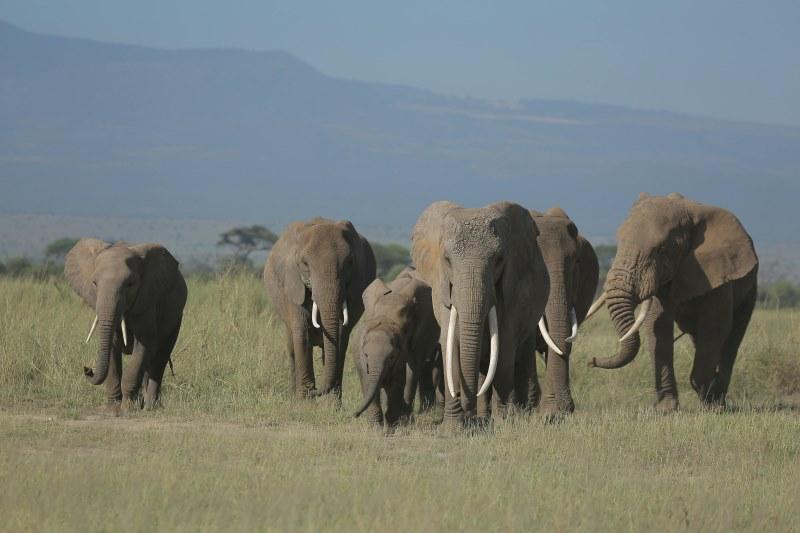
The African elephant is the world's largest land mammal and one of the five legendary species that define Big Five Hunting. Revered for its intelligence, complex social behaviour and immense physical presence, it remains one of Africa's most iconic animals. In the countries where elephant hunting is permitted, it is conducted under strict wildlife management regulations and should never be confused with poaching, illegal ivory trade or other unlawful activities.
Hunters interested in pursuing this remarkable species can explore our Elephant Hunts page to learn about available safari destinations, legal hunting opportunities and professionally guided elephant safaris across Africa.
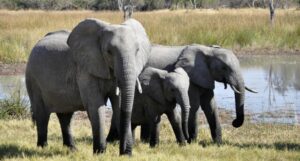
Elephants live in close family groups and are highly protective of herd members, particularly calves. When elephants detect a potential threat, they may become defensive or aggressive. Unexpected encounters at close range require particular caution, especially when young calves are present.
The herd leader is called the matriarch. She is the oldest, largest, and most dominant female. The matriarch is the backbone of the elephant family unit, as she provides stability and guidance within the herd. Other females comprising the family unit are usually her daughters and their offspring.
Elephants are herbivores, and consume a large variety of plant material, including grasses, leaves, shrubs, fruits, vegetables, and roots, depending on the season and their habitat. When it’s particularly dry, elephants will eat more woody parts of trees and shrubs like twigs, branches, and bark.
Elephants are constantly eating and can consume up to 330 pounds of food per day! They require about 18 to 26 gallons of water daily but may consume up to 40 gallons if it is very dry, or they have been without water for a long time.
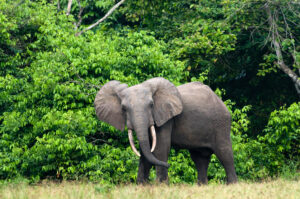
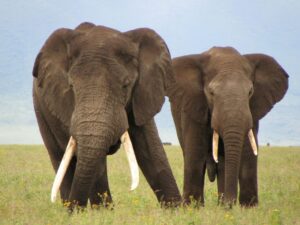
There are two main types of elephants found in Africa, namely the African Bush Elephant and the African Forest Elephant:
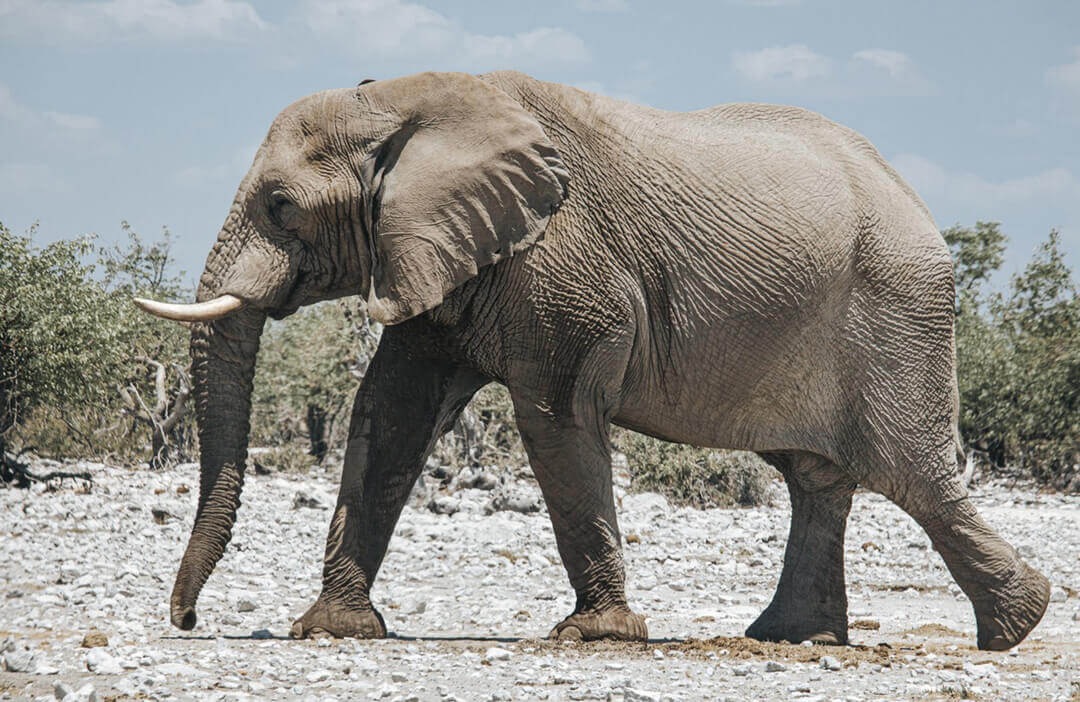
The African Bush elephant, also known as the African savannah elephant, is the world’s largest land animal, weighing over 13,200 pounds! They are native to areas of sub-Saharan Africa, including Uganda, Kenya, Tanzania, Botswana, Zimbabwe, Namibia, Zambia, South Africa, and Angola.
The African Forest elephant is native to the humid tropical forests in West Africa and the Congo Basin and is the smallest of the three living elephant species, reaching a shoulder height of approximately 7.8 feet.
How do an elephant’s ears assist to keep it cool?
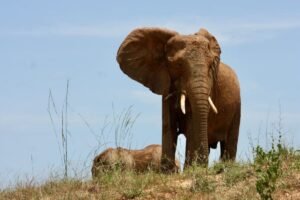
An interesting fact is that the size of an elephant’s ears is proportionate to its geographic distribution. The closer to the equator the elephant resides, the larger the ears, allowing more heat to move from the body, and therefore it has larger ears. African elephants live closest to the equator and have the largest ears to assist them in keeping cool.
They also use their ears to funnel in sound waves from their surrounding location, which then contributes to their keen sense of hearing. It is this excellent hearing that assists them in knowing when there are predators or dangers (including hunting safaris!) in the surrounding areas.
Name:
Loxodonta
Female Weight:
6000 - 8000 pounds
Male Weight:
4000 - 14000 pounds
Male Shoulder Height:
10.5 feet
Range:
Savannahs, Grasslands, Forests, and Deserts in Sub-Saharan Africa
Mating Season:
December–March with a 22-Month Gestation Period
Life span:
60-70 years
African elephants are the largest land animals, with adult males weighing between 4,000-14,000 pounds. Females are smaller but still have a considerable mass, weighing 6,000-8,000 pounds. An elephant’s skin is grey and wrinkly in appearance, with African elephants being more wrinkled than their Asian counterparts. These wrinkles act as a cooling mechanism by increasing the skin's surface area. The additional skin and wrinkles trap moisture that then takes longer to evaporate in the heat. Even though its skin is very tough, it is sensitive, and elephants, like most hairless mammals, are subject to sunburn. An elephant's trunk is an extension of the upper lip and nose and functions for breathing, feeding, smelling, drinking, lifting, grasping, feeding, dusting, communication, sensing, and as a defence or protection. The trunk contains about 100,000 muscles and tendons that give it great strength and amazing flexibility, with their trunks capable of expanding, contracting, and moving in various directions.
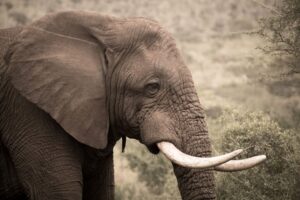
While Asian elephants have one finger-like projection at the tip of the trunk, African elephants have two. These finger-like projections contain delicate nerve endings and are capable of fine motor skills, for example grasping something small. Both African and Asian elephants have a total of 26 teeth, including two upper incisors (the tusks), 12 premolars (non-permanent teeth similar to baby teeth), and 12 molars. Asian elephants have smaller tusks than African elephants, and females have smaller tusks than males.
Elephants are generally tracked on foot by following fresh spoor found near water, roads or established travel routes. Experienced trackers assess the age and direction of the tracks before following them through the bush, while the professional hunter continually monitors the wind and surrounding herd activity. The objective is to approach carefully enough to identify the animal before any decision is made.
Like with any of the big-5 dangerous game animals, when elephant hunting in Africa, a minimum legal requirement is a .375 with a 300-grain bullet. Calibers 450 grain and up are recommended, such as a .416 Rigby, .458, or .458 Lott. Double rifles such as 470NE, 500NE, and up are ideal for hunting these beasts. Only solid bullets should be used on an elephant hunt.
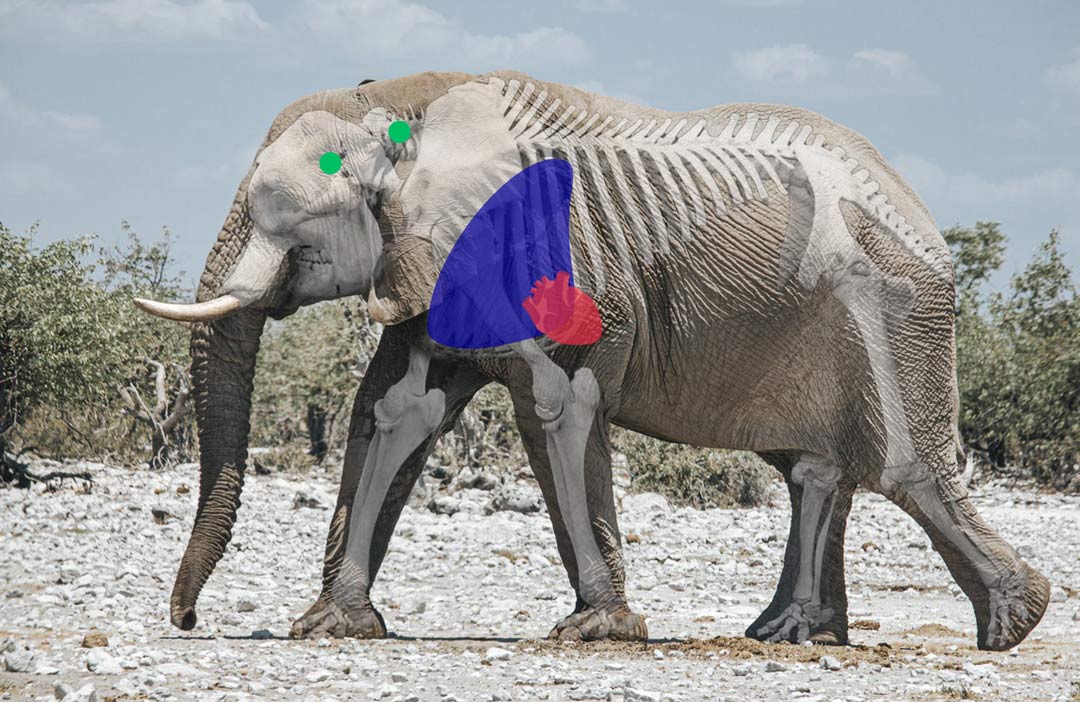
Understanding proper elephant shot placement is one of the most critical aspects of a successful hunt. Due to the elephant’s sheer size, thick skin, and unique anatomy, precise shot placement is essential to ensure a quick, ethical harvest. Unlike many other species, the brain and vital organs of an elephant are positioned differently depending on the angle, making it vital for hunters to study shot angles carefully before taking a shot.
For a detailed breakdown of angles, anatomy, and recommended shot positions, refer to our complete elephant shot placement guide before heading into the field.
Available Elephant Hunts
Elephant Hunting in Zimbabwe 10 Days Action in Save Valley
Booking Season: 2026
Hunt Difficulty: Difficult
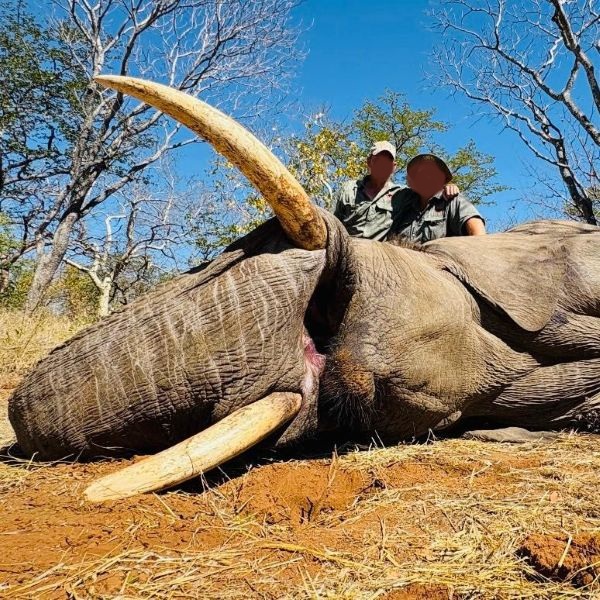
Hunt Exportable Trophy Elephants in Matetsi East RFC, Zimbabwe
Booking Season: 2026
Hunt Difficulty: Difficult
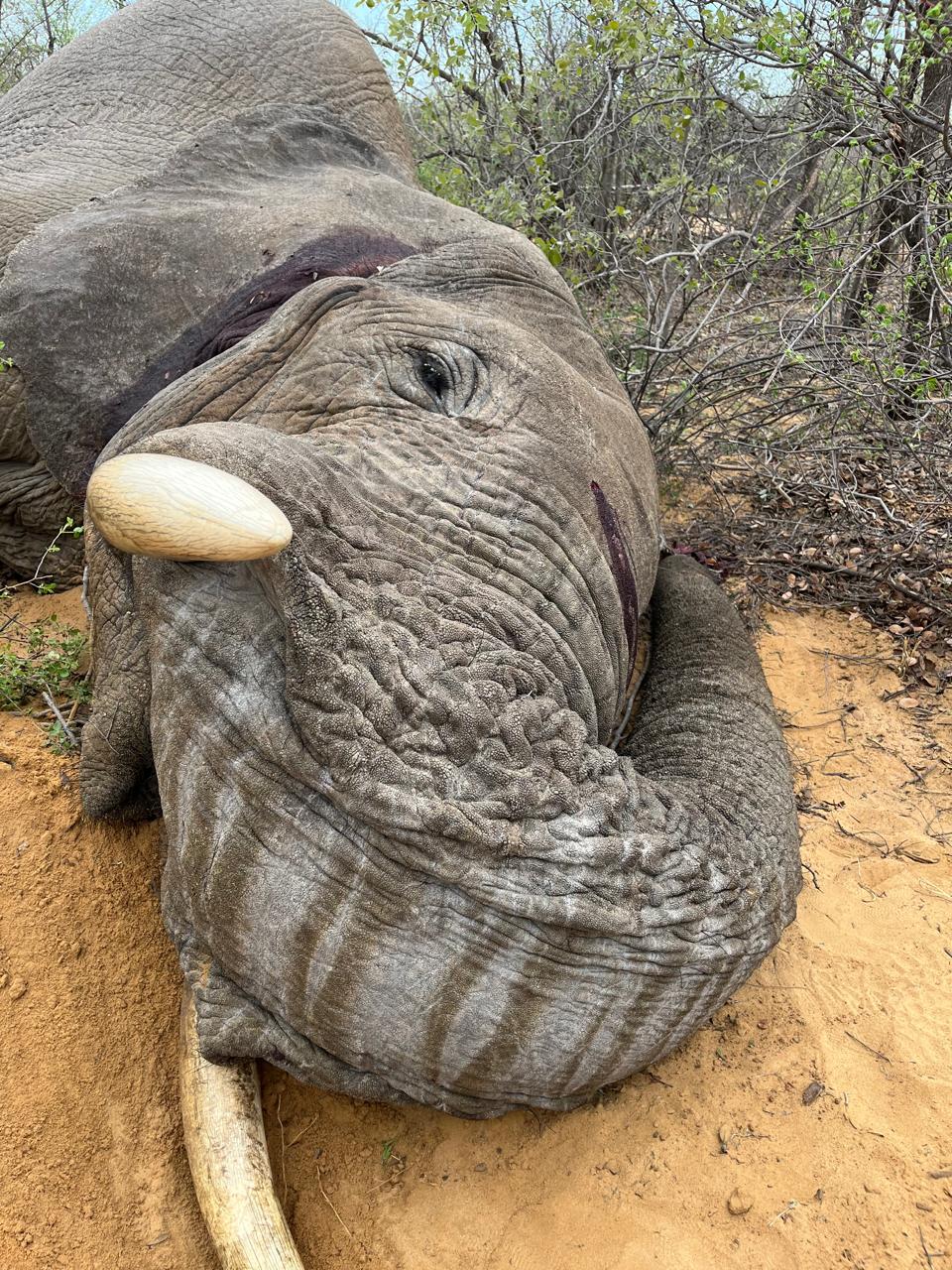
Exportable Caprivi Elephant Safari
Booking Season: 2026
Hunt Difficulty: Moderate, Difficult
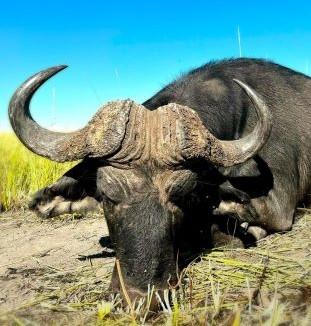
Free-Range Elephant & Buffalo Hunt in Botswana
Booking Season: 2026
Hunt Difficulty: Difficult
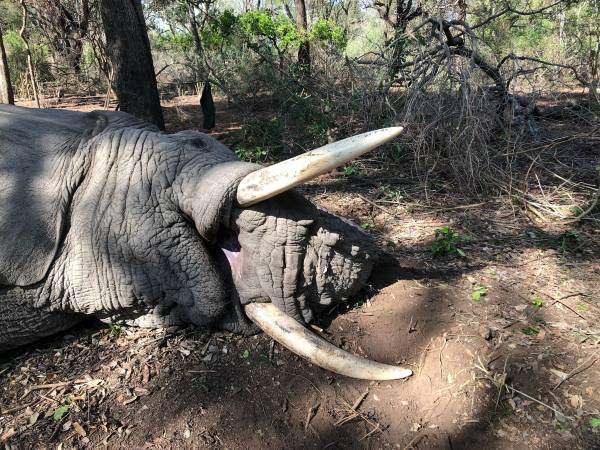
Elephant Hunting, Hyena and Night Critters in Zimbabwe
Booking Season: 2026
Hunt Difficulty: Difficult
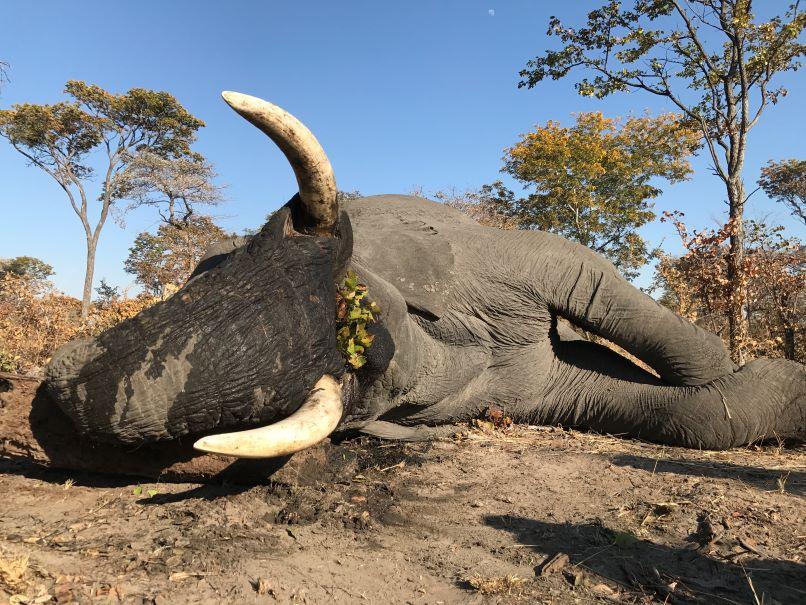
Lowveld Elephant Hunting in Zimbabwe | Mateke Hills
Booking Season: 2026
Hunt Difficulty: Difficult
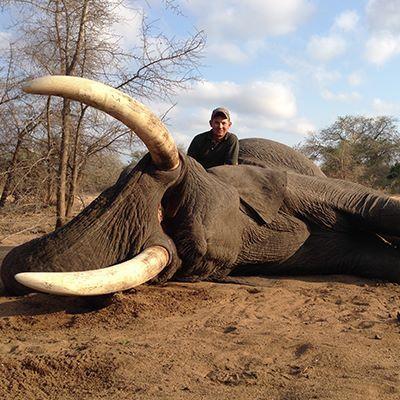
Exportable Trophy Elephant, Hunt Zambezi Valley, Zimbabwe
Booking Season: 2026
Hunt Difficulty: Difficult
Zimbabwe Tuskless Elephant Hunt | Hammond Save Valley
Booking Season: 2026
Hunt Difficulty: Difficult
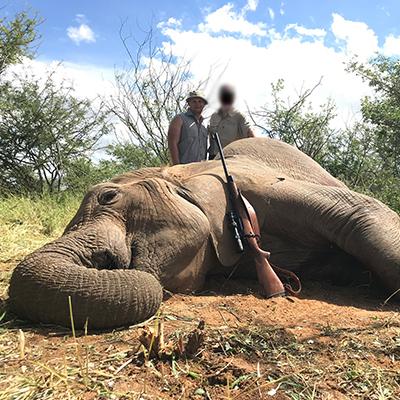
Tuskless Elephant Hunt | Zimbabwe Zambezi Valley
Booking Season: 2026
Hunt Difficulty: Difficult
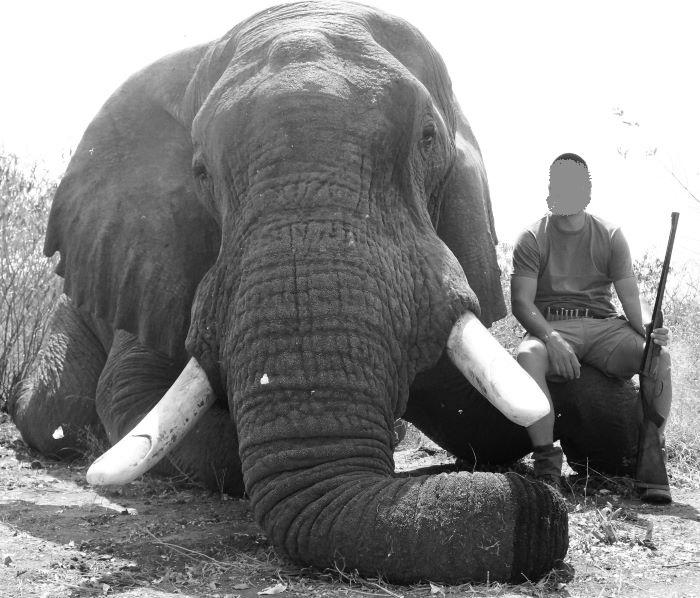
14-Day Exportable Elephant Hunting Safari in Botswana
Booking Season: 2026
Hunt Difficulty: Difficult
Search from our range of Hunts across various popular destinations in Africa.

Book Your Hunt