South African Plains Game Safari Trophy Nyala plus 5 Species
Booking Season: 2026
Hunt Difficulty: Moderate, Difficult

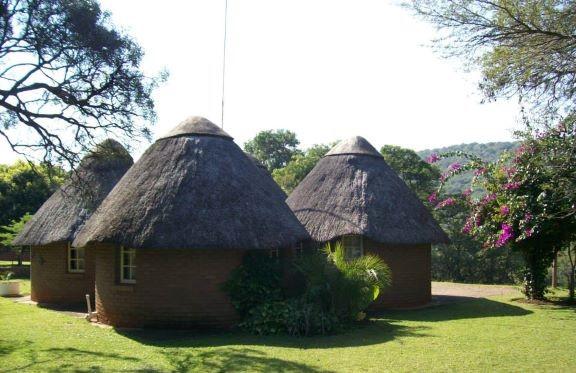
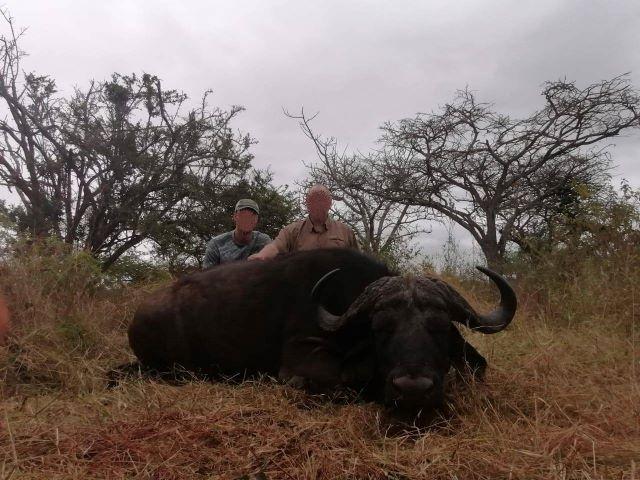
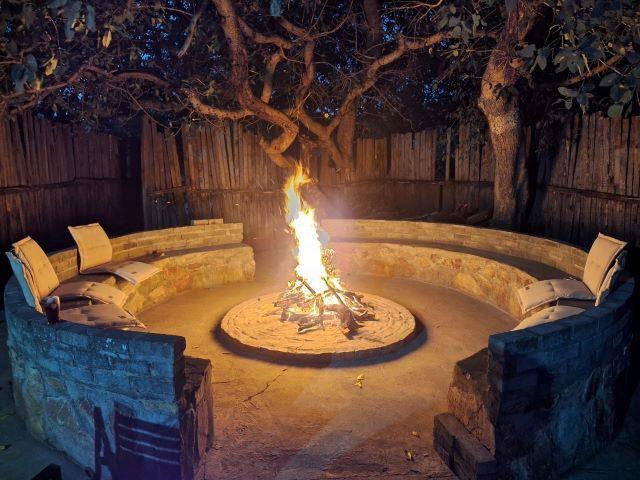
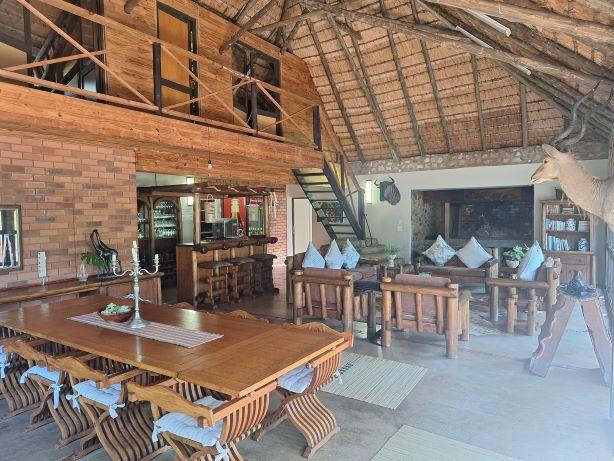
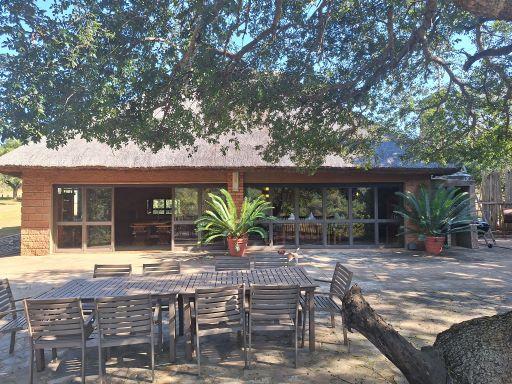
Relax each evening in a comfortable African hunting lodge featuring spacious en-suite accommodation, outstanding home-cooked cuisine and a traditional lapa where hunters gather to relive the day's stalk over a cold beer or favourite whisky.
KwaZulu-Natal's rolling hills, dense bushveld, riverine thickets and open grasslands create classic Cape buffalo country where every change in the wind, every fold in the landscape and every fresh spoor presents a new challenge for hunter and tracker alike.
| Fence Type: | Fenced |
| Nearest Airport Name: | Oliver Tambo International Airport |
| Transfer From Airport: | Yes |
Long before sunrise breaks across the rolling hills of KwaZulu-Natal, the day's hunt has already begun. While most hunters are still enjoying their first cup of coffee, experienced Zulu trackers are quietly studying the ground ahead, reading fresh buffalo spoor with a level of skill refined over generations. To an untrained eye, the earth appears unchanged. To a tracker, every hoof print, broken blade of grass and disturbed patch of soil tells the story of where Africa's Black Death travelled during the night.
This seven-day safari takes place across more than 30,000 acres of prime buffalo country, where dense bushveld, grassy valleys and thick riverine cover provide the perfect habitat for mature hard-bossed Cape buffalo. Hunting here is rarely about covering the greatest distance. Instead, success comes from working closely with your professional hunter and trackers, allowing patience, experience and careful fieldcraft to guide every step of the stalk.
For hunters searching for authentic Cape Buffalo Hunts, KwaZulu-Natal offers a style of hunting unlike anywhere else in South Africa. Combining traditional tracking, experienced Zulu trackers and classic fair-chase hunting, this safari delivers one of the country's most rewarding Dangerous Game Hunts while showcasing a region renowned for its rich wildlife, spectacular scenery and proud hunting heritage.
Price: US$11,250 per hunter (All-In)
Duration: 5 Hunting Days 6 Nights (Allow 7 Days Including International Travel)
Hunter Ratio: 1 Hunter : 1 Dangerous Game Professional Hunter
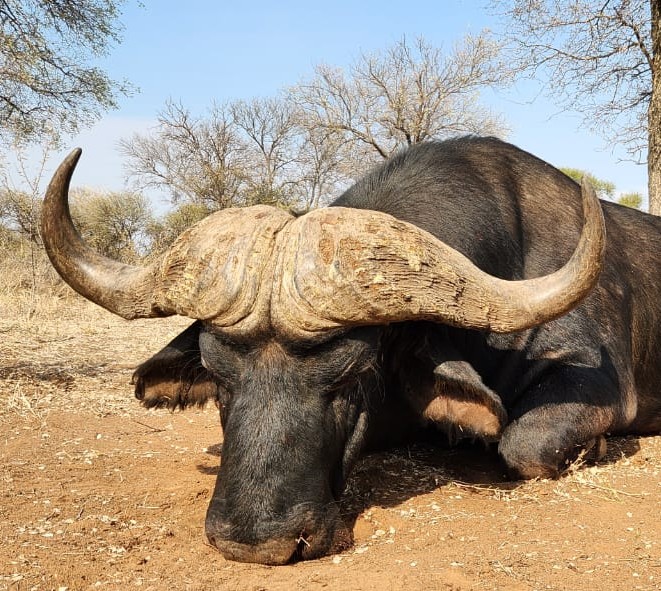
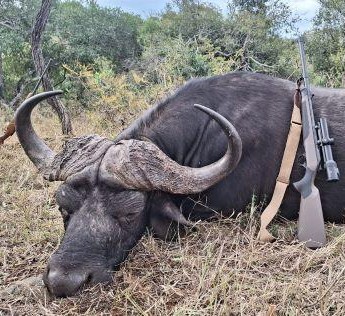
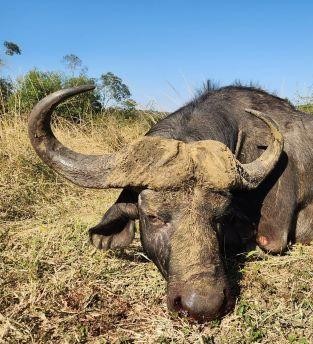
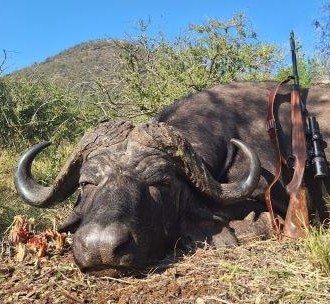
Trophy Included: 1 Hard-Bossed Cape Buffalo Bull (Under 39 Inches | Minimum Age 12 Years)
Hunting Area: 30,000 Acres of Prime Buffalo Habitat in KwaZulu-Natal
Observers: US$250 per person, per day
Every successful buffalo hunt in KwaZulu-Natal begins with the trackers. Before the first rays of sunlight reach the valleys below, experienced Zulu trackers are already searching roads, game trails and waterholes for the fresh spoor of mature buffalo bulls. Years of experience allow them to judge the age of a track, the size of the animal and even whether the buffalo is travelling alone or still moving with the herd.
Once the right spoor has been found, the vehicles are left behind and the hunt slows to the buffalo's pace. Every broken branch, freshly turned stone and disturbed patch of grass becomes another piece of the story, allowing the tracking team to predict where the buffalo is heading long before it comes into view. Communication between your professional hunter and the trackers is often quiet and subtle, with much of the hunt unfolding through hand signals, experience and an instinct developed over a lifetime in the bush.
Unlike many forms of hunting where success depends on covering ground quickly, tracking Cape Buffalo rewards patience above all else. There are no shortcuts and no guarantees. Some stalks may end within an hour, while others continue throughout the day before the opportunity finally presents itself.
It is this partnership between hunter, professional hunter and experienced Zulu trackers that gives buffalo hunting in KwaZulu-Natal its unique character. Every successful safari becomes a shared achievement, built on teamwork, traditional fieldcraft and generations of tracking knowledge that continue to define Hunting in South Africa.
For hunters seeking an authentic Dangerous Game Hunt, few experiences compare with following fresh buffalo spoor on foot through the rolling hills of KwaZulu-Natal. There are no shortcuts and no guarantees, only skilled trackers, experienced professional hunters and the opportunity to earn one of Africa's most respected trophies through traditional fair-chase hunting.
Every experienced buffalo hunter eventually discovers that the greatest challenge is not finding the buffalo, it's getting close enough without being detected. KwaZulu-Natal's rolling hills, deep valleys and thick riverine bush create constantly changing wind conditions where a perfect stalk can unravel in seconds if the breeze shifts unexpectedly.
This is where experience separates a good hunt from a memorable one. Your professional hunter and Zulu trackers are not only following fresh spoor; they are constantly reading the wind, watching the movement of grass, listening to birds and adjusting the approach as conditions change. Often the buffalo has no idea the hunting party is nearby. Other times, a single swirl of wind is enough to send an old Dagga Boy disappearing silently into the thick cover.
When the final approach begins, every movement slows. Rifles are carried ready, conversations disappear and each step is carefully placed. Success is rarely determined by speed, but by discipline, patience and trusting the judgement of the team around you. In the rolling hills of KwaZulu-Natal, the wind is often the final obstacle between the hunter and one of Africa's most respected trophies.
Hours of careful tracking often end without warning. One moment the hunting party is quietly following fresh spoor through the Natal bush, and the next your professional hunter gently raises his hand, signalling everyone to stop. Somewhere ahead, hidden amongst the thick cover or feeding quietly on a distant hillside, is the buffalo you have spent the morning following.
This is where patience becomes more valuable than speed. Rarely does a mature Cape buffalo offer a perfect opportunity immediately. Instead, your professional hunter and Zulu trackers begin quietly studying the herd, identifying the oldest bulls, watching how they move and waiting for the right moment to close the remaining distance.
Old Dagga Boys have survived for a reason. Years of avoiding lions, rival bulls and hunters have made them cautious and unpredictable. They trust their noses, constantly test the wind and often disappear into cover long before hunters realise they have been detected. Every successful approach is therefore built on careful planning rather than luck.
When the moment finally arrives, there is very little conversation. The trackers quietly step aside, your professional hunter confirms the chosen bull, and suddenly the hours spent following fresh spoor all lead to a single opportunity that has been earned every step of the way.
Every experienced buffalo hunter understands that the first shot is the one that matters most. While Cape buffalo are renowned for their strength and resilience, good hunting has never been about how many cartridges are fired, it has always been about placing the first bullet exactly where it belongs.
By the time your professional hunter quietly settles the shooting sticks, hours of tracking, careful planning and patient stalking have already brought you to this single opportunity. There is rarely any pressure to rush. Instead, your PH will help you wait for the right angle, identify the correct bull and ensure every possible advantage is in your favour before giving the signal to shoot.
A mature buffalo deserves respect. These old bulls have survived countless dry seasons, predators and rival bulls to reach maturity, and they should be hunted with the same discipline that allowed them to survive for so many years. In KwaZulu-Natal's thick bushveld, a well-placed first shot is not simply good hunting—it is an ethical responsibility shared by both hunter and professional hunter.
Before travelling to South Africa, we recommend becoming familiar with our Cape Buffalo Shot Placement Guide. Understanding the buffalo's vital anatomy and recognising the correct shot angles will do far more for your success than simply carrying a larger calibre. Confidence comes from preparation, and preparation begins long before you arrive in camp.
When the opportunity finally presents itself, there should be no uncertainty. The trackers have done their work, your professional hunter has guided the stalk and the buffalo has offered the shot. All that remains is to trust your preparation and make the moment count.
Buffalo hunting in KwaZulu-Natal is at its best during South Africa's cooler months, from April through October. Comfortable daytime temperatures, crisp mornings and gradually thinning vegetation create ideal conditions for tracking mature buffalo on foot, while the changing seasons encourage predictable movement between feeding areas, thick cover and permanent water.
Unlike many destinations that operate within a short hunting window, South Africa offers excellent buffalo hunting throughout much of the year. Even so, experienced hunters often favour the cooler months when long walks through the rolling hills and dense bushveld become more comfortable, allowing both hunters and Zulu trackers to spend more time following fresh spoor without the fatigue of midsummer heat.
Every season presents its own challenges, but one thing remains constant. Success in KwaZulu-Natal is earned through patience and traditional tracking.

Your safari begins with your arrival at OR Tambo International Airport in Johannesburg, where you'll be welcomed by Johann or a member of his team. After assistance with firearm clearance, you'll spend your first evening relaxing before setting off the following morning on the scenic drive to KwaZulu-Natal.
The journey of approximately five and a half hours is part of the safari itself. Leaving Gauteng's highveld behind, the landscape gradually transforms into the rolling hills, lush valleys and thick bushveld that have made KwaZulu-Natal one of South Africa's most beautiful hunting regions. Long before reaching camp, you'll begin to understand why this province has earned such a respected reputation among dangerous game hunters.

After a rewarding day following buffalo through the rolling hills of KwaZulu-Natal, there are few better places to unwind than beneath the traditional African lapa. Comfortable lodge accommodation, excellent home-cooked meals and genuine South African hospitality provide the perfect setting to relive the day's stalk while enjoying a cold beer, your favourite whisky and the stories that inevitably grow a little better with every retelling around the campfire.
The surrounding landscape is every bit as memorable as the hunting itself. Rolling hills, dense bushveld, riverine thickets and open grasslands create classic buffalo country where visibility can change within only a few yards. It is this constantly changing terrain that rewards patient tracking, careful stalking and close teamwork between hunter, professional hunter and the experienced Zulu trackers who call this region home.
As darkness settles over the Natal bush and tomorrow's plans are discussed beneath the stars, it becomes clear that a buffalo safari is about far more than a single trophy. The friendships built around the fire, the knowledge shared by the trackers and the anticipation of another dawn spent following fresh spoor become part of the memories hunters carry home long after the safari has ended
Every buffalo hunting destination in Africa tells a different story. Botswana is remembered for its vast wilderness, Limpopo for its classic bushveld, while KwaZulu-Natal is defined by rolling green hills, experienced Zulu trackers and traditional fair-chase hunting. Together they showcase why Cape Buffalo Hunting in South Africa has earned its reputation as one of the world's premier dangerous game experiences.
Long after the photographs have been framed and the trophy has found its place back home, it is often the smaller moments that remain the clearest. The silence before sunrise, the first fresh tracks crossing a dusty road, the whispered conversations between trackers, the smell of wood smoke beneath the lapa and the friendships forged around the campfire become every bit as valuable as the buffalo itself.
Whether this is your first safari or another chapter in a lifetime of African hunting, KwaZulu-Natal offers an unforgettable combination of exceptional buffalo hunting, spectacular scenery and genuine South African hospitality. For hunters planning future adventures across the continent, our collection of Hunting Trips showcases many more of Africa's finest dangerous game and plains game safaris, each offering its own unique story waiting to be written.
This safari takes place across more than 30,000 acres of prime buffalo habitat in KwaZulu-Natal, where mature Cape buffalo are hunted using traditional tracking methods. The emphasis is on fair-chase hunting, experienced Zulu trackers and an authentic dangerous game safari.
Buffalo width alone does not determine trophy quality. This hunt focuses on mature hard-bossed bulls that are at least 12 years old, ensuring hunters pursue fully mature animals that have reached the later stages of their natural lives. Age, character and heavy bosses are often considered more important than horn width alone.
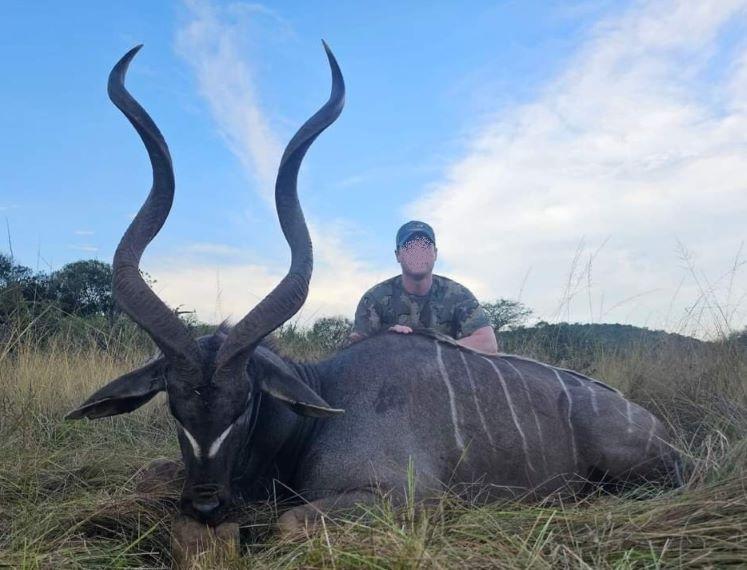
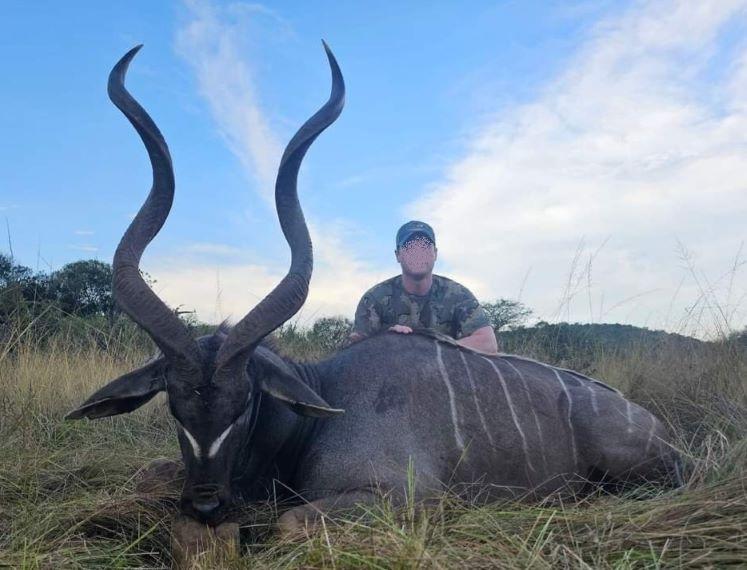
Yes. KwaZulu-Natal is home to an outstanding variety of plains game hunting opportunities, allowing hunters to combine Cape buffalo with trophies such as nyala, greater kudu, bushbuck, impala, blue wildebeest and warthog, depending on availability and the length of the safari.
Although the legal minimum is generally a .375 H&H, many experienced hunters choose larger calibres such as the .404 Jeffery, .416 Rigby or .458 Lott. Whatever rifle you carry, accurate shot placement and following the guidance of your professional hunter remain the most important factors in a successful buffalo hunt.
Please note that terms, conditions and price are subject to change without notice and rates at the time of the hunt will apply
You can speak directly with the outfitter before booking. GHS remains available throughout the process.
Needing assistance with firearm permits and international travel services, or good taxidermists? View our affiliated companies
View Affiliated Services