
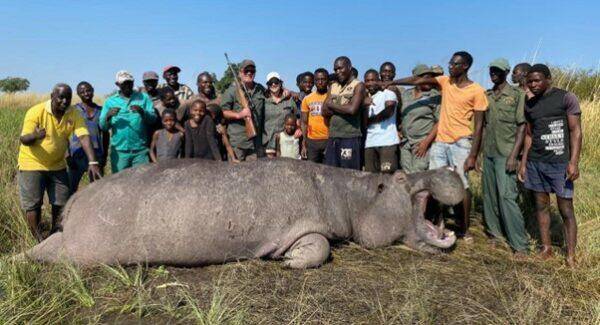
The “Land Whale” may be associated with Africa’s great waterways, but hippo hunting in Namibia? Absolutely. While Namibia may be one of the most arid safari hunting landscapes on earth, it is home to a branch of the Zambezi River where hippos come home to wallow, and hunters frequent for some exceptional hippo hunting in Namibia.
Along these river systems, hunters encounter one of Africa’s most unpredictable animals in conditions far removed from traditional plains game safaris. Thick reed beds, muddy shorelines, and low-light water movement make African hippo hunts one of the most challenging experiences in modern dangerous game hunting safaris.
[DYNAMIC-BLOGTABLEOFCONTENT]
Key Takeaways
Namibia may be known for its vast desert landscapes, but the country’s Zambezi Region offers a completely different safari environment where thick reed beds, muddy shorelines, and slow-moving river systems create ideal conditions for exceptional hippo hunting. Formerly known as the Caprivi Strip, this remote water-rich region supports healthy populations of hippo, Nile crocodile, and other dangerous game species, making it one of the most unique hunting destinations in southern Africa.
Hippo hunting in Namibia can take place either on land or in the water, with each environment presenting its own challenges when it comes to tracking, visibility, recovery, and precise hippo shot placement. These massive animals are notoriously aggressive and unpredictable, particularly in low-light river conditions or when wounded near water, making accurate shot execution absolutely critical during dangerous game hunts.
Beyond the hunt itself, Namibia’s conservancy system continues to play an important role in supporting wildlife management, anti-poaching initiatives, and employment opportunities for rural communities across the region.
Why Hippos Are Among Africa's Most Dangerous Animals
For many American hunters planning their first African safari, hippos are often underestimated. Their time spent wallowing in rivers and floodplains creates the impression of a slow-moving, almost lazy animal. In reality, hippos are responsible for more fatal encounters across Africa’s waterways than most dangerous game species, particularly when surprised near shallow water or pressured while moving back toward the river at dusk.
A mature bull hippo is an enormous animal, commonly weighing well over 3,000 pounds, with older bulls occasionally pushing far beyond that in productive river systems like the Zambezi Region. Much of that weight is carried low through the shoulders and chest, allowing the animal to move surprisingly efficiently through water, mud, and thick shoreline vegetation. In confined river channels or reed beds, a wounded hippo can become extremely difficult to track safely.
Unlike many plains game species, hippos spend most daylight hours partially submerged before leaving the water during the evening to graze. In Namibia’s Caprivi floodplains, professional hunters often watch movement routes carefully, as bulls tend to use the same access points between feeding areas and the river. These worn pathways through mud, reeds, and sandbanks become important indicators when tracking hippo movement during a safari.
Despite their size, hippos are capable of short bursts of speed that catch many first-time dangerous game hunters off guard. Charges often happen at close range and usually in thick cover near water, where visibility is limited and reaction time disappears quickly. This is one reason why accurate hippo shot placement and experienced river-based tracking remain so important during hippo hunts.
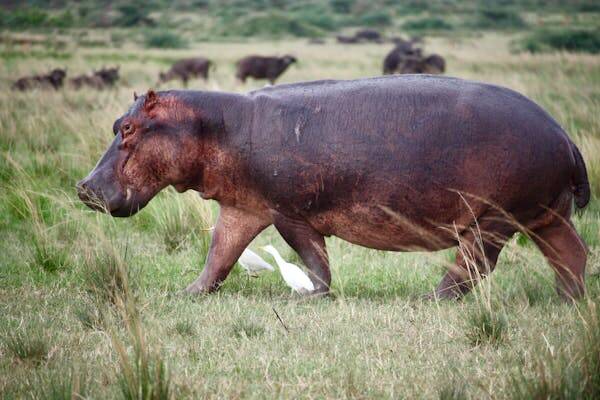
Namibia’s Hunting Conservancies and the Zambezi Region
Hunting Hippo in Water and Along Namibia's Floodplains
Unlike most safari hunting in Namibia, hippo hunts unfold almost entirely around the waterways of the Zambezi Region. Thick reed beds, muddy shoreline crossings, floodplain channels, and dense river vegetation create a hunting environment that feels very different from the country’s better-known desert landscapes. For many American hunters arriving in the Caprivi for the first time, the sheer amount of water and vegetation often comes as a surprise.
Most hippo are encountered while partially submerged during the heat of the day, particularly in slower-moving channels and protected bends of the river system where bulls spend long hours resting in deeper water. These conditions may make locating animals easier, but they also create far more demanding shooting situations, especially when only portions of the head remain visible above the surface. Water movement, fading light, and constantly shifting angles leave little margin for error during dangerous game hunts along the riverbanks.
Land-based hunting presents a very different challenge altogether. As evening approaches, hippos leave the water to feed along floodplain grasses and often follow the same worn paths between grazing areas and the river. Professional hunters and trackers pay close attention to these movement routes, particularly where mud banks, reeds, and trampled shoreline vegetation reveal regular bull activity. In some areas of the Zambezi floodplains, tracking hippo on land can become surprisingly tense once visibility begins to fade and animals start moving back toward the water after dark.
For hunters pursuing a more traditional dangerous game experience, these shifting conditions between water and land are part of what makes hippo hunting in Africa so unpredictable. No two river systems behave exactly the same, and factors like current speed, flood levels, shoreline cover, and hippo movement patterns can change the entire dynamic of the hunt from one afternoon to the next.
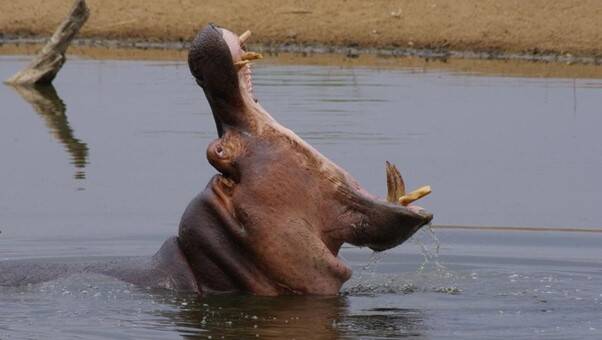
The Challenge of Shot Placement in Namibia's River Systems
One of the biggest surprises for first-time hunters pursuing hippo in Namibia is how little of the animal is often visible when the moment to shoot finally arrives. In the slower channels and reed-lined waterways of the Zambezi Region, mature bulls can remain partially submerged for hours, exposing only small portions of the head above the surface before disappearing again beneath the water. What initially appears to be a straightforward dangerous game hunt quickly becomes a test of patience, angle judgment, and shot discipline.
Professional hunters in the Caprivi rarely rush these opportunities. Water movement, fading evening light, riverbank vegetation, and constantly shifting head positions can all affect the shot window within seconds. Even experienced hunters are often surprised by how quickly a bull can sink or reposition after surfacing briefly for air. In many situations, waiting for a better angle becomes far more important than forcing a rushed shot in poor visibility conditions.
Conditions become even more unpredictable once hippo leave the water to feed during the evening hours. Along muddy floodplain trails and worn shoreline crossings, hunters may encounter bulls moving through thick reeds and low cover where visibility changes constantly. In these situations, tracking and positioning often become just as important as marksmanship itself, particularly when dealing with an animal capable of covering short distances far faster than most hunters expect.
For this reason, experienced professional hunters place enormous emphasis on calm decision-making and precise hippo shot placement during African dangerous game hunts. In Namibia’s river systems, the challenge is rarely finding hippo — it is waiting for the exact moment when conditions, visibility, and shot angle finally come together safely.

The Reality of Hunting Namibia's Flood Plain Ecosystems
One of the defining characteristics of hunting the Zambezi Region is that the experience rarely revolves around a single species alone. The river systems and floodplains of the Caprivi support some of southern Africa’s most diverse dangerous game environments, where hippo share the waterways with massive Nile crocodiles, buffalo herds moving through the reeds, and elephant crossing between feeding areas and water sources.
Along quieter channels and muddy shoreline crossings, hunters frequently encounter fresh elephant spoor pressed deep into the riverbanks or buffalo tracks cutting through floodplain grass on the way to water. Large crocodiles often occupy the same stretches of river where hippo bulls spend much of the day submerged, particularly during hotter periods when animals concentrate around deeper channels and slower-moving water systems. For many hunters, combining crocodile hunts with a hippo safari in Namibia creates one of the most unique dangerous game experiences anywhere in Africa.
Conditions along these river ecosystems can change quickly. A quiet stalk toward a feeding hippo may suddenly involve buffalo movement through thick reeds or elephants emerging from dense riverine cover only yards away. This constant awareness of surrounding game is part of what makes hunting Namibia’s floodplain systems feel very different from traditional plains game safaris elsewhere in the country.

Identifying Mature Bull Hippos in the Zambezi
Experienced professional hunters in Namibia’s river systems spend considerable time observing hippo behavior before a shot opportunity is ever considered. Mature bulls are usually identified by their heavier head structure, thicker necks, scarred facial features, and the visible pressure created by large tusks along the snout. Older bulls also tend to carry more visible damage around the ears and shoulders from territorial fighting in the water.
Behavior often becomes just as important as physical appearance. In larger pods, dominant bulls frequently position themselves slightly behind the rest of the group when approaching shallow crossings or reacting to disturbance along the riverbanks. In muddy water or thick reed systems, these subtle movement patterns can become one of the clearest indicators when trackers are evaluating a mature bull during a safari.
Conservancies and Wildlife Management in Namibia's River Systems
Much of Namibia’s Zambezi Region falls within conservancy-managed hunting areas where safari revenue contributes toward anti-poaching efforts, wildlife monitoring, and employment opportunities across remote floodplain communities. In these river systems, regulated dangerous game hunting remains closely tied to maintaining healthy populations of hippo, crocodile, buffalo, and elephant across large unfenced ecosystems.
For many hunters visiting the region, one of the more noticeable realities of a Namibian safari is how closely local communities still live alongside dangerous game animals moving through the river corridors. Professional hunters, trackers, skinners, camp staff, and conservancy teams often come directly from the surrounding floodplain areas, bringing generations of experience tracking wildlife along the Zambezi waterways.
Meat from harvested animals is also commonly distributed within local conservancies, particularly in more remote regions where communities continue to rely heavily on wild game protein. In many parts of the Caprivi, safari hunting remains connected not only to wildlife management, but also to the practical realities of living alongside hippo, crocodile, buffalo, and elephant on a daily basis.
Why Some Hunters Choose Namibia for Hippo Safaris
Every major African river system offers a different style of hippo hunting experience. Countries like Zimbabwe and Zambia are well known for large floodplain ecosystems and classic dangerous game safaris along the Zambezi, while Mozambique often presents thicker river vegetation and more remote hunting conditions. Namibia’s Zambezi Region, however, offers a unique combination of professionally managed conservancies, stable safari infrastructure, and river-based dangerous game hunting within one of southern Africa’s safest and most accessible hunting destinations.
For many American hunters traveling to Africa for the first time, hunting in Namibia often feels slightly less overwhelming logistically than some neighboring destinations, particularly when combining dangerous game species with additional plains game opportunities during the same safari. The Caprivi’s mixture of floodplains, river systems, and open woodland also creates a very different atmosphere from the drier central regions more commonly associated with Namibia hunting safaris.
Frequently asked Questions
Can you Hunt Hippos in Namibia?
Yes. Hippo hunting in Namibia takes place primarily in the country’s Zambezi Region, formerly known as the Caprivi Strip, where permanent river systems and floodplain environments support healthy hippo populations alongside crocodile, buffalo, and elephant.
Where Should You Shoot a Hippo
Shot placement during hippo hunting depends heavily on water depth, visibility, animal position, and the surrounding river conditions. In many situations, only a small portion of the head may be visible above the waterline, making patience and precise shot execution critical during dangerous game hunts.
Conclusion
Hippo hunting in Namibia offers a very different experience from traditional safari hunting across the country’s dry plains and desert regions. In the waterways of the Zambezi Region, conditions change constantly as hunters navigate muddy shoreline crossings, dense reeds, fading evening light, and some of Africa’s most unpredictable dangerous game animals. For many international hunters, particularly Americans visiting the Caprivi for the first time, the combination of river systems, dangerous game movement, and close-range encounters creates one of the most memorable hunting environments anywhere in southern Africa.
Beyond the hunt itself, these floodplain ecosystems support an extraordinary overlap of species, from crocodiles and buffalo to elephant moving through the river corridors alongside hippo populations. Every stalk, shoreline crossing, and evening movement toward the water brings a level of uncertainty that makes hippo hunting in Namibia both technically demanding and deeply rewarding for experienced dangerous game hunters.
Hunters looking to better understand the realities of navigating these river systems can also explore Navigating Dangerous Waters: Hippo Hunting In The Caprivi, while those preparing for their first safari in the region may benefit from reading Hippo Hunting In Namibia: Preparing For A Safari Hunt.
About the Authors
This article was written by Pierre and Tamlyn van Wyk, co-founders of Game Hunting Safaris, who have spent extensive time hunting the floodplains and river systems of Namibia’s Zambezi Region. Over the years, they have guided and participated in numerous dangerous game safaris across the Caprivi, including both trophy hippo hunts and non-export management hunts, as well as buffalo hunting safaris in some of the region’s most challenging riverine environments.
Their experience tracking hippo through reed beds, muddy shoreline crossings, and low-light river systems has helped shape the practical field observations shared throughout this article, particularly regarding shot opportunities, animal behavior, and the realities of hunting dangerous game in Namibia’s floodplain ecosystems.