
Updated: June 2026
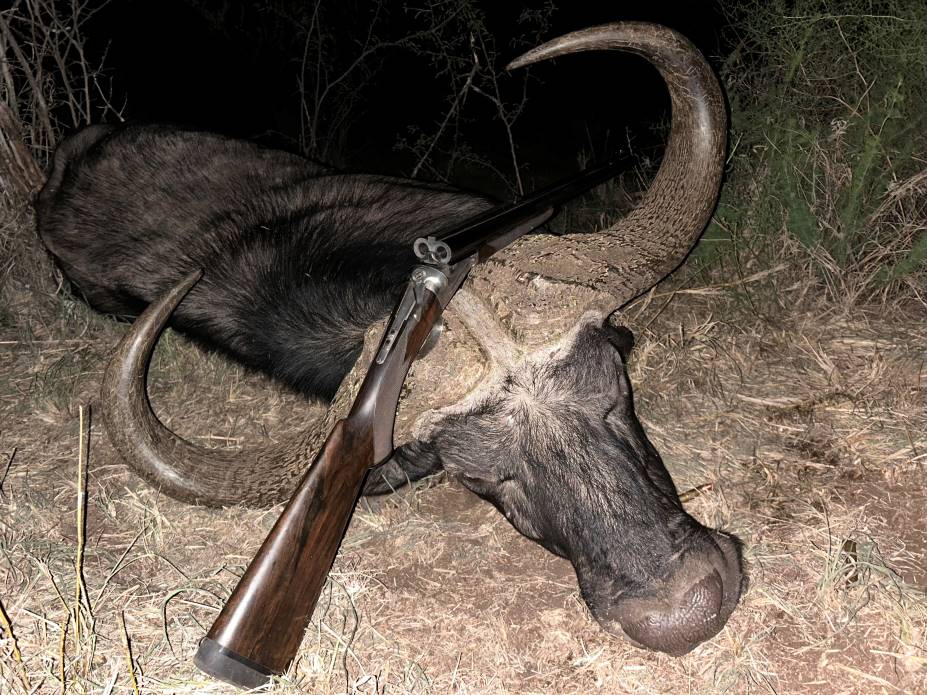
The Cape buffalo has earned a reputation as one of Africa's most respected animals to feature in Dangerous Game Hunts, and for good reason. Powerful, unpredictable, and capable of turning the tables in an instant, the old dagga boy has humbled many experienced hunters. It is this combination of danger, challenge, and respect that places the Cape buffalo near the top of so many hunters' bucket lists.
A mature bull can weigh well over 2,000 pounds and is protected by a solid boss, heavy horns, and an attitude that rarely backs down. When wounded or cornered, a Cape buffalo is capable of covering surprisingly short distances with incredible speed, making Buffalo Shot Placement one of the most important skills every dangerous game hunter should understand before entering the field.
Before committing to a safari, it is worth comparing the different Hunting Trips available across Africa. Hunting methods, trophy quality, costs and available concessions vary considerably between countries, and choosing the right safari often has a greater impact on the overall experience than simply chasing the widest horn spread.
With buffalo safaris ranking among Africa's most respected hunting adventures, one question remains: are Cape buffalo hunts really worth the investment?
In Africa, it is a fact that more than 200 people are killed by Cape buffalo every year.
Which animal kills the most people every year?
This question or discussion point is often asked and raised when investigating dangerous game hunting safaris! When we think of humans being killed by animals, we think of ferocious beasts such as great white sharks, grizzly bears, African lions, and of course serpents such as the black mamba and vipers.
In fact, the animal, or to be more specific insect, which kills more than one million people a year is a mosquito. Small, irritating, and exceptionally annoying. A few untreated mosquito bites can ruin an African big game safari. Left untreated, they can fester, blister, and be a constant irritation in hot and humid climates. Nothing like a charging Cape buffalo to take a hunter’s mind off a few itches!
Why are we mentioning deaths relating to mosquitoes when talking about Cape buffalo hunts? Big game hunting for the Cape buffalo takes the hunter to the remotest parts of “The Dark Continent,” where medical supplies are mostly not available.
Mosquitos transmit deadly diseases, the most dangerous being malaria. Malaria results in vomiting, chills, fever, and headaches and left untreated, will result in death. To prevent malaria, check the location of the hunting safari, and if classified as a malaria area, be sure to obtain a prescription for either Doxycycline or mefloquine.
Characteristics of Cape Buffalo Hunts
African buffalo hunts are always done by practicing fair chase. What is fair chase? The animal, in this case, the Cape Buffalo is afforded options in terms of “escaping” from the big game hunter. Normally, fair chase takes into account the size of the buffalo hunting concession or private game ranch.
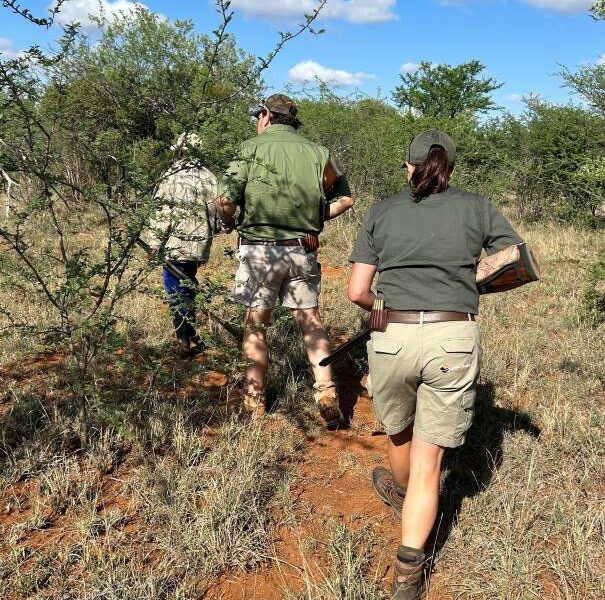
A typical buffalo hunt is long, dangerous, eventful, and adrenaline-packed. The hunter needs to be on top of his/her game!
Let’s take a quick look at the costs of various Cape buffalo hunts
- Cape Buffalo hunts are most affordable in fenced-off ranches in South Africa. While international hunters tend to frown upon game hunting safaris taking place in fenced-off areas, South Africa remains the premier destination for an Africa hunting trip, especially for African buffalo hunts.
- Depending on the size of the trophy, the value of Cape buffalo hunts in South Africa can range between $9,000 and $15,000. End-of-season discount hunts can cost even lower at $7,500 to $8,000. In South Africa, buffalo cull hunts focusing on females (cows), can start at the ridiculously low cost of only $4,500. Buffalo hunting, whether for bulls or cows, is just as much fun and rewarding.
- When we move out to open concessions, free range, and government blocks in countries such as Zambia, Mozambique, Zimbabwe, and Tanzania, buffalo hunting safaris can increase in costs to anything from $15,000 to $25,000. This will depend on factors such as government permit costs, the location of the hunting safari, access to the hunting grounds, levies, and the need for domestic charter flights.
Cost of Cape Buffalo Hunts versus Other African Big Game Animals
Now, this is where things get interesting when we talk about Cape buffalo Hunts … and value for money. The reality is that in most instances, it is always about the money.
The below prices are quoted using average trophy sizes from 2022 to 2023
Elephant Hunting Safari: Duration, normally 21 days for US$55,000 to US$80,000.
Rhino Hunting Safari: Duration, 5 nights at US$55,000 to US$75,000 (white Rhino only).
Leopard Hunting Safari: Duration, 21 days at US$40,000 to US$55,000.
Hippo Hunting Safari: Duration, 7 nights, at US$12,000.
Crocodile Hunting Safari: Duration, 7 nights at US$11,000.
Lion Hunting Safari (Excluding canned lion hunting in South Africa), duration 14 days at $45,000 to US$55,000.
Now, if we talk about value, and include experience, adrenaline, danger, and the possibility of death, the hunter has numerous options as follows:
- Five to six Cape buffalo hunting safaris vs. one elephant hunting safari.
- The same ratios apply when comparing the average buffalo hunting safari cost to that of the White Rhino, which is five to six safaris. If we had to compare to hunting black rhino, the factor could change to 15-20 Cape buffalo per each black rhino hunting safari.
- Leopard and lion hunting safaris we can “ring fence” and display at an average factor of four times Cape buffalo hunting safaris vs, one of these cats.
- Hunting Nile crocodile, while not as dangerous is highly stressful due to the accuracy required when executing the “kill shot”. Crocodile hunting is also not as physically demanding compared to Cape buffalo hunting. These Crocodile hunting safaris vs. Cape buffalo hunting safaris are on average equal when it comes to cost.
- Hippo hunting safaris, which are just as exciting as hunting Cape Buffalo, are similar in price.
African Buffalo Hunts: Value and Affordability
Let’s be honest, every big game hunter would love to harvest the entire “full bag” of Africa’s Dangerous 7, from the African Elephant to the Nile Crocodile. Not all hunters are in a financial position where elephant hunting is affordable. The same applies to hunting safaris for lions, leopards, and rhinos.
As such, Cape Buffalo hunts are a “bang for your buck.” While the game hunting safari may not be for elephants, these dangerous game animals share the same habitat. The hunter, even while the focus may be on buffalo hunting, gets to enjoy the same scenery, meals, campsites, and African outfitters as those hunters on the more costly hunting safaris.
In South Africa as an example, the cost to hunt Cape buffalo for a mature bull, in Rands will equate to an estimated R100,000. The blue wildebeest, which is in South Africa and is also known as “the poor man’s buffalo” will cost roughly R7,000 (excluding day fees etc.). Why then hunt one Cape Buffalo, when you can hunt 12 blue wildebeest instead?
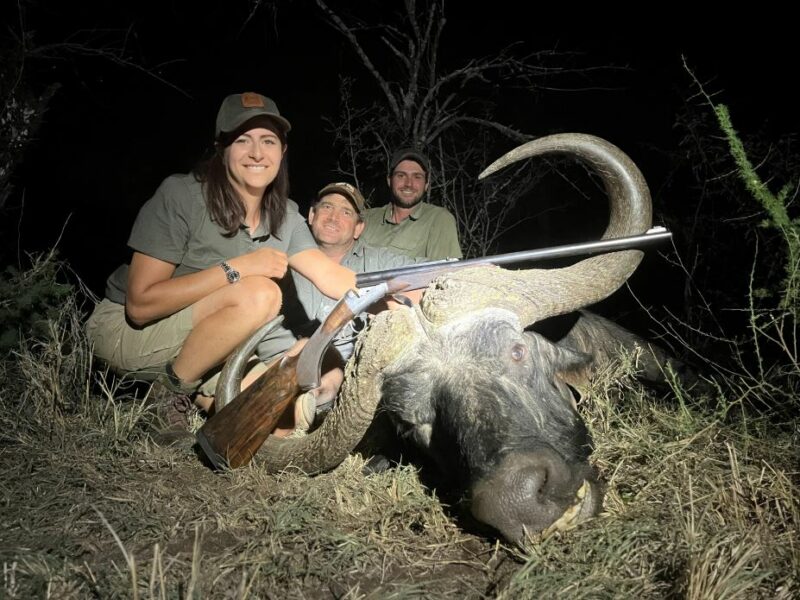
For me, it’s all about the experience, the rush, and the memories. Escaping the high walls of the corporate prisons and concrete jungles and entering the sweet savannah of a hunting safari is the first prize. I would not save a lifetime to enjoy one elephant hunt but would rather annually enjoy booking and planning my African Cape buffalo hunts.
When hunting Cape buffalo, often African plains species, in areas where a good concentration of antelope are available, will be listed as “discount hunts” adding to the already fantastic hunting adventure at an affordable price.
Interesting facts about Cape Buffalo
- Buffalo are excellent swimmers.
- The main predator of Buffalo is the African Lion. Not much scares a Lion.
- A group of buffalo is not only called a herd but an obstinacy. Rather appropriate description.
- Buffalo sexing can be done by looking at their horns. A mature bull’s horns will touch, and this rock-hard juncture is called a “boss.” Also, appropriate.
- Buffalo love mud baths. Wallowing in the mud pools kills off ticks.
- Buffalo can live for a long time, up to twenty-five years. Plenty of time to cause mayhem.
- A Buffalo is a “bulk feeder” and has a four-chambered stomach. Buffalo need large quantities of grass to sustain their body weight.
Frequently Asked Questions
Which country offers the best free-range Cape buffalo hunting?
For hunters wanting a traditional free-range safari, several countries stand out. Zimbabwe is famous for vast wilderness concessions such as the Zambezi Valley, Matetsi and the Save Valley Conservancy, where tracking old dagga bulls on foot remains the essence of the hunt. Buffalo Hunting in Mozambique offers equally wild experiences in areas such as the Zambezi Delta and the Niassa region, combining excellent buffalo populations with remote, untamed hunting country. South Africa, on the other hand, is renowned for exceptional trophy quality and outstanding safari value.
Is South Africa or Zimbabwe better for Cape buffalo hunting?
Both countries offer exceptional buffalo hunting, but the experience is very different. South Africa is ideal for hunters looking for excellent trophy quality, comfortable lodges and the opportunity to combine buffalo with a wide variety of plains game. Buffalo Hunting in Zimbabwe appeals to hunters wanting a more traditional safari focused on tracking free-range buffalo through large unfenced concessions where every encounter is completely natural.
Why are Cape buffalo safaris more expensive in Tanzania?
Tanzania is one of Africa's premier buffalo hunting destinations, offering vast wilderness concessions and some of the continent's largest free-range buffalo populations. However, these exceptional hunting opportunities come at a premium. Government concession fees, longer mandatory safari durations, charter flights and the logistics of operating in remote wilderness areas all contribute to the higher overall cost. If you are considering an East African safari, our guide to Buffalo Hunting in Tanzania explains what makes these hunts so unique.
Can I combine a Cape buffalo hunt with plains game?
Absolutely. Combining a Cape buffalo with plains game is one of the most popular safari combinations in southern Africa. Hunters commonly add species such as kudu, sable, eland, nyala, waterbuck or impala, creating a more varied hunting experience while making the most of their time in Africa.
Which country produces the biggest Cape buffalo trophies?
Several African countries consistently produce outstanding Cape buffalo. South Africa is well known for exceptional trophy quality through careful wildlife management, while Zimbabwe, Mozambique, Zambia and Tanzania continue to produce magnificent old dagga bulls in free-range hunting areas. The best destination ultimately depends on whether your priority is horn measurements, wilderness hunting or overall safari experience.
Is Cape buffalo a good first dangerous game animal?
Many professional hunters believe Cape buffalo are the ideal introduction to Africa's dangerous game. The hunt demands patience, accurate shooting and respect for the animal, while teaching valuable lessons about tracking, wind, shot placement and following up wounded game. It is a challenging but immensely rewarding experience that prepares hunters well for future dangerous game safaris.