
Updated : June 2026
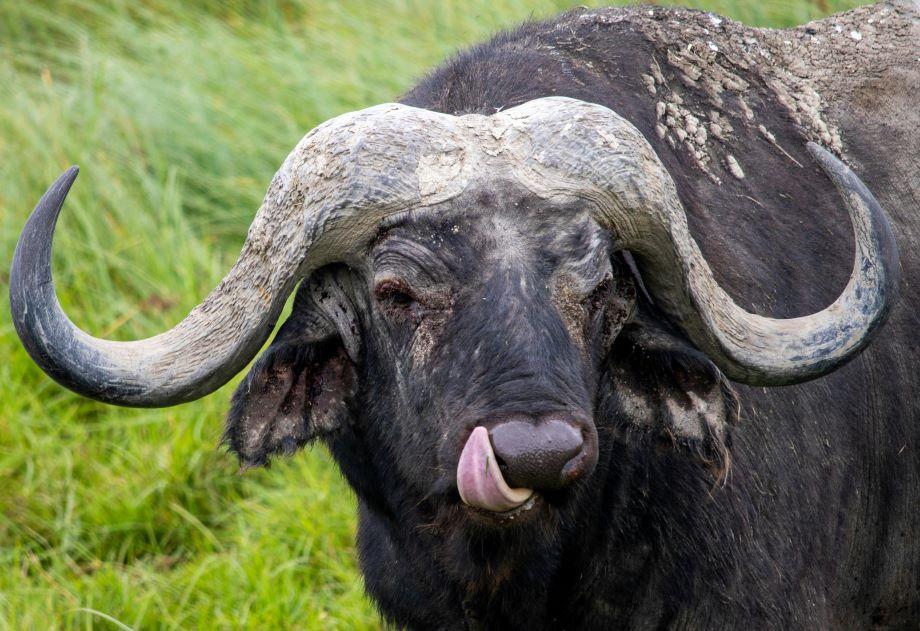
For hunters researching Buffalo Hunting in Mozambique, destinations such as Niassa often dominate the conversation. Yet further south, within the vast wetlands and floodplains of the Marromeu ecosystem, lies a buffalo hunting experience unlike almost anywhere else in Africa.
This is not classic woodland buffalo hunting. Here, towering reeds, flooded grasslands, marshes, and winding waterways shape every stalk. Fresh spoor can disappear beneath waterlogged ground, visibility changes by the minute, and hunters often rely on subtle signs such as freshly grazed grass, broken reeds, and bird activity to locate buffalo herds.
Marromeu is home to some of Mozambique's highest buffalo densities, making it one of the country's premier Cape Buffalo Hunts destinations. While finding buffalo is rarely the greatest challenge, getting within range of the right old bull through this unique landscape demands patience, determination, and an experienced professional hunting team.
If you think every buffalo hunt in Africa is the same, Marromeu is ready to prove you wrong.
Why Mozambique Offers a Different Buffalo Hunting Experience
One of the reasons Hunting in Mozambique continues to grow in popularity is the diversity of hunting environments found across the country. While many African buffalo safaris take place in woodland or open savanna, Mozambique offers something few destinations can match, a vast wetland ecosystem where water, reeds, floodplains, and seasonal marshes become part of the hunt itself.
In Marromeu, the terrain often dictates the pace of the day. Buffalo move between grazing areas, reed beds, and shallow wetlands, forcing hunters to adapt constantly as conditions change. One stalk may begin across open grasslands before disappearing into head-high reeds, while the next may involve following fresh feeding sign through marshy ground where traditional spoor quickly disappears.
The result is a buffalo hunt that rewards observation as much as tracking. Reading broken reeds, freshly grazed grass, bird activity, and subtle movement across the floodplains often becomes just as important as finding a clear hoof print. It is this constantly changing environment that makes Marromeu one of Mozambique's most distinctive buffalo hunting destinations.
Getting to the Buffalo is Part of the Adventure
Unlike many traditional buffalo safaris, reaching the hunting grounds in Marromeu can be an adventure in itself. Depending on the location of the buffalo herds and seasonal water levels, hunters may travel by hunting vehicle before transferring to amphibious craft or boats capable of navigating the Delta's wetlands. It is not unusual for the journey to the hunting area to take well over an hour before the first tracks are even searched for.
Once in the Delta, everything slows down. Equipment is unloaded, rifles are checked, and the hunting party prepares to spend the day on foot through one of Africa's most unique buffalo habitats. The transition from vehicle to watercraft and finally to boots on the ground is simply part of hunting in Marromeu.
The Marromeu Complex forms part of Mozambique's famous Zambezi Delta ecosystem and consists of several historic hunting concessions, known locally as coutadas, a Portuguese term referring to designated hunting areas. These vast concessions protect thousands of square miles of wetlands, floodplains, reed beds, and grasslands that support one of Africa's largest free-ranging buffalo populations.
Marromeu Decides How the Hunt Will Unfold
Every buffalo hunt has a plan. In Marromeu, that plan often changes before breakfast.
Unlike the woodlands of Niassa or the mopane forests found elsewhere in southern Africa, Marromeu is a landscape shaped by water. Seasonal flooding constantly changes the terrain, creating a patchwork of floodplains, reed beds, shallow wetlands, islands of higher ground, and open grasslands. The route you planned to walk yesterday may be underwater today, while buffalo that fed in one area overnight can quietly disappear into another before sunrise.
For the professional hunter and tracking team, every morning begins by reading the country as much as reading the buffalo. Wind direction, water levels, fresh grazing, bird movement, muddy crossings, and subtle changes in the reeds all help build a picture of where the herd is heading. In many places, clear hoofprints simply don't exist for long, forcing trackers to rely on experience and countless small clues that most hunters would walk straight past.
That unpredictability is what makes Marromeu so rewarding. One stalk may begin across seemingly open floodplains before ending in head-high reeds where visibility shrinks to only a few yards. The next may involve several miles of walking through wet grass before a herd suddenly appears where moments earlier the country seemed completely empty.
The buffalo are certainly the prize, but in Marromeu it is often the landscape that provides the greatest challenge. Success belongs to hunters willing to adapt, trust their PH and trackers, and accept that nature, not the hunter, usually dictates how the day will unfold.
When the Tracks Run Out
Traditional buffalo hunting often begins with a fresh spoor crossing a road or game trail. In Marromeu, that luxury does not always exist.
Seasonal flooding, marshy ground, and dense reed beds can quickly erase or disguise even the freshest tracks. Instead of following a single line of hoofprints for miles, professional hunters and trackers are often forced to piece together dozens of small clues that, on their own, may seem almost insignificant.
Freshly grazed grass, broken reeds, muddy crossings, buffalo dung, well-used game paths, and even the behaviour of birds can all help reveal where a herd has moved. It becomes less about following a perfect track and more about understanding how buffalo use this unique landscape throughout the day.
For visiting hunters, this is often one of the most fascinating aspects of hunting in Marromeu. Watching experienced trackers read an environment that appears to hold no obvious signs is a reminder that Dangerous Game Hunting is as much about knowledge and patience as it is about marksmanship.
When a herd is eventually found, many hunters realise they have not simply followed buffalo, they have watched a masterclass in bushcraft unfold one clue at a time.
Finding the Right Bull Is Harder Than It Looks
Marromeu has earned a reputation for holding exceptional numbers of Cape buffalo, but hunters quickly discover that finding buffalo and finding the right buffalo are two very different things.
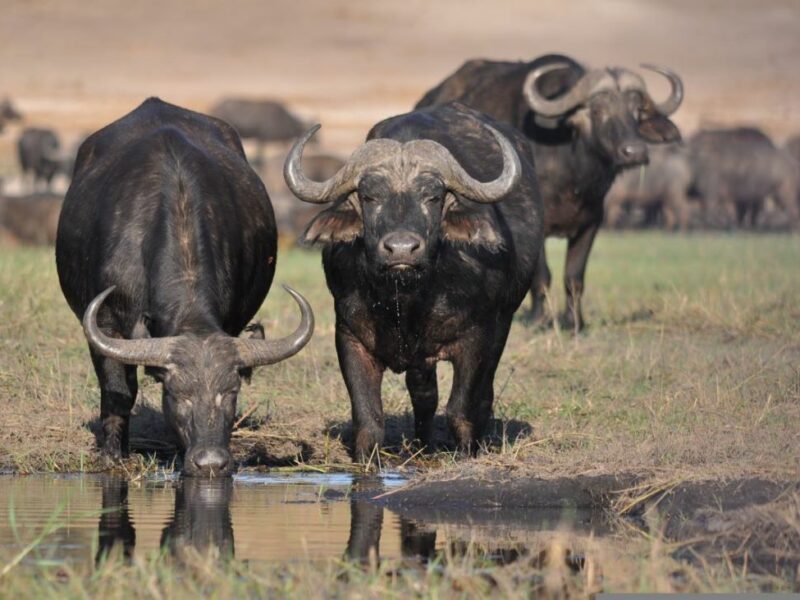
Large herds can stretch across the floodplains for hundreds of yards, with cows, calves, young breeding bulls, and old dagga boys constantly feeding, moving, and changing position. Through a rifle scope, what first appeared to be a single herd quickly becomes a sea of black hides, sweeping horns, and moving animals.
This is where the professional hunter earns his living.
Having already studied the herd, he quietly picks out the mature trophy bull. The challenge is then getting the hunter onto exactly the same animal.
"The bull behind the cow."
"What cow?"
"The one left of the reeds."
"I've got the reeds..."
"No...the other reeds."
It may sound amusing back in camp that evening, but in the moment there is nothing funny about it. A herd can shift position within seconds, buffalo walk in front of one another, and the bull you were looking at a moment ago suddenly disappears behind fifty others. Good communication between hunter and professional hunter becomes just as important as marksmanship.
The temptation is often to rush the shot before the opportunity disappears. Experienced Dangerous Game Hunting professionals know better. Sometimes the smartest decision is to back out, circle the herd, and begin the stalk again rather than force an opportunity that doesn't feel right.
Only once both hunter and PH are completely confident they are looking at the same bull does the focus turn to Cape Buffalo Shot Placement. Ironically, should a buffalo be wounded, one aspect of the follow-up can become easier. Rather than sorting through hundreds of overlapping tracks left by an entire herd, an injured bull will often leave the group and travel alone, leaving a single line of spoor for the tracking team to follow.
Of course, that is also when the hunt becomes most dangerous. A solitary old dagga boy waiting silently in thick cover is exactly why Cape buffalo have earned the respect they command throughout Africa.
The Delta Never Lets You Get Comfortable
One of the first lessons Marromeu teaches is to expect the unexpected.
A morning can begin with clear skies and firm ground before leading into flooded reed beds, knee-high water, or thick grass that hides everything beyond a few yards. Wind direction changes, buffalo alter their course, and what looked like a straightforward stalk can quickly become a complete rethink.
The Delta has a habit of keeping hunters humble. Just when you think you've worked out the herd, they disappear. Just when you think you've found the perfect approach, the wind shifts. Success rarely comes from forcing the hunt. It comes from adapting to whatever the day presents.
That uncertainty is precisely what keeps experienced buffalo hunters coming back. Every successful bull feels earned because nothing about the hunt is predictable.
Marromeu Offers More Than Outstanding Buffalo Hunting
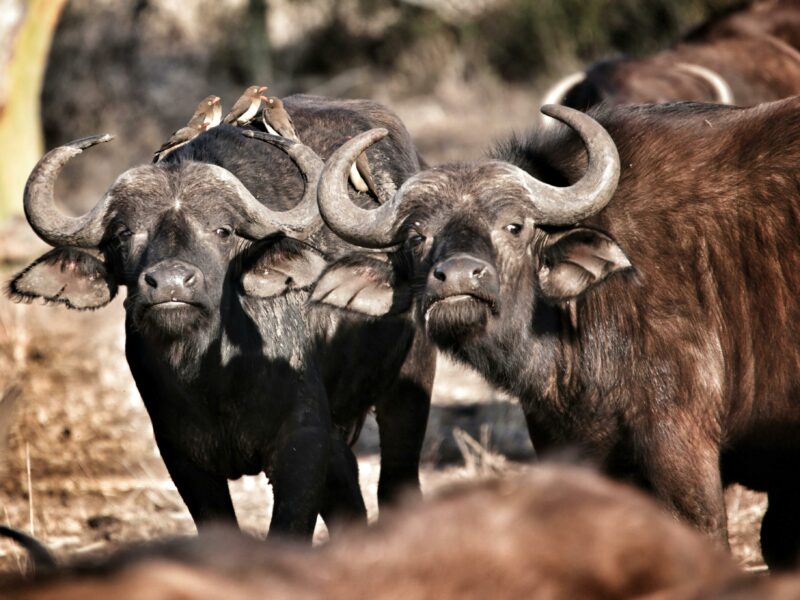
While Cape buffalo are undoubtedly the headline attraction, Marromeu's vast wetland ecosystem supports an impressive diversity of wildlife, making it an excellent destination for hunters looking to build a true African safari rather than pursue a single species.
The waterways and floodplains are well known for producing exceptional Hippo Hunts and Crocodile Hunts, allowing dangerous game hunters to combine several iconic African species during the same safari. Depending on the concession and annual quota allocations, hunters may also have opportunities to pursue a variety of exceptional Plains Game Hunts unique to this part of Mozambique.
Species such as Livingstone's eland, sable, waterbuck, reedbuck, bushbuck, and warthog thrive in the Delta's rich mosaic of wetlands, grasslands, and scattered woodland. Adding a plains game animal or two often transforms a buffalo safari into a more complete African hunting experience, while providing additional opportunities during periods when buffalo are proving particularly elusive.
For hunters, that variety is one of Marromeu's greatest strengths. Every day in the field offers the possibility of encountering something unexpected, reminding you that this is far more than simply a buffalo destination.
Some Things Haven't Changed in a Hundred Years
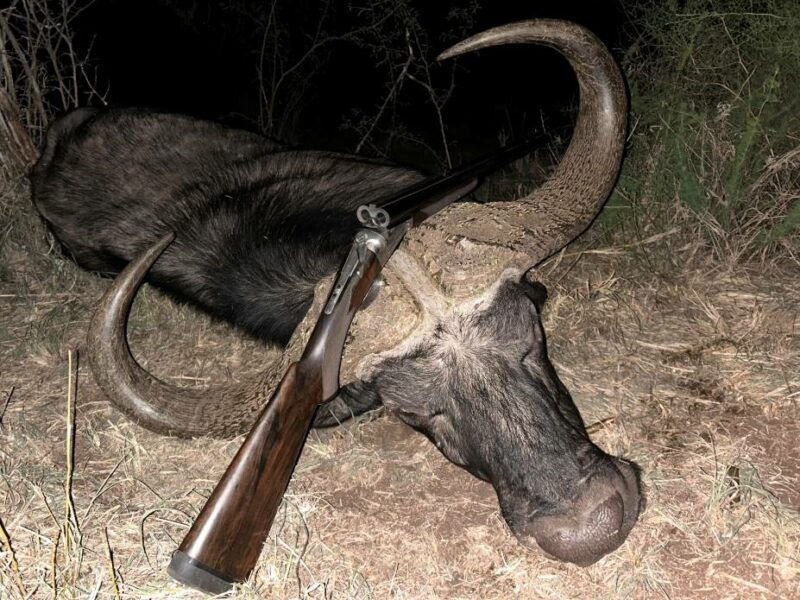
For all the advances in modern hunting equipment, recovering a Cape buffalo in parts of Marromeu can still feel remarkably old-fashioned.
There are no winches, no cranes, and often no way of driving a vehicle to where the buffalo lies. Once the photographs are taken and the animal is prepared, the real work begins.
Armed with little more than axes, knives, ropes, and an incredible work ethic, the recovery team sets about processing the buffalo before carrying meat, hide, and equipment back across the Delta to where transport becomes possible. Depending on where the hunt ends, that journey can take hours.
It is hard, physical work that reminds hunters just how remote this part of Mozambique remains. Out here, nature still dictates the rules, and modern convenience has little influence over how things get done.
Long after the trophy reaches the taxidermist, many hunters remember something else entirely, the teamwork, determination, and sheer effort required to recover one buffalo from a place that has changed very little over the generations.
The Delta Doesn't Care About Your Plans
There is an old saying among professional hunters that Africa always gets the final vote.
Marromeu proves that saying almost every day.
You may leave camp convinced the buffalo are feeding in one part of the concession, only to discover they crossed a flooded channel during the night. A promising stalk can disappear with a single change in wind direction, while a herd that seemed impossible to approach an hour ago suddenly presents the perfect opportunity.
Nothing happens on a timetable. That uncertainty is exactly what keeps experienced hunters coming back.
No professional hunter can promise where the buffalo will be tomorrow morning. No tracker can guarantee where a herd will choose to rest during the heat of the day. The Delta changes constantly, and every successful safari is built around adapting to those changes rather than trying to control them.
It is one of the last places where the hunter is reminded that he is simply another visitor in a wild landscape.
And perhaps that is why a buffalo taken in Marromeu means so much. It is never just the trophy. It is everything the Delta asked of you before finally allowing the opportunity.
Long After the Hunt Is Over
Every Cape buffalo eventually finds its place on a wall.
The dust is wiped from the horns once or twice a year. Friends stop to admire the trophy. Stories are shared over a good cigar or a glass of whisky, and someone inevitably asks, "So...how did you get that one?"
It is only then that most hunters realise they are no longer talking about the buffalo. They are talking about Africa.
They remember the first morning in camp, the endless floodplains stretching towards the horizon, the trackers quietly studying the reeds, the professional hunter pointing towards a bull hidden amongst hundreds of others, and the feeling of finally getting everyone looking at the same animal.
They remember wet boots, long walks, changing wind, laughter around the campfire, and the quiet moments between the excitement. They remember the anticipation before the shot far more vividly than the sound of the rifle itself.
Years later, very few hunters can remember the exact horn measurement. They remember how the hunt made them feel.
That is the true value of hunting a place like Marromeu. It is not simply about taking home an outstanding Cape buffalo. It is about experiencing a part of wild Africa that still operates on nature's terms, where every opportunity is earned rather than given.
Perhaps that is why so many hunters eventually find themselves planning a return to Africa. The trophy becomes a reminder of the hunt, but the memories become the reason they come back.
Frequently Asked Questions About Buffalo Hunting in Marromeu
Is Marromeu a good destination for a first Cape Buffalo hunt?
It certainly can be, provided you understand the style of hunting involved. Marromeu is a genuine free-range buffalo destination where long days on foot, changing conditions, and adapting to the environment are all part of the experience. Hunters looking for a true African buffalo safari often find it an unforgettable first dangerous game hunt.
When is the best time to hunt buffalo in Marromeu?
The dry season, from June through October, generally offers the best hunting conditions. As water levels recede and vegetation becomes less dense, buffalo movements become more predictable as they travel between grazing areas and permanent water sources.
How physically demanding is a buffalo hunt in Marromeu?
You should expect to walk several miles each day across floodplains, wetlands, and uneven ground. Every safari is different, but arriving in reasonable physical condition will make the hunt more enjoyable and allow you to take advantage of every opportunity that presents itself.
Which rifle should I bring for buffalo hunting in Mozambique?
The legal minimum calibre is a .375, although many experienced hunters prefer larger rifles such as the .416 Rigby, .404 Jeffery, .458 Lott, or a traditional double rifle. Whatever you choose, confidence in your rifle and accurate shot placement are far more important than simply carrying the biggest calibre available.
Can I combine buffalo hunting with other species?
Absolutely. Many hunters combine their buffalo safari with hippo, crocodile, or a selection of plains game species, creating a far more complete African hunting experience. If you're considering a multi-species safari, our Hunting Trips page provides an overview of the different safari options available throughout Africa.
Why do so many hunters return to Marromeu?
Ask anyone who has hunted there, and they rarely start by talking about horn measurements. They remember the endless floodplains, the challenge of reading the country, the teamwork between hunter and trackers, and the satisfaction of earning an opportunity in truly wild Africa. Those are the memories that keep drawing hunters back.
About the Author
Pierre van Wyk is the co-founder of Game Hunting Safaris and has spent more than three decades hunting and exploring some of Africa's most remote wilderness areas. Having hunted Cape buffalo throughout southern and eastern Africa, he believes every destination has its own personality, challenges, and stories worth telling. Through Game Hunting Safaris, Pierre enjoys helping international hunters plan authentic free-range African safaris while sharing the lessons, memories, and experiences that only time spent in the bush can provide.