
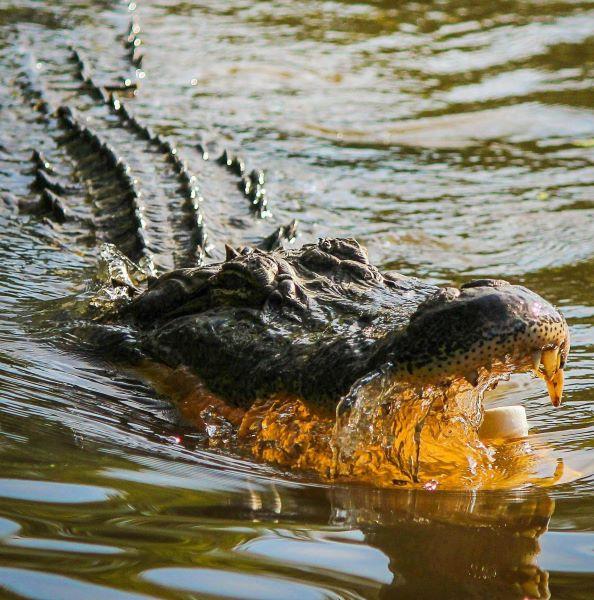
When hunters talk about crocodile hunting in Mozambique, they are referring to one of the most authentic and rewarding dangerous game experiences available in Africa. From the vast waterways of Cahora Bassa to the remote concessions of Sofala Province, Mozambique consistently produces trophy Nile crocodiles exceeding fourteen feet, with some exceptional specimens pushing well beyond the sixteen-foot mark.
For those considering broader crocodile hunts in Africa, Mozambique stands out as a destination that still offers true wild conditions, low hunting pressure, and the opportunity to pursue prehistoric predators in their natural habitat. It is a country that demands preparation, understanding, and the right expectations before stepping into the field.
As part of the wider opportunities for hunting in Mozambique, crocodile safaris are often combined with other dangerous game such as hippo, creating a diverse and highly rewarding hunting experience. However, success on these safaris is never accidental, it comes down to planning, knowledge, and understanding how every element of the hunt comes together.
This guide breaks down the key safari particulars you need to know to ensure your crocodile hunting experience in Mozambique is both successful and unforgettable.
[DYNAMIC-BLOGTABLEOFCONTENT]
Can you hunt other species in Mozambique?
Yes, you can hunt other species Mozambique. Mozambique is in fact a premier destination and offers the African Big Five, as well as crocodile and hippo hunting. Many of these safaris fall under dangerous game hunts in Africa, making Mozambique a highly sought-after destination for serious hunters.
Does Mozambique have Crocodiles?
Yes, Mozambique has plenty of Crocodiles which can reach over 16 feet in size.
Are Crocodiles still hunted?
Yes, Crocodiles are still hunted throughout many African countries such as Tanzania, South Africa, Mozambique, Botswana, Namibia, Zambia and Zimbabwe.
How big does a trophy Crocodile measure?
Using the Rowald Ward measuring system (30th Edition), a Nile Crocodile needs to measure 13,5 feet from snout to tail.
Using SCI (Safari Club International), 9 feet and 7 inches is the minimum.
Understanding proper shot placement is critical when hunting large Nile crocodiles, as a poorly placed shot can result in a lost trophy or dangerous recovery situation. Hunters should always study correct crocodile shot placement techniques before heading into the field.
How much will a Crocodile Trophy fee cost in Mozambique?
In Mozambique, the average trophy fee for a crocodile hunt is approximately US$4,000. Trophy fees are only one part of the overall safari cost, so hunters comparing budgets should also consider daily rates, permits, transfers and other expenses when reviewing African Hunting Safari Prices.
Hippo hunting in Mozambique is also extremely popular, so if the hunter decides to add a Hippo to the hunting safari, the hunter can budget for an additional amount of US $5000.
Is it better to rent a Rifle when Crocodile hunting in Mozambique?
Renting a rifle is always an option. As the hunter will generally enter Mozambique via Oliver Tambo International Airport South, import regulations are not strict.
Outfitters in Mozambique do have a selection of fine rifles and often, due to all the admin it is just easier to rent a rifle. Rifle rental in Mozambique will cost approximately US $400 for the duration of the hunting safari.
Are there any additional hunting costs in Mozambique?
Yes, there are. The hunter will need to obtain a hunting license from the Mozambique local authorities which will cost US $400.
What services will the crocodile hunting package include?
While there are a few different service options offered by outfitters in Mozambique, additions are normally specific to additional activities or hunts. The hunter can thus expect the below to be included on a crocodile hunting safari in Mozambique:
- The services of a fully trained and registered professional hunter
- The services of trained skinners and trackers
- A hunting vehicle being a four-by-four truck, or a motorized boat which is often used when Crocodile or Hippo hunting.
- Field preparation of the trophy Crocodile
- Accommodations will include the provisions of soft drinks, meals, still or sparkling bottled water. Your outfitter will check before commencement of the African hunt as to any local beer or wine requirements. If there are any specific alcoholic beverages required in terms of spirits, arrange with the outfitter in advance or purchase at the “duty free” at the international airports.
- Daily laundry service. When crocodile hunting and the temperatures are high, it is advised to ensure that hunting attire is washed and cleaned on a daily basis.
What services will the crocodile hunting package exclude?
- Domestic and international air travel before and after the commencement of the hunting safari.
- Trophy fees, which will apply to crocodiles successfully harvested or wounded and not recovered.
- Dip and pack of the Crocodile trophies and the exporting of the trophies. These cost can often be substantial, so do obtain cost estimates from your outfitter or safari broker.
- Crocodile hunts require a CITES permit to be applied for and issued.
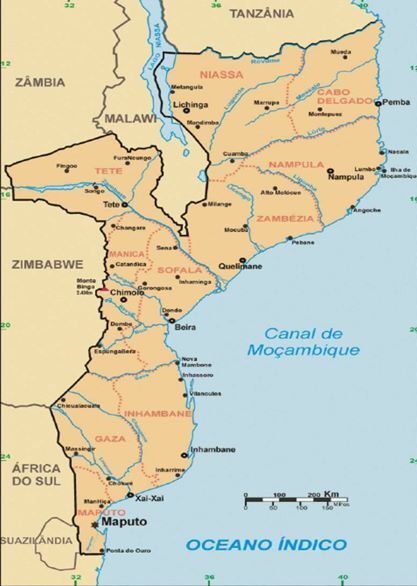
As can be seen from the above image. Mozambique is an exceptionally long country surrounded with a long stretch of coast line on the Indian Ocean, more than 1500 miles long.
Mozambique boasts a vast plateau covered in savannah with open Miombo woodlands. Mozambique has many rivers which flow through the beautiful country the largest being the Zambezi. Mozambique is sparsely populated, with a rich and varied habitat making Mozambique a prime big game hunting destination.
Mozambique, quick glance and overview
Mozambique was a former colony and has its capital situated in Maputu. Mozambique covers an area of more than 500 000 square miles with a time zone of GMT + 2. English is not widely spoken with Portuguese being the man dialect.
Crocodile hunting laws in Mozambique
Before commencing any game hunting safari to a new destination, it is always advisable to conduct research into the laws and regulations of the host country. African prisons are no very pretty or accommodating.
- The hunting season in Mozambique runs from April to November. The months of December to March are just too hot for any type of safari, except for game fishing.
- A license needs to be issued in the hunter’s name and your outfitter will arrange all the necessary paperwork.
- All big game animals hunted in Mozambique are subject to quota availability. Investigate in advance which other animals may be included in the crocodile-hunting safari, as they may not be available if the hunter decides to include them at the eleventh hour. As advised, Hippo hunting in Mozambique is also immensely popular especially considering that Hippo occupy the same habitat as Crocodiles.
- The hunt permit needs to be issued before commencement of crocodile hunts in Mozambique
- Excluding the hunting of nocturnal animals, hunting hours are an hour after sunrise and half an hour after sunset. These are the legal hours as regulated by the government officials.
- The crocodile hunting safari duration, i.e., number of days will be set by the concession holder. In Mozambique, unlike Tanzania the government does not determine the duration of the hunting safari.
- PAC hunts (problem animal control) are illegal in Mozambique.
License Requirements
When crocodile hunting in Mozambique, before the safari application has to be made by the outfitter for the hunting license. The cost of the hunt permit is not refundable should the safari be cancelled. The following documents will be required by the outfitter in order to make the application, namely:
- The full name and surname of the hunter who will hold the license.
- Details of the crocodile hunting area.
- Foreign hunters need to supply two certified or notarized copies of their passports.
- Two recent passport sized color photographs.
- A document verifying “proof of residence.”
- The applicant needs to supply their full name, date and place of birth.
- The hunter needs a declaration that he is legally entitled to hold the hunting license and that no judicial decisions to the contrary have been made.
- The hunting license can only be issued to an applicant over the age of eighteen years.
- The applicant needs to be of sound mind and mentally fit. The hunter may also not suffer from any physical disability which may compromise the safety of crocodile hunting

A future hunting safari in Mozambique, destination Economic Outlook
It is always suggested that when considering a hunting safari in a new destination, spend some time from a business perspective and investigate the economic environment. These statistics will provide helpful information relating to safari costs, inflations and the general wealth of the nation.
While many international hunters travel with gifts, often while appreciated, may not always be exactly what is needed.
Mozambique is rich in natural resources, including massive coal reserves and has one of the world’s largest natural gas fields. Industry is growing, but locals rely heavily on agriculture. Subsequent to 2002, the GDP (Gross Domestic Product) has been amongst the words highest, but the country remains one of the world’s poorest and most underdeveloped. Mozambique in fact ranks incredibly low in GDP, human development and humanity levels of inequality.
Cuisine while Hunting in Mozambique
Mozambican food revolves around the availability of natural supplies and includes an abundance of fresh seafood, corn porridge, stews and casava puddings.
Beef and Chicken is often served with tasty chips, batata potatoes and cashew nuts. Mozambique is famous for its famous chili sauces and juicy fruits such as papaya, pineapples and mangos.
While travelling to the crocodile hunting grounds, it is strongly suggested to stop next to the local street vendors and try some of the local meals. Freshly baked breads with butter chili are a favorite.
When it comes to local alcoholic beer, Mozambique is famous for its well brewed 2M beer which is best served ice cold. On the stronger side, another favorite beverage is a mixture of white rum (called Tippi Tinto) and Marango. Beware though, this drink is superb and knows no limits, crocodile hunting in Mozambique while nurturing a heavy “hang over” is not recommended.

Contrary to popular recommendations, do not pack a safari bag with loads of sweets and chocolates to donate to the children less fortunate. Not all of the youth have access to dentists, toothbrushes and toothpastes and as such sugar can result in dental decay and problems which may not be able to be treated.
The Culture of the Local People
More than 50% of Mozambicans identify as Christian although there are still many African beliefs. Approximately 20% adhere to the Islamic faith, particular in northern Mozambique under the Arabian influence.
Mozambicans love traditional music and dances, while preparing meals under the historic influences of the Portuguese.
Safety on a Safari in Mozambique
When it comes to military institutions, police stations, border crossings and any type of airports. Keep the camera safely packed away. The national flag of Mozambique still boats an image of the African favorite weapon, the AK 457.
Follow the basic simple rules, like in other country and do not flaunt expensive camera’s, phones or walk around with big bundles of cash. Keep any cash in smaller bundles to avoid pulling out big bundles which like anywhere, will attract attention.
Potential Hazards when on a Hunting Safari in Mozambique
While your outfitter will be fully aware of the “going on’s” in the country, it is always good to be aware of factors influencing the sentiment in Mozambique.
Extortion, like in most African countries is always a favorite amongst officials. Basically, these guys look for any reason to take away some of the hard-earned cash.
Officials in Mozambique will look for any excuse to obtain a bribe and is one of the biggest complaints by visitors to the country. What may be “small change” to the hunter, could provide basic food for a family for a week or two.
As most transport in Mozambique is via vehicle, there will be a good chance of being stopped by police who clearly differentiate between locals and visitors. Ensure that you always have your passport available and having a spare certified or notarized copy available is always a good thing. Be sure to keep documents in a waterproof zip lock to stop them from getting damaged.
If for whatever reason you are driving, be sure to have two triangles and two “reflective” else known as “glowing jackets” in the vehicle and that the vehicle’s battery is secure. Do not exceed the speed limits and be aware that due to road conditions, the speed restrictions often quickly change.
If you are asked to pay a bribe, be firm in your response and decline to do so. Police in Mozambique love confirming that visitors where in the wrong for some ridiculous issue. Do not make the payment and request that you be taken to the local police station. These corrupt officials will let you go.
If, as a driver the rules accidentally have been broken, pay the fine and ensure to ask for a receipt. Visitors and residents of any African country need to comprehend that every time a bribe is paid, or extortion entertained, the problem is only exacerbated making it more unpleasant and challenging for future visitors.

When planning a safari of this nature, it is always worth taking the time to fully understand the realities of the destination, trophy quality, and overall experience. Many international hunters spend time researching whether the country delivers on expectations, often asking questions such as is Mozambique good for crocodile hunting before making a final decision.
At the same time, safety remains an important consideration when pursuing dangerous game in remote environments. Working with experienced outfitters and understanding what to expect in the field ensures a far more enjoyable safari, which is why many hunters look into safe crocodile hunting in Mozambique as part of their preparation before arriving in-country.
Author: PC van Wyk