

Successful leopard hunting depends heavily on preparation, bait placement, spoor interpretation, wind direction and blind setup. Successful Leopard Hunts depend heavily on patience, bait placement, wind direction, spoor interpretation and the experience of skilled Professional Hunters who understand the behaviour of mature tom leopards. In many cases, days may be spent monitoring bait sites and trail activity before a hunter ever catches a glimpse of the animal itself.
Widely regarded as one of Africa’s most elusive predators, the leopard combines intelligence, stealth, and aggression in a way few other dangerous game species can match. Their nocturnal habits, ability to move silently through dense cover, and natural caution around human activity make them exceptionally difficult animals to hunt successfully. Even experienced hunters often describe leopard safaris as a game of patience and precision rather than physical pursuit alone.
Successful leopard hunts rely on a combination of ethical hunting practices, careful quota management, and detailed field preparation. Professional Hunters spend significant time studying spoor movement, bait activity, territorial patterns, moon phases, and likely approach routes before constructing blinds or beginning active hunting operations. Every detail, from minimizing scent around bait sites to selecting safe shot angles in low-light conditions, can influence the success of the safari.
As one of the species pursued during Big Five Hunting, the leopard demands concentration, discipline and careful fieldcraft. Whether hunting in Zimbabwe, Namibia, Mozambique or elsewhere in Southern Africa, understanding the methods used by experienced Professional Hunters is essential.
[DYNAMIC-BLOGTABLEOFCONTENT]
How Leopard Behaviour Changes the Hunting Technique
Leopards are solitary and highly territorial predators, primarily active during the early morning hours, late afternoons, and throughout the night. Their secretive nature, combined with exceptional eyesight, hearing, and camouflage abilities, makes them one of the most difficult dangerous game species to locate consistently in the wild. For hunters pursuing African leopard hunts, understanding leopard behavior is often just as important as marksmanship or tracking ability.
Unlike lions, which may move openly through an area, leopards prefer thick cover, rocky outcrops, riverine vegetation, and dense bush where they can move unseen. Mature toms are especially cautious and will often avoid areas where they detect excessive human activity, unfamiliar scent, vehicle traffic, or disturbances around bait sites. Experienced Professional Hunters therefore spend considerable time studying spoor patterns, territorial markings, feeding behavior, and movement corridors before active hunting begins.
Key Characteristics
Territorial Behaviour: Mature leopards establish territories using scent marking, claw scratches on trees, spoor, and vocalizations to warn off rival animals.
Nocturnal Activity: Leopards are most active after dark and often approach bait sites cautiously under low-light conditions or during moonlit periods.
Habitat Adaptability: Leopards thrive across a wide variety of African environments, including savanna, mopane woodland, rocky hillsides, forests, and semi-arid bushveld.
Feeding Habits: Their prey ranges from small antelope and warthogs to baboons, monkeys, and even young livestock in certain areas.
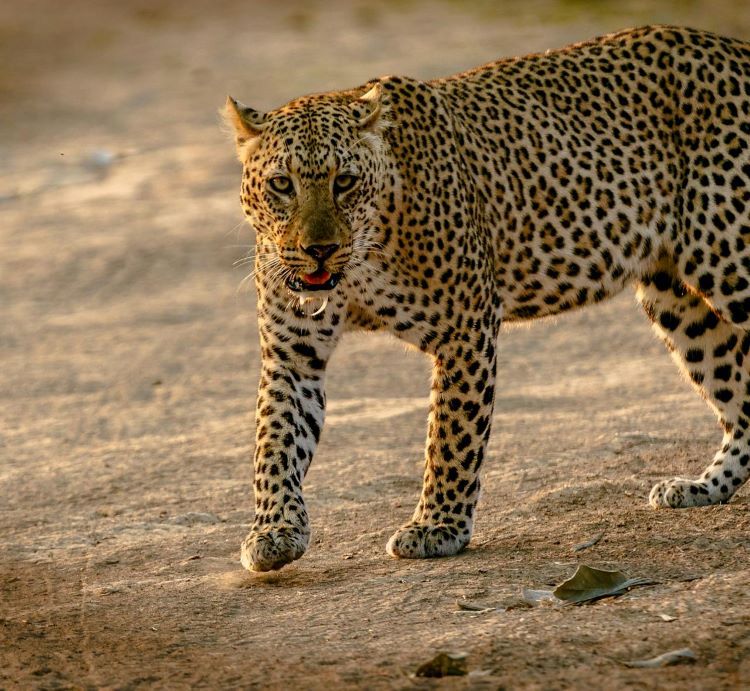
Exceptional Camouflage: Their spotted coats allow them to blend almost invisibly into surrounding vegetation, making visual detection extremely difficult.
Techniques for Hunting Leopard
Successful leopard hunting techniques rely heavily on patience, preparation, and understanding how leopards behave within their territory. Unlike many other African dangerous game species, leopards are rarely hunted through direct pursuit alone. Instead, Professional Hunters and trackers combine baiting methods, spoor interpretation, trail camera monitoring, blind positioning, and careful wind management to increase the chances of a mature tom approaching within safe shooting range.
Different hunting methods may be used depending on the terrain, leopard activity, hunting regulations, and the experience of both the hunter and the safari team. In some regions, baiting remains the most common and effective approach, while other areas may allow the use of trained hounds to track and pressure the leopard after fresh spoor has been identified.
Because leopard hunting often takes place during low-light conditions or after dark, attention to detail becomes critical. Factors such as moon phases, scent control around bait sites, shooting angles, and hunter movement near active areas can all influence the outcome of the safari. Experienced Professional Hunters therefore spend considerable time preparing hunting areas before active leopard hunting even begins.
Below are some of the most widely used methods for hunting leopard in Africa and the techniques commonly employed during dangerous game leopard safaris.
1. Baiting
Baiting remains one of the most widely used and effective leopard hunting methods in Africa. This technique involves placing bait in carefully selected areas where leopard activity has been identified through spoor, territorial markings, trail cameras, or previous feeding patterns. In many safari regions, baiting forms the foundation of successful African leopard hunts.
Professional Hunters often position bait high in trees to imitate natural leopard feeding behavior while helping prevent scavengers such as hyenas from reaching the carcass. Once a mature tom begins feeding consistently on the bait, a temporary blind may be constructed nearby to allow hunters a safe and concealed shooting position.
Several factors influence the success of baiting operations, including:
Wind direction and scent control around bait sites
Moon phases and nighttime visibility
The freshness and positioning of bait
Human movement near active areas
Leopard territorial behavior and competition from other predators
Trail cameras are frequently used to monitor activity around bait sites and help identify mature tom leopards before hunting begins.
2. Spot-and-Stalk
Although less common than baiting, spot-and-stalk hunting remains one of the more physically demanding and traditional methods used during dangerous game hunts targeting leopard. This approach typically involves tracking fresh spoor, identifying feeding areas, or locating leopards resting in thick vegetation, rocky terrain, or trees during daylight hours.
Because leopards are exceptionally cautious animals with excellent hearing and eyesight, hunters must move slowly and quietly while remaining constantly aware of wind direction and surrounding cover. Mature toms may detect hunters long before they are seen themselves, often disappearing silently into dense bush without warning.
Professional trackers play a critical role during spot-and-stalk hunts by interpreting spoor size, age, stride patterns, claw marks, drag marks, and feeding activity to determine leopard movement and likely resting locations.
3. Calling
Predator calling is occasionally used to encourage leopards to reveal themselves or investigate a particular area. Calls may imitate distressed prey animals, rival leopards, or territorial sounds designed to trigger curiosity or defensive behavior.
Calling techniques require patience and restraint, as excessive calling can quickly alert experienced leopards to human presence. In many cases, Professional Hunters use calling strategically in combination with baiting or spoor tracking rather than relying on it as a standalone hunting method.
Depending on the area and leopard density, calling may prove particularly effective during breeding periods or in regions where territorial competition between mature males is common.
What First-Time Leopard Hunters Don't Expect
For many hunters, leopard hunts are very different from what they initially imagine. Unlike active spot-and-stalk plains game safaris, leopard hunting often involves long days of preparation, checking spoor, dragging bait, hanging bait in trees, monitoring trail cameras, and waiting patiently for a mature tom to begin feeding consistently.
In many safari areas, days may pass without even seeing the leopard itself. Professional Hunters and trackers often spend hours driving roads at first light searching for fresh tracks, assessing bait activity, and identifying whether younger toms, hyenas, or other scavengers have visited the area overnight. Hunters quickly learn that patience, discipline, and attention to detail become just as important as marksmanship during dangerous game leopard safaris.
Once a suitable leopard starts feeding regularly, hunters may spend long evenings sitting silently in blinds overlooking bait sites, often waiting in near darkness while listening for baboon alarm calls, hyenas moving through the bush, or the sound of claws gripping bark near the bait tree. Even then, mature toms may approach cautiously before disappearing again without offering a clear shot opportunity.
For many American and international hunters, this combination of suspense, patience, uncertainty, and sudden high-pressure shooting opportunities is precisely what makes leopard hunting one of Africa’s most rewarding dangerous game hunts.
Ethical Considerations When Using Leopard Hunting Techniques
Ethical hunting practices remain central to responsible leopard hunting in Africa and play an important role in long-term wildlife conservation and sustainable safari management. Because leopards are apex predators with relatively low population densities compared to plains game species, regulated hunting quotas and strict permit systems are essential for maintaining stable populations across hunting areas.
Experienced safari operators and Professional Hunters place strong emphasis on ethical hunting standards, wildlife conservation, and ensuring hunts are conducted responsibly within legal hunting concessions.
1. Adhere to Regulations
Leopard hunting in Africa is highly regulated in most countries and typically requires:
Government-issued permits and quota allocations
Licensed Professional Hunters and registered outfitters
CITES documentation for export purposes
Hunting within approved safari concessions
Most ethical leopard safaris focus exclusively on harvesting mature male leopards that have already contributed genetically to local populations while avoiding females and younger animals.
Revenue generated through regulated leopard hunting contributes significantly toward anti-poaching programs, habitat management, wildlife monitoring, and rural community support across many African safari regions. In several countries, hunting concessions help protect large wilderness areas that may otherwise face agricultural expansion, illegal poaching, or habitat loss.
Conservation-based hunting programs also provide employment opportunities for trackers, skinners, camp staff, anti-poaching teams, and local communities living alongside dangerous wildlife populations. When properly managed, sustainable leopard hunting can therefore play an important role in supporting both wildlife conservation and local economies throughout Africa.
2. Ensure Quick and Humane Kills
Leopard shot placement is one of the most critical aspects of dangerous game hunting, particularly when pursuing an animal known for its speed, aggression, and ability to disappear into thick cover after being wounded.A wounded leopard is widely regarded as one of Africa’s most dangerous animals due to its aggression, speed, and tendency to charge from thick cover when injured.
Hunters are therefore encouraged to wait for clear, ethical shooting opportunities that allow for precise placement into the vital organs. Proper rifle selection, calm decision-making, and guidance from experienced Professional Hunters all contribute toward safer and more humane hunting outcomes.

Safety Around Baits, Blinds and Leopard Follow-Ups
Applying the Right Leopard Hunting Technique
No single technique works in every hunting area. Bait placement, spoor, wind, trail-camera activity and the behaviour of an individual tom all influence how the Professional Hunter approaches the safari. The discipline to avoid disturbing an active bait and wait for a clear opportunity is often more important than changing tactics too quickly.
Hunters comparing destinations, safari combinations and available opportunities can explore our current African Hunting Trips, while dedicated leopard options, prices and availability are listed on our Leopard Hunts page.
Author
Pierre van Wyk is co-founder of Game Hunting Safaris and has spent years exploring Africa’s leading dangerous game hunting regions. With experience participating in leopard safaris, elephant hunts, and plains game expeditions across Southern Africa, Pierre focuses on sharing practical hunting knowledge, safari preparation tips, conservation insights, and realistic perspectives on modern African hunting safaris.