
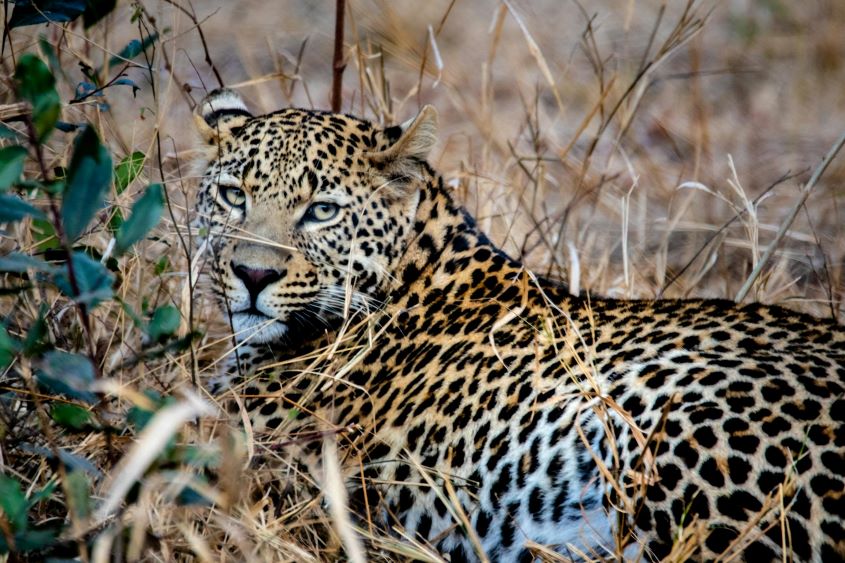
Leopard hunting in Namibia is often misunderstood until a hunter experiences it firsthand.
From the outside, many hunts can look similar. The pricing may appear comparable, the concessions sound impressive, and almost every outfitter promises opportunity. But once the hunt begins, the differences between a properly prepared leopard safari and an average one become very obvious very quickly.
This is not a hunt built around constant movement or easy opportunities. Leopard hunting in Namibia depends on preparation, pressure management, baiting systems, patience, and the ability to make a shot count when the moment finally arrives. In the right areas, the experience can be one of the most rewarding hunts Africa has to offer. In the wrong conditions, it can quickly become frustrating, unpredictable, and mentally exhausting.
That is why experienced leopard hunters rarely judge these safaris by marketing alone. They judge them by concession quality, pre-baiting preparation, hunting pressure, and the experience of the outfitter running the hunt behind the scenes.
This article looks at the realities of leopard hunting in Namibia, why some hunts consistently produce opportunities while others struggle, and what most hunters only fully understand once the safari is already underway.
[DYNAMIC-BLOGTABLEOFCONTENT]
Why Leopard Hunts in Namibia Are Never the Same
A big misconception about leopard hunting in Namibia is the belief that all hunts operate more or less the same way. From the outside, safaris can appear nearly identical. The pricing may look similar, the concessions sound impressive, and almost every outfitter promises healthy leopard populations and genuine opportunity. But once the hunt actually begins, the differences between operations become obvious very quickly.
Some leopard hunts are built around preparation that started weeks before the hunter ever arrived in camp. Multiple bait sites are already active, trail cameras are monitored daily, and outfitters understand exactly which toms are moving through the area and how they are behaving around bait.
Other hunts begin almost from scratch once the safari starts. That difference changes everything.
In properly managed areas with low pressure and strong preparation, leopard hunting starts feeling controlled and deliberate. Movement patterns become more predictable, daylight activity improves, and the hunter is stepping into a system designed to create opportunity.
In weaker areas, the opposite often happens. Leopards become cautious, and movement shifts almost entirely to darkness, and the hunt slowly turns into a waiting game where the leopard is always present—but rarely visible when it matters. Both are sold as leopard hunting in Namibia.
Only one consistently gives hunters a realistic opportunity at a mature tom.
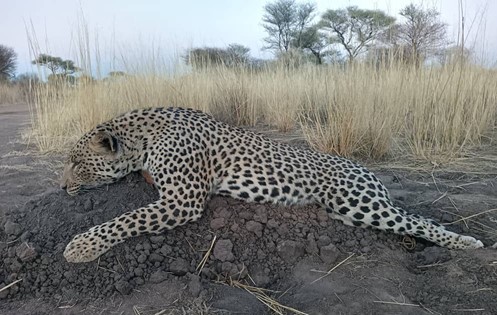
What Leopard Hunting Feels Like After Day Seven
First-time leopard hunters often arrive in Namibia expecting a far more active hunt than what leopard hunting actually becomes once the safari starts. In reality, much of the hunt is slow, repetitive, and mentally exhausting.
Days usually begin before sunrise. Bait sites are checked early, tracks are studied carefully, and trail cameras are reviewed to see whether a leopard visited during the night. From there, hunters may spend hours driving between concessions, dragging bait into trees, checking roads for fresh spoor, and waiting for a mature tom to fully commit to a bait site before a blind is finally selected.
Then the waiting starts.
Hours are spent sitting quietly over bait, often in complete silence, watching shadows and listening for movement that may never come. Some evenings feel full of anticipation. Others feel endless. Then you wake up and do it all again the next day. And then the next.
Leopard hunting is repetitive by nature. Check bait. Move bait. Sit. Wait. Repeat. For hunters who are used to constant movement or visible progress, the pace can become mentally draining long before the leopard ever appears.
That mental fatigue slowly starts affecting everything around the hunt.
Small frustrations begin feeling bigger than they really are. Hunters start focusing on camp facilities, food, vehicles, personalities in camp, or minor inconveniences that normally would not bother them at all. Spending two weeks away from home, family, work, and normal routines while sharing every day with the same PH and tracker team can quietly become stressful, especially when expectations are high and progress feels slow.
This is where preparation matters in ways most hunters never expect.
And then, without warning, everything changes.
A mature tom may suddenly appear on bait after days of seeing nothing at all. The moment is usually quick, tense, and happening in poor light under enormous pressure. After all the waiting, the hunter has only seconds to stay calm, judge the leopard properly, and execute the shot cleanly.
That contrast is what makes leopard hunting in Namibia so unique. Long periods of monotony followed by a few seconds that determine the outcome of the entire safari.
Why Leopard Preparation Takes So Long
Some hunters may only see the final stage of a leopard hunt, sitting in a blind waiting for a tom to appear on bait. What many never fully realise is how much preparation happens long before that moment.
A proper leopard hunt in Namibia is built around detail, timing, and patience. In well-managed concessions, baiting often starts weeks before the hunter ever arrives in camp. Professional hunters spend enormous amounts of time checking roads for tracks, studying movement patterns, identifying territorial toms, and deciding where bait sites have the highest chance of producing daylight activity.
Seasonality also plays a major role.
While leopard hunts can technically take place across much of the hunting season, dry winter periods generally produce the most consistent bait activity. Between July and September, natural food and water sources become more limited, movement patterns become easier to predict, and leopards are often more willing to feed opportunistically around active bait sites.
Even then, success is never immediate.
A mature tom may take days or even weeks before fully committing to a bait. Some leopards feed cautiously at first, approaching only after dark before slowly becoming more comfortable over time. Older toms are particularly difficult. Large territorial males are often unpredictable, feeding irregularly and avoiding any pattern that exposes them to pressure or disturbance.
That is why proper bait preparation matters so much.
Bait sites need to be positioned carefully in areas where leopards already feel secure, with suitable trees capable of holding both the bait and the weight of a mature tom. Wind direction becomes critical, blind placement must be planned properly, and the entire setup has to feel natural enough that the leopard continues returning consistently once the hunt begins.
This is also one of the reasons experienced leopard outfitters invest so heavily in preparation. Maintaining multiple bait sites across enormous concessions takes time, fuel, vehicles, staff, and constant monitoring. Most of that work happens quietly behind the scenes long before the hunter arrives in camp.
And when that preparation is missing, the difference usually becomes obvious very quickly once the safari starts.
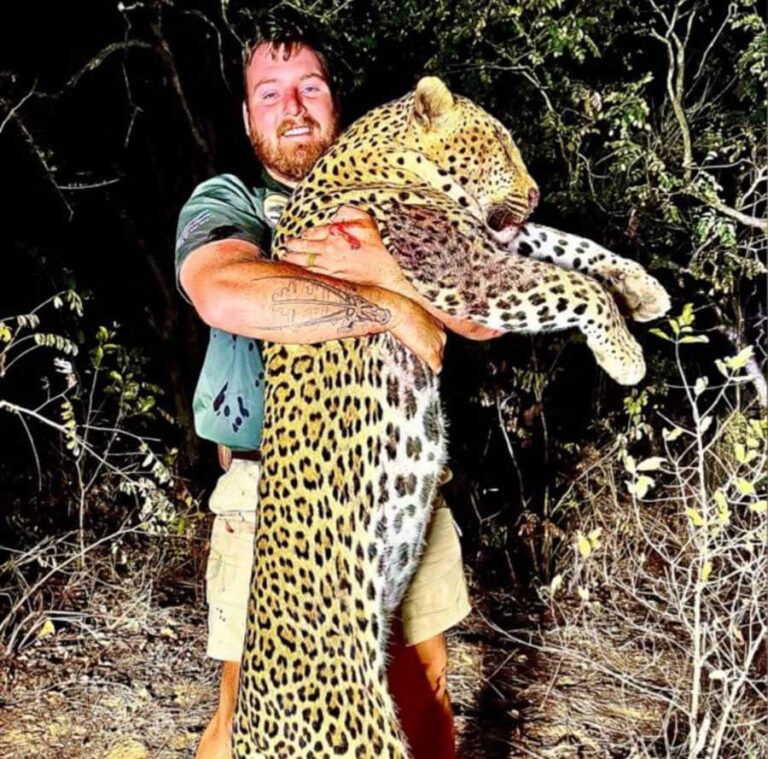
When the Shot Finally Comes, It Happens Fast
One of the biggest mistakes first-time leopard hunters make is underestimating how quickly the final moment develops once a mature tom finally appears on bait.
After days of waiting, fatigue, and repetition, the opportunity often lasts only a few seconds. Light is usually fading, nerves are high, and the pressure to execute cleanly becomes enormous. That is why experienced professional hunters place so much emphasis on preparation, calm decision-making, and proper shot placement before ever entering the blind.
While many leopards are taken cleanly with medium-caliber rifles, professional hunters still recommend larger calibers for dangerous game hunts such as the .375, particularly in situations where a wounded leopard could create a dangerous follow-up.
The difficulty is rarely raw shooting distance. The challenge is maintaining composure once the moment finally arrives after days of mental exhaustion and anticipation.
Poor leopard shot placement , hesitation, or rushing the moment can end a hunt instantly. Once a wounded tom disappears into cover after dark, the situation can become dangerous very quickly for both the hunter and the tracking team.
In some situations, professional hunters may decide not to follow a wounded leopard immediately at night, especially in thick cover where visibility is limited and the risk to trackers and hunters increases significantly. But even waiting until first light can carry consequences.
One client wounded a mature tom late in the evening after several days of baiting and waiting. The decision was made to continue the follow-up at first light rather than push blindly into darkness. By the next morning, hyenas had already reached the carcass before the recovery team arrived. Only part of the leopard remained suitable for mounting.
That’s the reality of leopard hunting. Even when everything finally comes together, things can still go wrong very quickly.
Namibia Still Holds a Strong Leopard Population
One of the things that surprises many hunters is that Namibia still supports a healthy leopard population across large parts of the country.
Well-managed hunting areas, large private concessions, and regulated quota systems have helped maintain stable leopard numbers in many regions where habitat and prey availability remain strong. In properly controlled areas, leopard hunting is managed through strict permit systems focused on mature toms rather than younger breeding animals.
The biggest long-term threat to leopard populations in Namibia is not regulated hunting, but habitat loss and increasing pressure from expanding human settlement and agricultural development.
That is one of the reasons concession size and proper wildlife management remain so important to the future of leopard hunting in Namibia.
The Reality of Leopard Hunting in Namibia
Leopard hunting in Namibia is not simply a matter of arriving in camp and waiting for a leopard to appear. The hunts that consistently produce opportunities are usually built on weeks of preparation, careful bait management, large hunting areas, experienced professional hunters, and the patience to stay disciplined when progress feels slow.
That is also why leopard hunting is so mentally demanding.
Long periods of repetition, uncertainty, and waiting often become part of the experience long before the final opportunity ever presents itself. And when it finally does happen, everything usually comes together in only a few seconds under pressure, fading light, and enormous expectation.
For some hunters, that challenge can become frustrating. For others, it becomes the exact reason leopard hunting remains one of the most respected dangerous game hunts in Africa.
Frequently Asked Questions About Leopard Hunting in Namibia
What is the success rate for leopard hunting in Namibia?
Success rates vary enormously depending on the area, concession size, and the level of preparation behind the hunt. Properly managed concessions, strong pre-baiting systems and low hunting pressure can improve the likelihood of an opportunity, but no responsible outfitter should guarantee success on a leopard hunt. In weaker areas where preparation starts late or pressure is too high, success rates drop quickly. The difference is rarely Namibia itself, it is usually how the hunt is managed behind the scenes.
Why do some leopard hunts in Namibia fail?
Most unsuccessful leopard hunts come down to pressure, poor preparation, or unrealistic expectations. If baiting only starts once the hunter arrives, or the concession is too small and heavily pressured, mature toms often become completely nocturnal. In many cases the leopard is still in the area, but never presents a realistic shot opportunity during legal hunting hours.
What is the best time of year for leopard hunting in Namibia?
The best leopard hunting conditions in Namibia are usually during the dry winter months between July and September. During this period, movement patterns become more predictable, natural food sources are reduced, and leopards are often more responsive around active bait sites. Cooler temperatures also improve overall hunting conditions for long days spent checking bait and sitting in blinds.
Can leopard hunting in Namibia be combined with other species?
Yes. Hunters may combine leopard hunting with plains game hunts while waiting on active bait sites. In Namibia, kudu, gemsbok, warthog and eland hunts are popular and are commonly available in many leopard concessions. Combination safaris help break the mental fatigue that can develop during long periods of bait hunting and waiting.
Hunters comparing broader safari combinations can also review our current African Hunting Trips.
What makes leopard hunting one of Africa’s most difficult hunts?
Leopard hunting is mentally demanding because success often depends on patience, discipline, preparation, and the ability to stay focused after days of repetition with very little visible progress. A mature tom may only appear for a few seconds in fading light after weeks of preparation. For hunters, the psychological challenge becomes just as difficult as the shooting itself.