
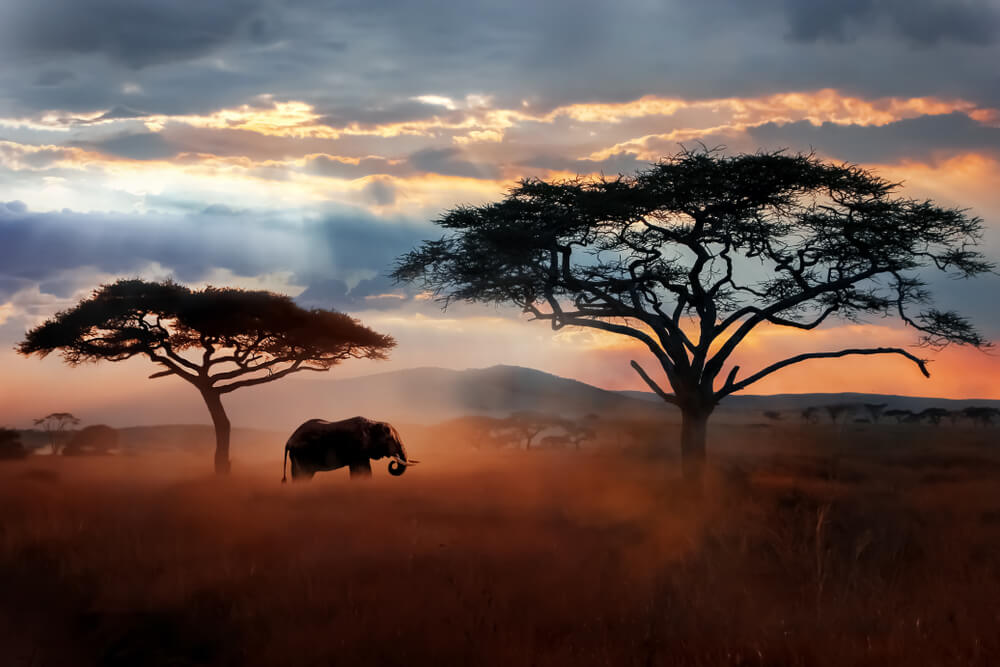
When planning African hunting trips, most hunters begin by choosing their preferred species, destination and hunting dates. But there is another consideration that can change the entire safari: whether the animal is primarily active during daylight or after dark. Hunting a nocturnal species often involves different preparation, equipment and expectations from a conventional daytime hunt.
Spotted hyena, brown hyena, bushpig, civet, genet and honey badger are among the African animals most active at night. Depending on the species and hunting area, a safari may involve monitoring bait sites, using predator calls or spending long hours waiting for an animal that might never appear. Even when trail cameras show regular activity, success is far from guaranteed.
There is also an important legal distinction. An animal being nocturnal does not mean it may legally be hunted at night. Some African countries prohibit ordinary night hunting, while others permit certain species or methods under specific conditions. Artificial lights, thermal optics and night-vision equipment may also be subject to separate restrictions.
This guide examines Africa's nocturnal hunting species, where night hunting may be permitted, the authorisations hunters should confirm and the practical considerations involved in adding a nighttime hunt to an African safari.
[DYNAMIC-BLOGTABLEOFCONTENT]
Where is Night Hunting Legal in Africa?
Night hunting is not permitted under the same conditions throughout Africa. Some countries generally prohibit hunting after dark, while others allow particular activities with special authorisation. Even where a species may legally be hunted, that does not automatically mean a hunter can pursue it at night or use artificial lights.
The distinction matters when planning hunts for spotted hyena, brown hyena, bushpig, leopard and other animals that are particularly active after sunset.
Night-Hunting Rules by Country
| Country | General night-hunting position | Permits and exceptions | Artificial lights and night vision |
|---|---|---|---|
| South Africa | Possible under applicable provincial rules | Species-specific and provincial authorisations may be required | Confirm permitted equipment and methods |
| Namibia | Generally prohibited for ordinary trophy hunting | Separate statutory exceptions exist, but should not be assumed to apply to trophy safaris | Artificial lights prohibited for ordinary trophy hunting |
| Zimbabwe | Depends on the hunting area | Special authorisation required in the Parks and Wild Life Estate | Confirm concession-specific permissions |
| Zambia | Generally prohibited | Written permission exception under Section 73 of the Wildlife Act | Artificial lights also subject to Section 73 |
| Botswana | Generally prohibited | Specific permit exceptions under Section 55 | Artificial lights require specific authorisation |
| Tanzania | Generally prohibited for ordinary hunting | Limited statutory exceptions; not general permission for night safaris | Artificial lights and night-vision devices restricted |
| Mozambique | Generally restricted to daylight hunting | Species-specific exceptions require confirmation under current regulations | Artificial-light permissions must be checked separately |
Legal references reviewed: November 2026. These are general legal frameworks, not confirmation that a particular nighttime trophy hunt is currently bookable. The applicable permits, methods and any exceptions must be verified for the actual hunting area before booking.
What Permits and Permissions Should Hunters Confirm?
Before booking a nocturnal hunt, ask the outfitter or Professional Hunter to establish:
-
Whether the intended species may legally be hunted on the property or concession.
-
Whether hunting is permitted after sunset.
-
Whether spotlights, thermal optics or rifle-mounted night vision may legally be used.
-
Whether additional provincial, protected-species or concession permits are required.
-
Who is responsible for obtaining those permits and whether they will be issued before the hunt.
-
Whether the resulting trophy can legally be exported and imported into the hunter's home country.
A permit to hunt an animal, permission to hunt after dark and authorisation to use night-vision equipment are not necessarily the same thing.
Hunters should obtain clear confirmation of all three before committing to a safari.
Can I Include a Night Hunt on My African Hunting Safari Package?
In some hunting areas, a nocturnal species can be included alongside a conventional daytime safari. A hunter pursuing plains game, for example, might also be interested in bushpig, civet, genet or another species that becomes active after sunset. Whether this is possible depends on the local hunting regulations, the outfitter's permits and the species available on the property.
Night hunting also requires different arrangements. The outfitter may need to prepare bait sites, provide suitable equipment, arrange additional hunting hours or travel to a separate property. Hunters should establish whether these arrangements are included in the package or charged separately.
Some species, such as the South African springhare, may be considered for a specialist nocturnal outing where legally permitted. Others, including certain protected predators, require additional authorisations or may not be available for recreational hunting in the intended area.
Before booking, confirm which species can legally be hunted at night, what equipment may be used and whether there are additional daily rates, trophy fees or permit costs.
Which African Animals Are Most Active at Night?
Many African animals become more active after sunset, but their behaviour, hunting methods and legal status differ considerably. Some are regularly pursued during specialist nocturnal safaris, while others are primarily encountered during conventional daytime hunts or require additional authorisation.
The following comparison highlights the practical differences hunters should understand before considering these species.
| Species | Typical activity | Hunting considerations |
|---|---|---|
| Spotted hyena | Frequently active at night, but also during daylight | Predator calling, baiting and the unpredictability of animal movements. |
| Brown hyena | Predominantly nocturnal | Bait-site preparation, species-specific permits and US trophy-import restrictions. |
| Leopard | Often active at night and around dawn or dusk | Baiting, careful monitoring and hunting within legally permitted hours. |
| Lion | Active during both day and night | Tracking and baiting, subject to country-specific hunting hours and permits. |
| Caracal | Primarily nocturnal and crepuscular | Predator calling and other authorised hunting methods. |
| Civet and genet | Predominantly nocturnal | Specialist hunting arrangements and permitted lighting or observation equipment. |
| Bushpig | Primarily nocturnal in many hunting areas | Baiting, feeding patterns and movement around agricultural areas. |
| Honey badger | Activity varies by habitat and conditions | Unpredictable movements, protected-species considerations and local permits. |
| Porcupine | Predominantly nocturnal | Opportunistic encounters and property-specific hunting permissions. |
| Springhare | Nocturnal | Specialist hunting arrangements and restrictions on artificial lights. |
Important: Nocturnal activity does not establish that a species may legally be hunted after dark. The country regulations, individual permits and approved hunting methods must always be confirmed.
Nocturnal Species Profiles
The following species are particularly active after dark, although their behaviour and legal hunting status differ considerably. Some may be available during specialist nocturnal safaris, while others are generally pursued during daylight hours or require additional authorisation. Their nocturnal habits alone do not establish whether they may legally be hunted after sunset.
Spotted Hyena
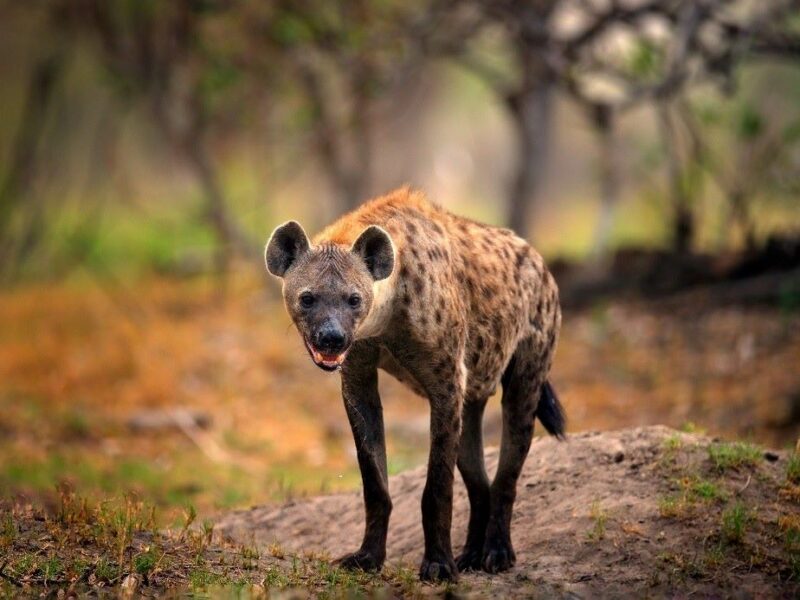
The spotted hyena is the largest member of the hyena family and is well known for its distinctive vocalisations, particularly the calls often described as laughter. Although frequently active at night, spotted hyenas also travel and hunt during daylight, depending on their environment and feeding opportunities.
Hunting spotted hyena can involve baiting, predator calling or tracking, depending on the hunting area and permitted methods. Their movements can be unpredictable, and even regular activity around a bait site does not guarantee an opportunity.
Hunters considering hyena hunts in Africa should establish which hunting methods and hours are authorised for their chosen destination.
Brown Hyena
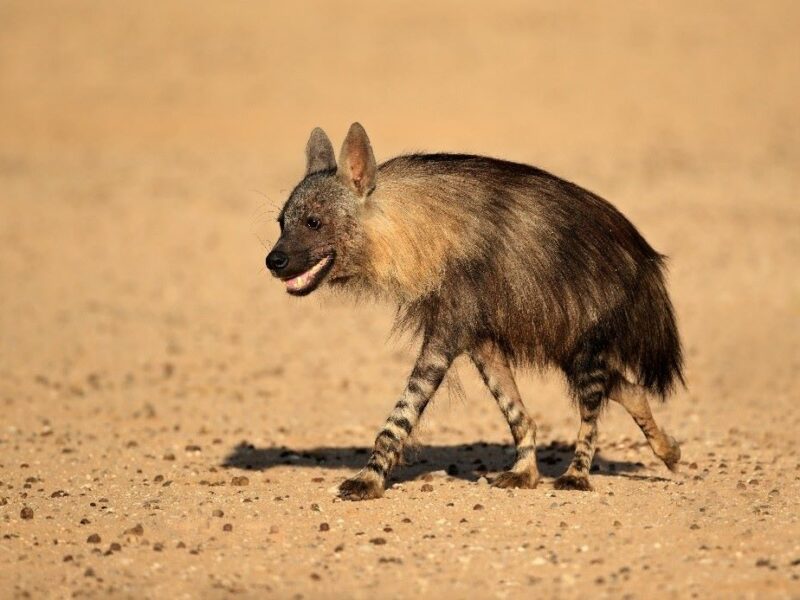
Brown hyenas are predominantly nocturnal scavengers, travelling considerable distances in search of carrion and other available food. They are generally solitary foragers, which can make their movements difficult to predict even when trail cameras confirm their presence in an area.
Where hunting is legally permitted, bait sites may be prepared and monitored before the hunter arrives. However, brown hyenas can be notoriously difficult to attract consistently. Our own experiences in Limpopo demonstrated that an animal visiting a property regularly might still ignore a carefully prepared bait site.
American hunters should check the brown hyena hunting and US import restrictions before booking.
African Lion
Lions are active during both daylight and darkness, although much of their hunting and movement takes place during the cooler hours. Their nocturnal behaviour is one reason hunters may hear lions calling or encounter fresh activity around bait sites early in the morning.
However, lion hunting should not automatically be regarded as a nighttime hunt. In many African hunting destinations, lions are pursued through tracking or baiting during legally permitted daylight hours. The hunting method, authorised hours and individual animal eligibility depend on the country's regulations and the particular hunting area.
Leopard
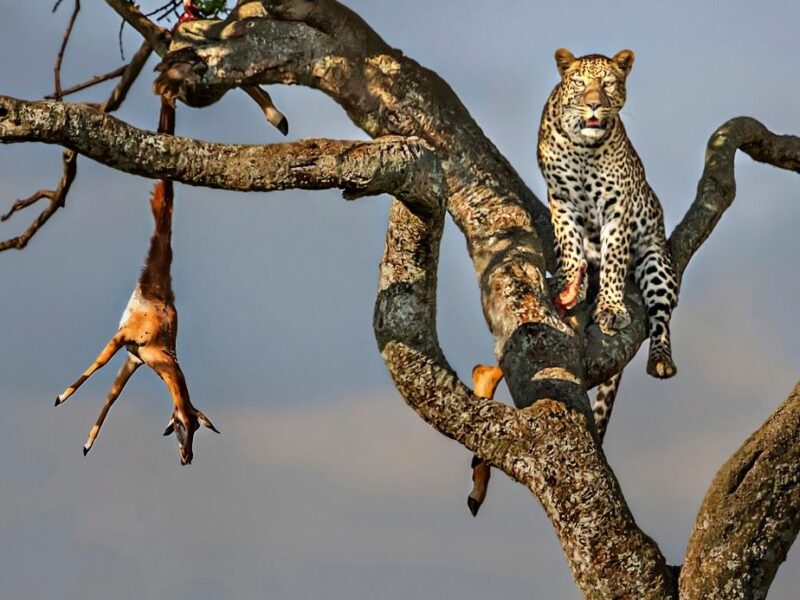
Leopards are largely nocturnal and crepuscular predators, although their movements vary with habitat, prey availability and human activity. They are exceptional climbers and frequently carry kills into trees, keeping their food away from competing predators and scavengers.
Leopard hunting often involves preparing and monitoring bait sites, studying trail-camera activity and establishing when a particular animal is likely to return. A leopard may visit bait consistently before a safari, only to change its behaviour once the hunter arrives. This uncertainty is one of the reasons leopard hunts require careful preparation and patience.
Importantly, a leopard feeding after dark does not mean it can legally be hunted at night. Hunting hours and permitted methods vary between destinations. Hunters considering leopard hunts in Africa should confirm the applicable regulations before booking.
Caracal
The caracal, known in South Africa as the rooikat, is a medium-sized wild cat recognised by its distinctive black ear tufts, short tail and powerful hind legs. Primarily active at night and around dawn and dusk, it may also be encountered during daylight, particularly in cooler conditions.
Caracals are agile predators that feed on birds, rodents and other small animals. Their ability to leap considerable heights allows them to catch birds taking flight, while their secretive behaviour makes them difficult to locate consistently.
Caracals may be pursued using predator calls, tracking or other methods authorised in the particular hunting area. Hunting with hounds is practised in parts of southern Africa, but the applicable provincial regulations must be checked before it is included in a safari. The same applies to spotlights and other equipment used after dark.
Civet
The African civet is a predominantly nocturnal, solitary mammal that spends much of its active time searching for food. Its varied diet includes insects, small vertebrates, fruit and other available food sources. Civets generally remain concealed during daylight, making nighttime encounters more likely.
Where legally available, civets may be included in specialist hunting arrangements or encountered as an additional species. Hunters should establish whether the outfitter has access to suitable habitat and whether the intended hunting hours and observation equipment are permitted.
African Genets
Genets are small, slender, cat-like mammals, although they belong to the viverrid family rather than the cat family. They are predominantly nocturnal, agile climbers and frequently spend daylight hours concealed in trees, rocky areas or dense vegetation.
Their diet includes rodents, birds, insects and other small animals. Genets can be difficult to observe because of their size, quick movements and ability to disappear into surrounding vegetation.
Where legally permitted, a genet may form part of a specialist nocturnal safari. Hunters must confirm its availability and the approved hunting methods, particularly where artificial lights or night-vision equipment are involved.
Aardwolf
Aardwolves are protected under certain provincial wildlife laws, including in Limpopo, where they are listed as protected wild animals. Their presence in a hunting area does not mean they are available for recreational hunting. Anyone considering an aardwolf hunt must first establish whether the relevant authority permits the activity, which hunting methods are authorised and whether hunting after dark is allowed.
South African Springhare
The South African springhare, also known as the springhaas, is a nocturnal rodent rather than a hare or rabbit. It emerges from its burrow after dark to feed on grasses and other vegetation, moving across open ground with powerful leaps on its long hind legs.
Springhare hunting can provide an unusual addition to a South African safari where nocturnal hunting and the necessary equipment are legally authorised. The animals are often encountered in open areas, but spotting one and obtaining a suitable opportunity are not always straightforward.
A Professional Hunter once described the distinctive sight of a springhare moving through the darkness as a pair of eyes that appears to be hopping. Anyone who has watched these animals travelling across open ground will understand the description.
Bushpig
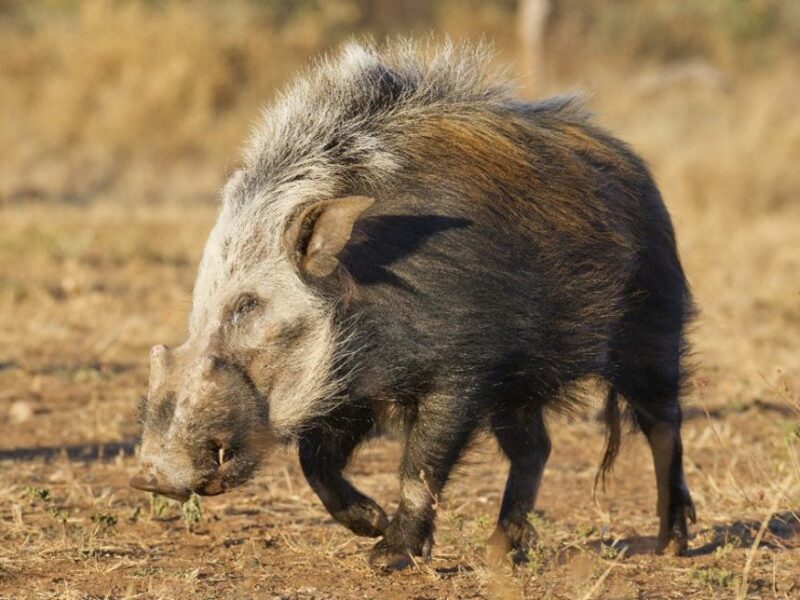
Bushpigs live in family groups, but large males may also live solitary lives. They are nocturnal omnivores, preferring to rest and sleep during the day before appearing at night to forage for food. They are known scavengers but also eat insects, plant roots, fruits, and crops – a reason why they are seen as pests and targeted on a nocturnal African hunt!
Cape Fox
Cape foxes are predominantly nocturnal and may be encountered during specialist predator hunts. However, their legal status and the permitted hunting methods depend on the province. In Limpopo, the Cape fox is classified as a protected wild animal. Hunters must confirm the applicable permits and any restrictions on hunting after dark before including this species in a safari.
Porcupine
Found in sub-Saharan and northern Africa, the porcupine is seen by many farmers as a pest, since they destroy and eat crops. With this species being more active at night, they are targeted on night hunts, mainly being an opportunistic hunting opportunity.
Tipping the scale at about 20-60 pounds, they are primarily herbivores, feeding on a range of bulbs, roots, leaves, berries, and fruits, but have been known to indulge in or gnaw on carrion.
Honey Badger
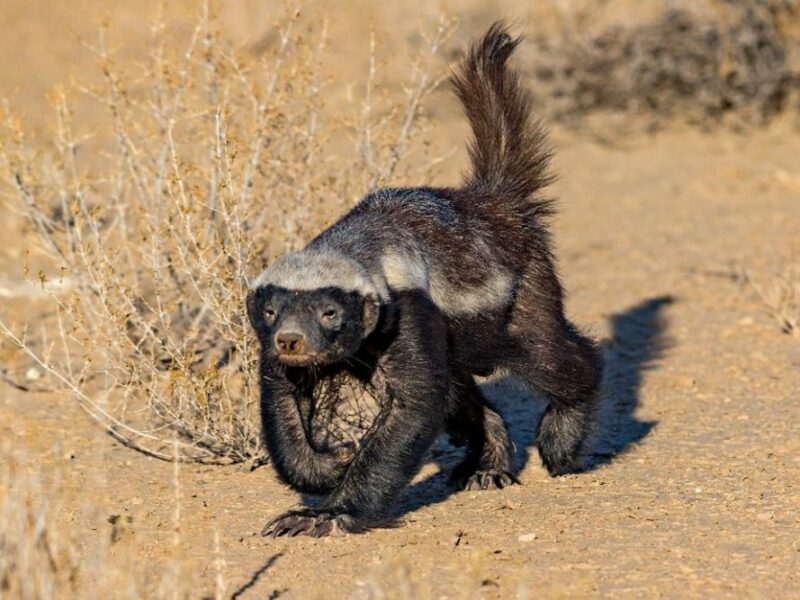
Honey badgers are subject to wildlife protection measures that vary between South African provinces. In Limpopo, they are classified as protected wild animals. Hunters must confirm the applicable provincial permits, any additional national requirements and whether the intended hunting methods are authorised before booking.
The species may be attracted to bait, but its unpredictable movements and the difficulty of recovering a wounded animal after dark make careful preparation particularly important.
What We Learned During Our Night Hunts In Limpopo
During one of our brown hyena hunting expeditions in South Africa's Limpopo Province, Pierre and I spent five nights trying to outsmart an animal that seemed determined to avoid us. Our outfitter had prepared bait sites before we arrived, and the trail cameras showed regular brown hyena activity. We were confident that everything was falling into place. As it turned out, the hyenas had other ideas.
On several nights, brown hyenas appeared in the area but ignored the prepared bait, preferring to chew on old bones nearby. We could see their movements through the thermal equipment, yet getting a clear opportunity through the rifle-mounted night vision was another matter entirely. Pierre spent one particularly frustrating night struggling to make out what the Professional Hunters could see through their thermal monoculars. It taught us that spotting an animal and being able to take a responsible shot are two very different things.
One evening, a honey badger appeared at the bait site. I took the shot, but despite a substantial blood trail, we couldn't recover the animal. Searching the rocky terrain in darkness was difficult, and the team decided to continue the recovery in daylight. We eventually followed the trail towards an abandoned termite mound, but even after considerable effort, the honey badger was never recovered. That remains one of the most disappointing parts of the expedition.
After five nights, we returned without a brown hyena. The experience reinforced something I believe every hunter considering a nocturnal safari should understand: trail-camera photographs, experienced Professional Hunters and carefully prepared bait sites improve your preparation, but none guarantees success.
You can read the full account in our brown hyena hunting expedition in Limpopo.
How Are Nocturnal Hunts Conducted in Africa?
Hunting after dark requires a different approach from a conventional daytime safari. The method depends on the species, its feeding habits, the terrain and, importantly, what the hunting regulations allow. An outfitter may use bait sites, predator calls or specialised observation equipment, but these methods are not universally permitted across African hunting destinations.
Bait Sites and Hunting Blinds
Baiting is commonly associated with predators such as hyena and leopard, although the arrangements differ between species and hunting areas. A Professional Hunter may prepare and monitor bait sites before the client's arrival, using tracks, trail cameras and feeding activity to establish whether an animal is visiting regularly.
A blind is then positioned with suitable visibility and attention to prevailing winds. However, repeated visits to a bait site do not guarantee that an animal will appear during legal hunting hours. As our Limpopo expedition demonstrated, even carefully prepared bait can be ignored when an animal finds something more appealing nearby.
Predator Calling
Predator calls are used to attract certain animals by imitating prey distress sounds or other vocalisations. Caracal and some other predators may respond to calling, but success depends on the animal's location, feeding behaviour, wind and surrounding conditions.
Calls are not a substitute for knowing the hunting area. The Professional Hunter must also establish whether electronic calling devices are permitted for the intended species.
Spotlights, Night Vision and Thermal Equipment
These devices serve different purposes.
Spotlights illuminate an animal directly and may assist with identification, but their use for hunting is restricted or prohibited in some destinations.
Night-vision equipment amplifies available light or uses infrared illumination, allowing a hunter to observe a target in low-light conditions. A rifle-mounted night-vision sight may provide a shooting image where its use is legally authorised.
Thermal equipment detects temperature differences and can help locate animals that are difficult to distinguish against vegetation or a dark background. However, a thermal image alone may not provide sufficient detail for reliable species identification or a responsible shot.
Hunters using unfamiliar equipment should practise with it before their safari, preferably under conditions resembling those they will encounter in the field. Being able to locate an animal is not the same as being able to identify it correctly and place a shot.
Planning a Nocturnal Hunt in Africa
A night hunt offers a very different experience from spending the day tracking plains game. Some animals are located through predator calls or activity around bait sites, while others may be encountered during a carefully planned outing after sunset. The challenge is often not knowing whether an animal will appear, even when the outfitter has evidence that it regularly visits the area.
However, not every nocturnal species can legally be hunted after dark, and the permitted methods vary considerably between destinations. Before committing to a safari, establish exactly which animals are available, which permits are required and whether the necessary equipment and arrangements are included in the quoted price.
For hunters considering a dedicated nocturnal species or an addition to a daytime safari, Game Hunting Safaris can help identify suitable hunting opportunities and the questions that need to be answered before booking.
The most important part of planning a night hunt is understanding what is actually permitted and available in the hunting area, rather than assuming that an animal's nocturnal habits make it a straightforward hunting opportunity.
About the Author — Tamlyn van Wyk
Tamlyn van Wyk is part of the Game Hunting Safaris team and an experienced African hunter who has participated in numerous hunting expeditions across southern Africa. She has firsthand experience with nocturnal hunting, including pursuing spotted and brown hyenas, and understands the preparation, patience and challenges involved in hunting after dark.
Her experience includes long nights in the field, working with Professional Hunters, using night-vision and thermal equipment, and adapting to changing conditions when animals fail to respond as expected. Tamlyn has also hunted species such as bushbuck and baboon during African safaris.
Through her contributions to Game Hunting Safaris, Tamlyn brings practical hunting experience and an understanding of what international hunters should consider when planning a safari, particularly when specialist equipment, permits and restricted hunting hours are involved.