Updated: May 2026
When most hunters think about dangerous game hunting in Africa, species such as Cape buffalo, lion, leopard, and elephant usually come to mind. Yet lurking beneath the surface of Africa's rivers and lakes is another member of the Dangerous 7 that presents a very different challenge.
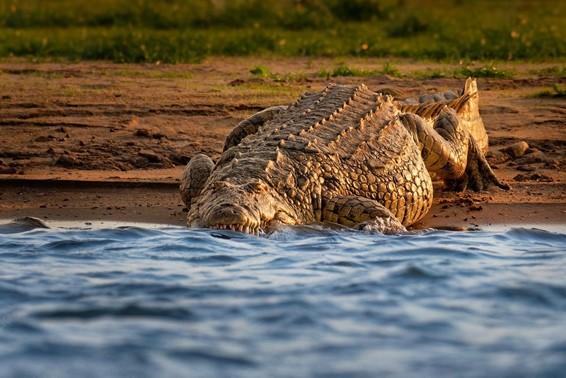
The Nile crocodile is one of the oldest surviving predators on earth. Virtually unchanged for millions of years, this apex predator occupies freshwater habitats across much of Africa and has earned a reputation for stealth, aggression, and remarkable adaptability. It is a predator perfectly suited to its environment and one that commands respect from hunters and local communities alike.
For those considering Nile crocodile hunts, success depends on far more than simply spotting a large reptile along a riverbank. Crocodile hunting demands patience, precise shot placement, careful stalking, and the discipline to wait for the perfect opportunity. A wounded crocodile can disappear beneath the water in seconds, turning a promising hunt into a frustrating and often unsuccessful recovery effort.
Unlike many traditional dangerous game safaris, crocodile hunting is a highly technical pursuit where accuracy and timing matter as much as trophy size. For hunters seeking a unique African hunting experience, the Nile crocodile remains one of the continent's most challenging and rewarding dangerous game trophies.
[DYNAMIC-BLOGTABLEOFCONTENT]
Why the Nile Crocodile Commands Respect
Whether you admire them or not, there is no denying that the Nile crocodile is one of Africa's most remarkable predators. Having survived largely unchanged for millions of years, it continues to dominate rivers, lakes, and wetlands across much of the continent. Few animals have adapted so successfully to their environment, and fewer still command the same level of respect from those who share the water with them.
The Nile crocodile is the definition of an apex predator. Built for ambush, it spends much of its life hidden just beneath the surface, often revealing little more than its eyes and nostrils as it waits for an opportunity. Powerful jaws, thick armored scales, and an explosive burst of speed make it one of Africa's most efficient hunters.
Its preferred habitat includes rivers, lakes, floodplains, and large dams where it feeds on a wide variety of prey. Fish form a large part of its diet, but larger crocodiles are capable of taking antelope, warthog, waterbirds, and almost anything else unfortunate enough to venture too close to the water's edge. Their famous death roll and immense bite force have made them one of the most feared predators in Africa.
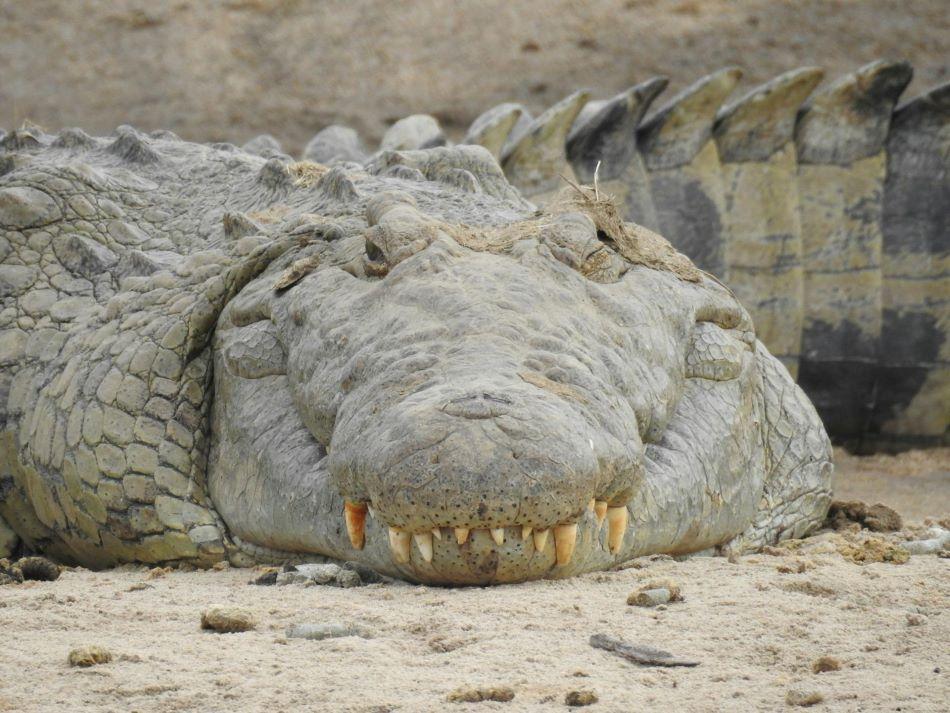
A mature Nile crocodile can exceed 16 feet in length and weigh more than a ton. Large males are heavily built animals, with broad heads, thick necks, and scales that resemble natural body armor. Trophy crocodiles are impressive animals, both in size and in the sense of history they represent.
For hunters, pursuing a Nile crocodile is unlike any other African safari. Success rarely comes quickly. Hours may be spent glassing riverbanks, studying tracks, and waiting for a mature crocodile to expose enough of itself for a shot. Patience, discipline, and precise shot placement are far more important than covering large distances.
What makes crocodile hunting so memorable is the setting. Many hunts take place along some of Africa's great rivers and lakes, in wild country where crocodiles have ruled the waterways for centuries. It is a hunt that rewards persistence and attention to detail, and one that leaves most hunters with a healthy respect for one of Africa's oldest and most formidable predators.
Other Crocodile Species Found in Africa
While the Nile crocodile dominates most conversations about crocodiles in Africa, it is not the continent's only crocodilian species. Several lesser-known relatives inhabit different regions of Africa, although none approach the Nile crocodile in size, distribution, or reputation.
West African Slender-snouted Crocodile (Mecistops cataphractus)
Found in parts of West and Central Africa, the slender-snouted crocodile is a specialized river-dwelling species recognized by its narrow snout and secretive nature. Populations have declined significantly due to habitat loss and hunting pressure, and the species is now considered critically endangered. It is not hunted on African safaris.
Dwarf Crocodile (Osteolaemus tetraspis)
The dwarf crocodile is Africa's smallest crocodile species and inhabits the forests and wetlands of West and Central Africa. Although rarely encountered by most safari hunters, it remains an interesting species due to its nocturnal habits and preference for dense tropical habitats. Hunting regulations vary by country, and opportunities are limited.
West African Crocodile (Crocodylus suchus)
Closely related to the Nile crocodile, the West African crocodile occurs in parts of West and Central Africa. Although generally smaller and less aggressive than its famous cousin, it remains a capable predator and is occasionally hunted where regulations permit.
Across Africa, crocodiles continue to face increasing pressure from expanding human populations, habitat loss, and competition for freshwater resources. Conservation and sustainable management programs play an important role in ensuring these remarkable reptiles remain part of Africa's rivers, lakes, and wetlands for future generations.
Where can You Hunt Nile Crocodiles in Africa?
Several African countries offer excellent opportunities for Nile crocodile hunting, with most hunts taking place along major river systems, lakes, and floodplains where mature crocodiles thrive. Each destination offers a slightly different hunting experience, from remote wilderness concessions to large privately managed hunting areas.
Hunting in Zimbabwe
Zimbabwe remains one of Africa's premier crocodile hunting destinations. The waters of Lake Kariba and the Zambezi Valley have produced numerous trophy crocodiles over the years, often as part of combination safaris that include Cape buffalo, hippo, and other dangerous game species. Hunters researching hunting in Zimbabwe will find some of the continent's most respected crocodile hunting areas.
Hunting Safaris in Zambia
Zambia offers excellent crocodile hunting opportunities along the Luangwa River, Lake Kariba, and several major river systems. Hunts are typically conducted in large wilderness areas where hunters can combine crocodile with buffalo, hippo, and a variety of plains game species. Many experienced hunters regard hunting safaris in Zambia as among the most authentic in Africa.
Hunting in Mozambique
Mozambique has become increasingly popular among dangerous game hunters, particularly in the Zambezi Delta and around Cahora Bassa. Large crocodiles are regularly taken in these areas, often during safaris that also target buffalo, leopard, and hippo. The country's remote wilderness areas continue to attract hunters interested in hunting in Mozambique.
Tanzania Hunting Safaris
Tanzania's vast hunting concessions provide opportunities to pursue Nile crocodiles in some of Africa's wildest and most remote landscapes. Crocodile hunts are frequently combined with buffalo, lion, leopard, and other classic East African dangerous game species. Few destinations offer the scale and adventure associated with Tanzania hunting safaris.
Hunting in Namibia
Although better known for plains game and desert-adapted species, Namibia's Zambezi Region offers excellent crocodile hunting opportunities along the Chobe and Zambezi river systems. These hunts are often combined with buffalo and hippo safaris. Hunters exploring hunting in Namibia are often surprised by the quality of crocodile hunting available in the country's northern regions.
South Africa Hunting Safaris
South Africa provides accessible crocodile hunting opportunities on well-managed properties and river systems. For many international hunters, it offers an efficient introduction to crocodile hunting while still producing impressive trophy specimens. South Africa hunting safaris remain particularly popular among first-time visitors to the continent.
Regardless of destination, Nile crocodile hunting is a highly specialized pursuit. Success often depends on patience, precise shot placement, and the ability to wait for the brief opportunity when a mature crocodile presents itself along the water's edge.
What Makes a Trophy Trophy Nile Crocodile?
One of the first questions hunters ask is, "How big is a trophy Nile crocodile?" The answer is not always as straightforward as measuring length alone.
A mature crocodile exceeding 12 feet is generally considered a very respectable trophy, while specimens reaching 14 feet or more are exceptional animals that few hunters will ever encounter. However, experienced professional hunters often look beyond simple measurements when evaluating a crocodile.
Head size, neck thickness, body condition, and overall appearance all play an important role in judging trophy quality. Mature males typically carry heavy, block-shaped heads, thick necks, and heavily armored scales that reflect years of survival in some of Africa's most challenging environments.
Part of the challenge lies in the fact that crocodiles spend much of their time submerged. Hunters may spend hours glassing riverbanks and shorelines waiting for a mature crocodile to expose enough of its body to judge its size accurately. Even then, estimating length can be surprisingly difficult.
Unlike many plains game species, crocodile hunting is rarely a matter of covering ground. Success depends on patience, observation, and the ability to wait for the right animal and the right shot. A mature crocodile may only present a brief opportunity before slipping silently back into the water.
This combination of trophy quality, precise shot placement, and the uncertainty of dealing with one of Africa's oldest apex predators is what makes Nile crocodile hunting such a rewarding safari experience.
The Moment Everything Happens
Hours may pass before a mature crocodile presents a genuine opportunity. The animal may be lying half-submerged along a riverbank, exposing only part of its body, while the professional hunter studies head shape, body size, and trophy quality through binoculars.
Then the moment arrives.
Unlike many African game species, crocodiles offer very little margin for error. A shot placed an inch or two from the intended target can turn a perfect hunt into a difficult recovery situation. This is why understanding proper crocodile shot placement is so important before arriving in camp.
As the crosshairs settle, several thoughts are often running through a hunter's mind at once. Is the crocodile broadside enough? Is enough of the animal exposed to judge its true size? Is part of the tail still submerged beneath the water? Has the tail been damaged or bitten off during territorial fights with other crocodiles, making the animal appear shorter than it actually is?
Even after a well-placed shot, the hunt may not be over. A crocodile's powerful death throes can cause it to slide, roll, or thrash its way back into deep water in a matter of seconds. Experienced professional hunters understand the urgency of recovery and will often move quickly once the shot is taken.
This combination of precise shot placement, split-second decision-making, and the uncertainty that follows the shot is what makes crocodile hunting such a unique challenge. Few African hunts place so much importance on a single moment.
Why Crocodile Hunting Gets Under Your Skin
Speak to hunters who have pursued buffalo, lion, elephant, and crocodile, and many will tell you that the crocodile was one of the most memorable hunts of their lives.
That may sound surprising at first.
Unlike buffalo hunting, there are no long tracks to follow through the dust. Unlike leopard hunting, there are no bait sites to check. Much of crocodile hunting involves patience, observation, and waiting for something to happen.
Yet that is exactly what makes it so addictive.
Every crocodile seen along a riverbank becomes a puzzle. Is it mature enough? How much of its body is actually visible? Is it longer than it appears? Will it climb fully out of the water before disappearing again? Hours can be spent studying a single crocodile before a decision is made.
The hunt becomes less about covering ground and more about reading an animal that has survived for decades by avoiding danger. Every movement matters. Every angle matters. Every decision matters. By the time the opportunity finally arrives, most hunters are far more invested than they expected to be.
That is often why Nile crocodiles occupy such a special place in trophy rooms around the world. The trophy represents far more than a measurement. It represents patience, discipline, and a successful encounter with one of Africa's oldest predators.
The Nile crocodile remains the perfect dangerous game hunting trophy for any hunter. The crocodile’s strong jaws, powerful bodies, impressive speed both on land and in the water, and agility, together with their unparalleled stealth, have them rated as one of the world’s best apex predators in their habitat. If you are considering a dangerous game hunting safari with a difference, then crocodile hunting in Africa is for you!
Choosing the Right Crocodile Hunting Destination
While Nile crocodiles can be hunted in several African countries, the experience varies considerably depending on where you hunt.
Hunters interested in crocodile hunting in Zimbabwe are often drawn to the legendary waters of Lake Kariba and the Zambezi Valley. These areas have produced exceptional trophies for decades and offer the opportunity to combine crocodile with buffalo, hippo, and other dangerous game species.
Those considering hunting crocodiles in Mozambique are frequently attracted by remote wilderness areas such as the Zambezi Delta and Cahora Bassa. These regions are known for producing large crocodiles in wild, untamed environments where every safari feels like a genuine adventure.
In Zambia, crocodile hunts are commonly conducted along major river systems where hunters can combine crocodile with hippo, buffalo, and a wide range of plains game. Tanzania, meanwhile, offers the opportunity to pursue crocodiles in some of Africa's largest and most remote hunting concessions.
The best destination ultimately depends on the type of safari experience you are seeking. Some hunters prioritize trophy size, while others are drawn to remote wilderness areas, combination dangerous game safaris, or the chance to experience a particular region of Africa.
How to Prepare for a Crocodile Hunting Safari
A successful crocodile hunt begins long before you arrive in Africa. Unlike many plains game safaris, crocodile hunting often involves long periods of observation, careful stalking, and precise shot placement. Proper preparation can make a significant difference to your overall experience.
Before Booking Your Hunt
Start by researching the destinations that offer the best Nile crocodile hunting opportunities. Countries such as Zimbabwe, Zambia, Mozambique, Tanzania, Namibia, and South Africa all provide excellent crocodile hunting, although the style of safari and hunting environment can vary considerably.
Working with an experienced hunting consultant can simplify the process. From selecting the right outfitter to understanding permit requirements, trophy shipping, and travel logistics, professional guidance can help ensure your safari runs smoothly from start to finish.
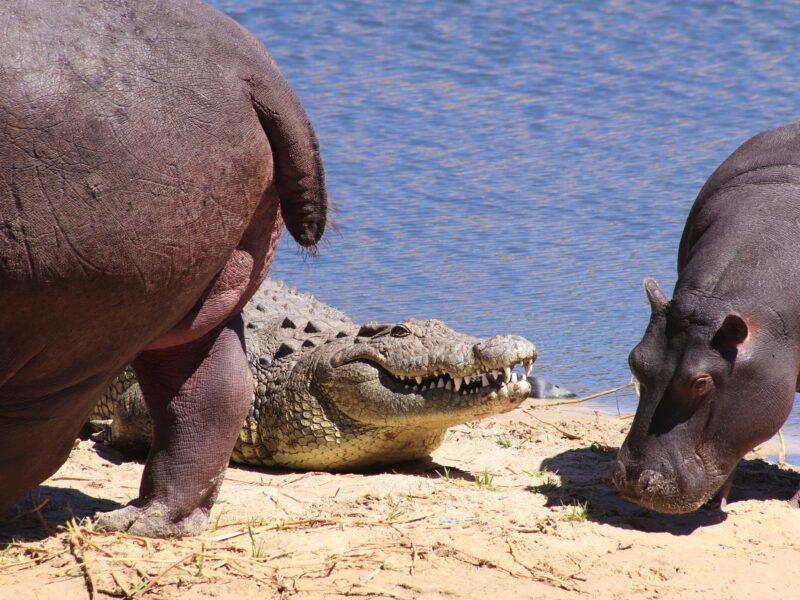
Many hunters also choose to add a hippo hunt to their safari. Since both species occupy similar river systems, combining crocodile and hippo on the same hunt is often a practical and rewarding option.
Preparing for the Hunt
While crocodile hunting is not physically demanding in the same way as tracking buffalo through thick bush, a reasonable level of fitness is still beneficial. Hunters may spend long hours glassing riverbanks, walking shoreline areas, and navigating uneven terrain.
Before departure, take time to familiarize yourself with crocodile anatomy and shot placement. A crocodile's vital areas are significantly smaller than those of most plains game species, making accuracy critical.
It is also worthwhile to learn about the country you will be visiting, including climate, terrain, local customs, and any travel requirements. The better prepared you are before arriving in camp, the more enjoyable your safari is likely to be.
What Should You Pack for a Crocodile Hunting Safari?
Most African safari camps provide daily laundry service, so there is no need to overpack. The key is to bring practical, comfortable clothing suited to warm days, cool mornings, and long hours spent near rivers and lakes.
A typical crocodile hunting safari packing list should include:
- Lightweight, quick-drying hunting shirts in neutral colors
- A combination of long and short-sleeved shirts
- Comfortable hunting trousers or shorts
- Two pairs of well-worn hunting boots
- Plenty of quality hunting socks
- A wide-brim hat or cap for sun protection
- A lightweight rain jacket, depending on the season
- A warm jacket or fleece for early mornings and evenings
- Casual clothing for camp
- Sunglasses and sunscreen
- Mosquito repellent
- Binoculars for glassing riverbanks
- Personal medications and a basic travel medical kit
If you are bringing your own rifle, ensure all firearm permits and airline requirements have been completed well before departure. It is also worth carrying copies of your passport, hunting licenses, travel insurance, firearm documentation, and flight itinerary in a separate bag.
One piece of advice that experienced African hunters often share is simple: never bring brand-new boots on safari. Whether you are stalking along a riverbank in Zimbabwe or glassing the edge of Lake Kariba in Zambia, comfortable footwear can make a significant difference to your overall experience.
Most importantly, pack light. African safari camps are well accustomed to international hunters, and almost anything forgotten at home can usually be worked around. Good optics, comfortable clothing, and a positive attitude are often more valuable than an overloaded duffel bag.
T
The Skill Most Crocodile Hunters Never Expext
Most hunters preparing for their first crocodile safari focus on rifles, optics, and shot placement. Few spend much time thinking about patience.
Yet patience may be the most important skill on the entire hunt.
Many hunters arrive in Africa expecting action every hour of every day. The reality is often very different. A mature crocodile may spend most of the day submerged, exposing only a small portion of its body above the water. Hours can pass without a shot opportunity, even when a trophy crocodile is present.
For hunters accustomed to whitetail deer, elk, or turkey hunting in North America, the experience can feel strangely familiar. Success often comes from observation, discipline, and the willingness to wait longer than everyone else.
The temptation is always there. A slightly smaller crocodile appears. A difficult angle presents itself. The animal starts moving back toward the water.
Should you take the shot?
Experienced professional hunters are remarkably patient. They understand that a safari lasting several days should never be rushed because of a few minutes of impatience. More often than not, the best decision is to wait.
When the right crocodile finally presents the right opportunity, the wait suddenly makes sense. What seemed like hours of inactivity becomes part of the story, and often one of the reasons the hunt is remembered so vividly years later.
What Happens After the Shot?
Unlike most plains game hunts, a crocodile hunt does not always end the moment the trigger is pulled.
The shot breaks, the recoil lifts the rifle, and for a second everyone is focused on the exact spot where the crocodile had been lying. If the animal is close to the water, those next few moments can feel much longer than they really are.
A Nile crocodile can absorb an astonishing amount of punishment in its final moments. Even after a well-placed shot, powerful muscle contractions can cause it to thrash, twist, and slide unexpectedly. If it reaches deep water, the recovery immediately becomes more complicated.
That possibility sits quietly in the back of every hunter's mind as the crosshairs settle. The shot feels right. The professional hunter nods. Yet nobody is celebrating. All eyes remain fixed on the riverbank, watching for movement and waiting to see what happens next.
This is one of the reasons crocodile hunting places such importance on shot placement. Success is often measured in inches. A perfectly placed shot can end the hunt in seconds, while a slight error can turn the recovery into a difficult and uncertain exercise.
Then the tension finally breaks.
The crocodile is recovered, dragged clear of the water, and for the first time the hunter gets to stand beside the animal that has occupied so much attention over the previous days. The experience is often surprising. A crocodile viewed through binoculars from a hundred yards away rarely appears as impressive as it does lying on the riverbank.
The heavy head, thick neck, armored scales, and sheer length become impossible to ignore. What had seemed like a dark shape along the water's edge suddenly reveals itself as one of Africa's oldest and most successful predators.
It is a moment that tends to stay with hunters long after the safari is over. Not because of a measurement written in a record book, but because of everything that happened before it.
How Long Does a Crocodile Hunt Take?
Unlike some dangerous game safaris that require lengthy government-mandated hunting periods, crocodile hunts can often be completed within a relatively short timeframe. Most dedicated crocodile safaris range from 5 to 10 hunting days, depending on the destination, hunting area, and trophy expectations.
That said, experienced hunters understand that crocodiles do not always follow a schedule. Weather conditions, water levels, visibility, and crocodile behavior can all influence the pace of the hunt. A mature trophy may be located on the first day, while another safari may require several days of patient observation before the right opportunity presents itself.
Many hunters choose to combine a crocodile hunt with a hippo hunt, Cape buffalo hunt, or selected plains game species. These combination safaris often provide the best overall value while allowing hunters to experience more of Africa's diverse hunting opportunities.
The ideal safari length depends on your objectives. Hunters focused exclusively on a trophy Nile crocodile may require fewer days than those planning a broader dangerous game safari involving multiple species.
Questions Hunters Ask Before Booking a Crocodile Safari
Is Crocodile Hunting Dangerous?
Although crocodiles are members of Africa's Dangerous 7, the risks associated with crocodile hunting are different from those encountered during buffalo, elephant, or lion hunts. Most crocodile hunts are conducted from carefully selected positions overlooking riverbanks, sandbars, and shorelines. The real challenge lies in precise shot placement and recovering the animal before it reaches deep water. Crocodile hunting remains one of Africa's most specialized dangerous game hunting experiences and should always be conducted with an experienced professional hunter.
What Is the Best Country for Crocodile Hunting in Africa?
Several African countries offer excellent Nile crocodile hunting opportunities, but Zimbabwe, Mozambique, Zambia, Tanzania, Namibia, and South Africa consistently rank among the most popular destinations. The best choice often depends on whether you prioritize trophy size, wilderness experience, combination dangerous game safaris, or overall safari value. Areas such as Lake Kariba, the Zambezi Valley, Cahora Bassa, and the Zambezi Delta have produced exceptional crocodile trophies for decades.
How Much Does a Crocodile Hunt Cost?
The cost of a crocodile hunt varies considerably depending on the destination, safari length, trophy fees, and whether additional species are included. Combination safaris that include hippo, Cape buffalo, or other dangerous game often provide excellent value. Hunters researching crocodile hunts should focus on overall safari quality rather than price alone, as experienced professional hunters and quality hunting areas often make a significant difference to the outcome of the hunt.
What Caliber Is Best for Crocodile Hunting?
Accuracy is more important than raw power when hunting crocodiles. Common choices include the .300 Winchester Magnum, 7mm Remington Magnum, and .375 H&H. Because the target area is relatively small, hunters should choose a rifle they shoot confidently and accurately. Understanding crocodile shot placement before arriving in camp is often more important than the specific caliber selected.
Can You Bow Hunt Crocodiles in Africa?
Bow hunting crocodiles is permitted in certain African countries, although regulations vary significantly between destinations. Hunters interested in bow hunting should confirm local regulations well in advance and discuss equipment requirements with their outfitter. Crocodile bow hunts are highly specialized and generally recommended only for experienced bowhunters.
What Is the Success Rate of Crocodile Hunting?
Success rates are generally high when mature crocodiles are located and hunters remain patient enough to wait for the correct shot opportunity. Most unsuccessful hunts result from rushed shots, poor shot placement, unfavorable weather conditions, or crocodiles spending extended periods in the water rather than exposing themselves along the shoreline.
Can Crocodile Hunting Be Combined With Other Species?
Absolutely. Many hunters choose to combine crocodile hunting with hippo hunts, Cape buffalo hunts, or broader big game hunting safaris in Africa. Because crocodiles share habitat with several other sought-after species, combination safaris are often both practical and cost-effective. In destinations such as Zimbabwe, Zambia, Mozambique, and Tanzania, it is common for hunters to pursue multiple dangerous game species during the same safari.
Why Do Experienced Hunters Rate Crocodile Hunting So Highly?
Crocodile hunting presents a challenge unlike almost any other African safari. The hunt requires patience, observation, precise shot placement, and the discipline to wait for the right opportunity. Much of the animal remains hidden beneath the water, making trophy judging surprisingly difficult. Success often depends on a single moment after days of preparation and observation. That combination of uncertainty, technical difficulty, and trophy quality is what makes crocodile hunting so memorable.
Is Crocodile Hunting a Good First African Safari?
Many American hunters choose to combine a crocodile hunt with several plains game species, creating a well-rounded introduction to African hunting. For those planning their first safari, understanding how big game hunting in Africa works can help simplify the process and set realistic expectations before arriving in camp.
Author: B. Hershensohnn