
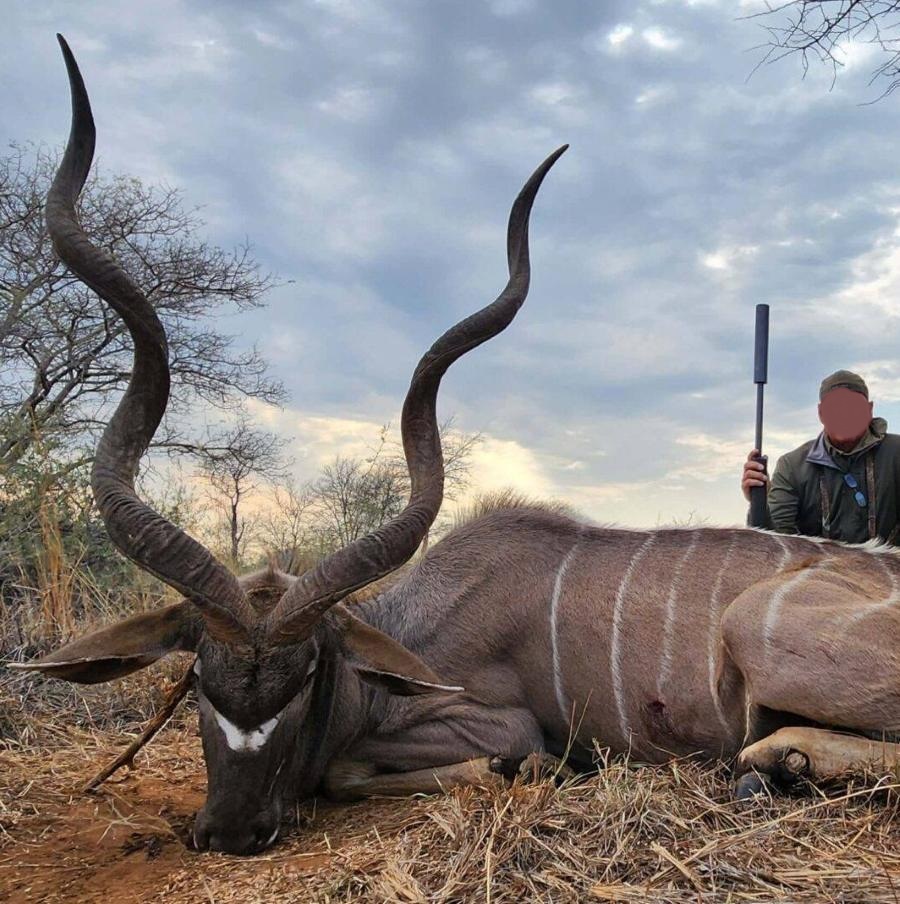
Ask three hunters what counts as big game in Africa and you will probably receive three different answers. Cape buffalo certainly qualifies. So does elephant. But what about a kudu, sable, gemsbok or a mature eland bull?
Big game hunting in Africa is a much broader category than the Big Five or dangerous game alone. It includes Africa’s largest species, but the term is also used for substantial plains game animals that have formed part of traditional African hunting.
That distinction matters because Big Game Hunting can describe different safaris. Following the tracks of an old Cape buffalo bull through thick brush is big game hunting, but so is glassing distant hillsides for kudu or spending days looking for a trophy eland bull. The animals, country and hunting method may change completely, but each still has its place in African big game hunting.
There is no single list of African big game animals that applies across every hunting country. Some species overlap with dangerous game, some belong to the Big Five, and others are usually classified as plains game. Understanding where those groups overlap makes the meaning of big game hunting clearer.
What Does Big Game Actually Mean in Africa?
Big game refers to the larger wild animals traditionally pursued by hunters. In Africa, the term has developed across different countries, hunting traditions and species groups, which is why there is no single bodyweight or species list that magically determines whether an animal qualifies.
Elephant and Cape buffalo are obvious examples. Both are large-bodied animals and are also classified as dangerous game. Lion and leopard are smaller, yet their place in African big game hunting has never depended purely on physical size.
The same principle applies to antelope. Eland, kudu, sable, roan, gemsbok and waterbuck are normally grouped under Plains Game Hunts, but they can also fall comfortably within the broader description of African big game animals. An eland can weigh more than several species traditionally regarded as dangerous game.
Big game hunting is better understood as a broad hunting category than as a strict scientific classification. The species being hunted, the hunting tradition and the way the term is used within a particular African country all play a part.
Which African Animals Count as Big Game?
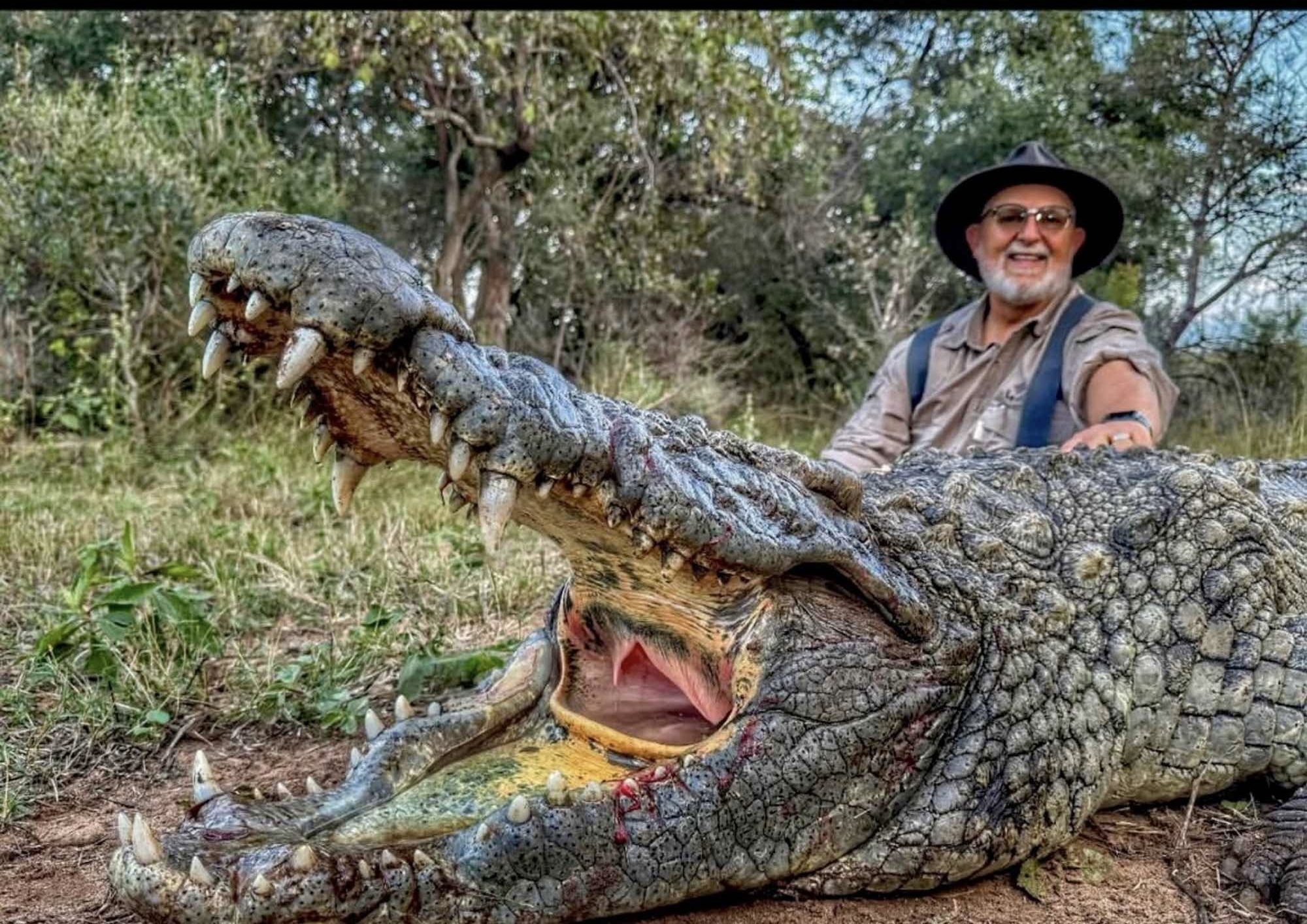
There is no official list covering every animal considered big game across Africa, but some species clearly belong in the category. Elephant, Cape buffalo, lion, leopard and rhino are obvious examples, while hippo and Nile crocodile are also regarded as African big game.
The definition does not stop with dangerous animals. Eland, kudu, sable, roan, gemsbok and waterbuck are all substantial game species, but African big game extends well beyond the familiar antelope of southern Africa.
Bongo in the forests of Central Africa and the forest buffalo of Cameroon and the Congo Basin are different animals hunted in different environments, yet both sit comfortably within the world of African big game hunting.
A hunter travelling to Africa specifically for a big kudu or old eland bull is every bit as capable of describing the trip as a big game hunt as someone arriving with Cape buffalo at the top of the list.
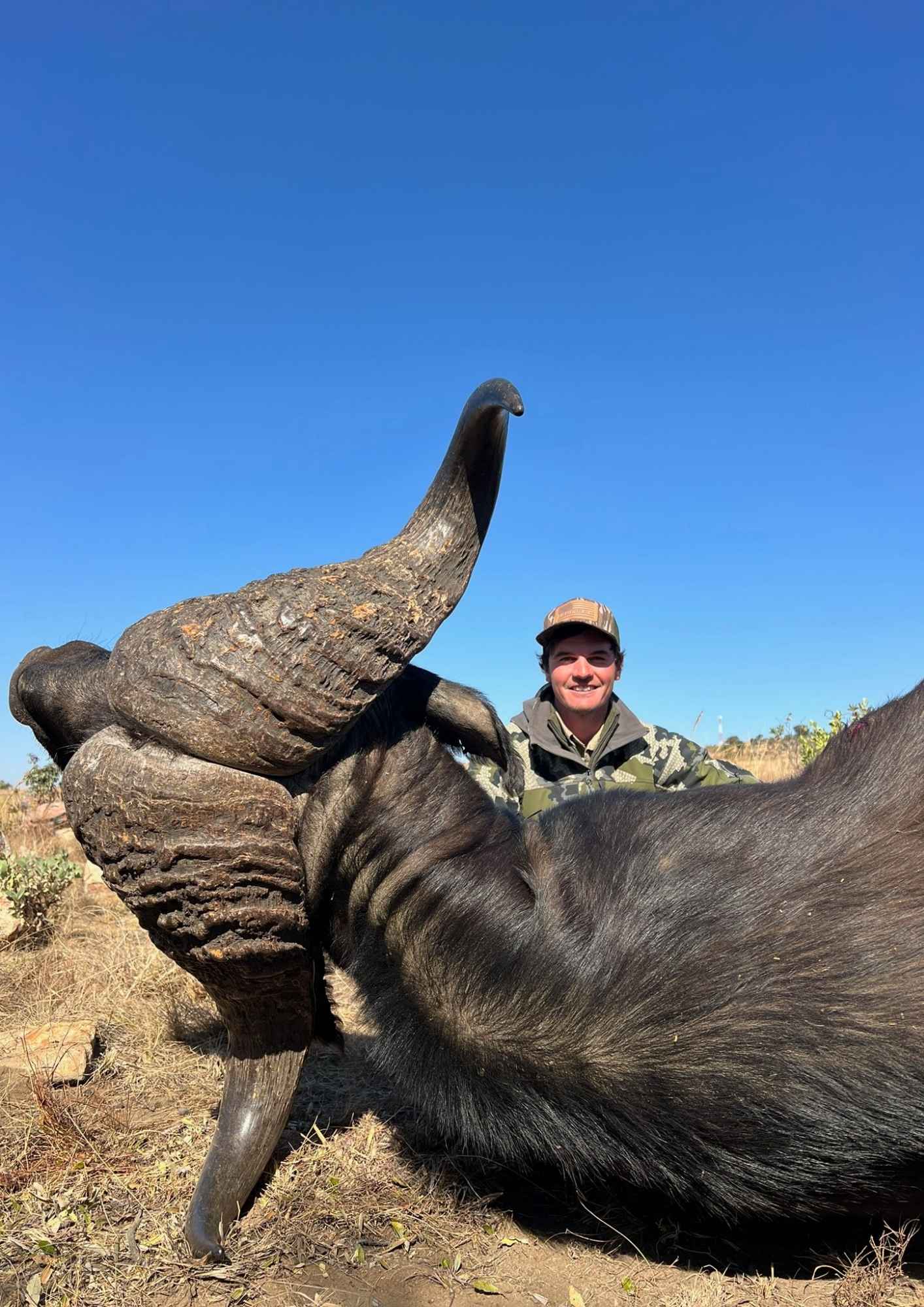
African hunting terminology can become confusing. The same animal can belong to more than one commonly used group. Cape buffalo is big game, dangerous game and one of the Big Five. Eland is big game but normally grouped with plains game. Leopard is both big game and dangerous game, while also belonging to the Big Five. Terms such as the Dangerous Seven extend the traditional Big Five grouping to include hippo and crocodile, adding another layer to the way African game species are commonly described.
These labels are useful for describing different types of hunting, but they were never designed to create neat boundaries between every African species. What the hunter is pursuing, and the type of safari built around that animal, tells you considerably more than the label alone.
Big Game Is Bigger Than the Big Five
The Big Five may be Africa's best-known group of game animals, but the term represents only a part of African big game hunting. Lion, leopard, elephant, Cape buffalo and rhino all qualify as big game, but being outside the Big Five does not make an animal small game.
The term Big Five originated with hunters and referred to five dangerous African animals that were difficult and dangerous to hunt on foot. It was never intended as a complete list of Africa's largest or most important game species. Hippo and crocodile are obvious examples of animals that sit outside the traditional five, while species such as eland, bongo, sable and kudu show how much further African big game extends.
A safari built around Big Five Hunting in Africa represents a type of big game hunt rather than the full scope of big game hunting. A hunter does not need a lion, elephant or buffalo on the licence for the safari to qualify as a big game hunt.
This distinction becomes important with plains game. Some of Africa's largest hunted animals belong to that category, which raises another question: does plains game count as big game?
Does Plains Game Count as Big Game?
Yes. Some of Africa's impressive big game animals are normally classified as plains game. The term covers a huge range of species, from relatively small antelope to animals weighing hundreds of pounds, so being described as plains game says little about the size or difficulty of the animal being hunted.
Eland is perhaps the clearest example. A mature bull can weigh more than a Cape buffalo, yet eland remains firmly within the plains game category. Kudu, sable, roan, gemsbok and waterbuck are smaller, but each can become the primary reason a hunter travels to Africa rather than simply an animal added to a longer species list.
The category also stretches beyond the open plains suggested by its name. Mountain nyala are hunted in the highlands of Ethiopia, while bongo are pursued in the dense rainforests of Central Africa. Neither hunt looks anything like glassing for gemsbok across the country of Namibia, yet these species can all sit within the non-dangerous side of African big game hunting.
Plains Game Hunts can thus range from straightforward multi-species safaris to highly specialised hunts built around a single animal. A hunter may spend days tracking eland, climb mountains looking for kudu or travel specifically to Ethiopia for mountain nyala. The absence of dangerous game does not make any of those animals, or the hunt required to find them, insignificant.
Plains game and big game are therefore not competing descriptions. One describes a commonly used grouping of African species, while the other reaches across several hunting categories. A plains game animal can also be big game without any contradiction at all.
Where Does Dangerous Game Fit In?
Dangerous game sits within big game hunting, but the two terms do not mean the same thing. Africa's traditional dangerous game species include animals capable of seriously injuring or killing a hunter, particularly when wounded, surprised at close range or followed into thick cover.
Cape buffalo, elephant, lion, leopard and rhino are the traditional Big Five, while hippo and Nile crocodile complete the Dangerous Seven. All seven can be considered big game, but only part of Africa's much larger big game category falls under dangerous game.
The difference is clear when looking at the hunt itself. Following a buffalo into thick brush carries risks that simply do not exist when tracking an eland. A leopard hunt may involve baiting and long periods of waiting before the animal is ever seen, while hunting a hippo can depend heavily on judging the animal, its position and the water surrounding it. These hunts place additional responsibility on the hunter and Professional Hunter because mistakes can have consequences.
This is the territory covered by Dangerous Game Hunts in Africa, where the classification has practical meaning beyond the size of the animal. Rifle choice, shot placement, the Professional Hunter's decisions and what happens after the shot all take on greater importance when the animal being pursued can fight back.
A hunter can therefore be on a big game hunt without hunting dangerous game. But when Cape buffalo, elephant, lion, leopard, rhino, hippo or crocodile becomes the objective, the safari sits within both categories.
The Animal Changes the Hunt
Calling all these animals big game does not mean the hunts have much in common. The species being pursued can change everything about how a safari is conducted.
A Cape buffalo hunt may begin with trackers cutting spoor at first light before following an old bull for hours. Kudu may require hours behind binoculars, searching ridges and valleys before a stalk is even possible. Eland may cover long distances after feeding, leaving hunters to decide whether a promising track is worth following.
Move elsewhere in Africa and the contrast is greater. Hunting bongo can mean working with trackers and dogs in vegetation where simply seeing the animal clearly is part of the challenge. Lord Derby eland take the hunter into the savannas of Cameroon and the Central African Republic, where covering country, glassing and tracking these enormous antelope can dominate the hunt. Mountain nyala take the hunter into Ethiopia's high country, where glassing, altitude and steep terrain create a completely different hunt.
The hunting may look completely different from one species to another, but each can still fall within big game hunting in Africa. The animal being pursued determines far more about the hunt than the category attached to it.
What Does Big Game Mean for the Hunter?
A hunter does not need to arrive in Africa chasing the Big Five for the trip to become a serious big game safari. One hunter may spend ten days looking for an old Cape buffalo bull, while another has travelled halfway around the world with a mature kudu, bongo or mountain nyala as the animal he most wants to find.
Once the hunting starts, the label matters far less. Tracks still need to be followed, animals need to be judged and opportunities can disappear after hours or days of work. A kudu does not become less important because it falls under plains game, just as calling a buffalo dangerous game tells only part of the story of the hunt.
African Hunting Trips can be built around completely different objectives. Some hunters arrive with several species on their list, while others have crossed the Atlantic for one animal and are prepared to spend most of the safari looking for it.
Big game hunting in Africa is all these things. The category may be broad, but once a hunter knows the animal he has come for, the hunt becomes specific.
FAQs About Big Game Hunting in Africa
Does a big game safari have to focus on one animal?
No. Some big game safaris are built around one priority species, while others combine several animals during the same hunt. A hunter may travel specifically for Cape buffalo, bongo or mountain nyala and spend most of the safari looking for that animal. Another may hunt several species as opportunities develop. The animals on the licence and the hunter's priorities determine how focused the safari becomes.
Can dangerous game and plains game be hunted on the same safari?
Yes, where the hunting area, licences and available quota allow it. A safari may have Cape buffalo as the main objective while also providing opportunities for kudu, sable, eland or other plains game. The combination varies considerably between countries and hunting areas, so the species available on a particular safari should always be confirmed before the hunt.
Do all African countries use the term big game in the same way?
Not necessarily. Hunting regulations are established by individual countries, while terms such as big game, plains game and dangerous game are also shaped by long-established hunting usage. A species may therefore be described one way by hunters while appearing under a different legal or regulatory classification in a particular country.
Can a first-time African hunter go on a big game hunt?
Yes. Big game hunting in Africa is not limited to hunters who have already completed several African safaris. A first safari could be built around kudu, eland or sable, or include dangerous game where appropriate. The important consideration is whether the hunt, species and level of difficulty suit the hunter's ability and objectives.
About the Author
Pierre van Wyk is co-founder of Game Hunting Safaris and has spent years hunting across southern Africa. His interest lies in the hunts themselves, the animals, the country and the decisions made in the field, and bringing that practical perspective into the information GHS shares with hunters planning an African safari.