
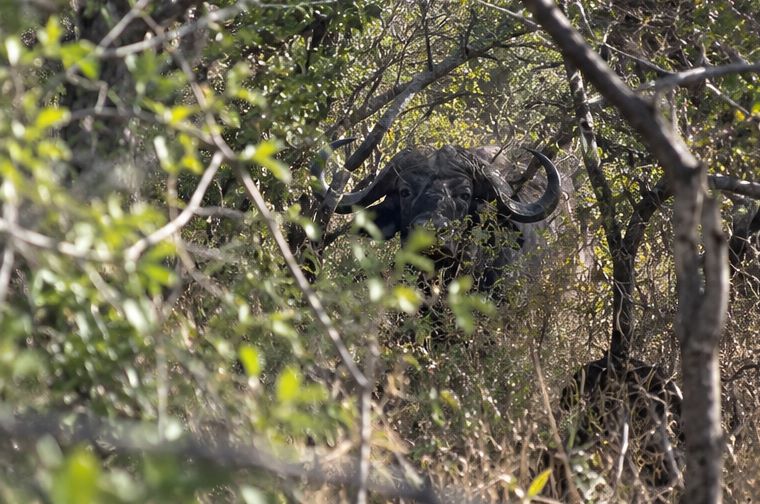
A wounded Cape buffalo can change a safari quickly. One minute you are following a bull you have spent hours tracking and judging; the next, the entire hunt is about recovery, blood sign, quota, trophy fees and whether there is still another buffalo available to hunt.
For hunters planning Cape buffalo hunts, especially those travelling from the United States for a once-in-a-lifetime safari, this is one of the questions worth understanding before the first shot is ever fired. If a buffalo is hit but not recovered, the consequences can extend well beyond the follow-up itself. Depending on the country, hunting area and safari agreement, the bull may still count against quota, the trophy fee will remain payable, and hunting another buffalo will involve a second fee or may not be possible at all.
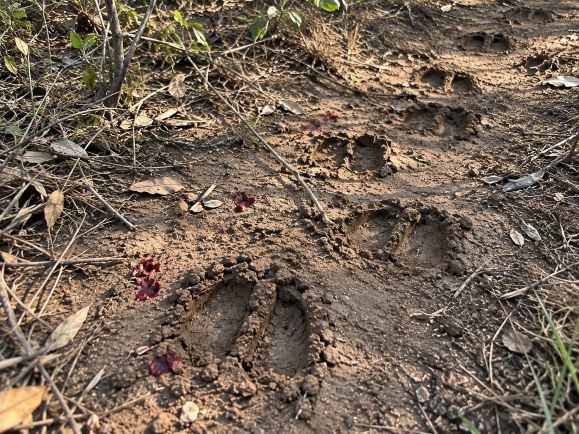
At Game Hunting Safaris, we normally use a simple practical rule: if there is blood, the buffalo is considered wounded. Blood is the clearest objective evidence that the bullet connected. From that point on, the focus should be on making every reasonable effort to recover the animal and understanding exactly what the wounded-animal clause in the safari agreement means.
When Is a Cape Buffalo Officially Considered Wounded?
On a buffalo hunt, there is a difference between thinking you hit the bull and having clear evidence that you did.
A buffalo may react sharply to a shot, kick, stumble, change direction or disappear into thick cover, but none of those reactions on their own prove where the bullet went. Branches, dust, poor visibility and the speed of the moment can make things look more certain than they are.
Blood gives the hunting team the clearest objective evidence that the bullet connected with the animal. Once blood is found, even a small amount, the hunt changes immediately. The buffalo is treated as wounded, recovery becomes the priority, and the trophy fee is payable even if the bull is never ultimately recovered.
Hunters sometimes argue that a buffalo hit low, or only lightly wounded, may survive. That is possible. But once there is confirmed blood, the hunting team cannot responsibly assume the animal will recover. In open African hunting areas, infection, fly strike, reduced mobility and predation can turn a seemingly minor wound into a slow death. Confirmed blood means the buffalo must be followed up properly, not written off as a minor wound that will heal on its own.
That does not mean a buffalo without visible blood was missed. Large, heavily built animals can sometimes travel some distance before leaving obvious sign, and the PH and trackers may still have strong reasons to believe the shot connected. Hair, disturbed spoor, the bull’s reaction and the point where it entered cover can all help the PH and trackers judge what happened.
But for the hunter, the important thing is to understand the wounded-animal policy before the safari begins, not while everyone is standing over a few drops of blood in the bush arguing about what the contract means.
Does the Trophy Fee Still Have to Be Paid?
Yes. Once a Cape buffalo is confirmed wounded, the trophy fee remains payable even if the animal is never recovered. By that point, the outfitter and PH have delivered the hunting opportunity: the buffalo was found, judged, approached, and the hunter was given the shot. What happens after the bullet leaves the rifle does not undo that part of the safari.
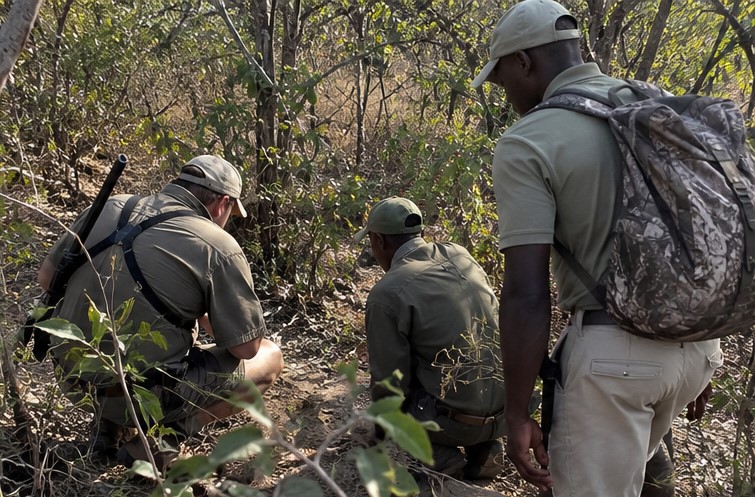
In practice, that confirmation normally comes from the hunting team on the ground. Trackers locate blood or other clear sign, the PH checks it, and the hunter is brought over to see exactly what has been found. Photographs are often taken as part of the record, particularly where the wound may later affect quota, reporting or the safari account.
From the outfitter’s side, that buffalo has already formed part of the hunt. Time has been spent finding it, the animal has been shot, and in quota-controlled areas it may also have to be recorded against the operator’s allocation for the season. The fact that the horns are not eventually recovered does not undo any of that.
A wounded buffalo is not only a financial issue. In quota-controlled concessions, it is also a matter of honest record keeping and responsible use of the hunting allocation. Where regulations require the animal to be reported or deducted from quota, it must be recorded properly. Good dangerous-game hunting still depends on honesty between the hunter, PH, outfitter and wildlife authority.
Wounded-animal clauses are normally written into safari agreements before the hunt begins. Hunters should know exactly what they are agreeing to, specifically on high-value dangerous game where the trophy fee can be substantial.
The uncomfortable part comes when the first buffalo is lost and another bull is still available. Depending on the country, quota and safari agreement, the hunter may be able to continue hunting, but the second buffalo can mean a second trophy fee.
The financial consequences of one poor result can become very real, very quickly.
Does a Wounded Buffalo Still Come Off the Quota?
In many quota-controlled hunting areas, yes. A wounded buffalo can still be treated as harvested for the season, even when the bull is never recovered.
Zimbabwe gives us a very clear example. In quota-based safari areas, animals shot, killed or wounded are treated as harvested and deducted from the hunting permit. That means a lost bull can still consume one of the buffalo allocated to that concession for the year. Buffalo hunting in Zimbabwe must be understood in terms of both the hunt and the available quota.
Tanzania also works within annual hunting quotas, so a wounded buffalo can have consequences beyond the individual trophy fee. Depending on the permit, hunting block and remaining allocation, losing the first bull may affect whether another buffalo can legally be hunted during the same safari. This is relevant on buffalo hunting in Tanzania safaris where hunters may have more than one buffalo available on the licence.
South Africa is often different. On privately managed buffalo ranches, the hunt is not constrained by the same government quota system used in large concession areas elsewhere in Africa. If the first buffalo is wounded and lost, another bull may often be made available, provided the property has suitable animals and the safari agreement allows it. That does not remove the first trophy fee, but it can mean the hunt itself is able to continue. This is one of the differences hunters encounter when comparing buffalo hunting in South Africa with quota-controlled free-range destinations.
The important point is simple: a lost buffalo does not automatically mean the quota resets. In some countries, that animal may still count against the season’s allocation even though the hunter never lays hands on the horns.
Can You Hunt Another Buffalo After Losing the First One?
Sometimes, but it is never something a hunter should assume.
If the first buffalo has been wounded and not recovered, the PH and outfitter first need to establish whether another bull can legally and practically be hunted. In a quota-controlled concession, the wounded buffalo may already have used the available allocation. If no additional buffalo remains on quota, the hunt for buffalo may effectively be over.
Where another buffalo is available, the decision is usually much simpler: the hunter can continue, but the first trophy fee does not disappear. A second bull means another hunting opportunity and another trophy fee.
This is one reason the question should be asked before the safari starts. If buffalo is the primary objective, the hunter should know what happens if the first bull is wounded and lost: whether another buffalo is available, whether the quota allows it, and what the additional financial commitment will be.
On some South African buffalo hunts, arranging another bull can be more straightforward because the ranches may have several suitable animals available. In a tightly controlled quota area elsewhere in Africa, there may simply be no second buffalo left to hunt.
A lost bull is bad enough. Finding out afterwards that the buffalo hunt is also finished can make it considerably worse.
What If the Buffalo Is Found Days Later?
A wounded buffalo is not always found during the original follow-up.
When that happens, the hunt can effectively restart on paper. The PH and outfitter need to establish that it is the same buffalo, deal with any reporting requirements, and confirm how the trophy should be handled under the rules for that country.
In quota-controlled systems, a buffalo that was properly reported as wounded can still be linked to the original hunter if it is recovered later. Where the regulations allow it and the necessary paperwork is in order, hunters may still be able to take possession of the horns and trophy.
Proper reporting matters from the moment blood is found. If the buffalo turns up later, there needs to be a clear record showing who wounded it, when it was wounded, where the follow-up took place, and what efforts were made to recover it.
The safari may be over, but the buffalo story sometimes is not.
Who Decides When the Search for a Wounded Buffalo Is Over?
The PH will normally advise the hunter, but it is still the client’s safari. Daily rates are being paid, and the hunter ultimately decides how much of the remaining safari he wants to spend trying to recover a wounded buffalo.
The decision usually becomes obvious once the sign starts disappearing. If blood has dried up, spoor has become impossible to separate, and trackers have already made wide loops and searched every likely line of travel without finding fresh evidence, there comes a point where continuing simply means walking aimlessly through miles of country.
A good PH will not call the search off casually. He will look at the blood, spoor, terrain, direction of travel, the bull’s reaction to the shot and what the trackers are telling him. But once there is no longer anything meaningful to follow, the hunter must decide whether to keep spending safari time on the search or accept that the buffalo may not be recovered.
That is a hard decision, but it is part of buffalo hunting.
Calling off the active follow-up does not always mean the area is forgotten. If there are still days left on the safari, the PH and trackers may continue checking the surrounding country, watching for vultures, or any sign that could reveal where the buffalo finally went down. A bull that could not be recovered on the original follow-up can still turn up later.
Frequently Asked Questions About Wounded Cape Buffalo
Who pays for extra costs during a wounded buffalo recovery?
Normal follow-up is part of the hunt, but extraordinary recovery costs can be different. If additional vehicles, extra staff, aircraft, helicopters, drones where legal, or specialist assistance are brought in specifically to help locate a wounded buffalo, those costs may be charged separately. The exact arrangement depends on the outfitter, country, hunting area and safari agreement, so it should be clarified before the hunt begins.
What happens if a wounded buffalo crosses onto another property or concession?
The hunting team cannot automatically follow a wounded buffalo wherever it goes. If the bull crosses onto neighbouring private land, another concession or an area where the PH does not have hunting rights, permission may be needed before the recovery can continue. In most cases the outfitter will contact the relevant landowner, concession holder or wildlife authority as quickly as possible.
Can a wounded Cape buffalo survive?
Yes, some wounded buffalo do survive, especially if the injury is superficial. But once blood confirms that the animal has been hit, the hunting team cannot assume it will recover. Infection, fly strike, reduced mobility, predators and the wound itself can all turn a marginal hit into a much more serious problem.
What should the wounded-animal clause in the safari agreement cover?
At a minimum, the hunter should understand what counts as a wounded animal, whether the full trophy fee remains payable, how quota is affected, whether another buffalo can be hunted, whether a second trophy fee applies, and who is responsible for unusual recovery costs.
Can you still get the horns if the buffalo is found after the safari?
Potentially, yes. If the buffalo can be linked to the original hunter and the relevant reporting, permit and trophy-documentation requirements are satisfied, the horns may still be released to the hunter. The exact process depends on the country and wildlife authority.
A Wounded Buffalo Can Change the Rest of the Safari
Wounding and losing a buffalo is one of the harder possibilities that comes with big game hunting. The physical recovery effort is only part of it. Trophy fees, quota, remaining safari days and whether another bull can still be hunted can all change in a matter of minutes.
The best outcome is still the simplest one: arrive prepared, understand the wounded-animal policy before the hunt starts, take the best shot you are given, and recover the buffalo quickly. If things do go wrong, clear rules, honest reporting and a professional recovery effort prevent an already difficult situation from becoming a dispute in camp.
For hunters planning hunting trips in Africa, this is exactly the kind of detail worth discussing before the safari rather than after a buffalo disappears into thick cover.
About the Author
Tamlyn van Wyk is co-founder of Game Hunting Safaris and has first-hand experience with the realities of dangerous-game hunting in Africa. On her own Cape buffalo hunt in South Africa, a wounded bull resulted in two days of tracking and recovery efforts, giving her a practical understanding of how quickly a buffalo hunt can change after the first shot.