
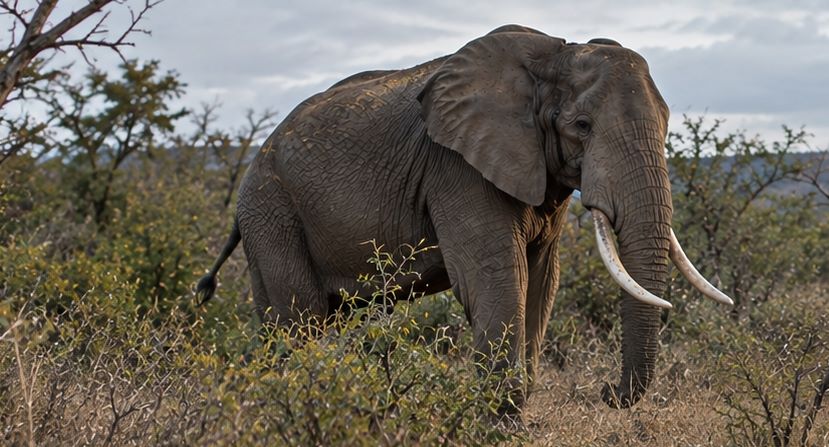
Two hunters can both say they booked an elephant hunt and be talking about completely different safaris.
One may be hunting an exportable trophy bull in a large concession where several mature bulls are available to judge. Another may be booking a non-exportable management elephant, a tuskless hunt, or a short-notice PAC/HWC opportunity where the animal, timing and trophy rights are different.
For hunters comparing elephant hunts, those distinctions are important before the deposit is wired. The price can vary considerably depending on the type of elephant available, whether the trophy can be exported, how the quota has been allocated, how many hunting days are included, and whether the hunter has any real choice between animals.
The words used in an advertisement do not always tell the full story. “Non-trophy,” “management,” “tuskless,” “non-exportable” and “PAC” are not interchangeable terms, and they do not necessarily describe the same kind of safari.
Before comparing elephant hunts by price, hunters need to understand one simple thing:
What elephant am I going there to hunt?
Trophy Bull, Non-Trophy Bull, Tuskless or Management Hunt?
The first thing to establish is what category of elephant the hunt is built around.
A conventional trophy-bull hunt is straightforward in principle. The hunter is looking for a legal bull that meets the expectations of the area and the hunt, with the trophy intended for export where the necessary permits allow it.
A non-trophy or management hunt can be different. The elephant may need to meet specific criteria set by the quota, wildlife authority, concession or operator. That might relate to age, tusk condition, ivory class, sex or another management objective. The important point is that “non-trophy” does not automatically mean poor quality, young or easy to hunt. It means the hunt is being conducted under a different set of conditions.
Tuskless hunts are different again. These are generally focused on female elephants without tusks, often under a specific management allocation. The hunting is tough as the animal may be part of a breeding herd, and the PH needs to be certain that the elephant is legally suitable before the hunt goes any further.
Management hunts are sometimes advertised alongside trophy and non-trophy hunts, but the label on its own is not enough. A hunter should ask what the management objective is, what class of elephant qualifies, whether the animal is exportable and who makes the final decision that it is legal to take.
For a hunter travelling a long way to Africa, especially from the United States, this distinction matters before the rifle ever leaves the case. Two elephant hunts can involve the same species, the same country and even the same concession, yet offer very different opportunities.
Before booking, ask exactly what category of elephant you will be hunting and what makes that animal eligible.
Non-Exportable and Non-Trophy Are Not Necessarily the Same Thing
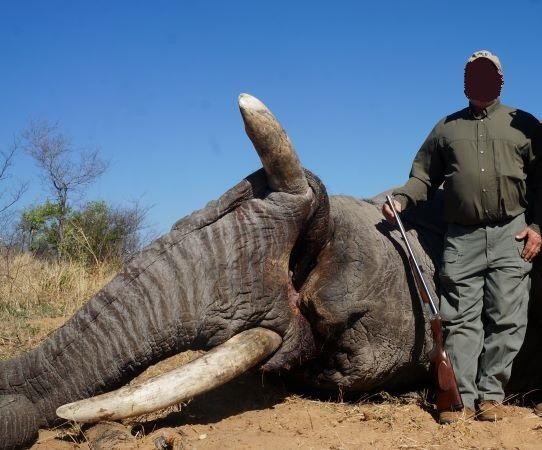
These two terms are often treated as though they mean the same thing. They do not.
A non-exportable elephant is defined by what happens to the trophy after the hunt. The elephant may be legally hunted, but the tusks, skull, hide or other trophy parts cannot be exported by the hunter under the conditions attached to that hunt.
A non-trophy elephant describes the category of animal being hunted. The bull may need to fall within a specific ivory class, have damaged or missing tusks, or meet other criteria attached to the quota or management objective.
Sometimes the two overlap. Sometimes they do not.
That distinction is important when looking at elephant hunting in Namibia, where some hunts are offered under management or non-exportable arrangements. The hunting itself still involves tracking a wild elephant on foot, judging the animal carefully and getting close enough for a controlled shot. What changes is the classification of the hunt and what the hunter is legally entitled to take home afterwards.
We have experienced this first-hand on a Bushmanland elephant hunt in Namibia, where the elephant formed part of a drought-relief wildlife management programme and the hunt was non-exportable. It was still a serious elephant hunt. The difference was not whether the elephant was hunted properly. The difference was the purpose of the allocation and what could leave Namibia afterwards, which in this instance was absolutely nothing, except memories and pictures.
Hunters should not assume that non-exportable means non-trophy, or that non-trophy automatically means non-exportable.
Before booking, ask two separate questions:
What category of elephant am I allowed to hunt?
What, if anything, am I allowed to export afterwards?
Is This a Trophy Hunt, Management Hunt or PAC/HWC Opportunity?
Not every elephant hunt starts with the same kind of quota.
A conventional trophy hunt is planned around hunting quota that has been allocated for the season. The concession, hunting dates and type of elephant available should all be understood before the safari begins, even though no one can guarantee which individual bull the hunter will eventually find.
A management hunt is different. The elephant is being hunted under an allocation created for a specific management purpose, which may place tighter conditions on the animal that qualifies. The hunt can still be every bit as demanding, but the objective behind the allocation is different from simply producing the best exportable trophy.
PAC and HWC opportunities are different again. These hunts arise when a specific elephant, or elephants in a particular area, are causing unacceptable conflict with people, crops or property. PAC/HWC opportunities are usually less predictable than ordinary trophy quota. The problem must exist before the response can be authorised.
For American hunters, another question needs to be asked before accepting a PAC or HWC opportunity: can the elephant legally be imported into the United States as a sport-hunted trophy? A hunt may be lawful in the country where it takes place without automatically qualifying the tusks or other trophy parts for U.S. import. U.S. Fish & Wildlife Service permits and country-specific requirements still apply.
That matters when looking at elephant hunting in Zimbabwe, where conventional trophy hunts, management allocations and PAC/HWC opportunities can all exist, but they should not be treated as the same product.
A hunter should be cautious if a PAC or HWC hunt is being presented like guaranteed inventory several seasons in advance. The area may be known for human-elephant conflict, and opportunities may arise regularly, but the exact animal, timing and authority to hunt it can depend on circumstances that do not yet exist.
A trophy hunt can usually be planned around quota. A PAC/HWC hunt starts with a problem that still must occur.
Before booking, ask what authority the hunt is being conducted under, what type of quota or allocation applies, and whether the opportunity already exists or is expected to become available later.
Is the Elephant Actually Secured for Your Hunt?
Seeing an elephant hunt advertised does not always mean that a specific elephant allocation has been secured for the hunter’s dates.
That distinction matters most on management, non-exportable and limited-quota hunts. An outfitter may know that elephant opportunities normally become available in a particular area, but the actual allocation may still depend on quota, permits, community approvals or decisions made closer to the hunting season.
A conventional trophy hunt should be clearer. Hunters must know which concession the hunt will be conducted in, whether elephant quota is available for that season and whether the hunt being discussed has access to that quota.
The same question becomes even more important when a hunt is advertised as “subject to availability.” That wording does not necessarily make the offer questionable. It simply means the hunter needs to understand what is still outstanding.
There is a difference between:
“Elephant quota has been secured for your hunt.”
and:
“We expect an elephant opportunity to become available.”
Both statements may be made in good faith, but they describe different levels of certainty.
Hunters booking in advance should also ask what happens if the expected allocation does not materialise. Can the hunt move to another area? Will the deposit be transferred to another season? Is another elephant opportunity likely to be offered, or does the hunter receive a refund?
On PAC/HWC hunts, certainty can be even lower. The area may regularly experience elephant conflict, but that does not mean a specific problem animal already exists or that permission to hunt it has been issued.
Before wiring a deposit, know whether you are booking secured elephant quota or an opportunity that is still expected to become available.
What Size or Type of Bull Are You Actually Allowed to Take?
One of the easiest misunderstandings with a non-trophy elephant hunt is assuming that the lower price simply buys the hunter the same bull for less money.
It does not work that way.
A non-trophy bull is still an adult elephant, and the hunt itself will be every bit as demanding as a conventional trophy hunt. What changes are the conditions attached to the animal that may legally be taken.
On some elephant hunting opportunities in Zimbabwe, for example, a non-trophy bull may need to fall within a certain ivory class or meet other conditions attached to the allocation. Broken or missing tusks may also form part of the criteria, depending on the hunt.
A hunter should not arrive expecting to find a 60-pound bull and simply take him because the package was cheaper.
If the allocation is for a smaller-ivory or management-class bull, the PH must hunt within those conditions. A magnificent heavy-ivory bull may be standing in front of you and still be the wrong elephant for that hunt.
The same applies beyond ivory weight. A hunt may be restricted by sex, tusk condition, age class or another requirement set by the wildlife authority or the allocation itself.
Non-trophy does not mean a bargain-priced trophy bull. It means hunting an elephant that qualifies under the conditions of that hunt.
Before booking, ask what makes the elephant eligible to be taken, and whether you will have a choice between several qualifying animals or simply be hunting for the first legal elephant that fits the allocation.
Why Can Two Elephant Hunts Have Completely Different Prices?
Two elephant hunts in the same country can have very different prices, and the reason is not always obvious from the hunt listing.
The type of elephant is one part of it. A conventional trophy bull will usually be priced differently from a non-trophy, management or non-exportable elephant. Trophy expectations also matter. Areas known for heavier ivory or older bulls may command a premium simply because those elephants are harder to replace on quota.
The hunting area itself can make just as much difference.
In Namibia, for example, elephant hunting in Bushmanland can be considerably more expensive than in the Caprivi. Bushmanland may offer the chance of larger bulls, but elephant numbers are lower and finding the right animal can take more time, fuel and effort.
The Caprivi can be different. Elephant densities can be extremely high in some areas, with large numbers of animals moving through the concessions. The average bull may be smaller, but the hunting can be more productive simply because there are more elephants to work with and less time may be spent searching vast country for a suitable animal.
Those differences affect operating costs, hunt length, quota value and ultimately the price offered to the hunter.
Similar trade-offs apply when choosing an elephant hunting area in Botswana, where elephant numbers, trophy expectations, water, hunting pressure and the type of country can all affect what the hunter is buying.
African hunting safari prices should never be compared on the number alone. A cheaper elephant hunt may involve a different class of elephant, a higher-density area, a shorter hunt or a less expensive quota structure. A more expensive hunt may be buying access to scarcer quota, heavier ivory, more difficult country or simply more hunting days.
The price only makes sense once you know what the hunt is built around.
Is the Elephant the Main Hunt or Part of a Wider Safari?
An elephant hunt can be the main reason for travelling to Africa, or it can be one objective within a much broader safari. The difference matters because the way the hunt is structured will influence how much time, effort and flexibility can realistically be given to elephant.
Elephant hunting in Tanzania is a good example. On a longer safari, elephant may be one of several important species included under the hunter’s permit and the quota available in that hunting block. Buffalo, lion, leopard, plains game and other species may also form part of the hunt. That does not make elephant less important, but it does mean the PH and hunter are managing several objectives within the same number of hunting days.
If elephant is the main reason for being there, that needs to be understood before the safari starts. A licence containing elephant does not automatically mean every day of the hunt will be devoted to finding one.
On a dedicated elephant safari, most of the hunting day is built around elephant. The PH can spend time checking areas, following tracks, changing plans and staying with the hunt when a promising bull is found. Other species may still be taken along the way, but they are secondary to the main objective.
A broader safari can work differently. Elephant may form part of a package that also includes buffalo, plains game or other dangerous game. That can make for an excellent safari, but each additional objective competes for the same number of hunting days. A buffalo that takes three days longer than expected, for example, can quickly change how much time remains for elephant.
This matters on longer big game hunting safaris, where several important species may be included in the same package. The question is not whether that structure is good or bad. It is whether the hunter understands which species takes priority when plans begin to change.
A hunter booking primarily for elephant should know whether the safari will stay focused on elephant until the right opportunity is found, or whether time will eventually have to be divided among the other animals on the licence.
If elephant is the main reason for the safari, make sure the hunt is structured that way.
Frequently Asked Questions About Booking an Elephant Hunt

How Many Hunting Days Should Be Available for Elephant?
There is no single number that suits every elephant hunt. The important question is how many of the safari days are available for elephant.
A 10-, 14- or 21-day safari may include several hunting objectives, travel between areas and time spent pursuing other species. If elephant is the main reason for the safari, the hunter should know whether enough days have been protected for that objective rather than simply looking at the total length of the package.
More days do not guarantee an elephant, but they give the PH and hunter more room to deal with difficult tracks, changing wind, elephant movements and days when the right bull simply cannot be found.
What Happens If I Do Not Take an Elephant?
That depends entirely on how the hunt has been priced.
Some elephant hunts separate the daily rate from the trophy fee, meaning the trophy fee may only become payable once an elephant is taken. Others are sold as packages with different payment terms.
The hunter should know before booking which payments are refundable, which are not, and what happens if the safari is completed without taking an elephant. Never assume the same financial structure applies to every elephant hunt.
Can I Pass an Elephant Bull I Do Not Want?
Usually the hunter can pass a legal bull, but the practical answer depends on the type of hunt being booked.
On a conventional trophy hunt with several qualifying bulls available, there may be considerable choice. On a management, non-trophy or tightly defined allocation, the number of elephants that meet the required criteria may be much smaller.
A hunter who wants the freedom to reject several legal bulls while looking for something specific should establish beforehand whether the area, quota and hunt structure realistically allow that.
What Happens If I Take My Elephant Early in the Safari?
That should be discussed before the hunt starts.
On some safaris, the remaining days can be used for plains game, buffalo or other species already included or available on quota. On others, taking the elephant early may effectively complete the main purpose of the hunt.
This is worth understanding when elephant forms part of a longer Big Five hunting safari. Taking one major species quickly changes how the remaining days are used, while spending longer than expected on elephant can affect the time available for the other objectives.
What Should I Confirm Before Paying the Deposit on an Elephant Hunt?
At minimum, the hunter should know what type of elephant is being offered, whether quota has been secured, what makes the elephant legally eligible, whether the trophy is exportable, how many hunting days are available and what happens financially if no elephant is taken.
The hunter should also know which concession the hunt will take place in, whether elephant is the main objective or part of a wider safari, and whether there are restrictions on ivory size, sex, tusk condition or another management criterion.
If any of those answers are unclear before the deposit is wired, that is the time to ask.
Know What You Are Booking
Elephant hunts can look similar on paper while offering very different hunting opportunities. The important thing is to understand the quota, the type of elephant, the trophy rights, the number of hunting days and how the safari is structured before money changes hands.
For hunters comparing hunting trips in Africa, elephant should never be judged on price alone. A lower-priced hunt may be exactly the right fit, but only if the hunter understands what he is buying.
About the Author
Pierre van Wyk is the co-founder of Game Hunting Safaris and has hunted extensively across southern and eastern Africa. His experience includes dangerous-game hunting, elephant safaris and working directly with professional hunters, outfitters and safari operators across the region.
Much of his advice is based on first-hand hunting experience and years spent helping international hunters understand the differences between African hunting areas, hunt structures, quota, trophy expectations and the practical realities behind a safari listing.