10-Day Plains Game Hunt in Maasailand, Tanzania
Booking Season: 2026
Hunt Difficulty: Moderate

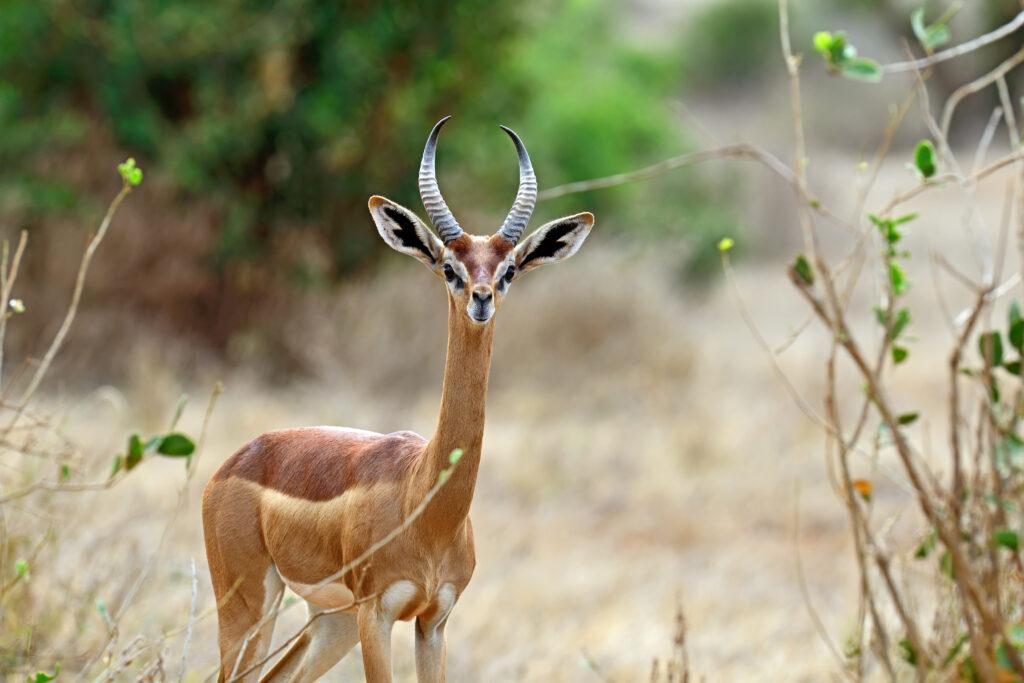
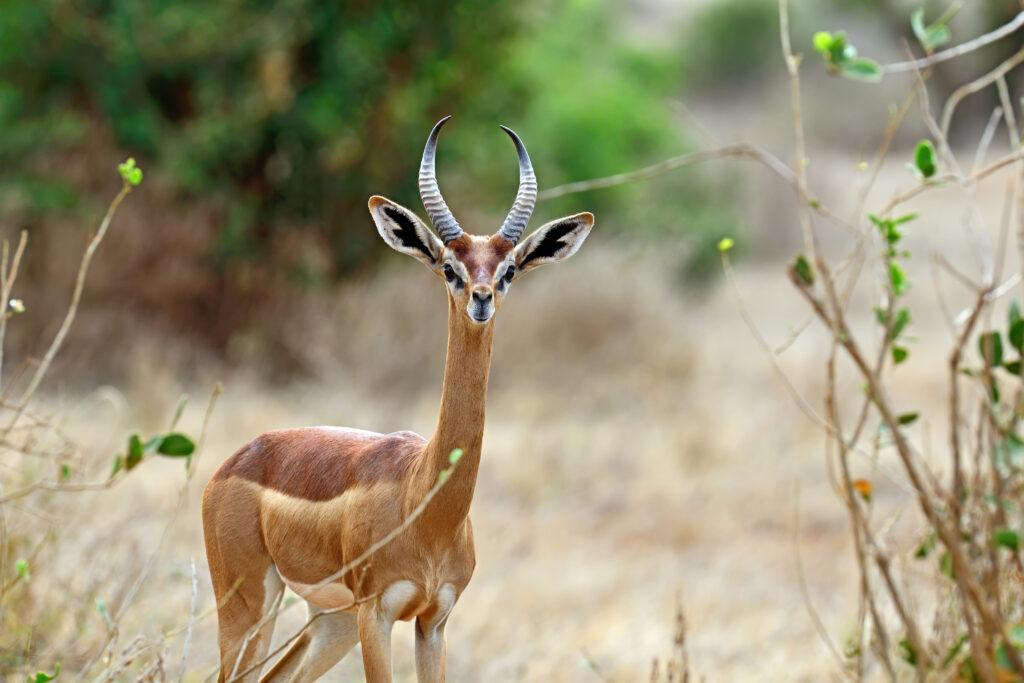
Few African animals stop hunters in their tracks quite like a gerenuk. Long neck, small head, slender body, oversized eyes, and an unusual habit of standing upright on its hind legs, the species looks unlike any other antelope found in Africa.
In fact, many first-time visitors to Tanzania assume the animal has been assembled from spare parts. The neck appears too long, the legs too thin, and the proportions too unusual to resemble a typical antelope. Yet every feature serves a purpose.
Unlike grazing species that feed primarily on grass, gerenuk specialize in browsing. Their elongated necks allow them to reach vegetation that other antelope simply cannot access, while their ability to stand upright enables them to feed well above the level of surrounding shrubs and thorn bushes.
The result is one of Africa's most distinctive plains game animals and a species that remains high on the wish list of collectors visiting East Africa. Once seen in the field, a gerenuk is rarely forgotten.
Hunters interested in pursuing unusual African antelope can explore our available Plains Game Hunts, while our Hunting in Tanzania guide provides a broader overview of Tanzania's unique safari opportunities.
Available Gerenuk Hunts
10-Day Plains Game Hunt in Maasailand, Tanzania
Booking Season: 2026
Hunt Difficulty: Moderate

Hunt Lion, Leopard, Elephant & Cape Buffalo in Masailand, Tanzania
Booking Season: 2026
Hunt Difficulty: Moderate, Difficult
Even hunters who have studied photographs before arriving in Tanzania are often surprised by how different a gerenuk looks in the field. At a distance, particularly in longer grass or broken bush country, a young ram can occasionally be mistaken for an impala. Both species possess a slender build, alert posture, and lyre-shaped horns. A quick glimpse through binoculars may not immediately reveal the difference.
The confusion rarely lasts long.
The first feature most hunters notice is the neck. A gerenuk's neck appears unusually long and elegant, giving the animal a silhouette unlike any other antelope in Africa. The head is narrow, the eyes appear oversized, and the overall proportions seem almost exaggerated.
Their movement is equally distinctive. While impala and many other antelope often appear compact and athletic, gerenuk seem taller and more delicate. They move with a smooth, almost graceful gait that quickly becomes recognizable once seen a few times.
Then there is the behavior that made the species famous. When feeding, gerenuk frequently rise onto their hind legs to browse above surrounding vegetation. The sight of an antelope standing upright and feeding like a giraffe is something few hunters forget and often removes any remaining doubt about the animal's identity.
Once a hunter has seen a gerenuk in the wild, confusion becomes almost impossible. The challenge is not identifying the second one. It is identifying the first.
A gerenuk is rarely the largest animal on a safari licence, yet it is often one of the trophies hunters talk about most after returning home. Part of that appeal comes from rarity. Unlike species such as impala, kudu, or zebra that occur across large portions of Africa, gerenuk are restricted to specific regions of East Africa. For many hunters, Tanzania provides the first realistic opportunity to pursue one.
Their distinctive appearance also makes them instantly recognizable in a trophy room. Even among experienced African hunters, few animals generate more conversation. Visitors inevitably stop, look twice, and ask the same question: "What exactly is that?"
Many of Tanzania's most respected plains game safaris take place in the same regions that support healthy gerenuk populations. As a result, the species is frequently pursued alongside classic East African trophies such as Buffalo Hunting in Tanzania, creating a safari that combines one of Africa's most famous dangerous game animals with one of its most unusual antelope.
That combination of rarity, appearance, and East African heritage has helped establish the gerenuk as one of Tanzania's most sought-after specialist plains game trophies.
Most African antelope compete for the same food sources. Gerenuk took a completely different approach.
Rather than focusing on grass or low-growing vegetation, gerenuk evolved to browse higher than most other antelope species. Their elongated necks and ability to stand upright allow them to reach leaves, shoots, and vegetation that remain out of reach for many animals sharing the same habitat.
Watching this behavior in the wild is often one of the highlights of a Tanzanian safari. A mature gerenuk will calmly rise onto its hind legs, balancing with surprising ease while feeding among thorn bushes and shrubs. The posture appears almost unnatural at first, yet it is perfectly suited to the environment.
This feeding strategy allows gerenuk to thrive in areas where food competition can be intense. By exploiting a level of vegetation that many other antelope cannot access, they occupy a niche all their own.
The result is an animal that looks unlike anything else in Africa. Long after details such as horn measurements have faded from memory, hunters often remember watching a gerenuk browse above the surrounding bush like a miniature giraffe.
One of the unique aspects of hunting gerenuk is that the trophy is about far more than horn length alone.
Certainly, hunters look for mature rams with well-developed lyre-shaped horns, good symmetry, and strong overall character. Yet the features that make a gerenuk truly memorable are often the same characteristics that make the species so unusual in the first place.
A mature ram possesses an elegant appearance unlike any other African antelope. The elongated neck, refined facial features, large eyes, and distinctive posture all contribute to the trophy's appeal. Even among experienced hunters, a mounted gerenuk is immediately recognizable.
Professional hunters often place considerable emphasis on maturity. Older rams typically display heavier horn bases, more developed facial features, and a presence that is difficult to quantify but immediately obvious when viewed through binoculars.
Perhaps more than any measurement, however, hunters remember the animal itself. The image of a mature gerenuk standing upright among thorn bushes is often what comes to mind first when reflecting on the safari. The trophy serves as a reminder of one of Africa's most unusual antelope rather than simply another set of horns on the wall.
One of the reasons gerenuk remain so popular among visiting hunters is that they fit naturally into a broader East African safari. Rather than focusing on a single species, many hunters use Tanzania as an opportunity to pursue a collection of animals found nowhere else or rarely encountered elsewhere in Africa.
The same hunting areas that support gerenuk often provide opportunities for both Grant's Gazelle Hunting in Tanzania and Thomson's Gazelle Hunting in Tanzania. Although both species are gazelles, each offers a completely different trophy and remains highly sought after by East African collectors.
Together, these animals help create a safari that feels distinctly East African. Few places on the continent offer the opportunity to pursue such a unique combination of species while hunting the vast plains and bush country that have made Tanzania famous among safari hunters.
While the gerenuk may be one of Tanzania's most unusual antelope, it is rarely the sole focus of a safari. Most hunters pursue the species as part of a broader East African adventure that may include plains game, dangerous game, or a combination of both.
Depending on the hunting area and licence, a safari may be structured around species such as buffalo, gazelles, and other iconic East African game. This diversity is one of the reasons Tanzania continues to attract hunters seeking a traditional safari experience rather than a single-species hunt.
Hunters interested in exploring Africa's most sought-after safari opportunities can learn more about Big Game Hunting and the remarkable variety of species available across the continent.
Yes. Tanzania remains one of the premier destinations for hunters seeking gerenuk. The species is typically hunted as part of a broader East African safari and is often combined with other plains game and dangerous game opportunities.
The nickname comes from their unusually long neck and their remarkable ability to stand upright on their hind legs while feeding. This distinctive behavior allows them to browse vegetation that many other antelope cannot reach.
Gerenuk are often more challenging than they appear. Their alert nature, excellent eyesight, and preference for open country can make stalking difficult. Opportunities may develop quickly, requiring hunters to be prepared when a mature ram presents itself.
Maturity is one of the most important considerations. Experienced professional hunters look for well-developed lyre-shaped horns, strong horn bases, symmetry, and the overall character that comes with an older ram.
Few species resemble a gerenuk. Their elongated neck, distinctive facial features, and unique feeding behavior set them apart from gazelles, impala, and most other plains game species found in Tanzania.
Yes. Many Tanzanian hunting areas support all three species. This allows hunters to pursue some of East Africa's most distinctive antelope during a single safari while building a truly representative collection of regional trophies.
What Rifle Is Best for Gerenuk Hunting?
Most hunters use the same rifle carried for the remainder of their Tanzanian safari. Popular choices include the .270 Winchester, .308 Winchester, and .30-06 Springfield. Consistent shooting from sticks is generally far more important than caliber selection.
Because there is simply nothing else quite like it. Whether standing upright to feed or moving through the bush with its unmistakable silhouette, a gerenuk tends to leave a lasting impression long after the safari has ended.
Very few hunters travel to Tanzania solely to hunt a gerenuk. Most build their safari around a broader species list and the overall East African experience. Hunters beginning their research often start by reviewing available Hunting Trips before selecting species, hunting areas, and safari packages.
Search from our range of Hunts across various popular destinations in Africa.

Book Your Hunt