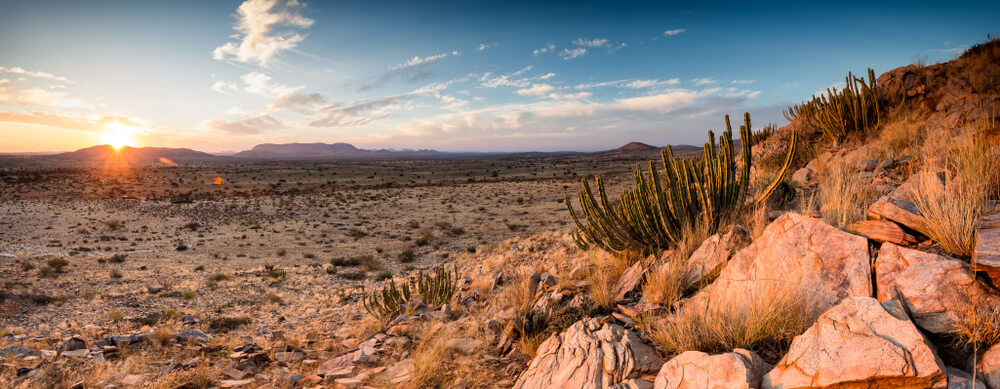

10-Day African Plains Game Safari in North West Province, SA
Booking Season: 2026
Hunt Difficulty: Moderate

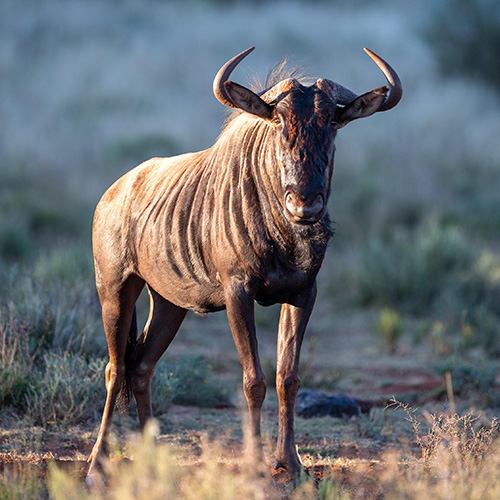
At first glance, black wildebeest hunting in South Africa should be relatively straightforward. The country is open; the animals are often visible from a considerable distance and there may be an entire herd standing out on the grasslands in front of you. Then you try to hunt one.
Black wildebeest have a remarkable ability to turn an apparently simple stalk into a frustrating game played across open country. There may be very little cover between you and the herd, and once the animals become unsettled, everything can change quickly. They bunch together, break apart, change direction and start moving across the plains almost like a school of fish, making it surprisingly difficult to keep track of the bull you came to hunt.
South Africa is one of the natural homes of the black wildebeest, with the species strongly associated with the country's open grassland regions. Anyone considering Hunting in South Africa can expect this hunt to feel quite different from pursuing the better-known blue wildebeest, particularly when the open country leaves both hunter and wildebeest with plenty of opportunity to see each other.
They also hold appeal for hunters working toward the different trophies that make up the wildebeest collection. A hunter may already have taken a blue wildebeest elsewhere in Africa yet arrive in South Africa specifically wanting to add a black wildebeest to the list. What he soon discovers is that seeing plenty of animals does not necessarily make getting the right one easy. And when the opportunity finally comes, the first shot matters.
Available Black Wildebeest Hunts
10-Day African Plains Game Safari in North West Province, SA
Booking Season: 2026
Hunt Difficulty: Moderate
Hunt in South Africa 10 Days in the Eastern Cape
Booking Season: 2026
Hunt Difficulty: Moderate
Plains Game Cull Hunt in the Eastern Cape SA
Booking Season: 2026
Hunt Difficulty: Moderate
Plains Game Hunt in South Africa 8 x Trophy Animals
Booking Season: 2025
Hunt Difficulty: Moderate, Difficult
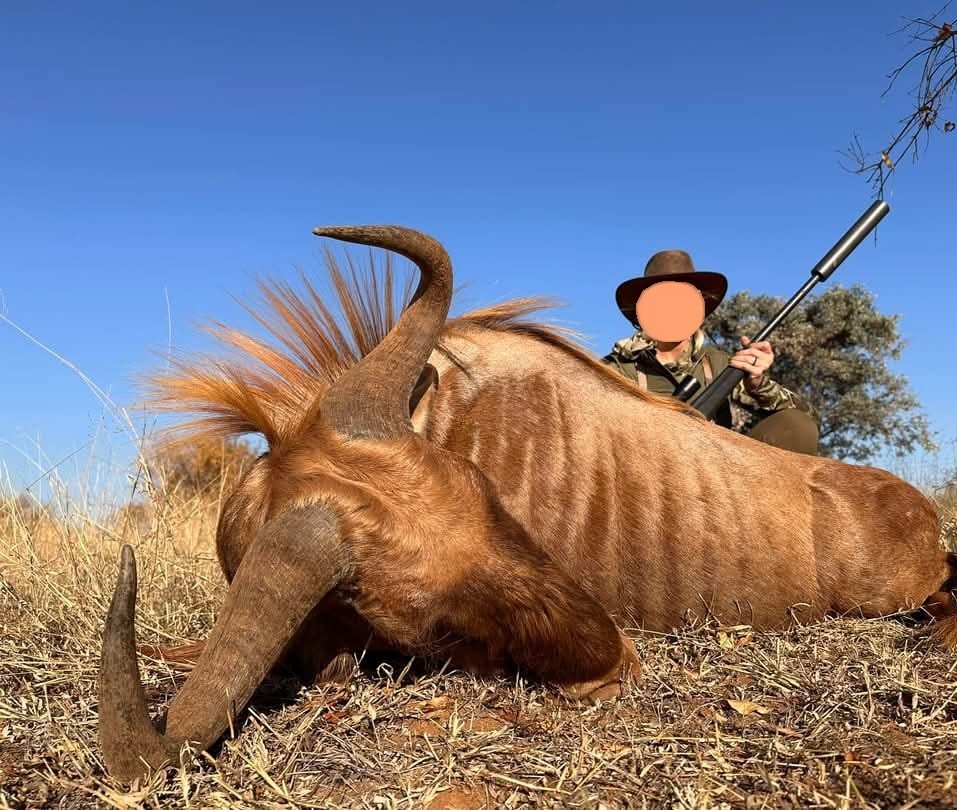
Wildebeest Hunting in South Africa: Complete the Wildebeest Slam!
Booking Season: 2026
Hunt Difficulty: Moderate
SA Plains Game Cull Hunt: 6 Hunters, 6 Species each
Booking Season: 2026
Hunt Difficulty: Difficult
Family Hunting Adventure: Plains Game in Limpopo
Booking Season: 2026
Hunt Difficulty: Moderate
Plains Game Hunting in SA, Trophy Sable and 4 Species
Booking Season: 2026
Hunt Difficulty: Moderate
South African Hunts: Complete the Wildebeest Slam!
Booking Season: 2026
Hunt Difficulty: Moderate
Africa hunting trip in Limpopo 7 hunting days in SA
Booking Season: 2025/2026
Hunt Difficulty: Moderate
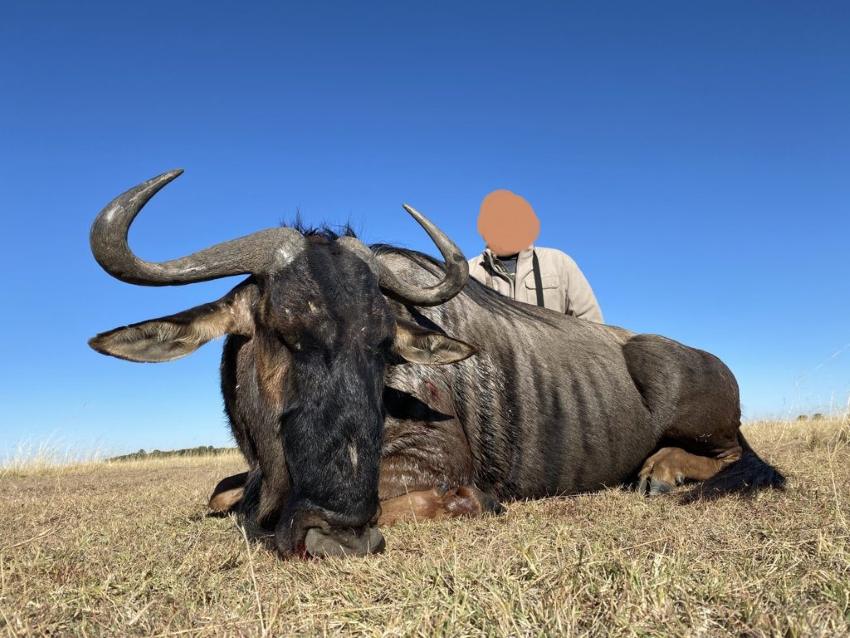
Wildebeest have earned a reputation among African hunters for being remarkably tough animals. A well-placed bullet generally ends the matter quickly. A poorly placed one can begin an entirely different kind of hunt.As the old joke goes, wound a wildebeest and he may show you the entire ranch. There is enough truth behind the humour to take it seriously.
For anyone interested in Wildebeest Hunts, the black wildebeest offers a hunt with a character entirely its own: open plains, sharp eyes, constantly moving herds and a tough animal at the end of it. You may be able to see him from half a mile away, but the challenge is getting close enough to hunt him.
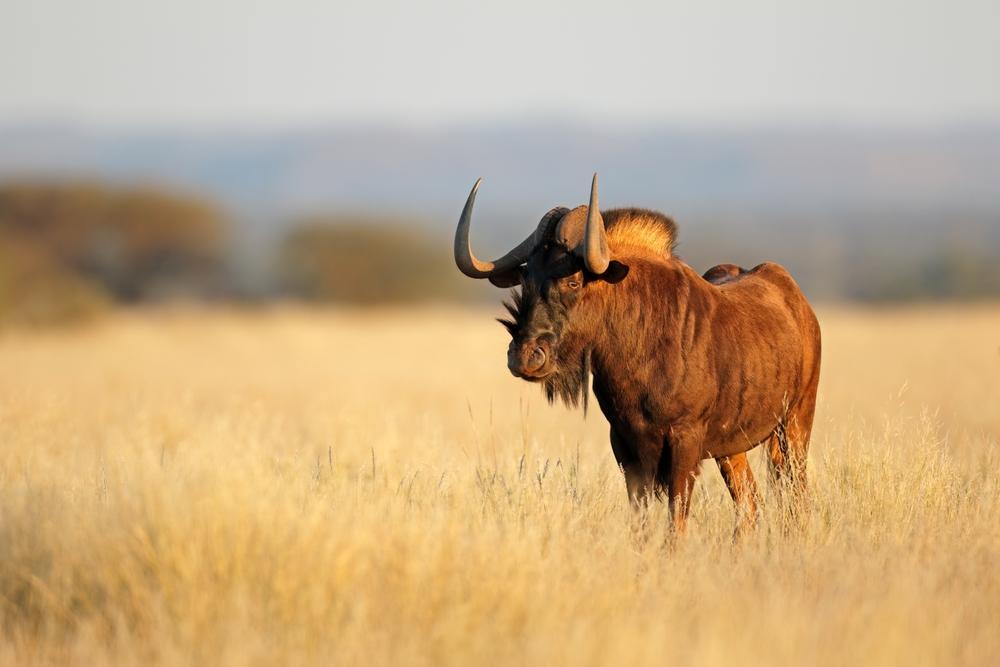
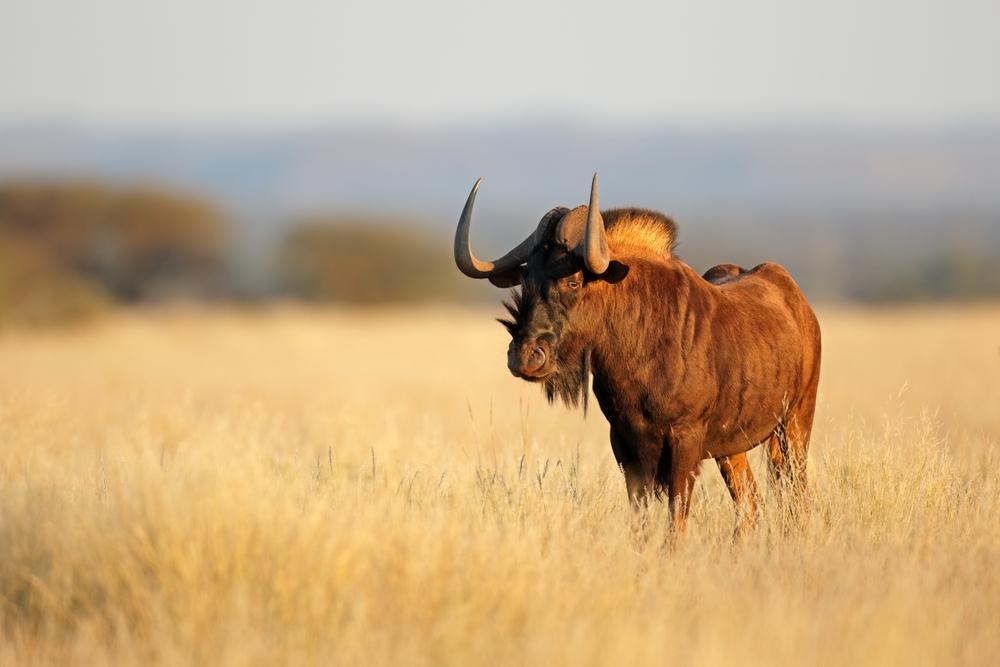
Black wildebeest are one of those animals that can become more interesting the longer a hunter spends in Africa. They may not carry the immediate recognition of kudu or sable, but they are unmistakably different, with their sweeping horns, distinctive white tail and almost prehistoric appearance.
South Africa is where this animal belongs, and hunting one across the country's open grasslands gives the safari a character that is difficult to reproduce with many other plains game species. There is often little mystery about whether wildebeest are somewhere in the area. You may be able to see animals scattered across the plains from a considerable distance.
The challenge is turning that sighting into a hunt.
A mature bull may be standing among other wildebeest and reaching him without putting the entire group on alert can require considerably more patience than the open landscape initially suggests. Once the herd begins moving, keeping track of the bull, your Professional Hunter has identified becomes another challenge altogether.
Black wildebeest also appeal strongly to returning African hunters and collectors. A hunter who already has a blue wildebeest in his trophy room may begin looking toward the other members of the wildebeest family, with the black wildebeest becoming an important part of working toward a broader wildebeest collection or slam.
But you do not need to be chasing a slam to appreciate the hunt.
There is something satisfying about pursuing an animal in country where you can often see exactly what stands between you and the trophy you want. No thick bush to disappear behind. No convenient cover where you need it most.
Just a black wildebeest somewhere out on the plains, and the problem of figuring out how you're going to get to him.
Finding black wildebeest is often only the beginning. Across South Africa's open grassland country, a herd may be visible from a considerable distance, giving the hunter and Professional Hunter plenty of time to study the animals and identify a mature bull worth pursuing.
The difficulty comes when you start looking at the ground between you and him.
Open grasslands rarely provide the convenient cover a hunter would choose for a stalk. A shallow depression, a fold in the ground or a slightly taller patch of grass can suddenly become important, and the approach may involve moving well out of sight before trying to close the distance from another direction.
The wind matters, but so does visibility. One wildebeest looking in your direction is manageable. An entire group containing dozens of eyes is another proposition, particularly when animals are spread across the plains and watching in different directions.
Patience can save a stalk. Sometimes the best option is simply to wait for the animals to settle or move into a position that gives the hunter a better approach. Trying to force the last few hundred yards across exposed ground can quickly turn a carefully planned stalk into the sight of wildebeest disappearing across the horizon.
Open country can also influence rifle choice. There is little need to turn a black wildebeest hunt into a discussion about specific calibres, but a hunter will appreciate a familiar rifle with a reasonably flat trajectory and enough authority for a tough, heavily built animal. Shots may be presented across open grassland, and whatever rifle is carried, the hunter should be completely comfortable placing the first bullet accurately from shooting sticks or another steady field position.
Eventually, the Professional Hunter may get you within range.
The bull is identified and the rifle is steady. You know exactly which animal you want.
Now you just need him to stand still and clear of the others. With black wildebeest, that can be where the real fun begins.
Getting within shooting distance of black wildebeest does not necessarily mean the hard work is over. The Professional Hunter may have identified a mature bull, but keeping track of that animal once the herd becomes restless can be surprisingly difficult.
One moment the bull is standing clearly on the edge of the group. The next, several animals move across in front of him. Then the entire herd changes direction, bunches together and begins flowing across the open ground almost like a school of fish.
Except black wildebeest rarely seem content simply to run.
Once excited, animals can kick, jump and bounce across the plains, changing direction and adding to the confusion. Their antics have helped earn them a reputation as the clowns of the African plains, and watching a herd in full motion can be entertaining when you are not trying to keep your eyes fixed on one bull.
This is where patience matters.
The hunter needs to stay with the bull the PH has identified rather than simply shifting attention to whichever wildebeest happens to offer the easiest shot. Animals can cross behind one another, separate and bunch together again, leaving only brief opportunities when the correct bull is standing completely clear.
Sometimes everything finally comes together. The bull stops, turns broadside and stands alone long enough for the hunter to settle the rifle.
Other times, just as the crosshairs find him, another wildebeest walks directly behind.
So, you wait. There may be twenty animals standing in front of you and not one responsible shot to take. And then, without any apparent reason, one starts running, then the others follow.
Within seconds, they're kicking and bouncing across the plains again, and your bull is somewhere in the middle of them.
Wildebeest have a well-earned reputation for being tough animals, and black wildebeest are no exception. Once a suitable bull is standing clear, the priority is making the first shot count.
Good wildebeest shot placement matters. A steady shooting position, a suitable bullet and a rifle carrying enough authority are far more important than trying to rush an opportunity before the herd moves again.
There is an old joke among African hunters that a poorly hit wildebeest will show you the entire ranch. There is enough truth behind the humour to take it seriously.
Put the first bullet where it belongs, and you may save yourself a very long walk across those open plains.
Black wildebeest also hold a special place on the trophy lists of hunters working toward a broader wildebeest collection or slam. A hunter may begin with the more familiar blue wildebeest before eventually setting his sights on the different wildebeest found across Africa.
That makes South Africa an important destination for anyone pursuing this goal. The black wildebeest is a distinctly different trophy, and hunting one across open grassland provides a different challenge from pursuing blue wildebeest through thicker bushveld country.
That difference is exactly the point. Taking a black wildebeest is not simply about adding another wildebeest to the trophy room.
It is about adding one that could only ever be a black wildebeest.
Black wildebeest fit naturally into a broader South African Plains Game Hunts safari. Depending on the hunting area, they may be pursued alongside species such as blesbok, springbok, gemsbok, impala and kudu, allowing the hunter to experience several different hunting styles during the same trip.
Hunters interested in wildebeest may also choose to pursue both black and blue wildebeest while in South Africa. Despite the shared name, the two can offer noticeably different hunts, making Blue Wildebeest Hunting in South Africa a natural addition when both species are available in the chosen hunting area.
Black wildebeest may not always be the animal that first puts a South African safari on the calendar, but once you are standing on the open plains watching a herd kick, bounce and run in every direction while trying to keep track of one particular bull, you quickly understand why they have earned a following of their own.
Getting one may be considerably more entertaining than you expected.
Yes. Black wildebeest are hunted in South Africa, particularly in open grassland areas where suitable populations are established. They are included as part of a broader plains game safari rather than hunted as the sole objective of the trip.
They can be. Black wildebeest are often visible from a long distance, but the open terrain leaves hunters with limited cover for the final approach. Once a herd becomes unsettled, animals may bunch together, change direction and move constantly, making it surprisingly difficult to keep track of one bull and wait for a clean shot.
Black wildebeest are hunted in more open grassland country, while blue wildebeest are often associated with bushveld and woodland habitats. The resulting hunts can feel different, with black wildebeest often requiring more attention to visibility, herd movement and the lack of stalking cover.
Yes, depending on the hunting area and available quota. Hunters interested in the broader wildebeest collection choose to pursue both species during the same hunting trip. Confirming both species when planning the safari is important, as not every hunting area will necessarily offer the same opportunities.
Search from our range of Hunts across various popular destinations in Africa.

Book Your Hunt