
Free Range Crocodile Hunting Safari in Limpopo, SA
Booking Season: 2026
Hunt Difficulty: Moderate

Crocodile hunting in South Africa is generally conducted around rivers, dams and other permanent bodies of water holding Nile crocodiles. The hunt can involve considerable time spent glassing banks and exposed sandbars, identifying a mature animal and working out where it is likely to leave the water to bask. Getting within range is only part of the challenge. A crocodile can disappear into deep water within seconds, making shot placement and the position of the animal important before the hunter fires.
Hunters considering Crocodile Hunts in South Africa should establish exactly what type of hunt is being offered. Hunting areas, trophy quality, available quota and the way crocodiles are hunted can differ considerably. Trophy size can also influence the price of a safari, particularly where larger crocodiles are priced according to length.
South Africa provides crocodile hunting opportunities in areas including Limpopo and Mpumalanga, with hunts taking place on suitable rivers and other waters capable of supporting mature Nile crocodiles. As with other Hunting in South Africa opportunities, hunters should confirm the hunting area, permits, number of hunting days and what is included in the quoted price before booking.
The Nile crocodile (Crocodylus niloticus) is listed as Least Concern on the IUCN Red List, but hunting and international trophy movement remain regulated. The necessary South African permits and CITES documentation should be confirmed before the safari, together with the import requirements of the hunter's home country. For an international hunter, a legal hunt in South Africa and permission to import the resulting trophy are two separate considerations.
Available African Crocodile Hunts
Free Range Crocodile Hunting Safari in Limpopo, SA
Booking Season: 2026
Hunt Difficulty: Moderate

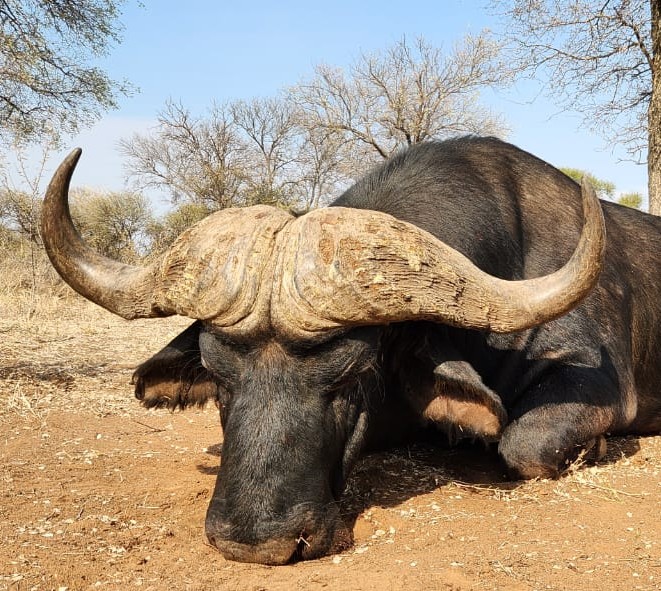
Cape Buffalo, Crocodile & Sable Safari in Limpopo
Booking Season: 2026
Hunt Difficulty: Difficult
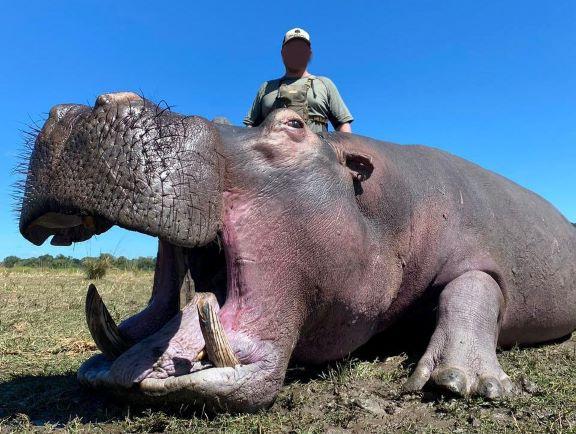
South Africa Dangerous Game & Nocturnal Hunting Safari
Booking Season: 2026
Hunt Difficulty: Moderate, Difficult
14-Day Dangerous Game & Plains Game Safari in South Africa
Booking Season: 2026
Hunt Difficulty: Difficult
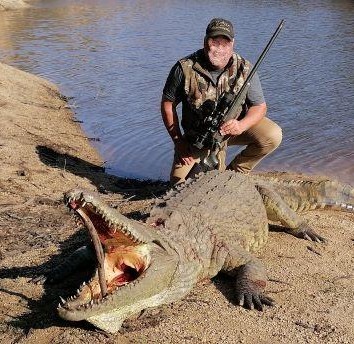
Hippo & Crocodile Combo Hunt in South Africa
Booking Season: 2026
Hunt Difficulty: Moderate, Difficult
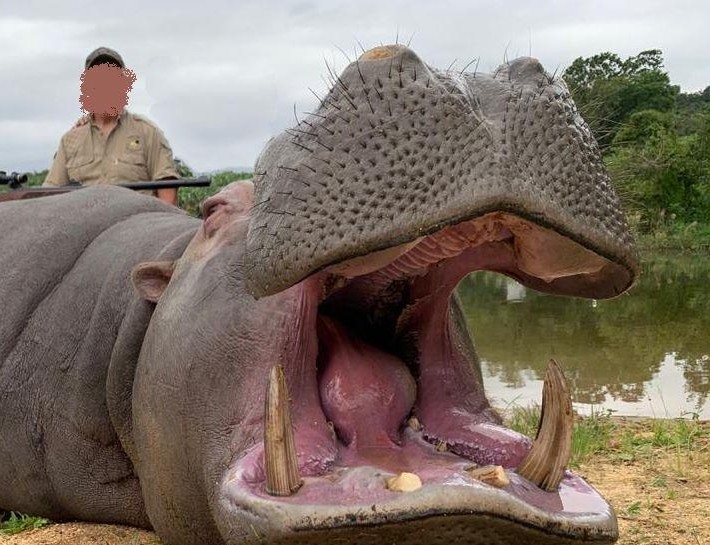
Four Dangerous Species. One Unforgettable Safari.
Booking Season: 2026
Hunt Difficulty: Moderate, Difficult, Extreme
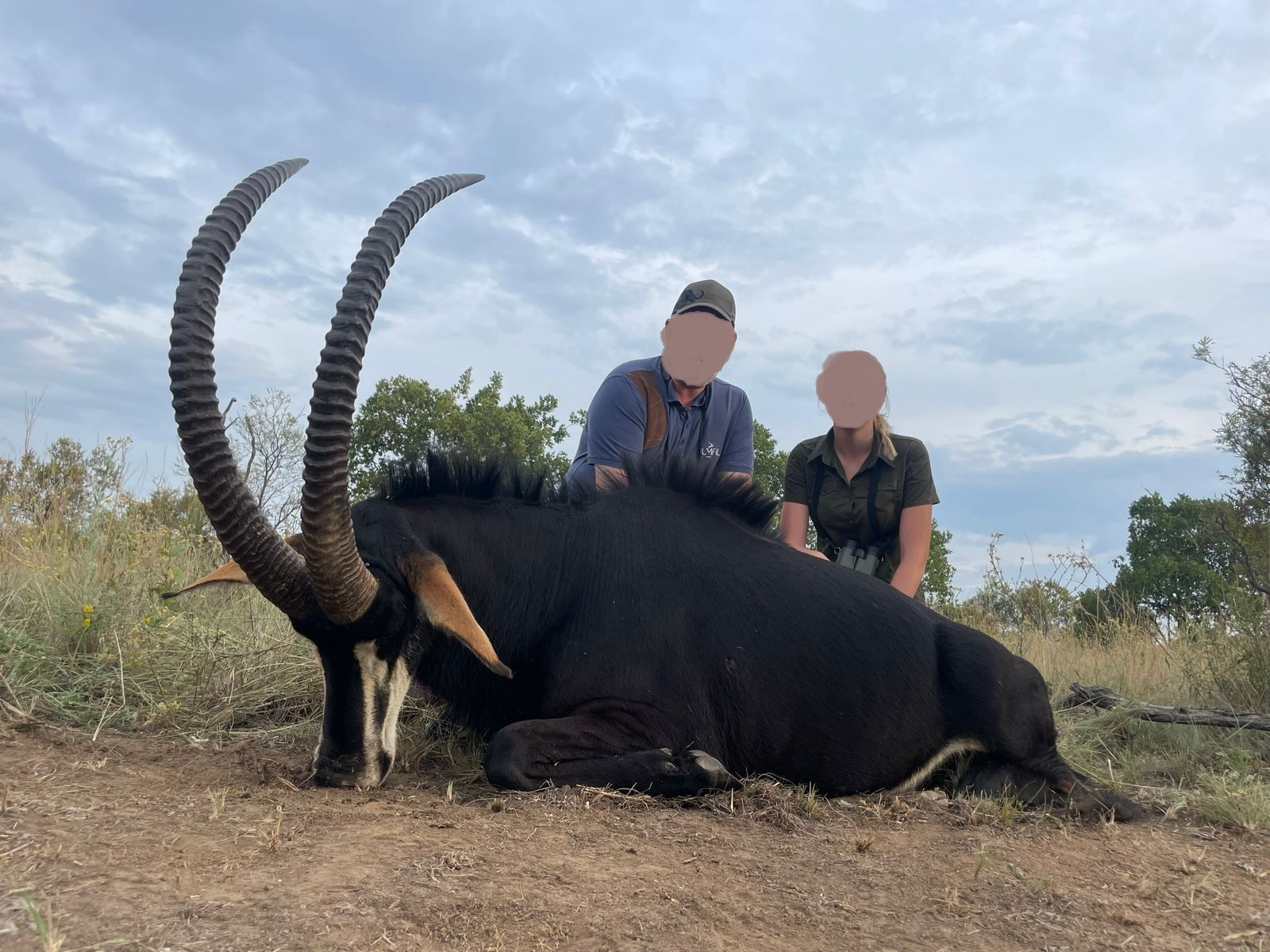
Limpopo Triple Trophy Hunt: Buffalo, Crocodile and Sable
Booking Season: 2026
Hunt Difficulty: Moderate, Difficult

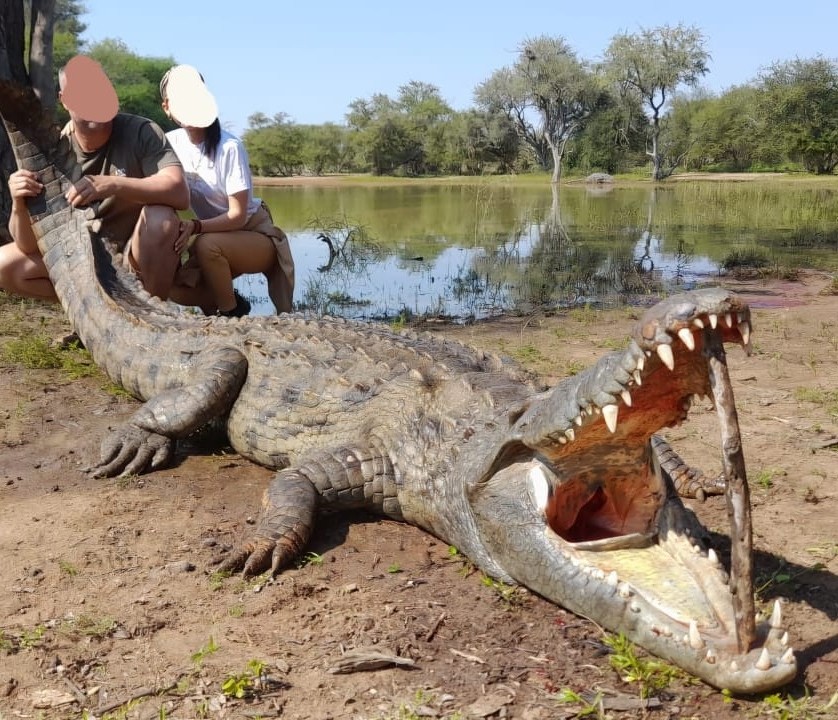
Nile Crocodile Hunting in Limpopo, South Africa
Booking Season: 2025
Hunt Difficulty: Moderate
Crocodile hunting in South Africa may involve hunting from a blind or using a spot-and-stalk approach, depending on the hunting area and where the animal is located. Whichever method is used, the position of the crocodile in relation to the water and the opportunity for an accurate first shot are critical.
Correct Crocodile Shot Placement is important as the brain represents a small target and a wounded crocodile can disappear into deep water within seconds. The hunter should be steady and understand the intended aiming point before taking the first shot.
When a broadside opportunity is presented, the first shot may be directed at the brain, followed immediately by additional shots if required. A follow-up into the spine can prevent the crocodile from reaching the water, while another shot into the vital area may be taken on the Professional Hunter's instruction.
The objective is not simply to hit the crocodile, but to anchor the animal quickly and prevent a wounded trophy from reaching deep water. This makes the shooting position, angle and distance from the water important considerations before the first shot is taken.
Accurate shot placement is more important than excessive rifle power when hunting crocodile in South Africa. Suitable calibres may include the 7mm, .300 Win Mag and .375, depending on the hunting area, legal requirements and the Professional Hunter’s recommendation. The rifle should be accurate, fitted with a dependable scope and suitable for a steady shot at a relatively small target. Hunters considering archery equipment must confirm the applicable provincial regulations and permit conditions with their outfitter before booking.
Crocodile hunting in South Africa can take place under different circumstances, and hunters should understand exactly what type of hunt they are booking. Some hunting areas hold established crocodile populations in rivers, dams and larger water systems where animals are located and hunted in the area in which they live.
Other hunts may involve crocodiles sourced from breeding or crocodile-farming operations and introduced into a hunting area. This type of hunt is also offered in South Africa, and the circumstances must be explained clearly to the hunter before a safari is booked. A lower-priced crocodile hunt should therefore not automatically be compared with a hunt for an established animal living in a large river system.
Trophy size is another important consideration. South African crocodile hunts are frequently priced according to the length of the animal, with a package including a crocodile up to a specified size and additional charges applying when a larger trophy is taken. In some cases, these increases are calculated according to each additional inch.
That makes it important to establish the pricing structure before hunting begins. A hunter should know what size crocodile is included in the package, how an animal's length will be estimated before the shot, what additional inches cost and how the final measurement will be determined.
The same principle applies to the hunt itself. Ask where the crocodiles come from, how long they have been in the hunting area, what body of water is being hunted and how the animals are normally located. There is nothing wrong with asking direct questions. Two South African crocodile hunts carrying similar price tags can represent different hunting propositions.
A crocodile hunt often begins with glassing rather than stalking. Rivers, dams and exposed banks are watched for crocodiles coming out of the water to bask. A mature animal may be seen more than once before a stalk is attempted, allowing the Professional Hunter to assess its approximate size and learn where it regularly leaves the water.
Once a suitable crocodile has been identified, getting close enough without disturbing it becomes the challenge. Crocodiles are alert around the water, and a hunter approaching an exposed bank may have little cover available. Wind, movement, noise and even the route used to reach the shooting position can determine whether the crocodile remains on the bank or disappears.
The final approach may involve crawling or using vegetation and changes in the terrain to remain hidden. There is little point rushing the stalk. If the crocodile slips back into the water before a shot is available, the hunting team may need to wait for it to reappear or return another day.
Once in position, the hunter needs a solid rest and enough time to make an accurate first shot. The PH will also consider how close the crocodile is to deep water and what will happen immediately after the shot. A large crocodile reaching the water can make recovery considerably more difficult.
That combination of finding, assessing, approaching and then anchoring a crocodile before it reaches deep water is what makes the hunt considerably more involved than simply shooting an animal lying on a riverbank.
Crocodile hunting in South Africa is concentrated in the warmer northern and eastern parts of the country where rivers, dams and other permanent water systems can support Nile crocodiles. Limpopo and Mpumalanga are among the principal hunting regions, although opportunities depend on the individual property, available animals and the permits applicable to the hunt.
Limpopo offers some of the country's most established crocodile hunting opportunities. Hunts take place along rivers or around large bodies of water where crocodiles can be glassed from a distance before a stalk is planned. The amount of water, surrounding vegetation and access to the banks can make one hunting area different from another.
Mpumalanga also contains suitable crocodile habitat, particularly in the warmer Lowveld. As elsewhere in South Africa, however, seeing suitable habitat does not mean that crocodile hunting is automatically available. The individual hunting area must have the animals and the necessary authorization in place.
The body of water itself is worth considering when comparing hunts. Hunting an established crocodile on a large river system can require considerable glassing and patience, while a crocodile occupying a smaller dam may be easier to locate and monitor. Hunters should therefore look beyond the province and ask where the crocodile will actually be hunted and under what circumstances.
The cost of crocodile hunting in South Africa varies according to the size of the crocodile, the hunting area, number of hunting days and what is included in the package. In South Africa, crocodile prices are often linked directly to the length of the animal.
A package may include a crocodile up to a specified length, with additional charges applying when a larger trophy is taken. These increases can be substantial once a crocodile moves into the larger trophy categories, and some outfitters price the difference according to additional inches.
Hunters should therefore establish the complete pricing structure before the safari begins. Ask what size crocodile is included, what happens if the PH identifies a larger animal, how additional length is charged and whether permits, daily rates, transfers, accommodation and trophy preparation are included.
Our African Hunting Safari Prices guide explains the broader costs that should be considered when budgeting for a safari. With crocodile in particular, however, the advertised package price should never be viewed without also understanding the trophy-size structure.
A cheaper crocodile hunt may also represent a different hunting proposition from a more expensive one. The hunting area, origin of the crocodiles, trophy quality and circumstances under which the animal will be hunted should form part of the comparison rather than simply choosing the lowest advertised price.
Length is the measurement hunters immediately associate with a trophy Nile crocodile, but judging the size of a crocodile in the field is not always straightforward. Much of the animal may be lying partly in water, vegetation or mud, and distance can make a large crocodile surprisingly difficult to assess accurately.
Mature bull crocodiles develop considerable body mass together with a broad, heavy head and thick neck. An old crocodile may carry scars, damaged teeth and other signs accumulated over years of fighting and living in the same water system. These characteristics can make an old mature animal impressive even before its final length is measured.
The Professional Hunter will spend time assessing a crocodile before deciding whether to make an approach. Where the hunt is priced according to trophy length, that judgement becomes important. A difference of several inches can affect both the quality of the trophy and the final cost of the safari.
A hunter should therefore agree beforehand on the approximate trophy size being sought and the maximum additional trophy fee he is prepared to pay. Once a larger crocodile is lying on the bank, it is rather late to start discussing what those extra inches cost.
Yes. Nile crocodiles can legally be hunted in South Africa where the necessary permits and hunting authorization are in place. International hunters should also confirm CITES requirements and the trophy import regulations applicable in their home country.
The price depends on the hunting area, number of hunting days, trophy size and what is included in the safari. Crocodile hunts in South Africa are often priced according to length, with additional charges applying when the crocodile exceeds the size included in the package.
Limpopo and Mpumalanga are among the main regions offering crocodile hunting in South Africa. The individual hunting area is more important than the province alone, as the size of the water system, available crocodiles and circumstances of the hunt can differ considerably.
Length is commonly used to judge Nile crocodile trophies, although body mass, head size, age and overall condition also contribute to the quality of an animal. Mature crocodiles become increasingly difficult to judge accurately in the field, particularly when part of the body is concealed by water or vegetation.
Crocodile hunting conditions are generally best during the warmer periods when animals regularly leave the water to bask. Local weather, water levels and the particular hunting area can influence crocodile movement, so hunters should discuss timing with their outfitter when planning the safari.
A legally hunted crocodile trophy may require CITES documentation and must comply with current U.S. import requirements. Hunters should confirm the applicable permits before booking rather than assuming that a legal South African hunt automatically means the trophy can be imported.
es. Crocodile can often be included as part of broader African Hunting Trips, depending on the hunting area, available species and permits. South Africa's wide selection of plains game and dangerous game makes combining several species during the same safari possible. South Africa’s broad selection of plains game and Dangerous Game Hunts makes it possible to combine crocodile with other species during the same safari.
Search from our range of Hunts across various popular destinations in Africa.

Book Your Hunt