7-Day Cape Buffalo Hunting Safari in Limpopo, South Africa
Booking Season: 2026
Hunt Difficulty: Difficult


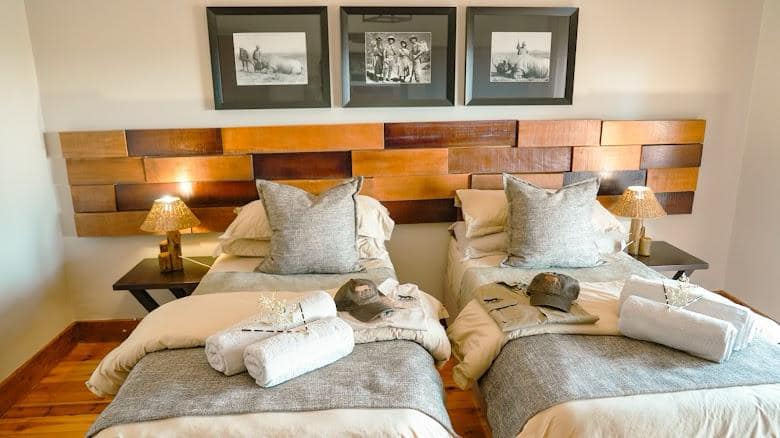
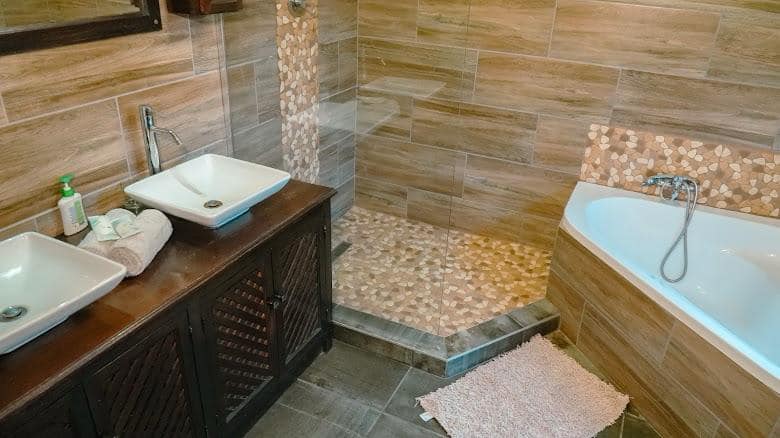
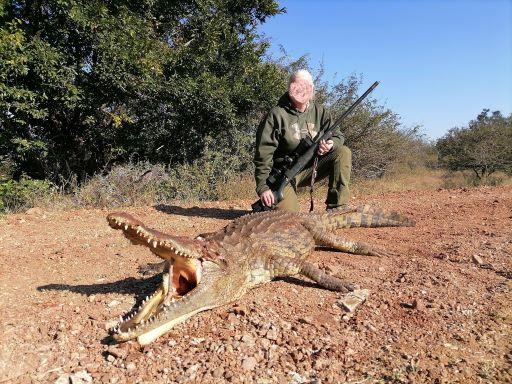
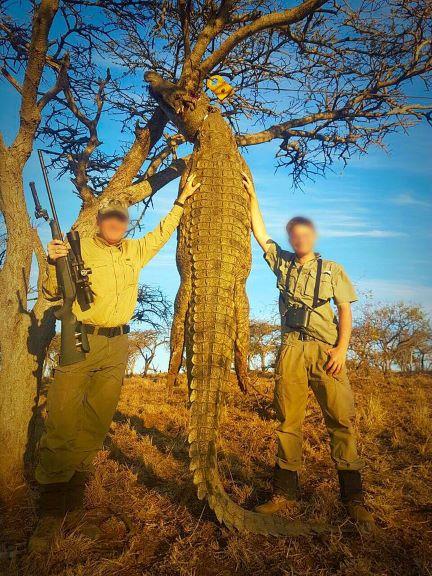
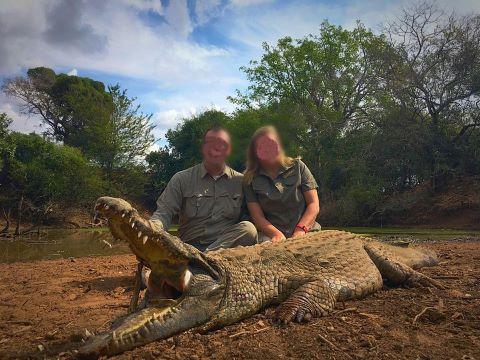
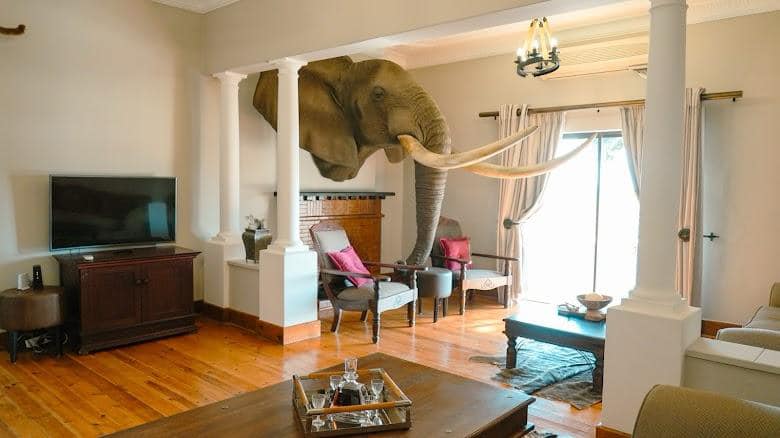
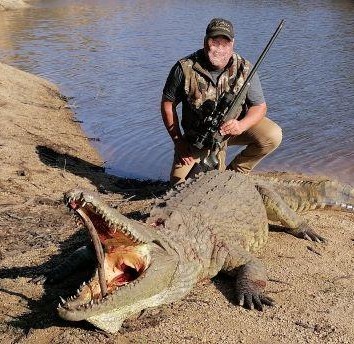
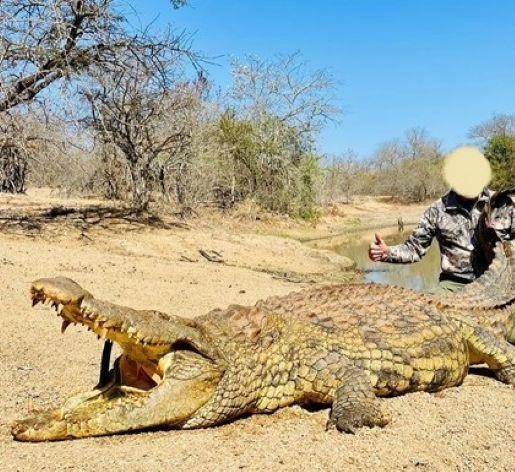
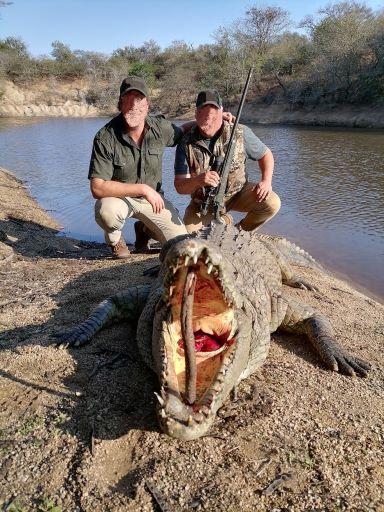
Comfortable en-suite accommodation, excellent home-cooked meals and genuine South African hospitality provide the perfect place to unwind after a day on the river. Evenings are spent around the campfire with your professional hunter, reflecting on the day's hunt and preparing for the next morning's stalk.
The hunting area consists of permanent rivers, large dams and dense riverine vegetation surrounded by open bushveld and mopane woodland. This varied terrain provides ideal habitat for mature Nile crocodiles while allowing hunters to carefully observe and stalk animals along the water's edge.
| Fence Type: | Free-range |
| Nearest Airport Name: | Oliver Tambo International Airport |
Free-Range Crocodile Hunting in South Africa
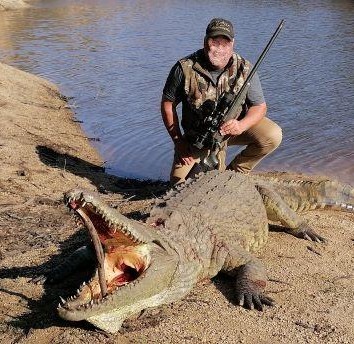
South Africa offers one of the most accessible and affordable opportunities to hunt a mature free-range Nile crocodile in Africa. Conducted along productive river systems near the Kruger National Park, this six-night safari combines experienced professional hunters, comfortable accommodation and fully exportable trophies with the convenience of a short safari that can easily be combined with other Dangerous Game Hunts.
Unlike many crocodile hunts that rely on baiting or shooting from long distances, this safari revolves around careful spot-and-stalk hunting. Mature crocodiles spend hours basking on riverbanks or sandbanks, but their exceptional eyesight and sensitivity to movement make closing the distance one of the greatest challenges of the hunt. Success depends on patience, careful planning and precise shot placement before the crocodile slips silently back into the water.
Whether you're planning your first crocodile safari or adding another iconic reptile to your African trophy collection, our complete guide to Crocodile Hunting in South Africa explains the hunting methods, best seasons, trophy expectations and what to expect before arriving in camp.
Price: US$7,220 All-In
Duration: 6 Nights / 5 Full Hunting Days
Hunter Ratio: 1 Hunter : 1 Professional Hunter
Location: Limpopo Province, South Africa
Primary Species: Nile Crocodile (up to 12 feet)
Observer Rate: US$260 per person per night (including government taxes)
Rifle Rental: US$200 per rifle for the duration of the safari
Optional Activities: Guided day trips to the world-renowned Kruger National Park can be arranged for observers or non-hunting days.
This safari includes the trophy fee for one Nile Crocodile up to 12 feet.
Should an even larger crocodile present itself during the hunt, you have the option to upgrade your trophy at the following rates:
The final trophy fee is based on the official measured length of the harvested crocodile, giving hunters the flexibility to upgrade should an exceptional Nile crocodile be taken during the safari.
Nile crocodile trophies harvested in South Africa are currently fully exportable to both the United States and the European Union, subject to the applicable import and export regulations.
South Africa has become one of Africa's leading destinations for hunting mature Nile crocodiles, offering fully exportable trophies, experienced professional hunters and productive free-range hunting areas. Limpopo's permanent rivers and dams provide ideal crocodile habitat, producing exceptional trophies while giving international hunters an accessible and well-organised safari.
Unlike most species pursued on Crocodile Hunts, success is rarely measured by the distance you walk. Instead, the hunt rewards patience, careful observation and meticulous planning. Mature crocodiles spend hours basking on riverbanks or sandbars, but a single careless movement can send them slipping silently back into the water before a shot is taken.
Although they often appear motionless, Nile crocodiles remain one of Africa's most efficient apex predators. Their exceptional eyesight, acute hearing and ability to disappear beneath the surface without warning make them one of the continent's most fascinating and challenging trophies to pursue.
Every mature Nile crocodile has survived for decades by doing one thing exceptionally well—avoiding danger. While younger crocodiles are often less cautious, the largest males become increasingly wary with age. Years of competing for territory, avoiding conflict and responding to anything unusual make them remarkably alert animals.
Old crocodiles rarely spend unnecessary time exposed on open riverbanks. Instead, they favour secluded sandbars, quiet bends in the river and heavily vegetated banks where they can bask while keeping a close watch on their surroundings. Even when they appear completely relaxed, they remain highly aware of movement, vibration and unfamiliar sounds. One careless step, the flash of sunlight on a rifle barrel or a shifting wind can be enough to send a mature crocodile gliding silently back into the water.
Professional hunters understand these habits and know that patience is often the greatest advantage. Rather than rushing a stalk, they spend time studying where a crocodile enters and leaves the water, how long it remains basking and whether it regularly returns to the same location. Building a plan around the animal's behaviour usually offers a far better chance of success than relying on speed or luck.
This is why truly large Nile crocodiles are held in such high regard by experienced hunters. Harvesting one is about far more than its length or trophy value. It is the challenge of outwitting an apex predator that has survived for decades by making very few mistakes—a hunt that rewards observation, patience and careful execution from beginning to end.
Unlike buffalo, lion or plains game, a mature Nile crocodile rarely offers a second opportunity. Once alerted, it can disappear beneath the surface in less than a second, often leaving nothing more than a small ripple on the water. If that first chance is rushed, the hunt can change completely.
Experienced crocodiles quickly learn to associate unusual movement, unfamiliar sounds or activity along the riverbank with danger. After slipping into the water, an old crocodile may remain submerged for long periods or move to another section of the river before surfacing again. Some will return to the same basking area later that day, while others may not be seen again for several days.
This is why experienced professional hunters are often prepared to wait far longer than they are prepared to shoot. A successful crocodile hunt is built on patience, careful planning and allowing the animal to relax before attempting the final stalk. Waiting for the perfect opportunity almost always produces better results than forcing the issue.
It's one of the many reasons Hunting in South Africa remains so rewarding. With experienced professional hunters, well-managed hunting areas and the flexibility to spend time observing a mature crocodile's behaviour, hunters are able to hunt patiently rather than feeling pressured into taking the first opportunity that presents itself.
When that moment finally arrives, everything comes down to remaining calm, trusting your professional hunter and making a single, well-placed shot.
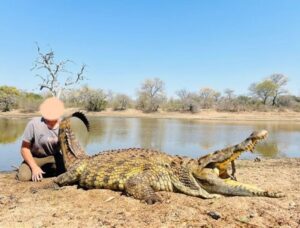
Unlike many African hunts where fresh tracks determine the day's plan, crocodile hunting revolves around understanding the animal's daily routine. During the cooler months between April and October, lower temperatures and thinner riverbank vegetation make it easier to locate mature crocodiles as they leave the water to bask in the morning sun. Rather than covering long distances, much of the day is spent observing the river, waiting for the right crocodile to expose itself before planning a careful approach.
Once a mature crocodile has been selected, the hunt becomes a game of patience and precision. Every stalk is dictated by wind direction, available cover and the animal's position along the bank. Hunters often remove their boots for the final approach, stalking quietly in their socks to avoid the slightest sound on dry leaves, sand or loose stones. Even the smallest mistake can send a crocodile gliding silently back into the water before a shot is taken.
If you're bringing your own rifle, South Africa has a straightforward temporary firearm import process for visiting hunters. Wesley and his team will provide the necessary invitation documents before your arrival and assist with firearm permits at O.R. Tambo International Airport, allowing you to focus on preparing for the hunt rather than the paperwork.
Above all, crocodile hunting is a hunt of discipline. Opportunities are often measured in seconds, and a poorly placed shot can result in a crocodile disappearing beneath the surface before recovery is possible. To better understand the anatomy of a Nile crocodile and where to place the shot from different angles, read our complete Crocodile Shot Placement Guide before your safari.
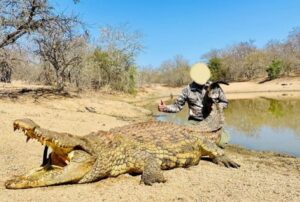
Your safari begins on arrival at O.R. Tambo International Airport in Johannesburg, where Wesley or a member of his team will meet you and assist with firearm permits and any arrival formalities. From there, you'll travel approximately four hours by road into Limpopo, passing through the changing landscapes of South Africa's bushveld before arriving at the hunting camp.
Depending on your international flight schedule, an overnight stay in Johannesburg before or after the safari may be recommended. Many international hunters choose to stay at African Sky Boutique Hotel, which provides comfortable accommodation, airport transfers and assistance with firearm permits, making the journey to camp straightforward and stress-free.
Once in camp, the pace slows considerably. Comfortable en-suite accommodation, excellent home-cooked meals and genuine South African hospitality provide the perfect place to relax after a day spent along the rivers. Evenings are usually enjoyed around the campfire with your professional hunter, discussing the day's stalks and planning the following morning while listening to the sounds of the African bush.
Although the lodge offers every comfort needed for a successful safari, the real attraction is waking before sunrise each morning knowing another mature Nile crocodile could be waiting along the riverbank.
If you've always wanted to add a mature Nile crocodile to your trophy collection without committing to a lengthy safari, this free-range Limpopo hunt is well worth considering.
Unlike many African hunts that involve covering long distances on foot, crocodile hunting rewards patience, careful planning and the ability to remain completely still while waiting for the right opportunity. It's a hunt that demands discipline, tests your judgement and offers one of the most unique challenges available on an African safari.
The relatively short duration also makes this an excellent option for hunters wanting to combine a crocodile with plains game or other dangerous game species, creating a varied and rewarding safari in one of Africa's most accessible hunting destinations.
If you're planning a broader African adventure, explore our collection of African Hunting Trips to discover additional free-range hunting opportunities across Southern, East and Central Africa.
Please note that terms, conditions and price are subject to change without notice and rates at the time of the hunt will apply
You can speak directly with the outfitter before booking. GHS remains available throughout the process.
Needing assistance with firearm permits and international travel services, or good taxidermists? View our affiliated companies
View Affiliated Services