
7-Day Kalahari Plains Game Hunt in Botswana
Booking Season: 2026
Hunt Difficulty: Moderate, Difficult

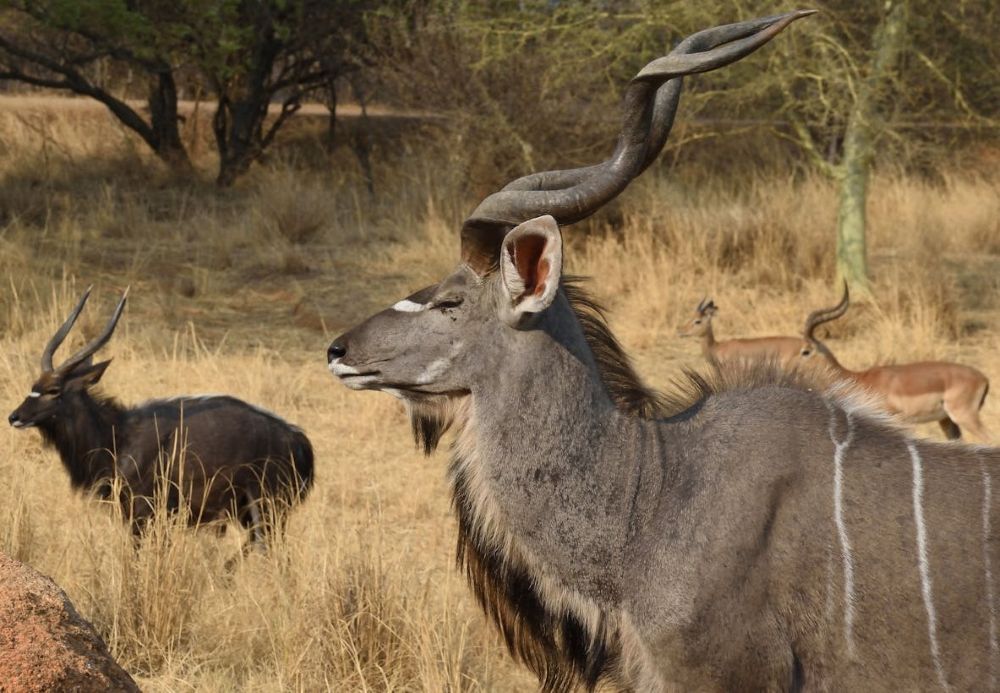
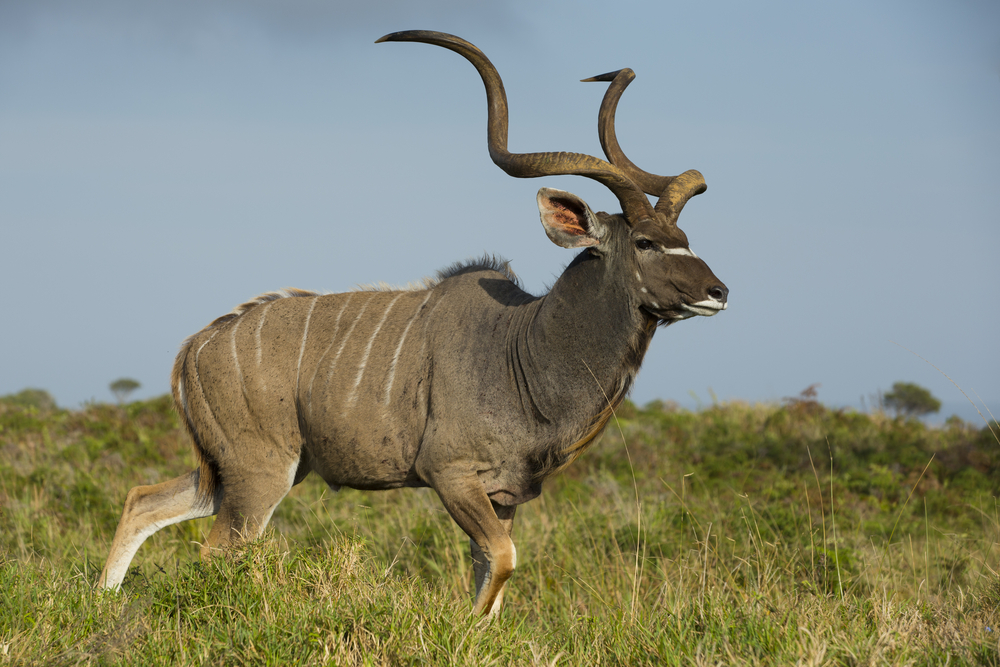
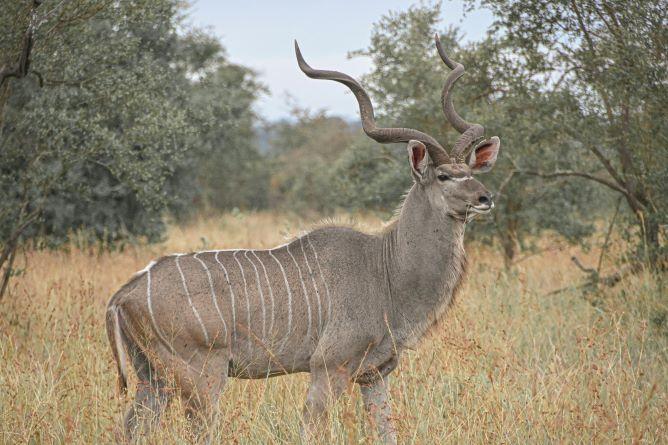
There are few sights in African hunting that rival a mature kudu bull stepping silently from the shadows. Long ivory-tipped spirals rising above the thornveld, alert ears searching for danger, and a grey coat that seems to melt into the bush have earned the greater kudu its famous nickname: The Gray Ghost.
Across Southern Africa, kudu remain one of the most sought-after plains game trophies. Yet Botswana occupies a unique place among kudu destinations. While neighboring countries may produce impressive numbers of trophies, Botswana has developed a reputation for something different: old bulls, vast wilderness, and the realistic possibility of encountering a truly exceptional kudu. Anyone researching Kudu Hunts across Africa quickly discovers that Botswana is frequently mentioned whenever conversations turn to giant free-range bulls.
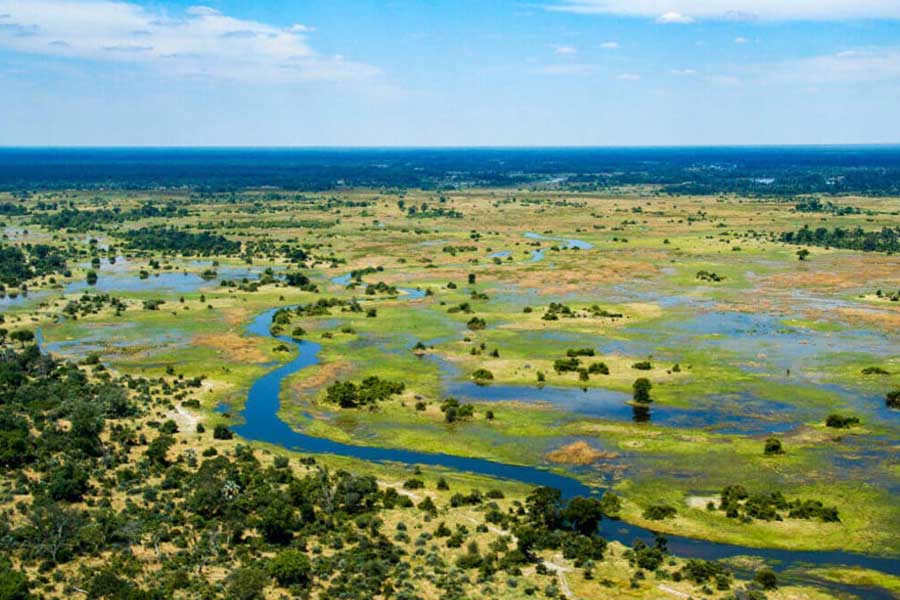
The country's hunting areas stretch across immense tracts of Kalahari sandveld, acacia woodland, and remote bush country where fences are often absent and wildlife still moves naturally across the landscape. This is not a hunt conducted from one small property to another. Days are spent covering ground, cutting fresh spoor in sandy roads, glassing distant tree lines, and searching for the mature bulls that have survived years of drought, predators, and hunting pressure. Much of what makes Hunting in Botswana unique is the sheer scale and wildness of the concessions themselves.
Those years matter.
Kudu do not become giants by accident. Every heavy-horned bull carries the scars of survival. They have learned how to use terrain, vegetation, and an uncanny awareness of danger to avoid both predators and hunters. Reaching advanced age allows their spirals to continue growing, creating the deep curls and impressive horn length that have fascinated hunters for generations.
Botswana's combination of habitat, genetics, and relatively low hunting pressure allows more bulls to reach that advanced age class. As a result, the country has quietly earned a reputation as one of Africa's premier destinations for free-range kudu. Bulls exceeding 50 inches are regularly taken in quality concessions, while exceptional trophies occasionally push beyond the coveted 60-inch mark.
Yet the true appeal of kudu hunting in Botswana extends beyond inches and record books. It lies in the experience itself. Following fresh tracks through red Kalahari sand at sunrise. Glassing distant camelthorn flats for the flicker of movement. Watching a mature bull disappear into cover moments after being spotted. Success is never guaranteed, which is precisely what makes it worthwhile.
Those seeking an authentic African safari experience will find few pursuits more rewarding than following the tracks of a giant kudu through Botswana's wild and untamed landscapes.
Available Greater Kudu Hunts
7-Day Kalahari Plains Game Hunt in Botswana
Booking Season: 2026
Hunt Difficulty: Moderate, Difficult
Hunting Safari in Botswana, Kalahari Plains Game 7 Days
Booking Season: 2026
Hunt Difficulty: Moderate, Extreme
Botswana has earned a reputation as one of Africa's premier destinations for free-range kudu hunting, and the reason is surprisingly simple: age.
A kudu bull requires many years to develop the deep spirals, heavy horn bases, and impressive horn length that hunters dream about. Most never reach that stage. Predators, drought, disease, and hunting pressure remove countless animals long before they develop into exceptional trophies.
Botswana's vast wilderness areas help change that equation.
Large unfenced concessions, low human populations, and extensive natural habitat allow more bulls to survive into older age classes. The result is a healthy population structure containing the mature animals responsible for the country's reputation as a producer of outstanding kudu trophies.
While trophy quality varies between concessions, Botswana consistently produces mature bulls exceeding 50 inches, with exceptional animals occasionally surpassing the coveted 60-inch mark. These giants remain rare, as they should be, but their existence continues to attract hunters searching for something truly special.
The appeal extends beyond horn length. Botswana offers a style of hunting that has become increasingly difficult to find elsewhere in Africa. Rather than hunting small parcels of land, hunters often find themselves pursuing kudu across enormous landscapes where wildlife moves naturally and fences are rarely encountered.
The combination of wilderness, challenging hunting conditions, and the possibility of encountering a truly exceptional bull creates a safari experience that remains distinctly Botswana.
Ask ten hunters why they want to hunt kudu in Botswana and most will eventually arrive at the same answer: giant bulls.
That reputation was not built overnight.
For decades, Botswana has quietly produced some of the largest free-range kudu found anywhere in Southern Africa. While neighboring countries certainly produce outstanding trophies, Botswana has earned a reputation for growing old bulls with the heavy horn bases, deep curls, and impressive spiral length that serious kudu hunters dream about.
A mature kudu bull measuring over 50 inches is an exceptional trophy in any African hunting destination. Bulls between 50 and 55 inches represent the type of trophy most hunters hope to encounter during a quality safari. Once a bull exceeds the 55-inch mark, conversations around the campfire tend to become much more interesting.
Then there are the giants.
A genuine 60-inch kudu remains one of African hunting's most coveted trophies. These animals are rare, as they should be. No professional hunter can promise one, and no hunter should arrive expecting one. Yet Botswana remains one of the few destinations where the possibility is real enough to keep hunters glassing one more hillside and tracking one more set of spoor.
The reason comes back to age.
A kudu's horns continue to develop throughout much of its life. Bulls that survive long enough grow heavier, deeper, and more impressive with every passing season. Botswana's vast wilderness areas allow more animals to reach that advanced age class, creating opportunities that have become increasingly uncommon elsewhere.
Of course, horn length tells only part of the story.
Many experienced hunters would rather take an old warrior with worn horn tips, battle scars, and a thick neck than a younger bull carrying an extra inch or two of horn. Age, character, and the story behind the hunt often become the memories that last longest after the tape measure has been packed away.
That is one of the reasons Botswana continues to attract hunters searching for something more than a number in a record book. Every mature kudu encountered has earned his place on the landscape, and every successful stalk feels like an accomplishment rather than a certainty.
It is easy to become focused on numbers when discussing kudu hunting.
Fifty inches. Fifty-five inches. The elusive 60-inch bull.
While horn length certainly matters, most experienced hunters eventually discover that a truly memorable kudu trophy is about far more than a tape measure.
Ask hunters about their favorite kudu and many will not start by mentioning the score. Instead, they talk about the stalk. The miles walked. The bull that vanished three times before finally offering a shot. The long day spent tracking through the Kalahari before catching a glimpse of spirals disappearing through the thornveld.
Those memories often outlast any measurement.
Some bulls carry broken tips from years of fighting. Others display worn horn ends, scars across the shoulders, or the heavy neck of an old warrior that has survived countless seasons. These characteristics rarely appear on a score sheet, yet they often add more character to a trophy than an extra inch of horn length ever could.
A giant kudu is a remarkable achievement. There is no denying that. But not every hunter needs a 60-inch bull to have the hunt of a lifetime.
At the end of the day, the right kudu is the one that excites you when you see him standing in the bush. If your heart starts pounding, if the stalk feels right, and if the bull represents everything you hoped to find in Africa, then the decision is usually a simple one.
Shoot the kudu that makes you happy. After all, beauty has always been in the eye of the beholder.
Any discussion about kudu hunting in Botswana eventually arrives at the same topic: giant bulls.
Stories of exceptional kudu have circulated through hunting camps for decades. Professional hunters, outfitters, and visiting sportsmen all seem to know somebody who saw a bull that pushed beyond 60 inches, or narrowly missed the opportunity to take one. Whether every story grows slightly with time is open to debate, but Botswana's reputation for producing truly exceptional kudu is very real.
The Kalahari ecosystem is responsible for much of that reputation.
Stretching across vast areas of Botswana, the Kalahari provides exactly the type of habitat kudu need to thrive. Scattered acacia woodland, camelthorn flats, dense pockets of cover, and enormous expanses of lightly populated wilderness create ideal conditions for bulls to reach advanced age. Unlike heavily developed regions elsewhere in Africa, kudu here can spend their entire lives moving across huge landscapes with remarkably little human interference.
That matters because giant kudu are not created through management programs or careful breeding decisions. They are created by time.
Every additional year a bull survives increases the opportunity for horn growth, heavier bases, deeper curls, and the mature appearance that hunters recognize immediately. Botswana's combination of habitat, genetics, and low hunting pressure allows more animals to reach that age class than many competing destinations.
The northern regions of Botswana also hold excellent kudu populations, particularly in concessions bordering the Okavango ecosystem and surrounding wildlife management areas. While these areas may be better known for dangerous game and diverse safari opportunities, mature kudu are encountered regularly and occasionally produce outstanding trophies.
The reality is that no area can guarantee a 60-inch bull. Animals of that caliber remain exceptionally rare anywhere in Africa. What Botswana offers is something far more valuable: a realistic chance.
That possibility is enough to keep hunters glassing distant tree lines, checking one more track in the sand, and believing that the next ridge may reveal the bull they have spent a lifetime searching for.
Finding a giant kudu is one challenge. Getting within shooting distance is another matter entirely.
Old kudu bulls have survived for a reason. Years of avoiding lions, leopards, hyenas, and hunters have turned them into masters of survival. Many professional hunters consider mature kudu among the most difficult plains game animals to hunt consistently.
Part of the challenge lies in their ability to disappear.
A bull standing in sparse thornveld can appear obvious one moment and completely vanish the next. More than one hunter has watched a mature kudu step behind a single bush only to spend the next thirty minutes trying to relocate him.
Their eyesight is exceptional. Their hearing is equally impressive. Most importantly, they understand how to use cover. Botswana's mixture of acacia scrub, camelthorn woodland, and Kalahari bush provides endless opportunities for kudu to avoid detection. The hunt often begins long before the first sighting.
Professional hunters spend hours checking sandy roads and game trails for fresh spoor. A mature bull's track may be followed for miles through soft Kalahari sand before a glimpse of horns is ever seen. Sometimes the spoor leads to success. Sometimes it simply disappears into country that seems capable of hiding an unlimited number of kudu.
Patience becomes one of the hunter's greatest assets.
A typical day may involve covering significant distances on foot, glassing countless tree lines, and passing opportunities on younger bulls while searching for an older animal. The physical effort can be demanding, especially during warm afternoons when the Kalahari sun begins to take its toll. Then comes the final stalk.
The wind must cooperate. The terrain must offer an approach. Every movement must be deliberate. One snapped twig, one flash of movement, or one swirl of scent can send a mature bull ghosting away through the bush before a shot is ever offered.
Perhaps that is why giant kudu hold such a special place in African hunting. The trophy is impressive, but the challenge of earning it is what makes the experience unforgettable.
Veteran professional hunters often joke that a kudu can disappear behind a telephone pole. The statement is exaggerated, but only slightly. More than one hunter has watched a mature bull step behind a small bush and simply vanish. It is one of the reasons kudu continue to frustrate and fascinate hunters in equal measure.
While a giant kudu may be the primary objective, very few hunters travel to Botswana intending to hunt only a single animal. One of the greatest advantages of a Botswana safari is the opportunity to pursue several iconic plains game species across the same vast wilderness landscapes.
The Kalahari ecosystem supports a remarkable variety of game, allowing hunters to build a safari around personal preferences rather than a predetermined package. Some arrive with a kudu at the top of their list and discover new appreciation for species they had never seriously considered before.
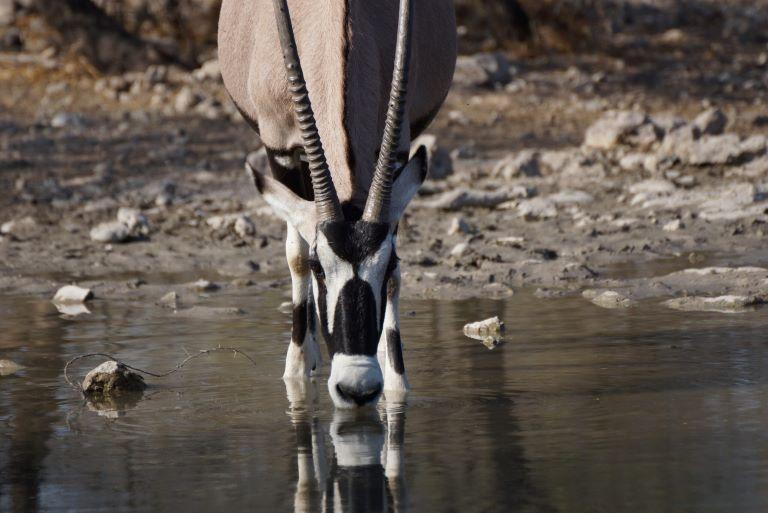
For many hunters, the most natural combination is kudu and Gemsbok Hunts. Few antelope are better adapted to the harsh conditions of the Kalahari. Their striking black-and-white facial markings, long rapier-like horns, and ability to thrive in arid environments have made gemsbok one of Africa's most recognizable plains game species. Botswana remains one of the finest destinations on the continent for hunters hoping to pursue both animals during the same safari.
Another highly sought-after addition is Sable Hunts. Widely regarded as one of Africa's most beautiful antelope, mature sable bulls possess jet-black coats, impressive curved horns, and a presence that immediately commands attention. Combining a mature sable and a giant kudu on the same safari represents a dream hunt for many visiting sportsmen.
Impala are frequently encountered throughout many hunting areas and offer a challenging and rewarding addition to any safari. Although often overlooked by first-time visitors focused on larger trophies, mature impala rams remain one of Africa's most respected plains game animals.
Warthog provide an entirely different hunting experience. Their unpredictable behavior, impressive tusks, and habit of disappearing into thick cover often create some of the most entertaining moments of a safari.
Hunters fortunate enough to pursue Hunting Gemsbok in Botswana or Hunting Sable in Botswana alongside their kudu quickly discover that the experience becomes about far more than a single trophy. Each day brings new opportunities, different challenges, and the possibility of encountering exceptional animals that were never part of the original plan.
That variety is one of the reasons Botswana remains such a compelling destination. While the search for a giant kudu may bring hunters to the country, the complete safari experience is often what brings them back.
Most discussions about hunting seasons focus on dates, temperatures, rainfall, and vegetation conditions. While those factors certainly matter, experienced kudu hunters know there is another measurement that deserves consideration.
Kudu O'Clock.
Nobody knows exactly why it happens.
You can spend an entire day tracking through the Kalahari, glassing distant tree lines, checking every patch of shade, and questioning whether kudu actually exist. Then, almost as if somebody flipped a switch, mature bulls begin appearing during the final minutes of legal shooting light.
Professional hunters have watched it happen countless times.
A giant bull suddenly materializes on a distant ridge. Another steps from thick cover to feed. A third appears standing motionless beneath a camelthorn tree that seemed completely empty moments before.
Perhaps it is coincidence. Perhaps mature kudu simply become more comfortable moving during the cooler hours of the evening. Whatever the reason, many hunters eventually learn to respect Kudu O'Clock.
Of course, successful hunting still depends on far more than those final minutes of daylight. Botswana's dry season generally offers the most favorable conditions. As vegetation thins and visibility improves, hunters are able to glass greater distances and evaluate mature bulls more effectively.
The cooler temperatures of winter also make long days on foot considerably more comfortable. Fresh tracks remain easier to follow, and hunters can spend more time searching the vast landscapes that make Botswana such a unique destination.
Yet despite all the planning, all the preparation, and all the miles walked, many hunters eventually discover the same truth. The giant kudu you remember most is often the one that appeared exactly when you thought the day was over.
A Botswana kudu safari is about far more than the pursuit of a set of spiral horns. It is an experience built around vast landscapes, long days on foot, and the constant possibility that the next ridge, tree line, or patch of thornveld may reveal the bull you have been searching for since the day you arrived.
Most mornings begin before sunrise. Coffee is poured while the bush is still dark, rifles are checked, and conversations around the vehicle usually revolve around where a mature bull was last seen or where fresh tracks were encountered the previous afternoon. By first light, hunters are already moving through the concession, searching sandy roads and game trails for spoor worth following.
Once fresh tracks are located, the real hunt begins. Hours can pass following a mature bull through Kalahari sand, weaving through acacia woodland and patches of thornveld that seem capable of hiding an endless number of kudu. At times the tracks appear easy to follow, only to vanish on hard ground or disappear into thick cover. Patience quickly becomes one of the most valuable qualities a hunter can possess.
The challenge is not simply finding a kudu. Botswana holds healthy populations of kudu across many hunting areas. The challenge lies in finding the right bull. Time and again hunters pass younger animals while searching for an older bull carrying the deep spirals, heavy bases, and unmistakable appearance that only comes with age. Judging trophy quality can be surprisingly difficult, especially when a kudu offers only a brief glimpse before melting back into the bush.
There are also few animals in Africa more capable of testing a hunter's emotions. A giant bull may be spotted early in the morning and never seen again. Another may disappear moments before a shot opportunity presents itself. Then, just when it feels as though the day is drawing to a close, Kudu O'Clock often arrives. Somehow the Gray Ghost has a habit of appearing during the final minutes of legal shooting light, creating moments that hunters remember long after the safari has ended.
What makes Botswana special is the setting in which all of this unfolds. These are not small hunting properties where game is encountered around every corner. The country's reputation has been built upon immense wilderness areas where wildlife still moves naturally and mature bulls survive because they have mastered the art of avoiding danger. Every successful stalk feels earned, and every trophy carries a story.
Years after returning home, most hunters remember very little about the exact measurement of their kudu. They remember the fresh spoor crossing a sandy road at sunrise. They remember the miles walked, the stalk that nearly worked, and the old bull that finally offered a shot after days of searching. Those experiences become part of the trophy itself.
That is the enduring appeal of kudu hunting in Botswana. The possibility of a giant bull may draw hunters to the country, but it is the wilderness, the challenge, and the memories created along the way that keep Botswana firmly on their list of Africa's greatest hunting destinations.
Search from our range of Hunts across various popular destinations in Africa.

Book Your Hunt