

Rhino Dart, Buffalo & Plains Game Hunting in South Africa plus FREE Observer
Booking Season: 2026
Hunt Difficulty: Difficult

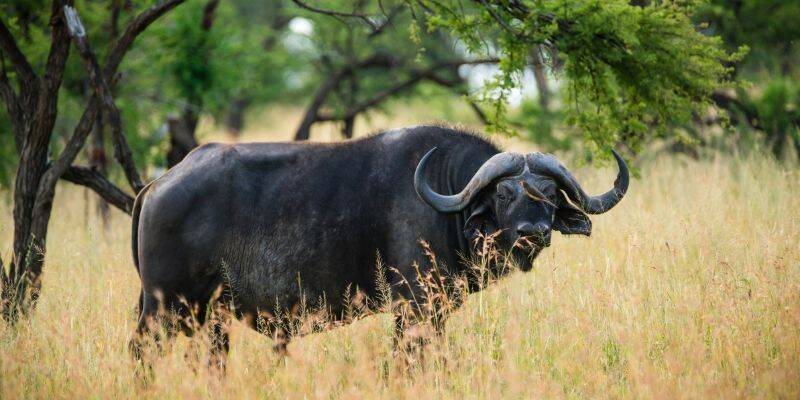
When it comes to dangerous game hunting in Africa, the Cape buffalo is widely known as one of the most formidable animals to pursue. Often referred to as the “Black Death,” the Cape buffalo has earned its reputation through its strength, resilience, and unpredictable behavior.
Cape buffalo hunting is not about numbers or easy opportunities. It is a close-range, high-pressure hunt where positioning, timing, and judgment matter more than anything else.
Buffalo are tough, unpredictable, and often encountered at close distance in thick cover. Tracking them on foot through bushveld and savanna can take hours, sometimes days, before the right opportunity presents itself.
When it does, it happens quickly and there is very little room for error.


The dry season is the best time to hunt buffalo, which typically occurs from May to October.
South Africa offers premium hunting areas and well-managed concessions, and hunting in South Africa provides excellent infrastructure and accessibility for international hunters. For many international hunters, buffalo hunting in South Africa provides excellent hunting areas, strong buffalo populations, and well-developed safari infrastructure.
Zimbabwe’s Zambezi Valley and Matetsi units are renowned, and hunting in Zimbabwe offers classic free-range buffalo hunts in remote wilderness areas making cape buffalo hunting in Zimbabwe ideal for hunters seeking a true wilderness experience.
Mozambique’s Niassa Reserve and other northern concessions provide vast wilderness hunting areas with exceptional buffalo populations. Remote wilderness areas such as the Niassa Reserve make Mozambique buffalo hunting safaris one of the most authentic dangerous game hunting experiences available in Africa.
The Okavango Delta and Chobe regions in Botswana are also known for their Cape buffalo hunting opportunities.
Several African countries offer outstanding Cape buffalo hunting opportunities, and the right destination often depends on the type of safari a hunter is looking for. Some areas provide classic free-range wilderness hunts, while others offer well-managed concessions with strong buffalo populations and easier travel logistics.
Hunting in Tanzania, Zimbabwe, Mozambique, Zambia, and South Africa are among the most established buffalo hunting destinations in Africa. Each country offers its own type of experience, from remote wilderness areas to more structured safari operations that many first-time African hunters find easier to plan.
For hunters traveling from the United States or Canada, South Africa is often the easiest place to start thanks to direct flights and well-developed safari infrastructure. Hunters looking for a more remote wilderness experience often explore areas in Zimbabwe, Tanzania, Mozambique, or Zambia where buffalo still roam large unfenced concessions.
The best time for Cape buffalo hunting in Africa generally occurs during the dry season.
As water sources become limited, buffalo herds concentrate around rivers and watering points, making them easier to locate.
The reduced vegetation during the dry months also improves visibility and tracking conditions.
Professional hunters often prefer these months because buffalo movements become more predictable.
Across most buffalo hunting destinations in southern and eastern Africa, the period from June through October generally provides the most consistent hunting conditions. During the dry months buffalo are easier to track and professional hunters can often locate herds more efficiently.
Many hunters travel to Africa specifically to pursue Cape buffalo because it represents the ultimate dangerous game experience. Cape buffalo hunting requires teamwork between hunter and professional hunter, careful shot placement, and the ability to remain calm under pressure. Tracking a buffalo herd through thick bush while waiting for the right opportunity can be one of the most exhilarating moments in hunting.
For many visiting hunters, taking a Cape buffalo is the highlight of an African safari. The hunt combines tracking, close-range encounters, and the experience of working alongside an experienced professional hunter and trackers. It is a hunt that requires patience and discipline, but it is also one of the most rewarding hunts Africa has to offer.
Many hunters who pursue Cape buffalo also consider other dangerous game species such as lion hunts in Africa, leopard hunting safaris, or even elephant hunts in Africa as part of a complete Big Five safari experience.
Cape buffalo are widely regarded as one of the most dangerous animals in Africa and have earned the nickname “Black Death” for good reason. Unlike many plains game species, buffalo are known for their unpredictable behavior, immense physical strength, and willingness to confront threats when pressured or wounded.
Buffalo hunting often takes place at close range in thick bushveld where visibility is limited and reaction time is short. Follow up situations on wounded buffalo can become extremely dangerous, particularly when a bull circles back into cover or charges at close distance.
Professional hunters place emphasis on shot placement, positioning, wind direction, and maintaining control of the approach throughout the hunt. Even experienced dangerous game hunters respect Cape buffalo because situations can change very quickly once inside close range.
Part of what makes Cape buffalo hunting so respected among African hunting safaris is the mental pressure involved. Hunters are required to remain calm, disciplined, and composed while tracking one of Africa’s most dangerous game animals through dense cover on foot.
Most buffalo hunts start early in the morning. Professional hunters and trackers head out at first light to look for fresh tracks along roads, riverbeds, or waterholes where buffalo may have moved during the night.
Once fresh spoor is found, the trackers begin following the herd on foot. Tracking can take time, sometimes several hours, as the team moves carefully through thick bush while paying close attention to the wind and the terrain.
When the herd is located, the professional hunter studies the animals carefully to identify a mature bull. This part of the hunt often requires patience while waiting for the right opportunity for a safe and ethical shot.
Shots on Cape buffalo are usually taken at fairly close distances, often inside 80 yards. This close-range hunting is part of what makes buffalo safaris so exciting and memorable for visiting hunters.
Cape buffalo hunts are well suited to hunters who want to experience Africa’s dangerous game hunting tradition. These hunts appeal to hunters who enjoy tracking animals on foot, spending long days in the bush, and working closely with experienced professional hunters and trackers.
Many hunters pursuing Cape buffalo are visiting Africa for their first dangerous game safari, while others are experienced international hunters returning for another challenging hunt.
Cape buffalo hunts are not always the best choice for hunters looking for a relaxed or purely trophy-focused safari. These hunts can involve long tracking days, physically demanding conditions, and encounters with potentially dangerous animals.
Hunters mainly interested in high-volume plains game hunting may prefer starting with a plains game safari before moving on to dangerous game such as Cape buffalo.
One of the most common questions hunters ask when planning an African safari is how much a Cape buffalo hunt costs. Prices can vary depending on the country, the hunting area, the length of the safari, and whether the hunt takes place in a large wilderness concession or on a well-managed private hunting property.
In general, Cape buffalo hunts typically range from about $9,000 to $25,000 depending on location and safari structure. Hunts in South Africa may sometimes be more accessible because of logistics and shorter safari durations, while wilderness hunts in countries such as Tanzania, Mozambique, Zimbabwe, or Zambia may involve longer dangerous game safaris in more remote areas.
Other factors that influence cost can include trophy fees, the number of hunting days, concession fees, and whether the buffalo hunt is combined with other species during the safari.
A standard buffalo safari typically includes the following:
Exclusions and optional extras when Cape Buffalo hunting in Africa:
When preparing for a Cape buffalo hunt, hunters should ensure they bring appropriate firearms and equipment and understand proper buffalo shot placement for an ethical and effective hunt.
Hunters planning their first African safari should spend time practicing from shooting sticks before arriving. Many buffalo are taken from sticks at relatively close range, and being comfortable shooting in this position makes a big difference when the opportunity comes.
Choosing the right rifle for Cape buffalo hunting is one of the most important parts of preparing for a dangerous game safari. Across most African countries, the legal minimum caliber for Cape buffalo hunting is a .375 shooting a 300-grain bullet, with the .375 H&H remaining one of the most trusted and widely used dangerous game calibers in Africa.
Many experienced professional hunters and international hunters also favor larger calibers such as the .416 Rigby, .404 Jeffery, .458 Winchester Magnum, and .458 Lott for additional stopping power during close-range encounters. Double rifles chambered in calibers such as the .470 Nitro Express are also highly respected for buffalo hunting in thick bushveld conditions.
More important than caliber alone is rifle familiarity, shot placement, and the ability to shoot accurately from sticks under pressure. Cape buffalo hunts often unfold quickly at close range, making confidence and composure with your rifle critical during dangerous game hunting situations.
Cape buffalo hunting is typically conducted at much closer distances than many North American hunters expect. In thick bushveld and riverine cover, most shots are commonly taken inside 50 to 100 yards, with some opportunities occurring even closer depending on terrain and vegetation density.
Because buffalo hunts often unfold quickly at close range, professional hunters place strong emphasis on preparation, rifle familiarity, and the ability to shoot accurately from sticks under pressure. Visibility can be limited in dense cover, and shot opportunities are often brief once a mature bull is identified within the herd.
This close-range hunting environment is one of the reasons Cape buffalo hunts are considered among the most intense and respected dangerous game experiences in Africa.
Cape buffalo hunting is not suited to hunters looking for a relaxed or predictable safari.
This is a physically and mentally demanding hunt where conditions are rarely ideal. Long tracking days in heat, thick bush, and uneven terrain are standard. Opportunities are not frequent, and when they come, they tend to be brief and unforgiving.
Buffalo are known for their resilience and their ability to react aggressively when pressured or wounded. A poor decision, whether it is taking a marginal shot, misreading the situation, or pushing too quickly, can change the entire dynamic of the hunt within seconds.
Many first-time dangerous game hunters underestimate how quickly pressure builds in close-range encounters. Distances are often short, visibility can be limited, and movement within the herd can create confusion if the situation is not controlled properly.
Hunters who do well are those who stay disciplined, manage their pace, and rely on the guidance of an experienced professional hunter. Those who try to force the hunt or rush decisions tend to struggle.
Many hunters assume buffalo hunting is about the shot. It is not. The real difficulty lies in getting into the right position to take that shot under the right conditions.
Buffalo herds are constantly moving, often through thick cover where visibility is limited and shooting lanes are narrow. Wind direction becomes critical at close range, and even a small shift can alert the herd and end the opportunity immediately.
Getting into position requires careful movement, patience, and precise coordination between the hunter, professional hunter, and trackers. It is not uncommon to spend hours working into range, only to have the opportunity disappear in seconds.
By the time a mature bull is identified and judged, there is usually very little time to adjust. You are either in position and ready, or the opportunity is lost.
This is why experienced professional hunters focus heavily on approach, positioning, and timing long before a rifle is raised.
The hunt is decided in the setup, not when the trigger is pulled.
Success on a buffalo hunt is built long before the shot is taken. It comes from consistent tracking, disciplined movement, and making the right decisions under pressure.
Reading fresh spoor, understanding how herds move between feeding and water, and adjusting to changing wind conditions are what create opportunity. These factors are constantly shifting, and small mistakes early in the approach often remove any chance of getting into position later.
Working closely with experienced trackers and a professional hunter is a critical part of the process. Their ability to interpret tracks, anticipate movement, and guide the approach often determines whether the hunt develops into a realistic opportunity or not.
Hunters who do well tend to stay patient, follow instruction, and avoid trying to control the pace of the hunt. Those who rush decisions, second-guess the approach, or lose focus in the final stages often miss opportunities that have taken hours to create.
A well-executed buffalo hunt is controlled, deliberate, and often slower than expected, but that is exactly what allows it to come together.
Buffalo hunts do not always unfold as planned, and most problems occur before the shot is ever taken.
Wind direction can shift without warning, immediately alerting the herd. Thick bush can limit visibility to the point where movement becomes difficult without being detected. Herds may change direction, circle back, or move into areas where a safe approach is no longer possible.
It is common to spend hours working into position, only to have the opportunity disappear in seconds. This is part of the hunt and one of the main reasons it demands patience and composure.
When a shot is taken, precision matters. Buffalo are extremely tough animals, and poorly placed shots often result in a wounded bull that must be followed up in difficult conditions.
Follow-up situations are where pressure increases significantly. Visibility is often limited, distances are close, and decisions must be made quickly.
This is why experience, discipline, and controlled decision-making are critical throughout the entire hunt, not just at the moment of the shot.
What happens after the shot is an important part of a buffalo hunt that is often overlooked, but it can be one of the most demanding phases of the entire experience.
If the bull does not go down immediately, recovery may involve tracking a wounded animal through thick cover, sometimes over extended distances. This requires careful coordination between the professional hunter, trackers, and the hunting team.
Follow-up situations are approached cautiously, as visibility is often limited and buffalo can remain dangerous when wounded. Movement is controlled, communication is deliberate, and every step is taken with awareness of how quickly conditions can change.
Once the animal is recovered, field preparation begins immediately. This includes skinning, caping, and preparing the trophy according to export requirements, as well as documenting the hunt where necessary.
In many areas, the meat is distributed to local communities, which is a standard part of how buffalo hunts contribute beyond the hunt itself.
Trophy handling and export logistics are managed after the hunt, and timelines can vary depending on the country and permitting process.
Understanding this part of the process gives a more complete and realistic view of what a buffalo hunt actually involves — beyond the moment the shot is taken.
Planning a buffalo hunt starts well before choosing dates or booking a safari. The process involves understanding how different countries, concessions, and hunt styles affect the overall experience.
Some buffalo hunts take place in large, unfenced wilderness areas where tracking is done entirely on foot over extended distances. Others are conducted on well-managed private concessions where logistics may be more controlled but the hunting approach can differ.
Deciding between these options depends on what type of hunt you are looking for , whether it is a remote, physically demanding wilderness experience or a more structured safari with easier access and shorter travel times.
Safari length is another important factor. Buffalo hunts typically run between 7 and 10 days, but longer safaris can increase the likelihood of finding the right bull and allow more time for tracking and positioning.
Preparation also plays a significant role. This includes rifle selection, practicing from shooting sticks, and ensuring you are physically ready for long days on foot in warm conditions.
For hunters traveling from the United States, planning should also include international flights, firearm import procedures, required documentation, and understanding how trophy export will be handled after the hunt.
A well-planned buffalo hunt removes unnecessary complications and allows you to focus on the hunt itself rather than the logistics around it.
Not all buffalo hunts are structured the same, and choosing the right outfitter is one of the most important decisions you will make.
The size and quality of the hunting area play a major role. Large, well-managed concessions with consistent buffalo populations generally provide more realistic opportunities than smaller or heavily pressured areas.
Access to quota is equally important. A properly allocated quota ensures that hunts are conducted sustainably and that there is a legitimate opportunity to pursue a mature bull.
The experience of the professional hunter should not be underestimated. Buffalo hunting requires sound judgment, particularly when it comes to approach, shot selection, and handling follow-up situations if needed.
It is also important to understand how the hunt will be conducted — whether tracking is done primarily on foot, how long the safari runs, and what level of support is provided in the field.
Clear communication and transparent pricing are strong indicators of a well-run operation. Hunters should understand exactly what is included, what is not, and how the hunt is structured before committing.
A good outfitter will set realistic expectations and explain both the opportunities and the limitations of the hunt rather than promising easy success.
Cape buffalo hunting in Africa operates under regulated quota systems set by government authorities. These systems are designed to manage wildlife populations while maintaining sustainable hunting practices.
Each country allocates annual quotas based on population data, habitat conditions, and long-term conservation objectives. These quotas determine how many buffalo may be hunted within specific concessions and regions.
Licensed outfitters operate within these frameworks, and hunts require the appropriate permits and documentation issued by local authorities. Without valid permits and quota allocation, hunts cannot legally take place.
For hunters traveling from the United States, additional requirements may apply. These can include firearm import documentation, export permits, and compliance with regulations governing the transport of trophies.
In many areas, revenue generated from buffalo hunting contributes directly to conservation efforts, anti-poaching initiatives, and local communities that live alongside wildlife.
Regulations, permit structures, and processes vary by country, which is why understanding how your chosen destination manages buffalo hunting is an important part of planning the hunt.
A properly conducted buffalo hunt operates within a structured system designed to balance wildlife management, conservation, and local economic support.
The cost of a Cape buffalo hunt can vary significantly depending on the country, hunting area, and structure of the safari.
Most buffalo hunts are priced as a combination of daily rates and a trophy fee, with safari lengths typically ranging from 7 to 10 days. The total cost is influenced by factors such as concession quality, quota availability, and the experience of the professional hunter.
In some countries, buffalo hunts are conducted in large, remote concessions with higher operating costs, while in others they may take place on private land with different pricing structures.
Beyond the base hunt cost, additional expenses often include government permits, rifle import fees, internal travel, accommodation before or after the safari, and trophy preparation and export.
For hunters traveling from the United States, international flights and shipping costs should also be factored into the total investment.
The lowest price is rarely the best indicator of value. The structure of the hunt, the quality of the hunting area, and the experience of the professional hunter will have a far greater impact on the overall outcome than price alone.
Hunters planning broader African hunting safaris often start with Cape buffalo because the hunt combines tracking, pressure, and close-range encounters in a way few other dangerous game species can.
Whether it’s finding Cape buffalo hunts, stalking, or walking and stalking at dawn, we’re here to deliver the experience of a lifetime with integrity and precision.
✉️ Contact us today to speak with an expert and plan your tailored Cape buffalo hunting adventure.
🌍 Browse our active hunting listings and secure your preferred species and dates.

Search from our range of Hunts across various popular destinations in Africa.
Find A Hunt


