
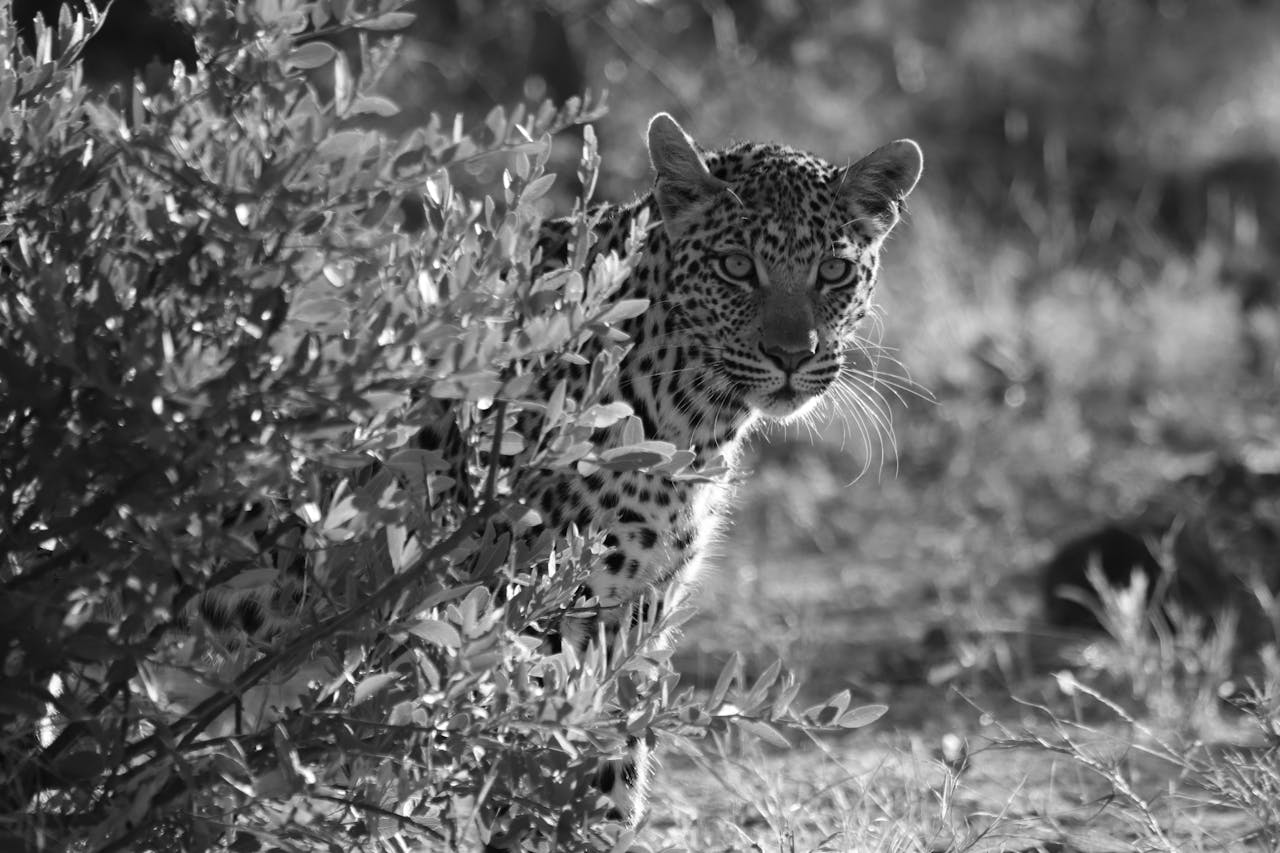
Tracking leopard in Africa is very different from tracking most other dangerous game species. Mature toms are nocturnal, highly territorial, exceptionally cautious, and capable of moving through thick bushveld almost without leaving a visible sign behind. For many hunters pursuing African leopard hunts, success depends less on speed and more on patience, observation, and the ability to correctly interpret spoor, scent markings, alarm calls, drag marks, and bait-site activity across challenging African terrain.
Experienced Professional Hunters and trackers understand that leopard tracking is rarely about simply following footprints through the sand. Instead, successful tracking involves reading subtle signs within the bush to determine how recently a leopard passed through the area, whether the cat is actively patrolling its territory, and how comfortable it feels approaching bait sites or water sources. Wind direction, terrain, competing predators such as hyenas, and even the behavior of birds and baboons can all reveal valuable information during dangerous game hunts in Africa.
Unlike many plains game hunts where animals move predictably in herds across open country, leopard movement patterns are often deliberate, cautious, and highly unpredictable. Mature toms frequently circle bait sites from downwind, avoid open approaches, and disappear into thick cover at the slightest indication of danger. Understanding these behaviors is one of the main reasons tracking leopard remains one of the most respected and challenging experiences in African hunting safaris.
[DYNAMIC-BLOGTABLEOFCONTENT]
Why Leopards Are So Difficult to Track
Leopards are widely regarded as one of the most elusive animals involved in African hunting safaris. Unlike herd animals that move predictably across open terrain, leopards are solitary predators that rely heavily on stealth, caution, and their ability to remain unseen within thick cover. Mature toms in particular often patrol large territories under the cover of darkness, moving silently through river systems, rocky hillsides, mopane bush, and dense vegetation while leaving surprisingly little visible sign behind.
One of the greatest challenges during a leopard hunt is the animal’s unpredictable behavior. A leopard may use the same game trail consistently for several nights before suddenly changing its route entirely after detecting unfamiliar scent, vehicle movement, human activity, or pressure from competing predators such as hyenas and lions. Experienced trackers therefore spend significant time studying spoor patterns, territorial markings, bait activity, and movement corridors before determining whether a mature tom is actively working an area.
Leopards are also exceptionally intelligent around bait sites and frequently approach cautiously from downwind while remaining hidden in thick vegetation. Many mature toms will circle an area multiple times before committing to the bait, sometimes watching silently from cover for extended periods before revealing themselves. This cautious behavior is one of the reasons patience and bush awareness are so important during dangerous game hunts in Africa.
Terrain and weather conditions can make tracking even more difficult. Wind may erase spoor overnight, rain can wash away fresh tracks entirely, and hard or rocky ground often leaves little visible evidence of movement. In thick bushveld or riverine habitat, trackers may rely more heavily on subtle disturbances such as bent grass, drag marks, scent sprays, alarm calls from baboons or antelope, and scavenger activity to determine whether a leopard is nearby.
For many Professional Hunters and trackers, successful leopard tracking is therefore less about physically following tracks and more about understanding how mature toms behave within their territory. This combination of patience, observation, and bush interpretation is one of the main reasons leopard hunting continues to be regarded as one of Africa’s most respected dangerous game pursuits.
Reading Leopard Spoor and Bush Sign
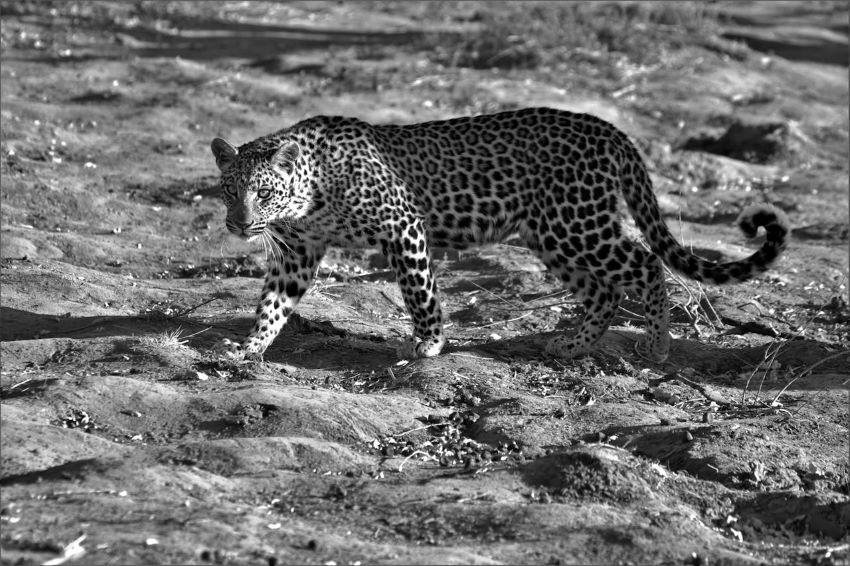
Reading leopard spoor requires patience, attention to detail, and an understanding of how these elusive predators move through different environments. Unlike herd animals that leave heavily used game paths and obvious movement patterns, leopards often travel alone through thick cover, dry riverbeds, rocky outcrops, and dense bushveld while leaving surprisingly subtle signs behind.
Trackers will often study the depth, direction, freshness, and spacing of spoor to determine whether a leopard is actively patrolling its territory or simply passing through an area. Fresh spoor found early in the morning may indicate that a mature tom has recently returned to a bait site or water source during the night, while older tracks exposed to wind, heat, or insect activity may suggest movement from the previous evening.
Compared to tracking lions or even animals pursued during Cape buffalo hunts, leopard spoor is often far more difficult to follow consistently across mixed terrain. Lions typically move in more visible patterns and leave larger tracks that are easier to identify in sandy conditions, while buffalo frequently disturb vegetation and leave obvious signs of herd movement behind them. Leopards, however, can move silently through thick bush while barely disturbing the surrounding environment.
Because of this, experienced Professional Hunters and trackers rarely rely on spoor alone. Broken branches, scent sprays, scrape marks beneath trees, drag marks from cached kills, alarm calls from baboons or antelope, and scavenger activity around bait sites can all reveal important clues about leopard presence and movement within the area.
Wind direction also plays a major role when interpreting leopard behavior. Mature toms frequently approach bait sites cautiously from downwind while avoiding open terrain and heavily traveled roads. In some cases, trackers may identify a leopard’s preferred movement corridor simply by studying repeated spoor patterns near river crossings, dry creek beds, or shaded bush lines over several consecutive days.
This ability to interpret subtle bush signs rather than simply following footprints is one of the main reasons leopard tracking remains one of the most respected skills when hunting in Africa.
How Professional Trackers Read Leopard Movement
Leopard trackers do far more than simply follow footprints through the sand. During professional African leopard hunts, trackers constantly interpret subtle changes within the surrounding environment to determine how recently a leopard moved through the area, whether the animal was relaxed or cautious, and how likely it is to return to nearby bait sites or travel corridors.
For many American hunters visiting Africa for the first time, one of the biggest surprises is how heavily dangerous game safaris rely on local trackers and bush interpretation rather than long-range glassing or spotting game across open country. Leopard tracking often involves slowly reading small disturbances in the environment — bent grass, faint spoor impressions, territorial scrape marks, drag signs from cached kills, disturbed dust along roads, and alarm calls from baboons or antelope hidden deep within thick cover.
Professional Hunters and trackers will also study how a mature tom leopard uses wind direction, shade, terrain, and cover throughout its territory. In some areas, leopards consistently move along dry riverbeds or rocky ridges where spoor remains protected from wind, while in dense bushveld they may avoid roads entirely and circle bait sites cautiously from downwind before revealing themselves.
One of the more difficult aspects of tracking leopard in Africa is determining the freshness of spoor. Early morning tracks with sharp edges, loose dust displacement, and minimal insect disturbance may indicate that the leopard passed through only hours earlier. Older tracks exposed to direct sunlight, wind, rain, or scavenger movement can quickly become unreliable and may lead hunters far away from the leopard’s current location.
Unlike some dangerous game species that leave obvious signs of movement behind them, mature tom leopards are masters of moving silently through thick bush while revealing very little evidence of their presence. This is one of the reasons experienced leopard trackers are so highly respected.
Why Mature Tom Leopards Are So Difficult to Hunt
Mature tom leopards are widely regarded as some of the most intelligent and cautious animals encountered during African leopard hunts. Unlike younger males that may approach bait aggressively or move carelessly through an area, older toms often survive for years by avoiding unnecessary risks, remaining highly aware of their surroundings, and adapting quickly to pressure from humans, vehicles, competing predators, and changing environmental conditions.
One of the reasons mature toms are so difficult to track is their unpredictable movement patterns. A dominant leopard may patrol the same river system or game trail consistently for several nights before suddenly altering its route after detecting unfamiliar scent, excessive vehicle movement, or human disturbance near a bait site. Experienced Professional Hunters therefore pay close attention to how confidently a leopard approaches bait, how frequently it returns, and whether its spoor suggests relaxed or cautious behavior within the area.
Older toms also tend to use terrain intelligently to remain concealed. In thick bushveld or mountainous country, mature leopards frequently move along shaded drainage lines, rocky outcrops, dry riverbeds, or dense vegetation corridors where visibility is poor and spoor remains protected from wind and direct sunlight. Some toms intentionally avoid open roads or heavily used game trails altogether, making tracking considerably more difficult even for experienced leopard trackers.
For many American hunters visiting Africa for the first time, one of the more surprising aspects of dangerous game hunting in Africa is how patient leopard hunting can become once a mature tom is located within an area. It is not uncommon for hunters and trackers to spend several days monitoring bait sites, checking spoor at first light, and waiting silently in blinds while a cautious tom circles the area without fully committing to the bait.
Mature leopards are also highly sensitive to pressure around bait sites. A tom that detects human scent, unusual movement, vehicle noise, or changes within the surrounding environment may disappear from the area entirely for several days before cautiously returning after dark. This is one of the reasons experienced leopard hunting safaris rely so heavily on patience, wind awareness, careful bait placement, and the ability to interpret subtle changes in leopard behavior over time.
Unlike many other dangerous game species, mature tom leopards rarely offer predictable opportunities. Their combination of stealth, intelligence, caution, and territorial awareness is one of the main reasons leopard hunting continues to be regarded as one of the most respected and mentally demanding dangerous game pursuits in Africa.
What Happens When Trackers Lose Spoor
Even under ideal conditions, experienced trackers do not follow leopard spoor continuously for hours without interruption. Wind, rocky terrain, dry ground, thick vegetation, livestock movement, rain, and overlapping animal tracks can all cause spoor to disappear unexpectedly, forcing trackers and Professional Hunters to slow down and reassess the situation carefully.
In many areas of Africa, mature tom leopards deliberately move through terrain that makes tracking difficult. Rocky hillsides, hard-packed roads, dry riverbeds, and thick bushveld often leave little visible evidence behind, particularly once temperatures rise and wind begins disturbing loose dust or sand. In some cases, a leopard may intentionally circle back along its own tracks or move cautiously through shaded cover to avoid detection near bait sites or water sources.
When spoor is lost, experienced trackers rarely panic or continue moving blindly through the bush. Instead, they will often return to the leopard’s last confirmed track and begin slowly searching nearby terrain for subtle disturbances such as bent grass, displaced stones, scent sprays, scrape marks, drag signs, or fresh movement from scavengers and prey species. Alarm calls from baboons, impala, or monkeys can also provide valuable clues about a leopard’s direction of travel within thick cover.
During leopard hunts, trackers frequently work together while reading the surrounding environment from multiple angles. One tracker may remain focused on spoor along the ground while another studies likely movement corridors ahead, particularly near drainage lines, river crossings, shaded bush, or game trails leading toward bait sites. This teamwork becomes especially important when following mature toms through difficult terrain where spoor may only appear briefly before disappearing again.
For many hunters, losing spoor is one of the moments that truly reveals the patience and experience required when hunting leopard. Leopard tracking is rarely a straightforward process, and even experienced teams may spend hours relocating subtle signs before confidently determining the leopard’s new direction of movement. This uncertainty and constant problem-solving are part of what makes tracking leopard one of Africa’s most respected dangerous game hunting experiences.
Final Thoughts
Tracking leopard in Africa is as much about understanding the bush as it is about understanding the animal itself. Every fresh spoor impression, alarm call, scent marking, and disturbed patch of ground tells part of the story, but interpreting those signs correctly requires experience, patience, and an intimate knowledge of how mature tom leopards behave within their territory.
For many hunters, the true challenge of guided leopard hunting safaris lies not simply in seeing a leopard, but in appreciating the level of discipline, fieldcraft, and teamwork required long before a shot opportunity ever presents itself. From reading movement corridors and monitoring bait activity to adapting when spoor disappears entirely, leopard tracking remains one of the most mentally demanding experiences in African hunting.
Hunters wanting to learn more about realistic safari preparation and bait-site strategies should also explore our guide to professional leopard hunting safaris, while those preparing for dangerous follow-up situations can review our detailed leopard shot placement guide for additional insight into ethical shooting opportunities during African dangerous game hunts.
Author
Pierre van Wyk is the co-founder of Game Hunting Safaris and has spent years working alongside experienced Professional Hunters and trackers throughout Africa’s leading dangerous game regions. Having participated in leopard, buffalo, and plains game safaris across multiple African countries, Pierre focuses on realistic hunting preparation, ethical safari practices, and the fieldcraft involved in traditional African hunting experiences.