
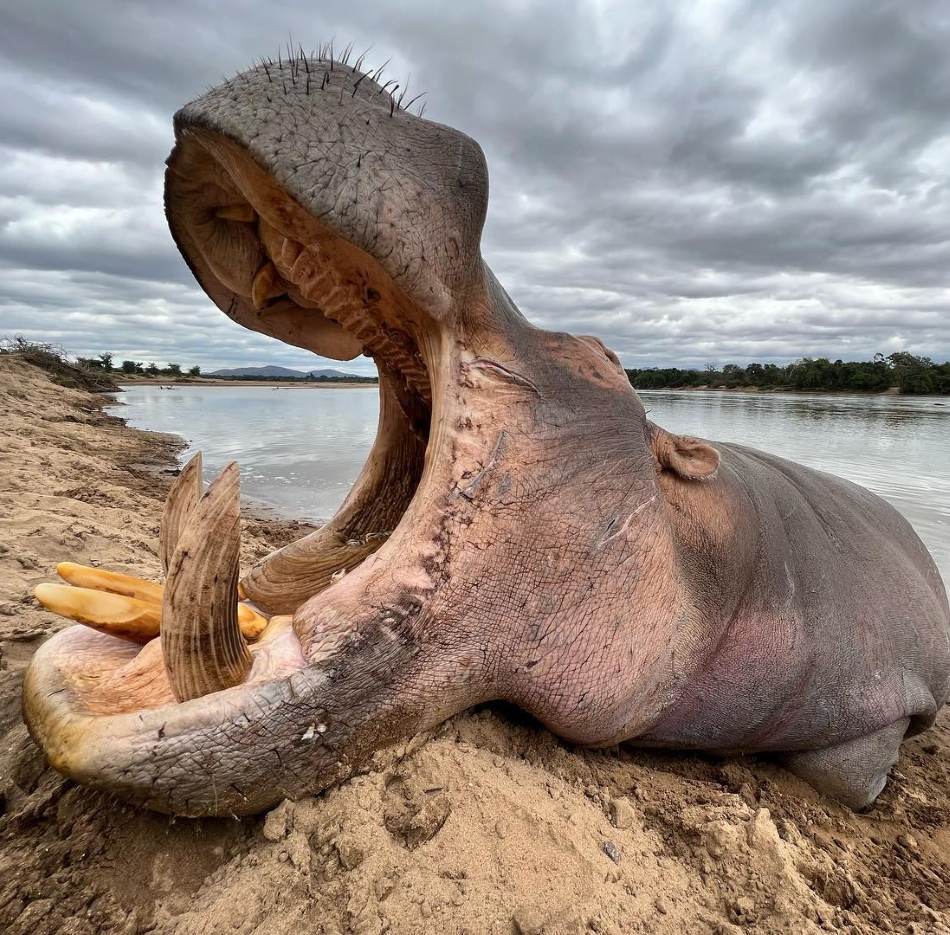
A hippo standing on dry ground may be the same animal you were watching in the water the day before, but hunting him there can be a different proposition.
Around water, much of a hippo hunt can involve glassing and watching. You may spend hours looking at a pod, waiting for animals to surface and trying to identify a mature bull before you get a shot opportunity.
Once the hunt moves onto land, some of that changes.
Now there may be tracks to follow. The bull may be moving between feeding areas and water, lying in thick cover or already heading back towards the river when you find him. Instead of watching several hippos and deciding which one to hunt, the challenge may simply be finding a suitable mature bull on land in the first place.
The terrain matters too.
A hippo standing on an open riverbank is one thing. Following tracks into thick brush where visibility may be measured in yards is another. That doesn't automatically make hunting a hippo on land better, more difficult or more exciting than hunting one in water.
It's simply a different hunt.
And if taking a hippo on land is important to you, that's something worth discussing with the outfitter before you book. Some hunting areas provide better opportunities for it than others, and there's an important difference between booking a hunt where hippos are regularly hunted on land and hoping the right bull happens to leave the water during your safari.
This article looks at what changes when a hippo hunt moves from water to land, and what you should understand before choosing that kind of hunt.
Finding a Hippo on Land Is Often the First Challenge
Wanting to hunt a hippo on land and finding the right hippo on land are two different things. You cannot simply make a mature bull leave the water because you're ready to hunt him.
Hippos regularly move onto land to feed and use established paths between the water and their feeding areas. In some hunting areas, those movements are well known. Local trackers and professional hunters may know where hippos commonly leave the river, which paths are being used and where animals have been feeding.
Fresh tracks, dung and feeding sign can tell the hunting team that hippos have been moving through an area.
What they cannot guarantee is that the mature bull you're looking for will still be there when you arrive. That makes hunting a hippo on land much more opportunistic than some hunters may expect.
A bull might leave the water regularly in a particular area, but his movements can change. He may return to the water before daylight, feed somewhere different or spend the day in cover where finding him becomes difficult. Another hippo may use the same paths, so fresh tracks don't necessarily mean you've found the bull you want to hunt.
This is where local knowledge becomes particularly valuable.
A PH and trackers who spend time in the area may know that a particular bull regularly leaves a certain stretch of river, uses the same general feeding area or sometimes remains away from the water after sunrise. That doesn't put the bull there on demand, but it gives the hunting team somewhere sensible to start looking. The hunting area makes a difference.
In one area, hippos may regularly move onto open floodplains or feeding areas where they can be located. Somewhere else, they may leave the water and disappear into thick reeds, making a land opportunity harder to find.
So if hunting a hippo on land is important to you, don't only ask whether hippos come onto land. Of course they do.
A much better question is:
“How often do you realistically get an opportunity to hunt a mature bull on land in this area?”
There's a difference between an area where the PH regularly hunts hippos this way and one where a bull on land is simply a good opportunity if it happens.
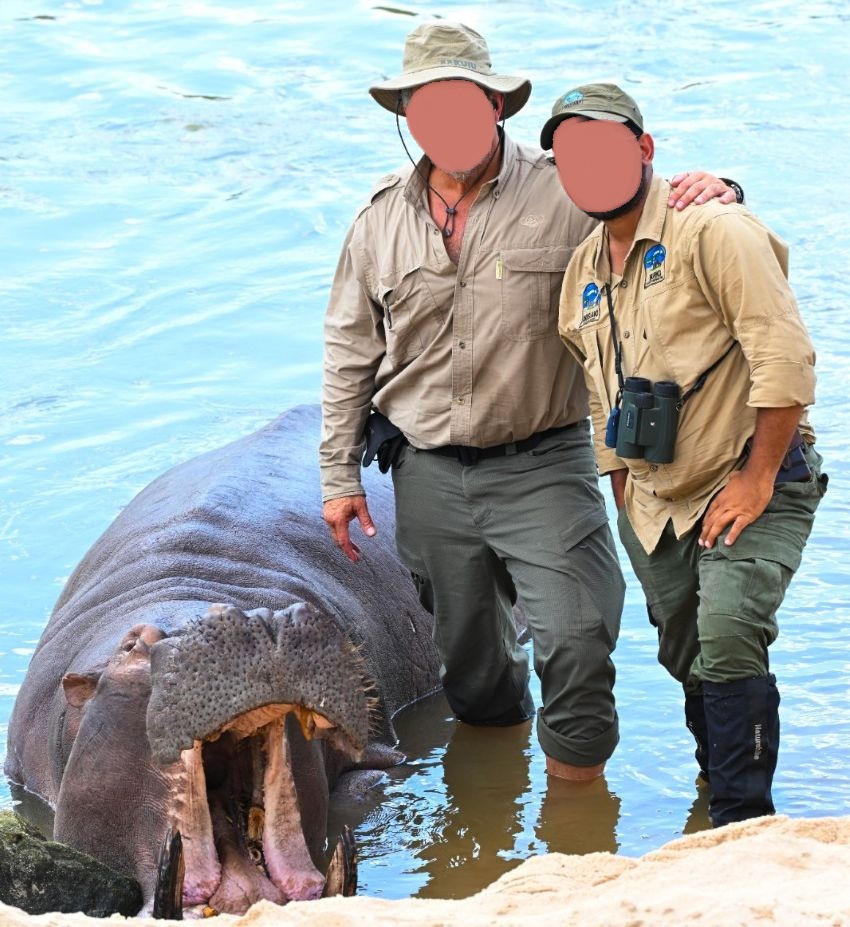
Is It Harder to Select the Right Hippo on Land?
Finding a hippo on land doesn't necessarily mean you've found a hippo you should hunt.
Around water, the PH may have time to watch a pod, identify individual animals and compare several hippos before deciding whether there is a suitable mature bull among them.
On land, that opportunity is different.
A bull feeding on an open bank may give the hunting team plenty of time to look at him. Find the same animal in thick reeds or riverine vegetation and you may only see parts of him at a time. Establishing his sex, age and trophy quality is more difficult, particularly if he is moving or feeding through cover.
There is another consideration that has nothing to do with trophy quality. You need to know what is around him.
When hippo hunting in Namibia's Caprivi, hippos may feed along riverbanks where you cannot necessarily see every animal nearby. A bull that appears to be alone may have other hippos close to him that are hidden by reeds or cover.
Bumping into another bull is one thing. Unexpectedly getting between a cow and calf at close range is a situation the hunting team wants to avoid.
Hippos may not be the only animals the hunting team needs to keep an eye on. In many African river systems, crocodiles occupy the same water and riverbanks. When you're moving quietly through reeds or working along the edge of the water, knowing what's around you matters for more than simply finding the bull.
The PH may therefore spend time watching the animal, checking the surrounding cover and trying to establish where the other hippos are before deciding whether to continue the stalk.
And even after all of that, the bull still must be the right one. If you've booked a hunt with specific trophy expectations, finding a mature hippo on land shouldn't suddenly change those expectations simply because you've finally found one away from the water.
After spending hours looking for a bull on land, it can be tempting to think, there he is. But the PH may look at him and decide he's too young, not the bull you're looking for or simply in a position where continuing the hunt doesn't make sense.
Finding the opportunity is only the first part. The right bull still needs to be in the right situation.
The Stalk is Different on Land
Once a suitable bull has been found on land, getting into position can be different from watching hippos around water.
How different depends on where you find him.
A bull feeding on an open floodplain may be visible from some distance. One moving through reeds or riverine cover may only appear for short periods before disappearing again. The wind matters, but so does the bull's position in relation to the water.
A hippo away from the river may already be working his way back towards it. If he reaches the water before the hunting team gets into position, the opportunity you spent hours looking for may be over.
There is another reason to know exactly where the water is.
A hippo's first reaction to trouble may be to head straight back to it.
In that sense, the hippo is a coward first. He would rather get back to the safety of the water than pick a fight with the hunting team. The problem starts when you're standing between him and where he wants to go.
Whether the bull is deliberately coming for you or simply trying to reach the water becomes academic when several thousand pounds of hippo are heading in your direction.
Give him a route to the water that doesn't involve coming through you.
Cover can work both ways. It may allow the hunting team to approach without being seen, but the same vegetation can make it difficult to keep track of the bull or see what lies between you and him.
The PH will also be looking for a clear shooting position.
One advantage of finding a hippo standing on land is that the hunter may be offered shot presentations that aren't available when most of the animal is submerged. A broadside bull, for example, can provide the opportunity for a body shot rather than the head or brain shot commonly associated with hippos in water.
That doesn't mean the shot will necessarily be easy. Vegetation, the angle of the animal and what he's doing can all determine whether there is a shot at all. Sometimes the better decision is simply to wait.
And on a land hunt, waiting too long may mean watching the bull disappear back towards the water.
Can You Specifically Book a Hippo Hunt on Land?
If taking your hippo on land is an important part of the hunt you want, tell the outfitter before you book. Some hunting areas provide much better opportunities for it than others.
The type of water and surrounding terrain matter.
River systems with feeding areas, floodplains and well-used hippo paths can provide different opportunities from hunting around a large permanent body of water such as Lake Kariba.
Hippo hunting in Zambia, for example, can take place around major river systems where the movements of hippos between water and feeding areas may be well known.
Seasonal conditions can change those opportunities as well.
During dry periods, falling water levels can concentrate hippos into the remaining pools and deeper sections of rivers. More animals sharing less water can also increase competition between bulls and change where hippos are moving and feeding.
In some areas, those conditions may improve the chances of finding a suitable bull away from the water. It still doesn't put a hippo on land on demand.
Nor does it mean hippos can't be hunted on land around large lakes such as Kariba. They can. The opportunity simply develops differently depending on the area, conditions and time of year. If hunting your bull on land really matters, ask how much time the outfitter recommends allowing for it.
You may spend days looking for the right opportunity and eventually find a suitable mature bull back in the water. At that point, you and the PH may have a decision to make: continue looking for a land opportunity or hunt the bull you've found.
That's a conversation worth having before the safari, not after several hunting days have already passed. There's also an important difference between telling an outfitter:
“I'd really like to hunt my hippo on land.”
and:
“I only want to take my hippo on land.”
The first is a preference.
The second may determine which hunting area and safari you should book in the first place.
Thinking About Hunting Hippo in Africa?
A hippo hunt on land isn't necessarily better than hunting one around water. It's simply a different way of hunting the same animal, and the area, conditions and movements of the hippos will ultimately determine what opportunities are available.
If taking a bull on land is part of the experience you're looking for, make that clear when you're planning the safari. The right hunting area, and a PH who knows it well, can make all the difference.
But like so much of big game hunting in Africa, you can't control everything. Sometimes it's simply about hunting the hippo the bush gives you.
You can explore our African hunting trips to compare available hunts and destinations, or talk to us about the kind of hippo hunt you have in mind.
Frequently Asked Questions About Hunting Hippo on Land
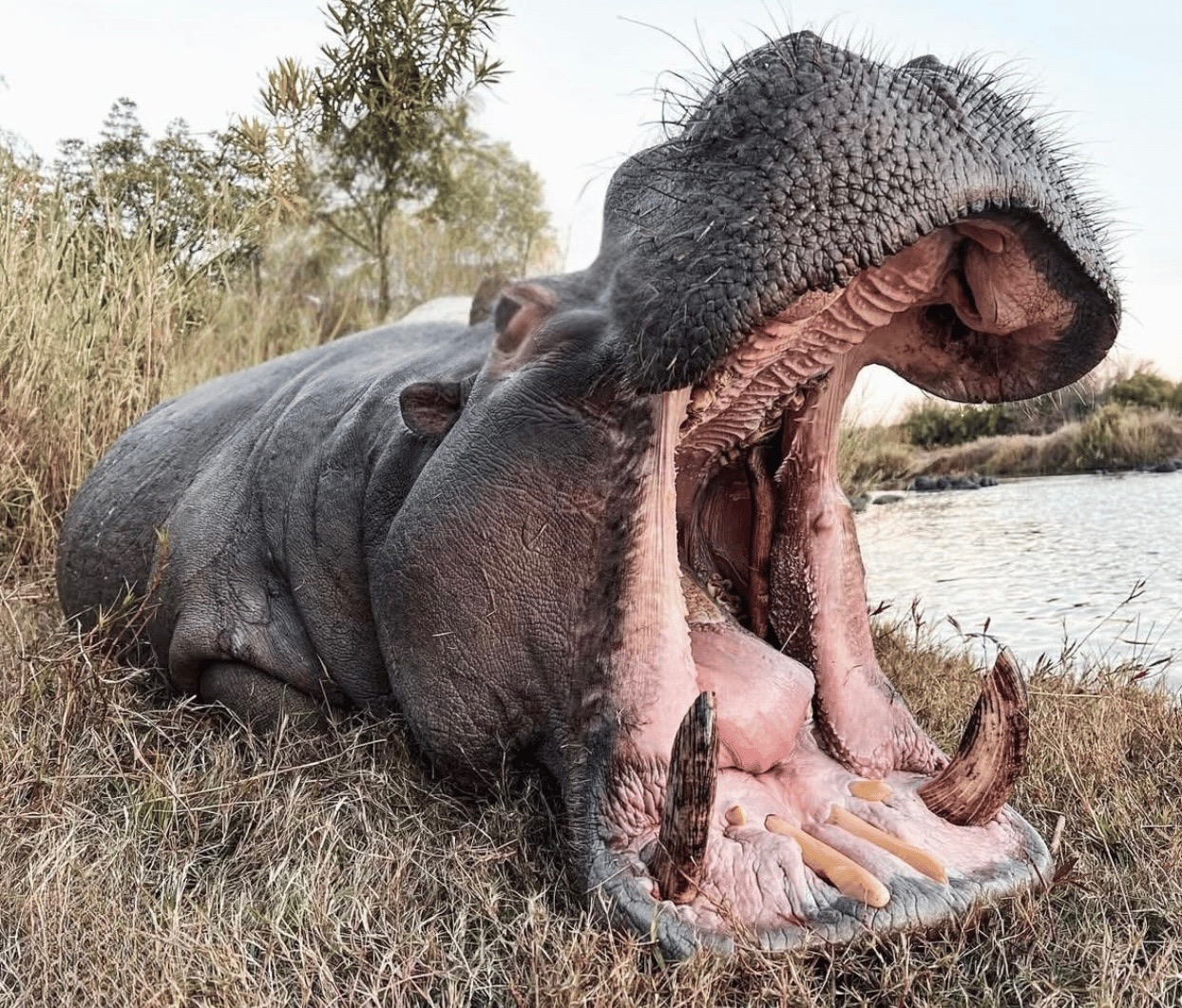
Is hippo shot placement different when hunting on land?
It can be. A hippo standing on land may offer a broadside body shot that isn't normally available when most of the animal is submerged. The correct shot will depend on the animal's position, angle and the opportunity presented.
For a closer look at the different options, see our Hippo Shot Placement guide.
Is hunting a hippo on land more dangerous than hunting one in water?
It presents different risks.
On land, the hunting team may be moving through thick cover with limited visibility, while other hippos could be nearby. The bull's position in relation to the water also matters, particularly if the hunting team is between him and the route he wants to use to get back to it.
That's one reason the PH needs to understand what is around the bull before continuing the stalk.
What time of day are hippos most likely to be found on land?
Hippos generally leave the water to feed at night, so early morning can provide an opportunity to find animals still away from the water or moving back towards it.
That doesn't mean every hunting area works the same way. Water levels, feeding areas, cover, season and the movements of individual animals can all affect where a bull is found during hunting hours.
Can I book a hunt where my hippo must be taken on land?
You can tell the outfitter that taking your hippo on land is a condition of the hunt, but that may affect which hunting areas are suitable and how much time should be allowed.
A land opportunity cannot simply be guaranteed because hippo movements and conditions can change. If hunting the bull on land is important to you, make that clear before you book the safari.
About the Authors
Pierre and Tamlyn van Wyk are the founders of Game Hunting Safaris and have more than 50 years of combined hunting experience. Both have hunted hippo in the Caprivi, along with other dangerous game species across southern Africa. Their first-hand hunting experience helps shape the practical advice and hunting information published on Game Hunting Safaris.