

Free-Range Leopard Hunting Safari in Tanzania | 14-Day Licenc
Booking Season: 2026
Hunt Difficulty: Difficult

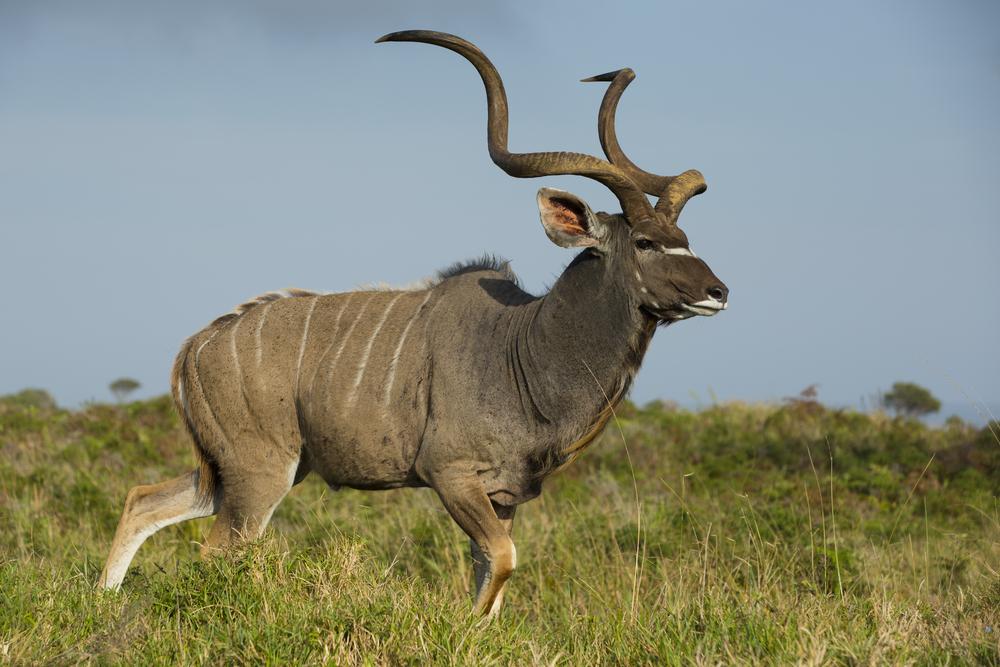
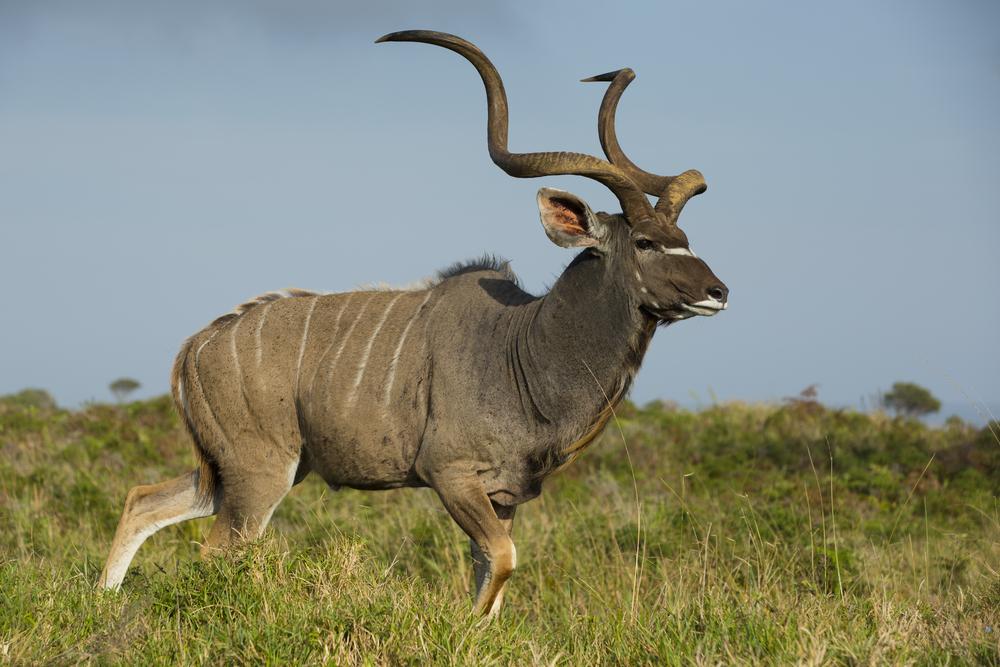
Few African antelope embody the spirit of a traditional East African safari quite like the Greater Kudu. Tall, elegant, and notoriously elusive, these magnificent spiral-horned antelope have captivated hunters for generations. Their towering horns, alert nature, and uncanny ability to disappear into seemingly open country have earned them a reputation as one of Africa's most respected plains game trophies.
Tanzania occupies a unique position among Greater Kudu hunting destinations. While countries such as Namibia and Botswana are often associated with trophy size, Tanzania offers something entirely different: the opportunity to pursue Greater Kudu within some of Africa's last great wilderness hunting areas. Here, the hunt unfolds across vast concessions where buffalo, lion, leopard, elephant, and a remarkable variety of plains game share the same landscape.
Tanzania is also one of the few African countries where hunters may encounter both Greater Kudu and Lesser Kudu. While both species are highly prized spiral-horned antelope, they occupy different habitats and provide distinctly different hunting experiences. This page focuses specifically on Greater Kudu hunting in Tanzania.
Unlike many kudu hunts elsewhere in Africa, a Tanzanian safari is rarely focused on a single species. Greater Kudu are often pursued as part of a classic East African hunting experience that combines challenging walking, diverse wildlife, and immense unfenced hunting blocks stretching across hundreds of thousands of acres.
The landscapes themselves add to the appeal. Miombo woodland, rolling hills, river systems, and remote wilderness areas create ideal habitat for mature kudu while providing hunters with a safari experience that feels increasingly rare in the modern world. Days are spent tracking game, glassing distant hillsides, and covering country where wildlife still moves largely as it has for centuries.
For hunters seeking more than a trophy alone, Greater Kudu hunting in Tanzania offers something special. It is not simply about horn length or record books. It is about experiencing Hunting in Tanzania while pursuing one of Africa's most iconic antelope. Many hunters researching Greater Kudu Hunts quickly discover that Tanzania offers one of the most authentic safari experiences remaining on the continent.
Available Greater Kudu Hunts
Free-Range Leopard Hunting Safari in Tanzania | 14-Day Licenc
Booking Season: 2026
Hunt Difficulty: Difficult
Hunt African Plains Game: Roan, Sable & Kudu in Tanzania
Booking Season: 2026
Hunt Difficulty: Difficult
Hunting Safari in Tanzania Plains Game in Masailand 7 Days 1:1
Booking Season: 2026
Hunt Difficulty: Moderate

Tanzania Hunting Safari 4 x Species Spiral Horn Hunt
Booking Season: 2026
Hunt Difficulty: Difficult
Tanzania offers a style of Greater Kudu hunting that has become increasingly difficult to find elsewhere in Africa. While some destinations are known primarily for trophy size, Tanzania has built its reputation on the quality of the overall safari experience.
A Greater Kudu hunt in Tanzania rarely takes place in isolation. Hunters pursuing kudu often find themselves sharing the landscape with buffalo, elephant, lion, leopard, sable, roan, and a remarkable variety of East African plains game. Every track in the dust and every distant movement on a hillside carries the possibility of something unexpected.
The country's hunting concessions are measured in hundreds of thousands of acres rather than small fenced properties. Wildlife moves naturally across vast ecosystems, creating a genuine wilderness experience where the outcome of the hunt is never guaranteed.
Much of Tanzania's Greater Kudu habitat lies within the famous miombo woodlands that dominate large portions of southern and western Tanzania. These rolling landscapes of woodland, river systems, and broken hills provide ideal cover for mature kudu while creating the type of terrain that rewards patient hunters willing to spend long hours on foot.
The hunt itself often becomes as memorable as the trophy. Days are spent tracking, glassing distant hillsides, and exploring country where signs of dangerous game are part of everyday life. Fresh buffalo spoor, elephant tracks crossing a road, or the distant call of a lion after dark all contribute to an atmosphere that feels distinctly East African.
This combination of wilderness, wildlife diversity, and traditional safari hunting is what makes Tanzania so special. A mature Greater Kudu may be the objective, but the experience extends far beyond a single animal.
In much of Tanzania, Greater Kudu and Cape Buffalo share the same rugged wilderness landscapes. As a result, many hunters pursuing Cape Buffalo Hunts quickly discover that a mature Greater Kudu makes one of the most rewarding additions to a traditional East African safari.
The two species require a remarkably similar style of hunting. Success is rarely achieved from a vehicle. Instead, hunters spend long days on foot tracking game through miombo woodland, glassing distant hillsides, and covering substantial distances across vast concessions.
A buffalo hunt may begin with fresh spoor crossing a sandy road at first light. Hours later, while searching for a herd, a mature kudu bull may appear on a distant slope before disappearing back into the woodland. Equally, hunters focused primarily on kudu often encounter buffalo sign throughout the day, a reminder that they are operating in genuine dangerous game country.
This overlap is one of the reasons Tanzania remains such a compelling destination. A safari can combine the excitement of pursuing Africa's Black Death with the challenge of hunting one of the continent's most elusive spiral-horned antelope.
Few safari combinations capture the spirit of Tanzania better than Cape Buffalo and Greater Kudu hunted across the same wilderness landscape. Days are spent walking, tracking, and hunting within vast wilderness concessions where the possibility of encountering exceptional animals remains very real.
One of the most rewarding aspects of a Greater Kudu safari in Tanzania is the remarkable variety of East African plains game that share the same landscape.
Unlike many Southern African hunting destinations where species distributions are relatively predictable, Tanzania offers hunters the opportunity to pursue animals found in very few other countries. A safari planned around Greater Kudu often develops into a much broader East African hunting experience.
Many of Tanzania's premier kudu areas also support excellent populations of Lesser Kudu Hunts. Although closely related to the Greater Kudu, Lesser Kudu occupy different habitats and present a completely different hunting challenge. Pursuing both species during the same safari provides a rare opportunity to hunt two of Africa's most beautiful spiral-horned antelope.
The open woodlands and savannahs of Tanzania are also home to iconic East African species such as Fringe-Eared Oryx, a distinctive subspecies found primarily in East Africa. Their striking appearance and limited distribution make them a highly desirable addition to any safari.
Several of Tanzania's famous gazelle species may also be encountered throughout Greater Kudu country. These elegant antelope are among the animals that give an East African safari its unmistakable character, and hunters interested in these uniquely regional species often explore opportunities for Gazelle Hunts while planning their safari.
The same wilderness areas that support Greater Kudu frequently produce exceptional Roan Hunts, with mature bulls often encountered in the miombo woodlands and rolling savannahs of southern Tanzania. In some concessions, hunters may also have opportunities to pursue magnificent Sable Hunts, widely regarded as one of Africa's most striking and respected plains game trophies.
This diversity is one of Tanzania's greatest strengths. A Greater Kudu may be the original objective, but the opportunity to hunt several uniquely East African species during the same safari often transforms a memorable hunt into a truly exceptional African adventure.
Greater Kudu are widely distributed across several of Tanzania's premier hunting regions, particularly in the country's southern and central wilderness areas. While they may not occur in every concession, quality populations are found in a number of the same ecosystems that support Tanzania's renowned Cape Buffalo Hunting in Tanzania and exceptional plains game safaris.
Much of Tanzania's Greater Kudu habitat is associated with miombo woodland, a vast ecosystem characterized by rolling hills, scattered drainage lines, open woodland, and pockets of thicker cover. These landscapes provide kudu with the browse, security, and varied terrain they require while also creating ideal conditions for traditional spot-and-stalk hunting.
Areas within the greater Ruaha and Rungwa ecosystems have long been recognized for producing excellent Greater Kudu hunting opportunities. Here, hunters may spend days exploring remote country where kudu share the landscape with buffalo, sable, roan, elephant, and a remarkable variety of East African game species.
Part of the attraction lies in the sheer scale of the habitat. Hunting concessions often cover enormous areas, allowing wildlife to move naturally across the landscape. Mature kudu survive by using this terrain to their advantage, slipping between woodland, drainage systems, and broken hillsides where they can remain remarkably difficult to locate.
Unlike destinations where game is concentrated on smaller properties, Tanzania's Greater Kudu are hunted within vast wilderness ecosystems that still retain much of their original character. This creates a style of hunting that rewards patience, persistence, and a willingness to cover ground in search of a mature bull.
Long after the measurements have been recorded and the photographs packed away, it is often the landscape that remains firmly fixed in memory. Endless miombo woodland stretching to the horizon, fresh spoor crossing a sandy road at sunrise, and the feeling of hunting in a place that still feels genuinely wild are all part of what makes Tanzania such a special destination for Greater Kudu.
The miombo woodlands of Tanzania appear deceptively open at first glance. Visibility is often far greater than in thick thornveld, and many first-time visitors assume spotting a Greater Kudu should be relatively straightforward.
The kudu have other ideas.
Mature bulls are masters at using the landscape to their advantage. A fold in the terrain, a shallow drainage line, or a patch of thicker woodland can hide an animal that stands well over four feet at the shoulder. More than one hunter has watched a kudu disappear into country that seemed far too open to conceal anything.
This natural ability to blend into the environment is one of the reasons Greater Kudu have earned so much respect throughout Africa. Their grey coats mirror the colors of the woodland, while their tendency to remain motionless often allows them to go unnoticed until the final moment.
Miombo habitat also encourages a traditional style of hunting. Success often comes from covering ground, glassing carefully, and paying attention to the smallest signs of movement rather than simply searching for an obvious trophy animal. Patience and persistence are frequently rewarded.
When a mature bull finally appears standing among the woodland shadows, hunters quickly understand why Greater Kudu remain one of Africa's most admired plains game species.
A Greater Kudu hunt in Tanzania is rarely defined by the amount of time spent behind a rifle. Instead, it is often measured by the miles covered on foot and the country explored in search of a mature bull.
Days frequently begin before sunrise. By first light, hunters are already moving through the concession, searching roads, game trails, and drainage lines for fresh tracks. Once promising spoor is located, the pace of the day can change quickly. What begins as a simple track may lead several miles through woodland, across dry streambeds, and over rolling hills before the first glimpse of a kudu is ever seen.
The terrain itself becomes part of the challenge. Miombo woodland can appear deceptively open in places, only to conceal kudu within pockets of thicker cover or broken ground. Mature bulls know how to use every advantage available to them. They slip through drainage systems, disappear into shadows, and often seem to vanish into country that moments earlier looked impossible to hide in.
Unlike hunts where animals are frequently encountered from vehicles, Tanzania rewards persistence. Success often comes from staying with the track, continuing over the next ridge, and trusting the experience of the professional hunter when the spoor suddenly changes direction or enters thicker cover.
The distances covered can be surprising. Long walks, warm afternoons, and the occasional tsetse fly are all part of the experience. Yet these challenges contribute to what makes a Tanzanian safari so rewarding. Every sighting feels earned, and every opportunity with a mature Greater Kudu carries a sense of accomplishment that cannot be measured by horn length alone.
By the time a hunter finally settles into shooting sticks and studies the spirals of a mature bull, the trophy has already become much more than a set of horns. It represents the miles walked, the country explored, and the effort invested in one of Africa's most authentic hunting experiences.
Greater Kudu can be successfully hunted throughout Tanzania's hunting season, but conditions often become increasingly favorable as the dry season progresses.
As vegetation begins to thin and grasses become shorter, visibility improves throughout much of the miombo woodland. Hunters are able to glass greater distances, evaluate mature bulls more effectively, and spot movement that might otherwise remain hidden in thicker cover.
The cooler temperatures commonly experienced during the middle and latter parts of the season also make long days on foot more comfortable. Covering ground, following fresh spoor, and exploring the vast concessions that define Tanzania's hunting areas becomes a more enjoyable experience when the heat begins to ease.
That said, Greater Kudu have a remarkable ability to disappear regardless of the month on the calendar. Mature bulls survive because they understand their environment, use terrain to their advantage, and rarely make hunting easy.
In truth, the best time to hunt Greater Kudu in Tanzania is often whenever the opportunity arises. Exceptional bulls are taken throughout the season, and the quality of the safari itself is usually determined far more by the hunting area, the professional hunter, and the effort invested than by any specific date on the calendar.
After all, a mature Greater Kudu encountered deep within Tanzania's wilderness is a memorable sight in any month of the year.
Search from our range of Hunts across various popular destinations in Africa.

Book Your Hunt