
Among Africa’s many predator hunting safaris, few animals create the same level of fascination as the cheetah. Unlike lions feeding around bait sites or leopards slipping silently through thick bush after dark, cheetahs are built for daylight, speed, and constant movement across vast open landscapes. That difference sits at the heart of cheetah hunting in Namibia, where success depends on patience, visibility, timing and being prepared when a rare opportunity finally develops.
With Namibia remaining the only African country where regulated cheetah hunting is legally permitted, these dangerous game safaris have become highly specialized and increasingly sought after by international hunters looking for something genuinely different from a traditional African cat hunt. Success can never be guaranteed, and that uncertainty is part of what makes cheetah hunting so appealing. Long days spent glassing open terrain, covering enormous ranchlands, and searching for brief sightings of one of the world’s fastest land predators create a safari experience unlike almost anything else in Africa.
For hunters, the attraction goes beyond simply collecting another trophy. Free-range cheetah hunting in Namibia combines rarity, challenge, and unpredictability in a way few other predator safaris can match, particularly for hunters looking to experience a more opportunistic and realistic style of African hunting.
Why Daylight Movement Makes Cheetahs Difficult to Find
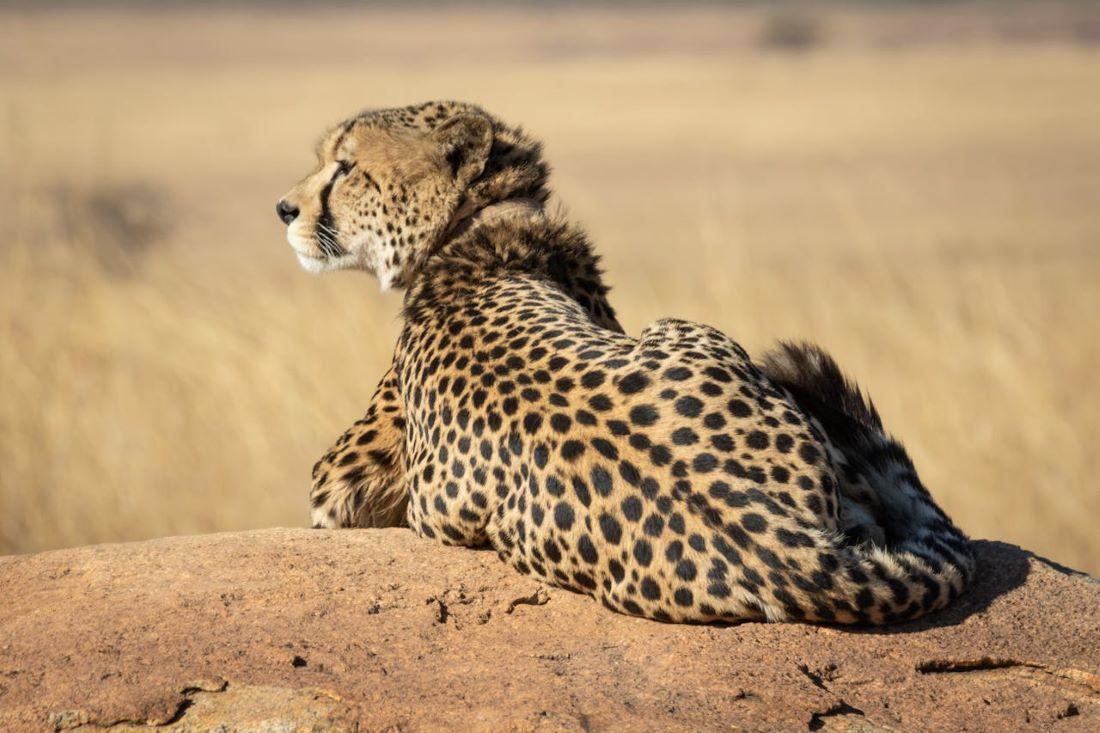
Unlike other African predators, cheetahs rely heavily on eyesight, open terrain, and constant movement to survive. They are primarily active during daylight hours and spend much of their time scanning open country from termite mounds, ridgelines, rocky outcrops, and elevated ground while searching for prey species moving across the plains.
This creates a very different hunting experience from traditional African leopard hunts, where bait sites and thick cover often play a much larger role. Free-range cheetah hunting is typically far more opportunistic, with hunters spending long hours glassing open terrain, covering extensive ranch country by vehicle, and watching carefully for brief sightings of movement in the distance.
Unlike leopards, cheetahs prefer feeding on fresh kills and seldom remain around bait sites for extended periods, which makes conventional baiting methods far less reliable during a cheetah safari. In some situations, hunters may monitor a recently disturbed kill in the hope that the cat briefly returns, but opportunities are often unpredictable and short-lived. Much of the hunt therefore revolves around visibility, patience, timing, and covering enough ground to eventually encounter a mature animal moving naturally through the landscape.
Part of what makes cheetahs especially cautious is that they are not only predators, but are also vulnerable to larger carnivores such as lions and hyenas. This constant pressure forces cheetahs to remain alert and unpredictable, often disappearing quickly once disturbed or pressured.
How Namibia’s Open Ranch Country Changes the Hunt
Few African hunting destinations offer the same combination of open terrain, large free-range ranches, healthy prey populations, and established hunting infrastructure as Namibia. Vast commercial ranchlands stretching across central and northern Namibia create ideal habitat for cheetahs, particularly in areas supporting strong populations of springbok and other plains game species.
For hunters, this terrain creates a safari experience built around visibility, patience, and covering ground rather than sitting stationary over bait. Much of the hunt involves covering open plains, dry riverbeds, and distant ridgelines while searching for movement in areas where cheetahs naturally move between livestock farmland and game ranches.
For international hunters planning a Namibia hunting safari, the country remains one of Africa’s most accessible destinations, with modern road networks, experienced professional hunters, and well-established outfitting operations across a wide variety of terrain. Many safari areas also allow hunters to combine predator hunting with broader plains game hunts, creating opportunities to pursue species such as springbok hunts and gemsbok hunts while covering productive free-range country where cheetahs naturally occur.
From thornveld and rocky hillsides to open savannah and semi-arid ranch country, Namibia’s diverse landscapes add significantly to the overall hunting experience and remain one of the major reasons why so many international hunters continue returning to the country for African predator and plains game safaris.
Cheetah Hunting Often Involves Traveling Beyond Namibia's Dangerous Game Areas
Hunters visiting Namibia for species such as buffalo hunts, hippo hunts, or crocodile hunts in the Caprivi region are often surprised to learn that most free-range cheetah hunting takes place much farther south across Namibia’s central ranch country and semi-arid plains.
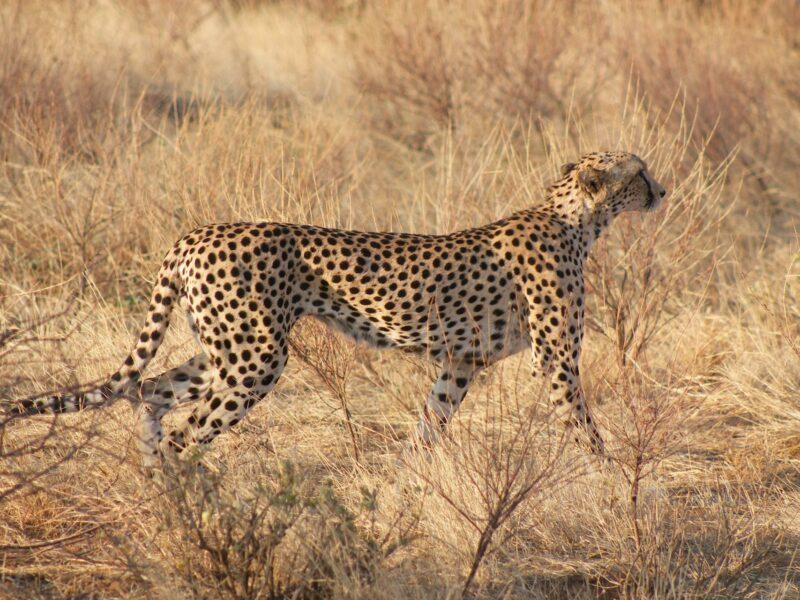
While the lush river systems and dense vegetation of the Zambezi region provide ideal habitat for dangerous game species, cheetahs are more commonly encountered across the open commercial farmland and expansive ranchlands of central and southern Namibia where visibility, prey movement, and open terrain better suit their hunting behavior.
For international hunters, particularly American hunters booking combination safaris, this can create a different style of hunting experience within the same trip. A safari may begin in the wetter northern regions pursuing dangerous game before shifting south toward more open country where long-range glassing, covering terrain by vehicle, and opportunistic predator encounters become part of the daily routine.
Long-Range Opportunities Leave Little Margin for Error
One of the biggest challenges during free-range cheetah hunting is the reality that opportunities often develop quickly and at considerable distance. Because cheetahs spend much of their time moving through open terrain and are extremely alert to pressure, hunters may only have a brief window to set up for a shot before the animal disappears into cover or moves out of range.
Unlike dangerous game hunted at close quarters, cheetah safaris in Namibia frequently involve longer shots across semi-arid plains, dry riverbeds, and open ranch country where stability and shot discipline become critically important. Many professional hunters recommend using tripods, bipods, or other steady shooting platforms whenever possible, particularly when visibility and mirage begin affecting longer-distance shooting later in the day.
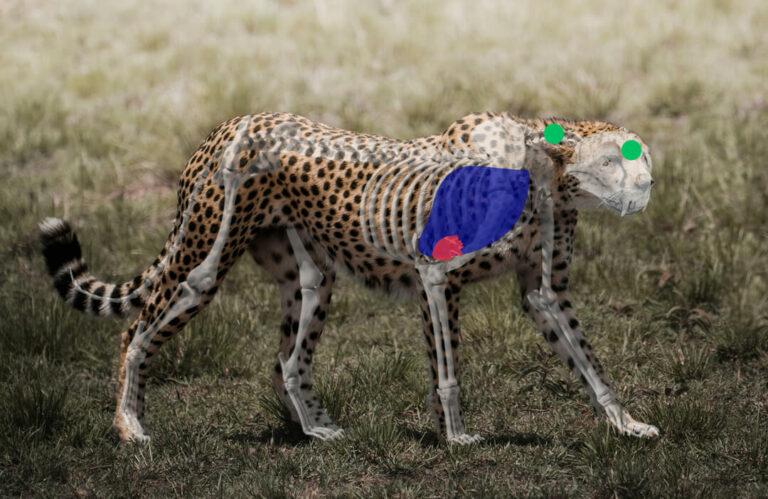
As with all predator hunting, ethical shot placement for hunting big cats in Africa remains essential. Because cheetahs are relatively light-framed animals with thin skin and limited body mass compared to larger dangerous game species, hunters should wait for a clear, stable opportunity rather than rushing difficult shots at moving animals.
Bow hunting is also legal in certain areas of Namibia, although most outfitters consider it an exceptionally challenging approach due to the opportunistic nature of most cheetah encounters and the difficulty of consistently getting within effective bow range in open terrain.
Why the Opportunity Never Becomes Predictable
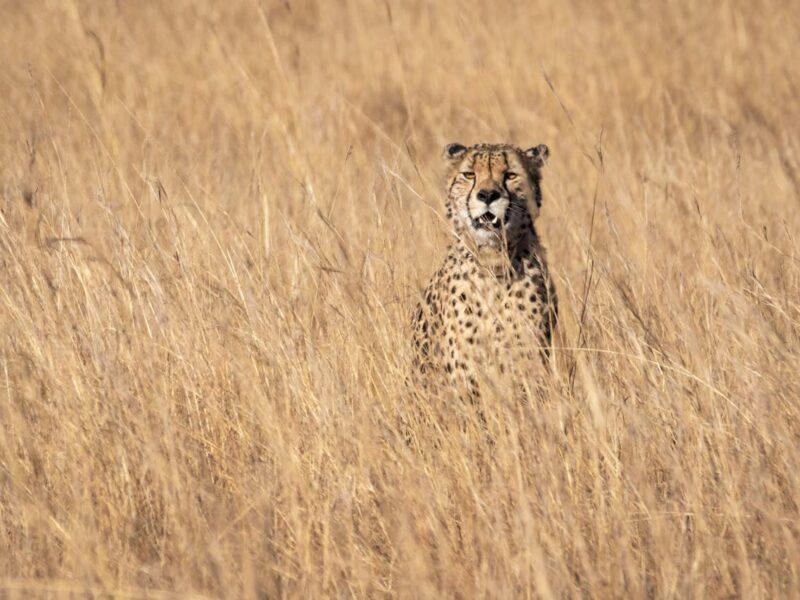
Few hunting opportunities match the uncertainty of a free-range cheetah safari in Namibia. Long days can be spent covering open country and glassing distant terrain before a brief sighting suddenly demands calm decision-making and accurate shooting.
Even in productive cheetah country, success can never be assumed. The cats move across enormous territories, sightings are fleeting and the circumstances required for a suitable opportunity may never come together. That unpredictability is what makes the hunt so different from more structured African predator safaris.
For hunters considering a cheetah opportunity as part of a broader plains game safari, our current African Hunting Trips provide a starting point for comparing destinations, available species and suitable hunting packages.
About the Author
Pierre van Wyk is the co-founder of Game Hunting Safaris and a lifelong African hunting enthusiast with extensive experience hunting across Namibia’s diverse landscapes. From pursuing buffalo, hippo, and elephant in the Caprivi and Zambezi regions to traveling through Bushmanland and Namibia’s vast central ranch country, Pierre has spent years exploring many of the country’s premier safari destinations firsthand. His experience with free-range African hunting safaris, dangerous game, and predator hunting across Southern Africa helps shape the realistic, experience-driven content published on Game Hunting Safaris.