Lion, Leopard & Buffalo Safari in Niassa
Booking Season: 2026
Hunt Difficulty: Difficult

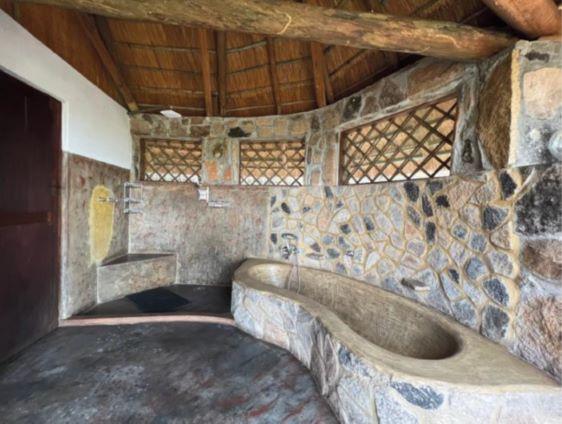
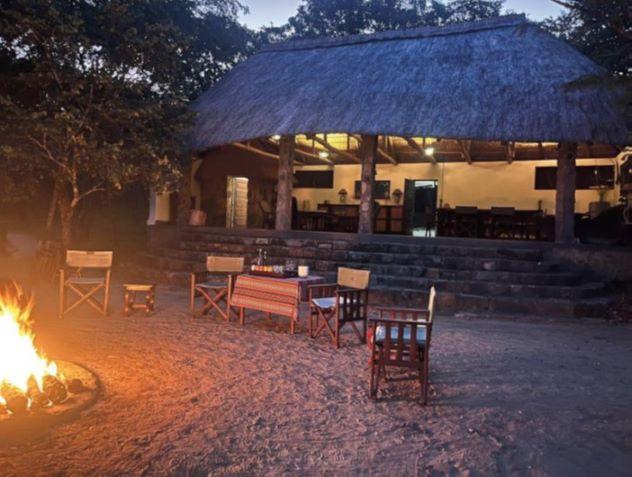
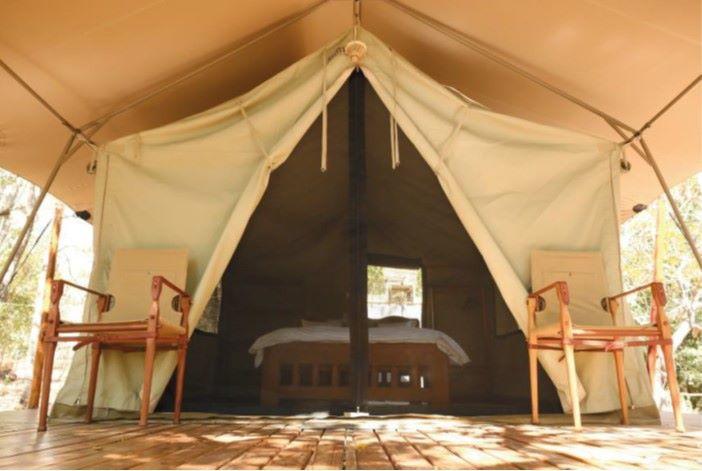
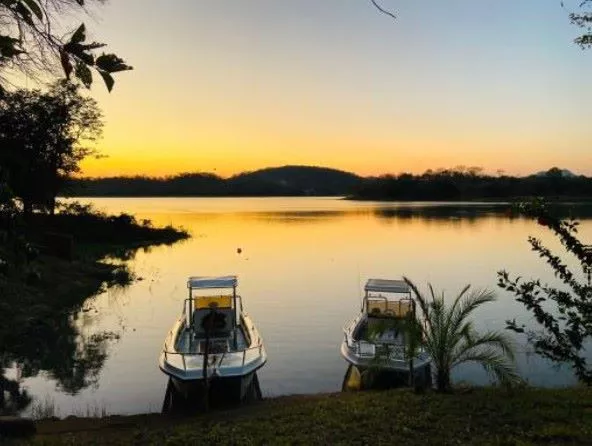
Luxury en-suite safari tents with hot showers, daily housekeeping, excellent meals, satellite internet, and all the comforts expected on an extended wilderness safari.
Vast unfenced miombo woodland, river systems, open dambos, and dense bush create classic free-range leopard habitat across one of Africa's largest wilderness areas.
| Fence Type: | Free-range |
| Nearest Airport Name: | Pemba Airport (POL), Mozambique |
| Transfer From Airport: | Yes |
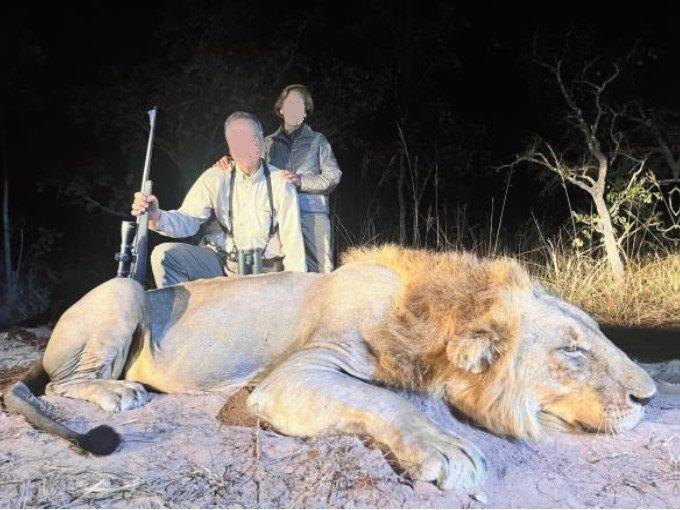
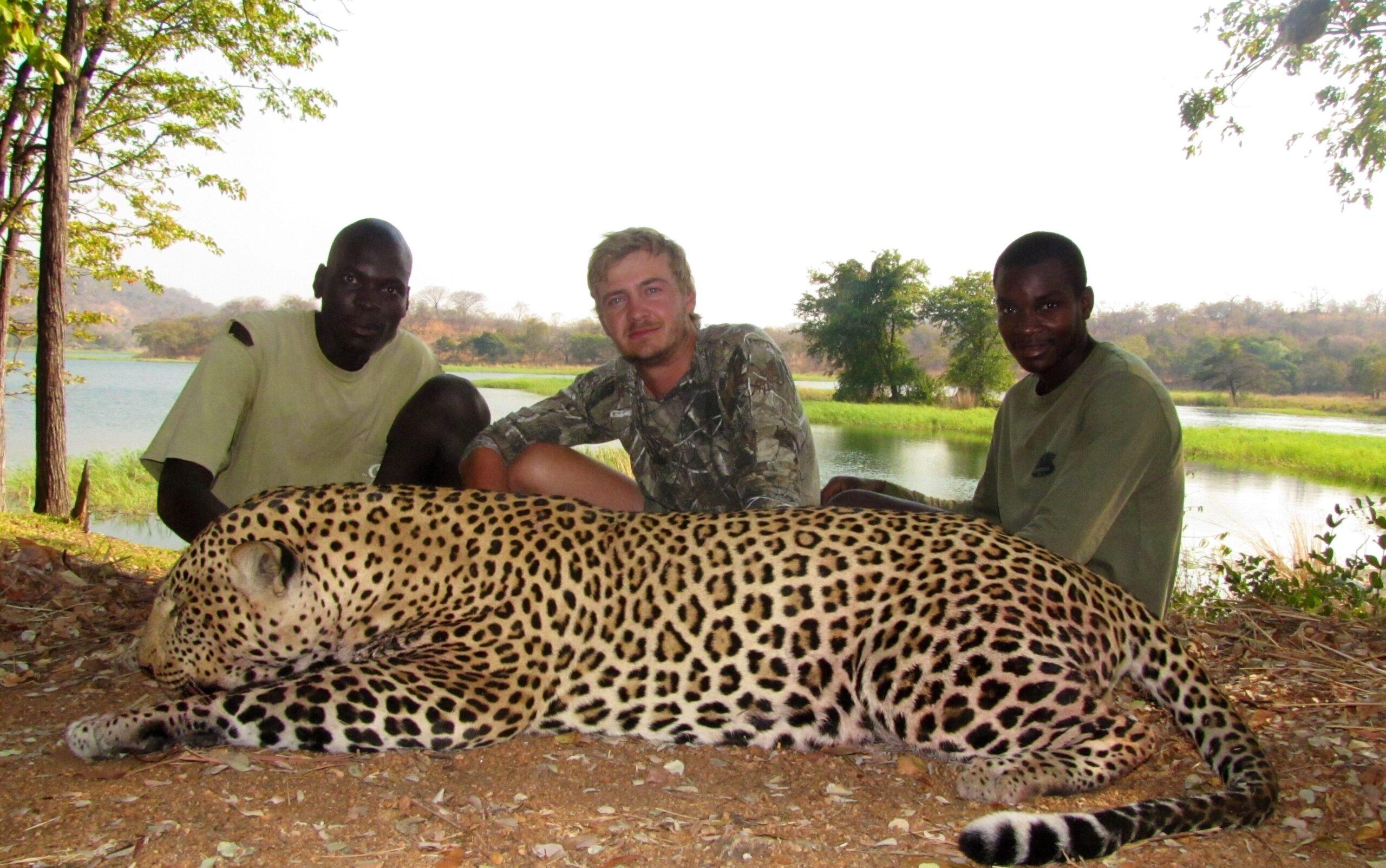
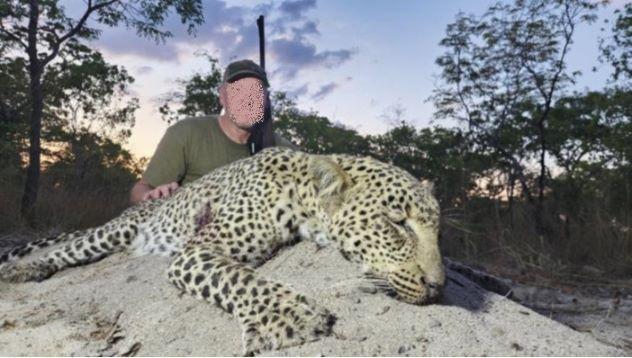
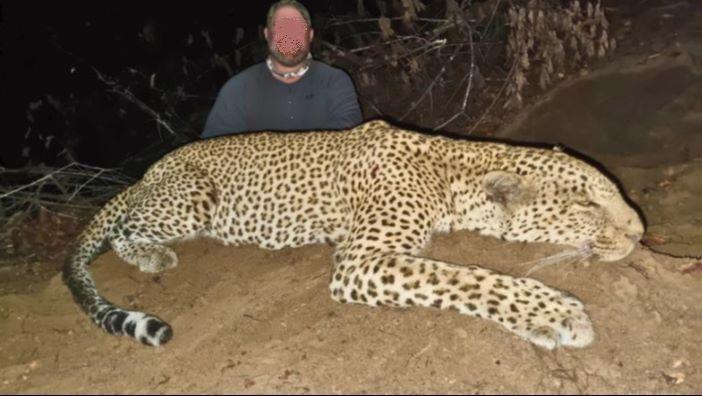
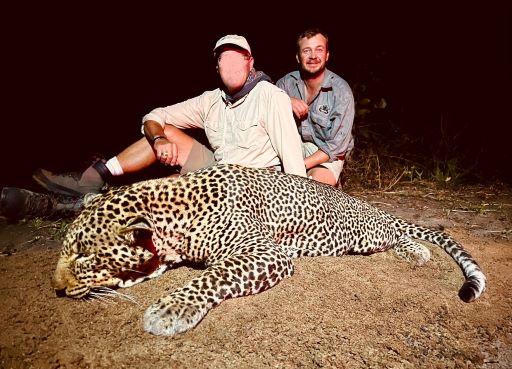
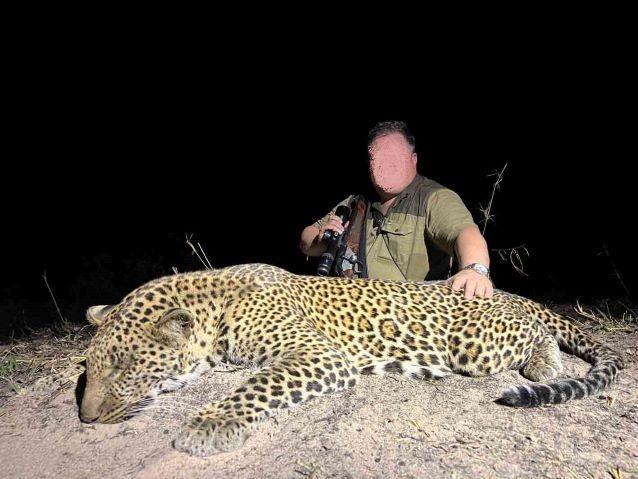
For American hunters considering Leopard Hunting in Mozambique, few destinations rival the legendary Niassa Reserve. Located in northern Mozambique, this vast wilderness has become one of Africa's premier destinations for free-range leopard safaris, offering enormous unfenced hunting concessions, healthy leopard populations, and the kind of remote conditions that serious dangerous game hunters travel across the world to experience.
Although leopard forms part of Africa's famous Big Five, hunting a leopard is unlike any other Big Five safari. Rather than covering miles in search of game, success depends on careful bait preparation, trail camera activity, fresh tracks, patience, and allowing mature toms to reveal their movements over time.
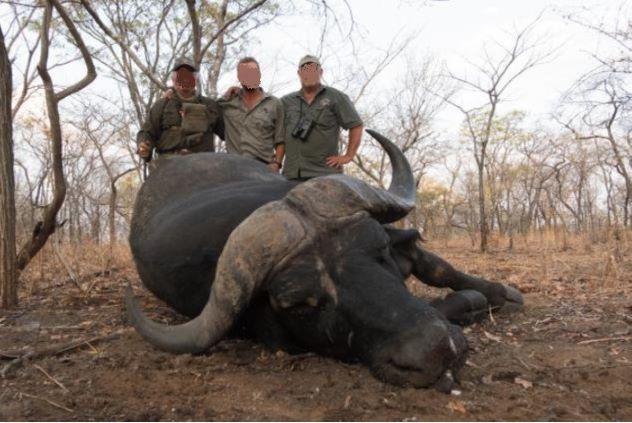
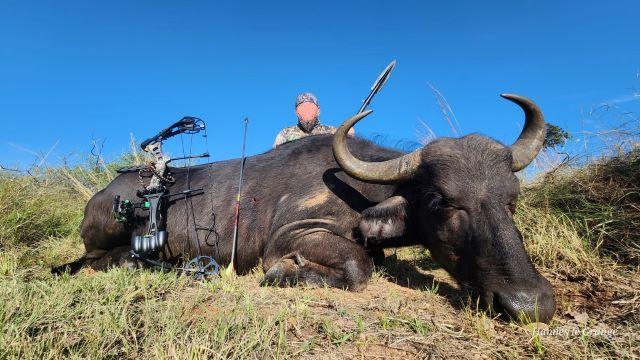
This fourteen-day safari also offers exceptional flexibility beyond the leopard itself. Hunters can add a free-range Cape buffalo with no size limit, while Niassa's remarkable diversity of game, including Roosevelt Sable, Niassa Wildebeest, Lichtenstein's Hartebeest, and several Tiny Ten species, allows hunters to build one of Africa's most complete wilderness safaris.
Price: US$41,450 All-In (Includes Leopard Trophy Fee)
Duration: 14 Full Hunting Days
Hunter Ratio: 1 Hunter : 1 Professional Hunter
Primary Species: 1 Trophy Leopard
Location: Niassa Province, Mozambique
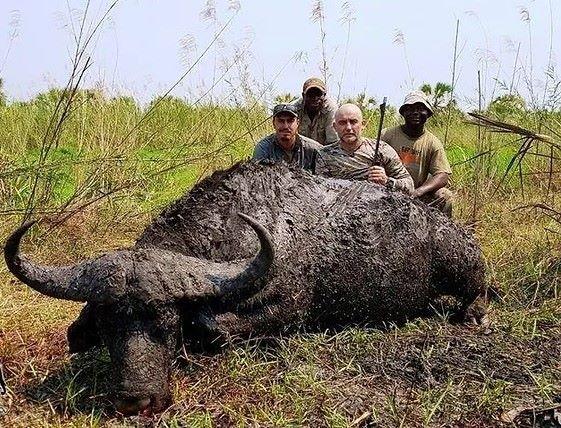
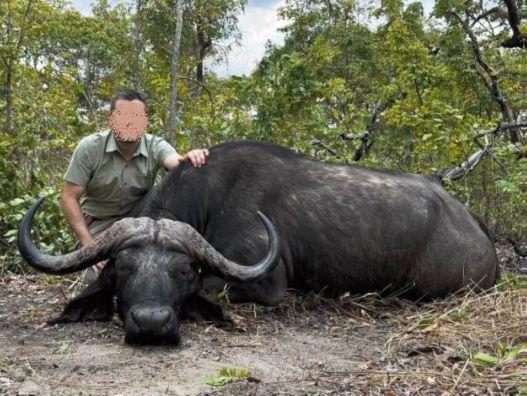
Cape Buffalo Upgrade: Add a free-range Cape Buffalo (No Size Limit) for US$5,500
Observers: Welcome at US$375 per person, per day
Rifle Rental: Available
Professional Videographer: Available on request at US$350 per day
Bow Hunting: Leopard may legally be hunted with a bow or crossbow in Mozambique, subject to current hunting regulations.
Important: Leopard hunting in Mozambique is conducted under a strictly controlled national quota. Availability is limited each season, and safari dates should be confirmed with the Game Hunting Safaris team before making travel arrangements.
The safari price includes one Leopard Trophy Fee valued at US$9,500. Should no leopard be harvested during the safari, the Leopard Trophy Fee is fully refundable, subject to the outfitter's standard terms and applicable government regulations.
Limited Leopard Quota
Mozambique issues a limited annual leopard quota under CITES regulations, making available safari dates highly sought after. Because permits cannot simply be added during the season, hunters planning a leopard safari in Niassa are encouraged to enquire well in advance to secure both quota and preferred hunting dates.
Leopard hunting opportunities exist across several African countries, but few regions combine the size, remoteness, and free-range hunting conditions found in Mozambique's legendary Niassa Reserve. Covering more than 26,000 square miles of protected wilderness, this vast conservation area remains one of Africa's last truly wild hunting destinations, where wildlife moves naturally across enormous unfenced concession blocks with very little hunting pressure.
Healthy populations of plains game provide an abundant natural prey base for mature toms, while experienced professional hunters carefully manage bait sites and hunting areas throughout the season. Rather than hunting small properties or intensively managed concessions, hunters spend fourteen full days pursuing leopard in an environment where every opportunity must be earned through patience, careful planning, and disciplined hunting.
One of Niassa's greatest advantages is the ability to build a true African dangerous game safari. Hunters can add a Cape Buffalo Hunt in Mozambique with no size limit, creating the opportunity to pursue two of Africa's most respected Big Five species during the same safari. For those wishing to extend their stay even further, Roosevelt Sable, Niassa Wildebeest, Lichtenstein's Hartebeest, Johnston's Impala, and several sought-after Tiny Ten species are also available.
For American and international hunters looking beyond simply harvesting a trophy, Niassa offers something increasingly difficult to find elsewhere in Africa: genuine wilderness, low hunting pressure, experienced professional hunters, and the chance to pursue leopard exactly as it has been hunted for generations.
Unlike tracking Cape buffalo or following fresh plains game spoor, successful leopard hunting begins long before the hunter ever enters the blind. Days before your arrival, experienced professional hunters and trackers begin identifying active leopard territories, selecting suitable bait trees, and positioning bait where mature toms are most likely to feed naturally.
Once bait sites have been established, trail cameras become one of the hunt's most valuable tools. Every photograph provides important information about the leopard's size, behaviour, direction of travel, and the time it visits the bait. Rather than rushing into a blind at the first sign of activity, the hunting team carefully studies these patterns, waiting until a mature tom begins visiting consistently.
When conditions are right, a temporary blind is constructed at a safe shooting distance, usually between 50 and 75 yards from the bait. Wind direction, background cover, shooting lanes, and the leopard's expected approach are all considered before the blind is used. Patience is essential, as hunters may spend several evenings waiting quietly for the right opportunity.
Even after a leopard appears, the hunt is far from over. Mature toms are naturally cautious and often spend several minutes observing the area before committing to the bait. Waiting for the correct angle and remaining disciplined under pressure are just as important as accurate shot placement. In leopard hunting, rushing the shot often creates unnecessary risk, while patience frequently rewards the hunter with a clean, ethical opportunity.
It is this careful combination of preparation, fieldcraft, patience, and experienced decision-making that has made Niassa one of Africa's most respected destinations for free-range Leopard Hunting.
One of the major advantages of combining your leopard safari with Plains Game Hunting is the opportunity to pursue several species found only in this part of East Africa without paying additional daily rates. Once your leopard hunt has concluded, you simply pay the applicable trophy fee for any additional animals harvested, allowing hunters to maximise both their time and investment while hunting one of Africa's largest free-range wilderness areas.
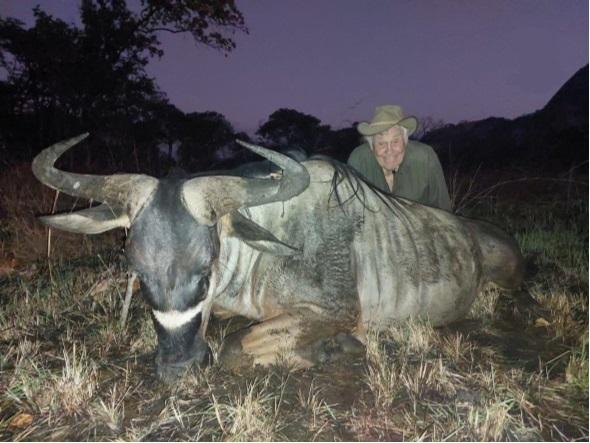
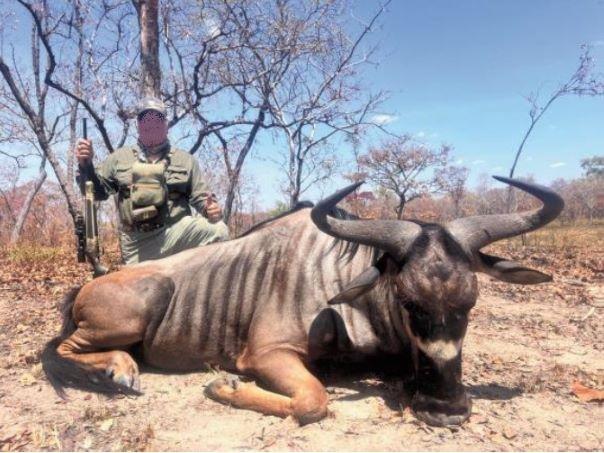
Among the most sought-after additions is a Wildebeest Hunt for the distinctive Niassa Wildebeest, a subspecies unique to northern Mozambique that is highly regarded by collectors. Hunters can also pursue a magnificent Sable Hunt for the impressive Roosevelt Sable, one of Africa's most beautiful antelope species. Other popular additions include Lichtenstein's Hartebeest, Johnston's Impala, and Warthog, each offering a unique hunting challenge while complementing a classic leopard safari.
For hunters working towards Africa's famous Tiny Ten, Niassa is equally rewarding. Sharpe's Grysbok, Red Duiker, and Blue Duiker are all available within the concession, giving collectors the rare opportunity to pursue several highly sought-after miniature antelope during the same safari.
Available plains game species and trophy fees include Niassa Wildebeest (US$5,500), Roosevelt Sable (US$5,500), Lichtenstein's Hartebeest (US$3,250), Blue Duiker (US$2,750), Sharpe's Grysbok (US$2,500), Red Duiker (US$2,500), Johnston's Impala (US$1,400), and Warthog (US$800).
A leopard safari in Niassa begins with an international flight into OR Tambo International Airport in Johannesburg, South Africa, before connecting to Pemba, Mozambique. Depending on airline schedules, many international hunters choose to overnight in Johannesburg before continuing their journey the following day.
From Pemba, hunters have two options for reaching the concession. The first is an approximately 11-hour road transfer through northern Mozambique, while the second is a charter flight directly to the concession landing strip. Although the charter represents an additional cost of approximately US$5,000 return, it is the preferred choice for most international hunters, saving valuable hunting time and reducing travel fatigue. Charter costs can often be shared when multiple hunters are travelling together.
Once in camp, hunters enjoy comfortable accommodation designed specifically for extended wilderness safaris. Spacious safari tents feature en-suite bathrooms with hot and cold running water, comfortable beds, daily housekeeping, and all the amenities needed for a relaxing stay after long days in the field. Camps are powered by solar systems and generators, while satellite internet provides communication with home when required.
Evenings are spent around the campfire discussing the day's leopard activity, reviewing trail camera photographs, and preparing bait strategies for the following morning. Excellent meals, attentive camp staff, and the peaceful atmosphere of one of Africa's largest wilderness areas complete an authentic safari experience that balances comfort with the remoteness of the Niassa Reserve.
Your outfitter will also assist with the necessary Mozambique firearm import permit before arrival. American hunters travelling with firearms should have a valid U.S. Customs Form 4457, while hunters transiting through South Africa will need to complete the required temporary firearm import documentation before continuing to Mozambique. As firearm regulations can change, it is always advisable to confirm the latest import requirements with your outfitter before travelling.
Not every African Hunting Trip is the same. Some are built around collecting multiple trophies in a short period, while others are centred on pursuing a single animal in truly wild country. This safari firmly belongs to the latter.
If your goal is to hunt a mature free-range leopard in one of Africa's largest and least developed wilderness areas, Niassa offers the time, space, and professional expertise needed for one of dangerous game's greatest challenges. Fourteen full hunting days allow the hunt to unfold naturally, giving experienced professional hunters the flexibility to adapt as leopard movement and conditions change.
For hunters wanting to make the most of their time in Africa, the safari can easily be expanded. The opportunity to add a Cape Buffalo, together with Niassa's unique plains game species, creates one of the continent's most rewarding combinations for hunters pursuing an authentic African wilderness safari.
Ultimately, this is a hunt for those who appreciate patience, preparation, ethical hunting, and the satisfaction of earning success rather than expecting it. If those qualities define the kind of safari you have been searching for, Niassa remains one of Africa's finest destinations for free-range leopard hunting.
Yes. This safari takes place in Mozambique's Niassa Reserve, one of Africa's largest unfenced wilderness areas. Leopards are hunted under genuine free-range conditions, with no high fences or artificially managed hunting blocks.
Leopard hunting is generally less physically demanding than tracking buffalo or elephant on foot, but hunters should still expect long days checking bait sites, travelling between hunting areas, sitting in blinds, and following up when opportunities present themselves. A reasonable level of mobility and patience is recommended.
Fourteen hunting days are widely regarded as the ideal duration for a free-range leopard safari. The additional time allows professional hunters to establish productive bait sites, monitor leopard activity, and adapt the hunt as conditions change without unnecessary pressure.
Niassa combines vast unfenced wilderness, low hunting pressure, healthy leopard populations, experienced professional hunters, and carefully managed quota. These factors have established the reserve as one of Africa's premier destinations for hunters seeking an authentic free-range leopard safari.
Please note that terms, conditions and price are subject to change without notice and rates at the time of the hunt will apply
You can speak directly with the outfitter before booking. GHS remains available throughout the process.
Needing assistance with firearm permits and international travel services, or good taxidermists? View our affiliated companies
View Affiliated Services