
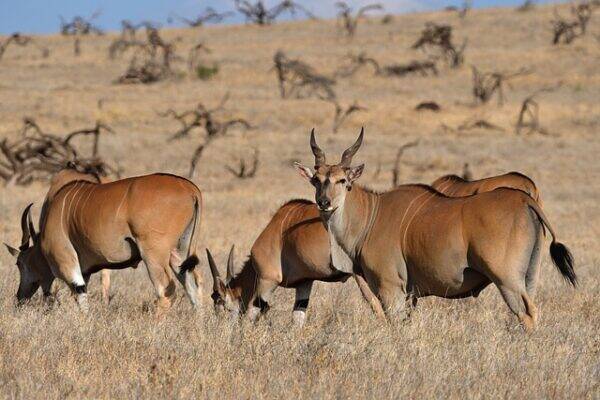
What is Plains Game hunting in Africa?
Plains game hunting in Africa is one of the most accessible and rewarding ways to experience a true African hunting safari. While many hunters are initially drawn to dangerous game, experienced hunters understand that a well-structured plains game safari often delivers a far more diverse and engaging hunting experience. Plains game generally refers to non-dangerous African game species, most commonly antelope, that are hunted across Southern and Eastern Africa.
From open savannas to dense bushveld, plains game hunting allows hunters to pursue multiple species during a single safari, requiring adaptability, patience, and a strong understanding of animal behavior. It is this combination of variety, challenge, and opportunity that makes plains game hunting a cornerstone of African hunting safaris.
In practice, plains game hunting involves a mix of spot-and-stalk methods, opportunistic shooting, and carefully planned approaches tailored to each species and terrain. Success is rarely about a single moment — it is about reading the environment, understanding animal movement, and working closely with an experienced professional hunter.
Whether planning a first safari or returning to explore new regions, understanding how plains game hunting works is essential to choosing the right destination, species mix, and overall hunting strategy.
Understanding the key species, hunting methods, and regional differences is essential before planning any African plains game safari.
[DYNAMIC-BLOGTABLEOFCONTENT]
What is the Most Sought-after African Plains Game Antelope?
The kudu (Tragelaphus strepsiceros) is widely regarded as one of the most sought-after African plains game antelope species. Known for its impressive spiral horns and striking appearance, it has become a benchmark trophy for hunters pursuing a true plains game safari, which is why kudu hunts are considered among the most sought-after plains game hunting experiences in Africa.
Kudu typically inhabit woodland and bushveld environments, where their natural camouflage and cautious behavior make them a challenging species to pursue. Their ability to blend into dense cover, combined with sharp senses and unpredictable movement, means that success often depends on patience, careful stalking, and precise shot placement.
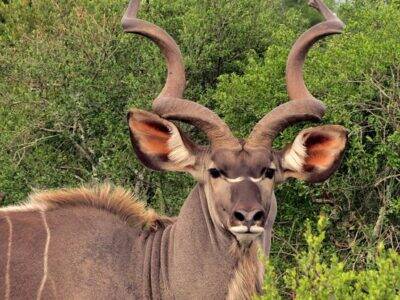
Male Kudu
The male, known as a bull, is characterized by its long, spiral horns that can reach impressive lengths, often exceeding 6 feet (1.8 meters). These horns have two and a half twists and are a prominent feature, making the male kudu easily recognizable. Bulls are generally larger and heavier than females, with a robust build and a shoulder height of around 55-63 inches (140-160 centimeters). Their coat is typically greyish brown with vertical white stripes along the body, providing effective camouflage in the dense vegetation of their habitat.
Female Kudu
The female kudu, called a cow, lacks the impressive spiral horns of the male. Instead, she has no horns at all. Female kudus are generally smaller and lighter than males, with a more slender build, and a shoulder height of 43-59 inches (110-150 centimeters). Like males, females also have a coat with vertical white stripes, aiding in camouflage. Both males and females have a crest of hair along their spine, which can be raised for communication or display purposes.
These antelopes are often found in woodland and bushland areas, using their agility and excellent leaping ability to navigate through dense vegetation. The kudu’s striking appearance and graceful movements make it a fascinating species to observe in its natural habitat.
What is the Most Popular African Plains Game to Hunt in South Africa?
The blue wildebeest is one of the most popular plains game species to hunt in South Africa. The blue wildebeest is sometimes also referred to as ‘the poor man’s buffalo.
The blue wildebeest, also known as the common wildebeest or brindled gnu, is a large and robust antelope species native to eastern and southern Africa. It is a perfect example of top-notch African big game and a very popular hunting trophy. As a result, wildebeest hunts are a popular choice for hunters looking to combine affordability with a challenging and rewarding plains game experience.
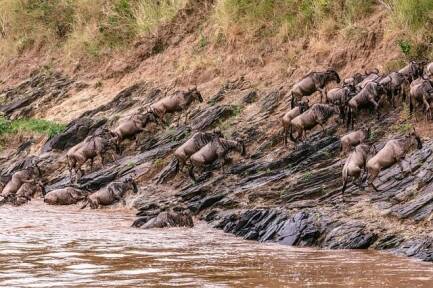
Physical Characteristics
- Size and Build: Adult blue wildebeests are large, with a shoulder height of 47-59 inches (120-150 centimeters). They have a heavy, muscular build, designed for endurance and stamina during migrations.
- Coat and Coloration: The coat of the blue wildebeest is short and coarse, with a brindled pattern that gives it a mottled appearance. The coloration ranges from bluish-gray to brownish-gray, which varies among individuals and populations.
- Horns: Both males and females possess curved, pointed horns. The horns sweep sidewards and curve upward, resembling a shape similar to parentheses. The horns can reach up to 28 inches (70 centimeters).
Behavior and Habitat
- Social Structure: Blue wildebeests are social animals and often form large migratory herds, particularly during the dry season when they search for water and grazing grounds. These herds have a hierarchical structure, with dominant males leading and defending their territory.
- Habitat: They inhabit various environments, from open grasslands to savannas and woodland areas, adapting to different ecosystems.
- Migratory Behaviour: Blue wildebeests are known for their impressive migrations, where thousands of individuals move in search of food and water. This migration is not only a survival strategy but also serves to synchronize calving, providing a better chance for the survival of the young calves.
- Diet: Blue wildebeests are herbivores, primarily grazing on grasses. Their diet is adapted to the seasonal availability of vegetation in their habitats.
- Reproduction: Mating typically occurs during the rainy season, and after a gestation period of around eight and a half months, a single calf is born. Calves are normally able to stand and run shortly after birth, a crucial adaptation for survival in the wild.
What is the Largest African Plains Game Animal?
The Eland (Taurotragus oryx), is the largest and slowest African big game antelope species, native to southern and eastern Africa. Due to their size and resilience, eland hunts require careful shot placement and patience, making them one of the most respected plains game trophies.
Physical Characteristics
- Size and Build: The eland is the largest antelope species, with males standing 5.6-6.6 feet (1.7-2 meters) at the shoulder. They have a distinctive dewlap or “skin flap” hanging from their throat, which is more prominent in males.
- Coat and Coloration: The coat of the eland is generally tan to fawn in color, and it becomes darker in older individuals. Both males and females have spiral-shaped horns, with those of males being thicker and longer, reaching impressive lengths of up to 4 feet (1.2 meters).
- Distinctive Features: Elands have large, rounded hooves adapted for soft and hard terrain, enabling them to move efficiently across various landscapes. Their long, twisted horns, present in all genders, can be used for defense against predators and in intraspecific conflicts.

Behavior and Habitat
- Social Structure: Elands are social animals, and they often form loose herds consisting of females, calves, and young males. Older males may be solitary or form smaller groups. Their social structure is not as hierarchical as a few other antelope species.
- Habitat: They inhabit numerous ecosystems, including grasslands, woodlands, and semi-desert areas. Elands are highly adaptable to different environments.
- Behavioural Adaptations: Elands are known for their remarkable jumping ability despite their generous size. They can clear obstacles or fences with ease.
- Diet: Elands are herbivores, primarily grazing on grasses and browsing on leaves, depending on food availability in their environment.
- Conservation Status: While the Eland is not currently considered endangered, local populations can be affected by habitat loss and hunting pressures.
The Eland’s impressive size, distinctive appearance, and adaptability to various habitats make it a fascinating species within the diverse array of African wildlife.
Is the bushbuck the most dangerous Plains Game Animal?
The bushbuck (Tragelaphus scriptus) is a widespread African antelope and is widely regarded as one of the most dangerous plains game species when wounded, known for its aggressive behavior and tendency to charge when cornered.
Bushbuck hunts are often conducted in thick cover and low-light conditions, where visibility is limited and encounters can happen at close range. This combination of dense habitat and unpredictable behavior makes bushbuck a challenging and respected plains game species among experienced hunters.
Physical Characteristics
- Size and Build: Bushbucks are generally medium-sized, with males standing about 2.6-3.3 feet (80-100 centimeters) at the shoulder. Females are slightly smaller than males, and both sexes have a sturdy, compact build.
- Coat and Coloration: The coat of the bushbuck varies in color, ranging from reddish-brown to gray or yellow-brown, depending on the subspecies and local environment. They often have distinctive white markings, including spots, stripes, and a white ring on the rump.
- Horns: Males possess spiral-shaped horns that are present in both sexes but are generally larger in males. The horns have one to three twists and can reach lengths of around 20 inches (50 centimeters).

Behavior and Habitat
- Solitary Behaviour: Bushbucks are primarily solitary, although females are seen with their offspring. Males are often more territorial and may defend their home ranges.
- Habitat: They inhabit many environments, including forests, woodlands, and savannas. Bushbucks are adaptable and can inhabit dense and more open habitats.
- Nocturnal Habits: Bushbucks are known for their crepuscular and nocturnal activity, being more active during dawn and dusk to avoid daytime heat and predators.
-
Diet: Bushbucks are browsers, feeding on leaves, fruits, and vegetation. Their diet can include both grasses and shrubs.
-
Reproduction: The gestation period for bushbucks is around six to seven months, and females usually give birth to a single calf, although twins can occur.
-
Conservation Status: The bushbuck is not considered globally threatened, and its conservation status varies among different subspecies and populations.
The bushbuck’s adaptability, subtle beauty, and preference for diverse habitats make it a fascinating and diverse member of Africa’s antelope species.
Main Plains Game Targeted when Hunting in Africa
Besides the above-mentioned antelope species, there are also:
- Impala (Aepyceros melampus)
- Springbok (Antidorcas marsupialis)
- Blue Wildebeest (Connochaetes taurinus)
- Gemsbok (Oryx gazella)
- Hartebeest (Alcelaphus buselaphus)
- Blesbok (Damaliscus pygargus)
- Waterbuck (Kobus ellipsiprymnus)
- Nyala (Tragelaphus angasii)
- Sable Antelope (Hippotragus niger)
- Roan Antelope (Hippotragus equinus)
- Common Duiker (Sylvicapra grimmia)
- Steenbok (Raphicerus campestris)
- Warthog (Phacochoerus africanus)
- Black Wildebeest (Connochaetes gnou)
- Red Hartebeest (Alcelaphus caama)
- Bontebok (Damaliscus pygargus dorcas)
- Mountain Reedbuck (Redunca fulvorufula)
These are just a selection, and there are many more species of antelope and game animals in Southern Africa, each contributing to the region’s rich biodiversity and offering unique opportunities for wildlife observation and sustainable hunting.

What is the Best Caliber Rifle for Plains Game Hunting in Africa?
Selecting the best caliber rifle for plains game hunting often depends on personal preferences, shooting proficiency, and the specific types of plains game you intend to hunt. Here are some popular rifle calibers considered effective for plains game hunting in Southern Africa:
- .270 Winchester: Suitable for medium-sized plains game, offering a good balance of power and manageable recoil.
- 7mm Remington Magnum: Known for its flat trajectory and sufficient energy, making it effective for a variety of plains game species.
- .30-06 Springfield: Versatile and widely used, capable of taking down a range of plains game with appropriate ammunition.
- .308 Winchester: Offers a good combination of manageable recoil and sufficient power for many plains game species.
- .300 Winchester Magnum: Well-regarded for its power and long-range capabilities, suitable for larger plains game.
- .375 H&H Magnum: A classic choice for African hunting, particularly for larger species, providing ample stopping power.
- .338 Winchester Magnum: Suitable for a variety of plains game, offering a balance between manageable recoil and stopping power.
Choosing the right caliber is just as important as understanding shot placement, particularly when hunting larger plains game species such as eland or wildebeest.
Shot placement is one of the most critical aspects of any successful hunt, directly impacting both the ethical outcome and the recovery of the animal. Hunters should take the time to understand species-specific anatomy and shot angles before ever entering the field — and a detailed shot placement guide for hunting game in Africa can provide the foundation needed to make confident, effective decisions in real hunting scenarios.
What Do Plains Game Hunts Cost?
The cost of plains game hunting in Africa can vary widely depending on location, species, and the type of plains game hunting packages selected.
- Daily Rates: Many outfitters charge a daily rate, which typically covers accommodation, meals, and the services of professional guides. These rates can range from a few hundred to over a thousand dollars per day.
- Trophy Fees: Trophy fees are additional charges for each animal harvested. The cost varies significantly based on the species, with more desirable or rarer species commanding higher fees. Trophy fees can range from a few hundred to several thousand dollars per animal.
- Travel and Logistics: Consider the cost of travel to the hunting destination, including flights, visas, and transportation within the country. Some outfitters may include airport transfers as part of their services.
- Tips and Gratuities: It is customary to tip guides, trackers, and other staff for their services. While the amount varies, it is generally recommended to budget a percentage of the total hunt cost for tips.
- Trophy Preparation and Shipping: If you plan to bring trophies home, factor in costs for field preparation, dipping, packing, and shipping. These costs can vary depending on the species and the taxidermy services you choose.
- Accommodation and Luxury Levels: The type of accommodation and luxury level can influence the overall cost. High-end lodges and luxury safaris often come with a higher price tag.
Given these factors, packages for plains game hunting in Africa can start from a few thousand dollars and rise significantly, depending on your preferences. It’s essential to thoroughly research outfitters, inquire about all costs upfront, and ensure that you understand the terms of the hunt. If you are considering your first African plains game hunting safari or looking to expand your hunting experience, choosing the right destination and outfitter is critical.
Prices can vary significantly depending on the country, concession quality, and species availability, making it essential to compare outfitters carefully before booking.
Explore available plains game hunting packages or speak with our team to plan a safari tailored to your budget, preferred species, and hunting experience.
Author: Tamlyn van Wyk