

10x African Plains Game Trophies in 10 Days in Limpopo, SA
Booking Season: 2026
Hunt Difficulty: Moderate, Difficult

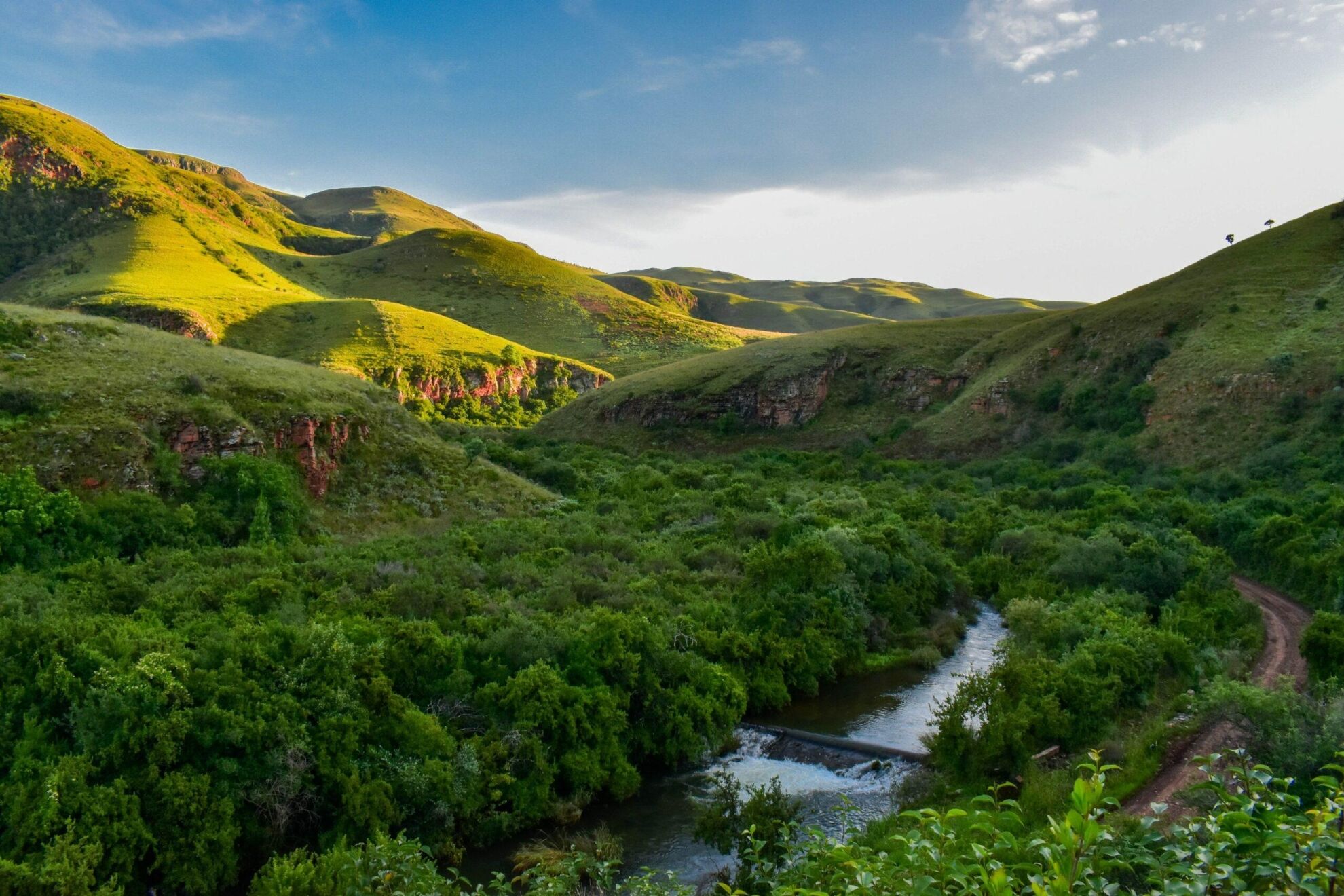

South Africa is often seen as the easiest entry point into African hunting, but that description can create the wrong expectations.
Within the broader world of African hunting safaris, South Africa represents a very specific model: structured, accessible, and built around private land rather than vast wilderness concessions.
This is not a frontier-style safari destination. It is a country where logistics are streamlined, game is well managed, and success depends less on unpredictability and more on execution, shot selection, and the quality of the outfitter.
For American and Canadian hunters, that creates a very different kind of opportunity, but only when expectations match the structure and style of hunting found here.
Although South Africa is best known for plains game safaris, certain provinces also support well-established dangerous game hunts, particularly for Cape buffalo. In some areas, hunters may also pursue species such as elephant, rhinoceros, hippopotamus, and crocodile under tightly regulated conditions. The country’s combination of dangerous game, plains game variety, and flexible safari planning is one of the reasons it remains so popular with international hunters.
South Africa combines:
Established wildlife management systems.
Developed transportation infrastructure.
Clear firearm import procedures.
Exceptional species diversity.
Professional hunting camps.
Flexible safari structures.
A wide range of safari pricing options.
Hunters can reach camp without relying on multiple charter flights or complicated transfers. No multi-day transfers. No complicated logistics layers. South Africa operates primarily under a private wildlife ownership and management framework regulated at provincial level. This system shaped the country into one of the most commercially developed hunting destinations in Africa.


South Africa is one of the most structured and operationally efficient hunting destinations on the African continent. South Africa offers American and international hunters a combination that is difficult to find elsewhere: a wide variety of huntable species, well-managed wildlife populations, reliable travel logistics, and safari pricing that often allows several animals to be pursued during a single trip.
A hunter can land at O.R. Tambo International Airport in Johannesburg, move through a formalized firearm import process, and within hours be in active hunting country. There are no bush charter chains required in most cases. No multi-day transfers. No complicated logistics layers. This infrastructure does not reduce the hunt. It removes unnecessary friction. For hunters traveling 8,000–9,000 miles across the Atlantic, efficiency matters.
South Africa operates primarily under a private wildlife ownership and management framework regulated at provincial level. This is not an informal system. It is legally structured and economically driven.
Over several decades, large areas of former livestock farmland transitioned into wildlife-based land use. Landowners discovered that properly managed wildlife populations created long-term sustainability where cattle farming often struggled.
That shift produced measurable results:
Wildlife in South Africa carries economic value, giving landowners a financial reason to protect both game populations and the habitat that supports them. Hunting revenue forms an important part of that model.
This structure explains why South Africa can offer:
It also explains why the country is sometimes misunderstood by hunters who compare it directly to government concession systems elsewhere in Africa. The models are different. Understanding that difference prevents unrealistic expectations.
South Africa is not a wilderness myth. It is not a romanticized frontier designed around isolation. It is a structured hunting environment built on privately managed wildlife land, regulated through provincial authorities, and supported by developed infrastructure. That does not make it inferior to other African destinations. It makes it different.
Hunters seeking:
Hunters focused primarily on extended dangerous game safaris in large wilderness concessions often look more closely at Tanzania hunting safaris or certain regions of Zimbabwe.
Hunters seeking:
Will find South Africa exceptionally well suited. The key variable is alignment.
For American and Canadian hunters, three practical realities often influence destination choice:
South Africa performs strongly in all three. Flights are regular and established. Airports are modern and organized. Road networks reduce dependence on charter aircraft. Firearm importation is structured and documented.
For a first African safari, reducing uncertainty is often the deciding factor. Hunters who begin in South Africa later explore other African destinations. Few hunters regret starting there, provided expectations align with the structure and style of hunting South Africa is known for.
South Africa excels for:
First-Time African Hunters
The structured environment reduces hesitation.
Hunters planning a first African safari often find South Africa particularly accessible because travel, firearm procedures and camp logistics are generally more predictable than in remote safari destinations.
Plains Game-Focused Safaris
South Africa remains one of the strongest plains game hunting destinations on the continent. Due to habitat diversity and well managed populations, multiple species can be pursued within a single property or region. That efficiency is rare.
Hunters with Limited Time Windows
Seven to ten days in South Africa can be productive. Species density, road access, and structured property systems allow effective use of limited vacation time.
For professionals balancing work obligations and international travel, that efficiency is often decisive.
Combination Safaris
South Africa allows structured combinations of:
Within a single itinerary. That logistical flexibility is difficult to replicate elsewhere without increasing travel days and cost.
Family-Inclusive Trips
Because of developed infrastructure, it is realistic to add:
South Africa integrates hunting and non-hunting travel more easily than most African countries.
South Africa is not built for:
Those environments exist in Africa. South Africa's strength lies in structure, not isolation. Understanding that distinction helps set realistic expectations. Hunters looking for larger open landscapes and a more traditional free-range plains game experience sometimes compare South Africa with Namibia hunting safaris.
South Africa's wildlife recovery story is measurable. Several species that declined historically have rebounded under private land conservation systems.
The relationship between sustainable use and conservation is central to South Africa's wildlife model. Hunting revenue gives private landowners an economic reason to retain wildlife habitat, although the system continues to evolve and remains the subject of debate.
South Africa's hunting landscape is not uniform. Terrain shifts dramatically between provinces, and those changes affect everything, from shot distance and wind behavior to physical demand and daily strategy. Understanding regional topography is not academic. It directly influences equipment selection, stalking methods, and realistic expectations.
The country can be broadly understood through several dominant ecological zones.
(Limpopo, Mpumalanga, North West)
When many sport hunters imagine "classic Africa," they are picturing bushveld.
The bushveld is defined by mixed thornveld vegetation, scattered trees, rolling terrain, and dry riverbeds known locally as spruits. It is neither jungle nor open prairie. It is textured ground, broken enough to create concealment, but open enough to allow controlled movement.
Low ridgelines rise gradually from sandy flats. Drainage lines cut shallow channels through the land. Patches of dense brush alternate with more open corridors where animals feed and move between bedding areas.
Visibility fluctuates constantly. A hunter may see 150–200 yards through light vegetation. In others, sightlines collapse to under 75 yards within a few steps. Wind in bushveld terrain behaves unpredictably. It swirls along ridges and rolls down drainage lines, requiring constant awareness.
For North American comparison, the closest parallels might be parts of South Texas brush country or certain sections of the Arizona low desert, but with thicker tree cover and greater species diversity.
Hunting in bushveld is deliberate.
Stalks often involve:
Most rifle shots occur inside 200 yards and this terrain rewards discipline and patience rather than long-range shooting ability.
The Kalahari presents a very different landscape from the bushveld. Red sand dunes roll across open country, with camelthorn trees scattered between wide valleys and dry pans. Visibility is often extensive, and animals frequently detect movement at significant distance in the open terrain.
Wind becomes a constant factor here, particularly across exposed dune systems where crosswinds can influence both stalking and shot placement. Hunters from the western United States or Canadian prairie provinces often find the terrain more familiar than dense bushveld environments.
Shot opportunities commonly extend beyond 200 yards, making steady shooting positions and comfort with wind reading more important than in thicker terrain.
Some large ranches in the Kalahari and Northern Cape also play a role in South Africa’s privately managed rhino hunting and conservation programs.
The Free State is often underestimated in hunting discussions, but its open plains create a distinct challenge. Broad, gently rolling grasslands stretch across significant portions of the province. Natural cover is limited. Minor elevation changes become critical for approach.
Wind plays a dominant role.
Unlike bushveld, where vegetation can mask minor wind errors, the Highveld exposes movement quickly. Herd animals feed in open ground, relying heavily on sight and wind to detect danger. Shot distances frequently extend beyond those common in bushveld. Hunters accustomed to western North American terrain often feel comfortable here. The ground is firm, and walking is generally easier than in sand-heavy regions, but concealment must be used intelligently.
The Highveld rewards careful planning, patience, and precise shot execution under wind pressure.
The Eastern Cape offers some of the most visually dramatic hunting terrain in South Africa. Steep hills rise above deep valleys. Ravines cut sharply into slopes. Vegetation alternates between brush-covered hillsides and more open grass slopes.
Elevation change becomes a meaningful factor here. Glassing from ridge tops is common. Approaches often involve descending into valleys before circling upward again for position.
Some Eastern Cape properties include steep mountain terrain where hunters may spend long periods climbing in and out of valleys or side-hilling across rocky slopes. While not extreme mountaineering, the terrain can become physically tiring over several consecutive days in the field. Shot distance varies significantly. One opportunity may present at 120 yards in broken cover. Another may require a 300-yard cross-valley shot with wind influence.
The more open areas of the Eastern Cape also contribute to the region’s popularity for springbok hunts, particularly for hunters pursuing the various color phases included in the South African springbok slam.
Hunting footprint in the Western Cape is more limited, but where available, terrain tends toward mountainous and coastal-influenced landscapes.
Steeper inclines and fynbos vegetation characterize parts of the region. Elevation shifts and wind patterns can change quickly, particularly near coastal slopes. This region is often combined with tourism due to proximity to major travel destinations.
KwaZulu-Natal introduces river systems, thicker vegetation pockets, and subtropical elements. Rolling green hills replace dry bushveld in many areas. Riverine thickets create dense corridors where visibility narrows.
Humidity levels are typically higher than in inland provinces.
Hunting here often involves:
The terrain feels more enclosed compared to open plains or dune country.
Regional selection influences more than scenery.
It affects:
A hunter comfortable with 300-yard western shots may prefer the Kalahari or Free State. A hunter accustomed to whitetail hunting in broken cover may feel immediately comfortable in bushveld terrain. Choosing a region aligned with personal experience increases confidence and success.
South Africa's reputation in the hunting world is built primarily on plains game diversity. But approaching a safari with a long checklist of animals is rarely the best strategy. A successful hunt begins with clarity, not volume.
South Africa allows for flexibility, but flexibility should be structured around habitat, region, and realistic time constraints. South Africa also gives hunters the opportunity to combine plains game with selected big game hunting in South Africa species, particularly Cape buffalo, without the extended travel and logistics often associated with remote concession hunts elsewhere in Africa.
South Africa is regarded as one of the strongest plains game destinations in Africa because of habitat diversity and managed wildlife density.
Across different regions, hunters can pursue:
What makes South Africa distinct is not simply the number of species available, it is the ability to pursue several within a single property or region without relocating camps. That logistical efficiency matters.
In other African countries, targeting different species may require separate concessions or internal travel days. In South Africa, a well-structured safari can incorporate multiple objectives within a defined timeframe.
Species such as impala and wildebeest attract hunters from around the world, while kudu hunts remain one of the main reasons international hunters travel to South Africa. Larger plains game animals such as eland and giraffe also provide unique safari opportunities, while zebra and warthog are commonly encountered during mixed plains game safaris.
Seven to ten days can be highly productive when planned properly.
One of the most common planning mistakes is attempting to pursue too many animals in too few days.
A stronger approach is strategic layering:
This structure maintains focus while allowing flexibility.
Because South Africa's ecosystems vary significantly, species selection should match the region being hunted.
Open-plains animals are best pursued in open country. Thick-cover species require terrain suited to concealment and stalking. Riverine animals favor specific ecological zones. Matching species to terrain increases opportunity and reduces frustration.
South Africa produces strong trophy quality across many species due to structured wildlife management.
However, structured management does not eliminate challenge.
Mature animals remain cautious.
Wind still shifts.
Shots must still be executed cleanly.
Patience remains essential.
Because many properties monitor age distribution closely, hunters are often presented with mature animals when opportunity aligns. That does not create guarantees. It creates opportunity. Preparation remains critical.
Certain species are commonly regarded as more physically demanding or strategically significant due to:
These animals often require:
Including one premium objective in a safari adds structure and focus without overwhelming the schedule.
South Africa is not designed around vast government dangerous game concessions. However, dangerous game, particularly buffalo, is available within regulated provincial systems and designated properties.
Understanding the structure is important.
Cape Buffalo hunts occur on privately managed land under specific legal frameworks. Property size, herd management philosophy, and provincial regulation vary.
Hunters pursuing buffalo should:
For international hunters, buffalo hunting in South Africa offers one of the most accessible ways to experience a dangerous game hunt without the logistical complexity found in some larger concession systems elsewhere in Africa. Because buffalo are exceptionally durable animals, understanding proper Cape buffalo shot placement before the safari begins is an important part of preparation.
South Africa becomes particularly attractive when the objective is to combine buffalo with plains game within a more condensed timeframe. Its infrastructure and accessibility make that combination considerably easier to plan.
In certain regions, crocodile hunting takes place along major river systems.
South Africa is particularly attractive to bow hunters because of managed water systems and predictable animal movement corridors.
Structured water sources allow:
Typical bow shots often fall within 15–30 yards, depending on setup.
That structure does not reduce difficulty. Patience remains critical. Animals approach water cautiously and often pause before committing.
African plains game are generally more durable than many North American deer species. Shot placement discipline is essential.
Bow hunters benefit from:
South Africa is known for selectively bred color variants of certain plains game species. These animals are legal within South African wildlife frameworks.
Opinions within the international hunting community vary. Some hunters actively pursue color variants. Others prefer traditional coloration and natural phenotype.
The important factor is clarity before booking. Understanding a property's management philosophy ensures alignment with personal expectations. Some South African outfitters specialize in selectively bred color variants, and certain wildebeest hunts now focus specifically on animals such as golden wildebeest and other uncommon genetic traits.
South Africa's species advantage is not simply numerical.
It is structural.
Within one organized safari, a hunter can pursue:
This efficiency can determine whether the safari happens at all. Efficiency does not reduce challenge.
It reduces logistical waste.
South Africa's primary hunting season runs from April through September. This period corresponds with the country's cooler, drier winter months. Vegetation thins, water becomes more limited, and animal movement patterns become more predictable.
Understanding seasonal conditions is important, but South Africa does not operate under a single uniform climate. Conditions vary by province.
Early winter brings:
Animals are still dispersed across broader feeding areas, and water sources are less pressured than later in the season. For hunters who prefer moderate temperatures and slightly greener landscapes, this period is often comfortable and productive.
These months represent the heart of the hunting season.
Conditions typically include:
As water sources become more limited, animal movement often becomes more concentrated. Visibility improves significantly in bushveld terrain. Tracking conditions are often excellent in drier soils. For American and Canadian hunters, this window aligns well with summer vacation periods at home.
September can bring:
Late season hunts can be highly productive, but temperatures may rise, particularly in northern provinces.
Understanding regional variation is important when selecting dates.
Seasonal timing should align with target species, regional climate, and personal comfort tolerance.
South Africa offers a clearly defined hunting calendar. There is no ambiguity about open seasons when working with licensed outfitters.
Cost is one of the first questions serious hunters ask, and it should be. South Africa offers one of the widest pricing spectrums in Africa, making it important to understand how African Hunting Safari Prices are structured before comparing individual hunts.
That range exists because of:
Understanding cost structure prevents surprises.
A South African safari typically consists of:
Each must be understood separately.
Daily rates generally cover:
Plains game daily rates commonly range from approximately $350 to $600 per day, depending on property quality and location. Higher-end lodges and premium properties may exceed this range. Dangerous game daily rates are typically higher.
Trophy fees vary by species, region, and property. Common plains game species may carry moderate fees, while premium spiral-horn species or large-bodied animals command higher prices. Buffalo hunts significantly increase total safari cost.
Because South Africa allows multi-species combinations, overall trophy totals can accumulate quickly if planning lacks structure. Clear prioritization is essential.
South Africa is known for pricing structures that may incorporate horn measurement for certain species.
In these cases:
This system is legal and common in certain regions. Understand this clearly before the hunt begins. Small differences in measurement can affect cost. Trophy size expectations and pricing structure must be discussed in advance and there should be no ambiguity.
Professional outfitters explain pricing clearly before the safari begins.
Additional expenses may include:
These costs are not hidden, but they must be budgeted separately. Clarity before travel removes nearly all financial uncertainty. International hunters may also spend time researching how safari deposits, escrow services, and payment structures typically work before booking a hunt in South Africa.
South Africa's wide pricing spectrum can create confusion. Low daily rates or unusually discounted trophy packages may appear attractive initially.
However, price alone does not define quality.
Factors influencing value include:
A lower price does not automatically indicate poor quality, but it warrants careful evaluation. Conversely, higher price does not guarantee a superior experience.
The objective is alignment between expectation and budget. A realistic financial plan prevents regret.
While every safari differs, a general framework for plains game hunts may fall within:
Buffalo-inclusive safaris often increase total investment significantly. These figures vary widely depending on goals and structure. Precise planning with a reputable outfitter provides accurate budgeting. Understanding logistics is important, but so is understanding what daily life on safari actually feels like. South Africa’s hunting system is built around clear logistics, established camp routines, and efficient use of hunting time.
Most international hunters arrive via O.R. Tambo International Airport.
Upon arrival:
When paperwork is prepared correctly in advance, the process is administrative rather than stressful. Many hunters choose to use a meet-and-greet service to streamline airport procedures. This is optional but often appreciated on a first visit. From Johannesburg, most hunting areas are accessible by road. Transfer times vary by province but are typically manageable within a single day. Unlike certain remote African destinations, additional bush flights are not usually required.
South African hunting camps vary from simple, functional bush lodges to high-comfort safari accommodations.
Regardless of style, most structured camps include:
Camp life follows a steady routine. Meals in camp are often centered around traditional South African "braai cooking", similar to a barbecue, with evenings spent around the fire after the hunt. Venison, grilled meat, and local dishes are common, and many international hunters are surprised by the quality of South African wine available even in relatively remote camps.
Most safari days follow a consistent pattern.
Early Morning
Morning hours are often the most productive, particularly in cooler winter months.
Depending on region, hunting may begin with:
Once a target animal is identified, the approach becomes deliberate.
Midday
As temperatures rise, activity slows.
Midday often includes:
This break is part of the rhythm. African hunting is rarely rushed.
Afternoon & Evening
Late afternoon brings renewed movement. Stalks often occur in softer evening light. Wind shifts must be monitored carefully. Shots are commonly taken from tripod shooting sticks. Practicing this position before arrival significantly improves confidence. Many North American hunters are initially unfamiliar with shooting off sticks. Within a day or two, the system feels natural.
Evenings conclude with dinner and discussion of the day's events. The routine becomes steady and focused.
Shot distance varies significantly by region.
Understanding regional context prevents equipment mismatch. Wind remains a consistent variable across provinces. Bullet selection and shot placement matter more than velocity or extreme magnification.
South Africa's developed infrastructure allows practical extensions beyond the hunt itself. For hunters traveling internationally, combining hunting with tourism increases overall value.
One of the most common additions is a non-hunting wildlife experience in Kruger National Park.
Kruger offers:
Because it is accessible by road or short domestic flight, combining a hunting safari with Kruger is logistically straightforward.
Another popular extension is time in Cape Town.
Cape Town provides:
For families accompanying a hunter, this option often balances the trip.
Some hunters extend beyond South Africa to visit Victoria Falls. Regional flights make this feasible within a short extension window. This approach is common for first-time African visitors seeking broader exposure to the continent.
South African properties can accommodate non-hunting guests.
Options may include:
Because South Africa's hunting areas often sit within reach of developed infrastructure, family-inclusive trips are realistic.
If combining hunting and tourism:
This reduces stress and improves overall experience.
Safety is one of the most common concerns expressed by first-time international hunters. South Africa is a modern constitutional democracy with developed infrastructure, but it also faces socioeconomic challenges and crime in certain urban environments.
Understanding context matters.
Crime in South Africa is concentrated primarily in specific metropolitan areas and urban environments. Hunting safaris, however, take place in rural, privately managed properties far removed from major city centers.
These properties typically feature:
The environment experienced in camp is very different from navigating large cities independently. The majority of international hunters travel, hunt, and return home without incident. As with travel anywhere in the world, common-sense precautions apply.
International media coverage has periodically highlighted crime statistics, farm attacks, and political rhetoric related to land reform. Those narratives exist and cannot be ignored. However, it is important to separate national political debate from the practical reality of a professionally managed hunting safari.
Hunting operations function legally under provincial regulation. Outfitters operate within structured wildlife frameworks. International clients continue to visit in significant numbers each year.
Risk is never zero in any country, including the United States or Canada.
In safari environments, risk is mitigated through:
Clarity and preparation remove most uncertainty.
When traveling for a hunting safari in South Africa:
Once in camp, daily movement is structured and supervised. Most hunters report that concerns diminish quickly upon arrival. It is normal to feel uncertainty before traveling internationally with firearms. That uncertainty rarely persists once on the ground.
For international hunters, traveling with a rifle may feel complex. In South Africa, the process is formalized and predictable.
Temporary firearm import permits are issued upon arrival at O.R. Tambo International Airport.
Hunters must present:
Serial numbers are verified. Documentation is reviewed. When paperwork is prepared correctly in advance, the process is procedural rather than complicated.
Using a meet-and-greet service can streamline the experience, particularly for first-time visitors.
South Africa does not require extreme caliber selection for most plains game.
Common North American calibers perform effectively:
Bullet construction matters more than velocity. For larger-bodied plains game, heavier bullet weights are advisable. For buffalo, the legal minimum is typically .375 H&H or equivalent. Hunters should confirm provincial regulations before travel.
Optic selection should align with region.
In bushveld provinces:
In more open regions such as the Free State or Kalahari:
Excessive magnification is unnecessary for most South African hunting.
Reliable glass and familiarity with equipment matter more than maximum zoom.
The majority of rifle shots in South Africa are taken from tripod shooting sticks.
Hunters unfamiliar with this method should practice before arrival.
Standing position shooting requires:
Even experienced North American hunters benefit from practicing off sticks before departure. Adaptation happens quickly, but preparation builds confidence.
Bring sufficient ammunition within airline limits. Use proven bullet types appropriate for target species. Avoid experimenting with unfamiliar loads immediately before international travel. Consistency and familiarity reduce error.
Some outfitters offer rifle rental programs. This can simplify travel logistics but requires comfort with unfamiliar equipment. Most experienced international hunters prefer traveling with their own rifle when feasible.
South Africa's hunting model cannot be understood without addressing conservation structure, fencing, breeding practices, and permit regulation.
These subjects are often discussed in oversimplified ways.
Clarity matters.
South Africa's wildlife management system is built largely on private land ownership.
Wildlife in many provinces is legally classified as a renewable resource when properly registered and managed. This allows landowners to:
This system has resulted in substantial wildlife recovery over the past several decades. Land once used exclusively for livestock has been converted to wildlife habitat.
Species numbers for many plains game animals have expanded under this model. The structure is not accidental. It is economically driven. Wildlife generates revenue. Revenue sustains habitat. Habitat sustains wildlife. Hunting plays a central financial role in that system.
Fencing is common in South Africa. That fact alone does not define the quality of a hunt. Properties vary significantly in size. Some measure a few thousand acres. Others measure tens of thousands of acres with varied terrain and natural behavior patterns.
Within these properties:
Fair chase is determined by:
Fencing does not automatically eliminate challenge, nor does its absence automatically create it. Understanding scale and management philosophy is more important than relying on a single word. Hunters who have never experienced the South African model often hold assumptions that change after walking the ground.
South Africa has also been associated with intensive breeding practices and selective color variants. These practices are legal within the country's regulatory framework. Opinions within the hunting community vary widely. Some operations focus on selective genetic breeding, including color morphs of traditional species.
Other operations focus exclusively on maintaining naturally occurring populations without genetic manipulation. Both exist within the country. Hunters must decide what aligns with their personal values. This conversation should occur before booking, not after arrival.
A reputable outfitter will answer direct questions about:
Clarity eliminates misunderstanding.
South Africa is known for selectively bred color variants in certain plains game species. These animals are legal and regulated within provincial frameworks. Some hunters pursue them intentionally, while others prefer traditional coloration and phenotype. Neither approach is inherently right or wrong. The important factor is transparency. Expectations should be aligned in advance.
South Africa operates under provincial wildlife authority. This means species regulation may differ by province. Certain species require specific permits that must be secured before the hunt begins.
This is relevant for animals such as:
These permits are not optional administrative details.
They must be:
It is illegal to harvest regulated species without proper authorization in place. No hunter should assume documentation can be "handled later." Professional outfitters address permit requirements before the safari begins. Confirming permit status before arrival is responsible and prudent.
Asking direct questions is not distrust. It is professional preparation.
South Africa maintains structured firearm import regulation and veterinary oversight for wildlife exports.
International hunters operate within defined legal frameworks. This is not an informal system.
The regulatory structure protects:
Understanding that framework builds confidence.
South Africa’s hunting industry operates through a private land wildlife system that differs significantly from concession hunting models found elsewhere in Africa. Hunters who take time to understand property size, management philosophy, fencing structure, and the style of safari being offered generally have far more realistic expectations before arriving in camp.
Much of the debate around South Africa hunting safaris comes from hunters comparing very different hunting models under the same label. Asking direct questions before booking removes most of that confusion.
Choosing to hunt in Africa is not a casual decision. It involves international travel, financial commitment, time away from work and family, and preparation that goes beyond most domestic hunts. South Africa offers a structured, accessible, and highly adaptable hunting environment. When comparing Hunting Trips in Africa, South Africa is particularly well suited to hunters who value species choice, straightforward logistics and the ability to combine several objectives within one safari.
It delivers:
It does not deliver remote, multi-week concession-style expeditions in unfenced wilderness blocks.
It does not market itself as isolation for its own sake. It offers structure. This structure is precisely what makes the safari possible.
A common source of dissatisfaction in international hunting is not the country itself, but a mismatch between expectations and reality.
Hunters seeking:
Often find South Africa to be an excellent fit.
Hunters seeking:
May prefer other destinations. There is no universally "best" African country, there is only alignment between objectives and structure.
Preparation builds confidence.
Clarity removes uncertainty.
Understanding the system ensures satisfaction.
Hunters who invest time in researching terrain, season, cost structure, and property philosophy almost always report smoother and more rewarding experiences.
The right safari is not the most expensive option, nor the cheapest. It is the one that fits expectations honestly and completely.
Most South Africa hunting safaris take place on privately managed land that is fenced, although property sizes vary dramatically. Some properties measure only a few thousand acres, while others extend across tens of thousands of acres with naturally behaving wildlife populations. Animals still respond to pressure, terrain, wind, and hunting activity in the same way they would elsewhere. The term “free range” can also mean different things in different African countries, which is why property size, habitat diversity, and management philosophy are often more important than fencing alone.
International hunters travel to South Africa every year, with hunting safaris generally taking place in rural, privately managed areas away from major urban centers. Urban crime exists in parts of the country, and international media coverage reflects that. However, safari environments are structured, controlled, and professionally managed. Common-sense travel precautions and coordination with a reputable outfitter mitigate most risk.
The primary hunting season runs from April through September during the cooler, drier winter months. Vegetation thins, visibility improves, and animal movement becomes more predictable. June through August is considered peak winter season in many provinces.
South Africa hunting safari costs vary widely depending on species selection, property quality, hunt duration, and whether dangerous game is included. Many plains game safaris fall between approximately $6,000 and $15,000 once daily rates, trophy fees, and basic safari expenses are combined. Buffalo hunts and premium species increase total cost significantly. Additional expenses such as taxidermy, shipping, gratuities, and rifle permit services should also be budgeted separately.
Common North American calibers such as .270 Winchester, .308 Winchester, .30-06 Springfield, and 7mm Remington Magnum perform effectively for most plains game species when paired with appropriate bullet construction.
Bullet performance and shot placement are more important than high velocity.
The legal minimum for buffalo in most provinces is .375 H&H Magnum or an equivalent caliber.
Hunters should confirm provincial regulations with their outfitter prior to travel.
In bushveld regions, most shots occur between 75 and 200 yards.
In more open regions such as the Free State or Kalahari, shot distances may extend beyond 250 yards depending on terrain and wind.
Preparation for regional conditions is advisable.
Yes. Certain species, including hyena, civet, and honey badger, may require provincial permits that must be secured before the hunt begins.
Harvesting regulated species without proper authorization is illegal.
Reputable outfitters handle permit applications in advance.
Yes. A temporary firearm import permit is issued upon arrival when documentation is properly completed.
When paperwork is prepared in advance, the process is structured and manageable.
Many hunters use airport meet-and-greet services to assist with the procedure.
Yes. Its developed infrastructure, structured regulatory system, and species diversity make it one of the most accessible African destinations for first-time safari hunters.
The predictable logistics reduce uncertainty for international travelers.
Yes. Many properties accommodate non-hunting guests and offer opportunities for tourism before or after the hunt.
South Africa’s infrastructure makes family-inclusive trips more feasible than in many remote African destinations.
Each country offers a different structure.
South Africa excels in logistical efficiency, plains game diversity, and flexible safari design.
Namibia offers large, open terrain with lower population density in certain regions.
Zimbabwe is often associated with government concession dangerous game hunting.
The best destination depends on the hunter’s specific objectives.

1 October 2026

9 September 2026

Search from our range of Hunts across various popular destinations in Africa.
Find A Hunt


